Romullo Baratto

Romullo Baratto is an architect with a PhD from FAUUSP and Managing Editor of ArchDaily. He previously coordinated the editorial team of the 11th São Paulo Architecture Biennial and served as Managing Editor of ArchDaily Brasil, where he led the platform to win the FNA Award—the first time the honor was granted to a media outlet. He collaborated on the editing of the book "Concrete Jungle", published by gestalten, and has curated architecture exhibitions in Brazil, Chile, Denmark, and Italy, as well as delivered lectures and moderated debates in Spain, the United States, and Portugal. His doctoral thesis investigates the urban landscapes of São Paulo through cinema. His work spans academic research and editorial practice, communicating architecture through texts, interviews, lectures, curatorship, and photography. Follow him on Instagram @romullobf.

BROWSE ALL FROM THIS AUTHOR HERE

Brazilian Houses: 10 Homes Using Rustic Wood

Subscriber Access | 

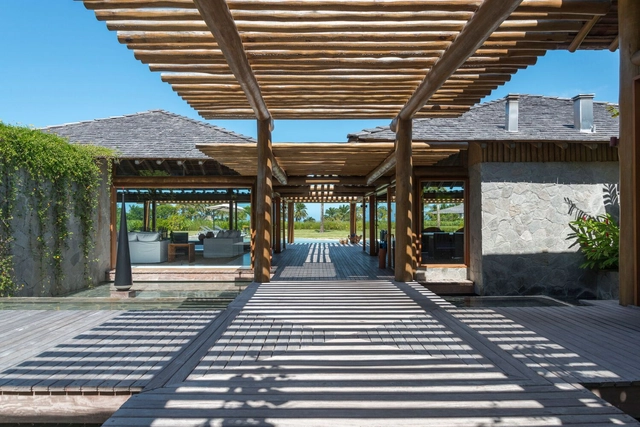
Wood is, without a doubt, one of the most versatile building materials there is. Treated lumber, boards, composites, or rustic hardwood, have structural and visual qualities that attract architects and clients searching for a wide range of possible applications and designs. Logs are one of the oldest ways of using this material since they require very little treatment and processing after the tree is cut and are the most natural form of lumber.

Rustic lumber is often used in vacation homes, but not only for this purpose. Below, we have gathered Brazilian houses that use rustic wood elements either in their structure or walls and finishings.
Brazilian Houses: 10 Homes Using Rustic Wood - Image 1 of 4Brazilian Houses: 10 Homes Using Rustic Wood - Image 2 of 4Brazilian Houses: 10 Homes Using Rustic Wood - Image 3 of 4Brazilian Houses: 10 Homes Using Rustic Wood - Image 4 of 4Brazilian Houses: 10 Homes Using Rustic Wood - More Images+ 9

UFMT launches book on Indigenous technologies and architectures in Mato Grosso

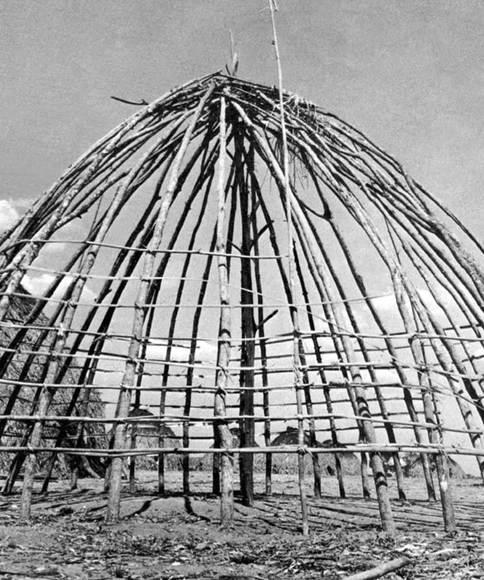
The Center for Studies and Research in Indigenous Technologies, Tecnoíndia—founded by UFMT professor José Afonso Botura Portocarrero, an architect with a PhD from the School of Architecture and Urbanism at USP, and retired UFMT anthropologist Maria Fátima Roberto Machado, who holds a PhD from the National Museum of the Federal University of Rio de Janeiro—is releasing a new book that compiles articles produced over 20 years of research and teaching on Indigenous technologies and architecture in Mato Grosso.

Follow the restoration work of the Ipiranga Museum in this 360° virtual tour.

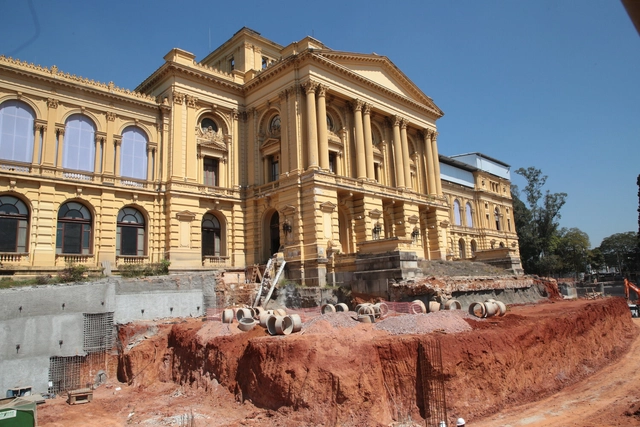
The Ipiranga Museum, located in São Paulo's south zone, has launched a virtual tour that allows users to follow the progress of the restoration and expansion of the building and its immediate surroundings. The digital tour features 360-degree camera footage captured across various spaces of the building and construction site, providing an overview of the renovation's progress.

Heritage and Landscaping: João Mendes Ribeiro on the Rehabilitation of the Coimbra Botanical Garden

Subscriber Access | 

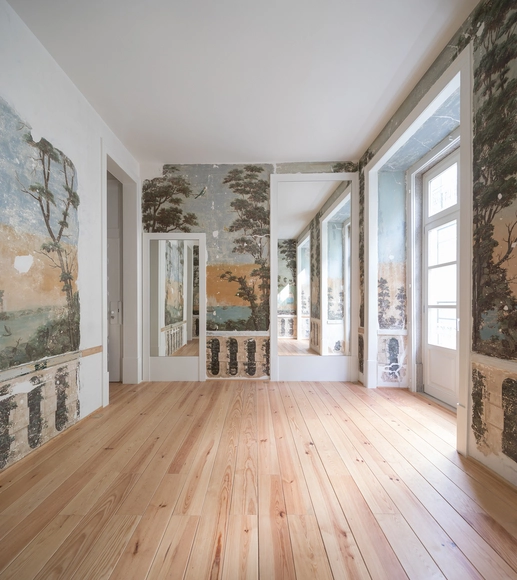
With the aim of getting to know the architects, projects, and stories behind landmark Portuguese architecture, Sara Nunes, from the architectural film production company Building Pictures, launched the podcast No País dos Arquitectos, where she talks with leading names in contemporary Portuguese architecture.

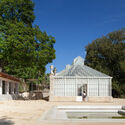
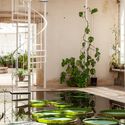
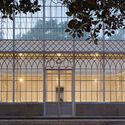
In her first episode, Sara spoke with architect João Luís Carrilho da Graça about his Lisbon Cruise Terminal. Now, for the second interview, she welcomes João Mendes Ribeiro for a conversation about heritage, the adaptive reuse of historical structures, and landscape architecture, focusing on the rehabilitation of the greenhouse at the Botanical Garden of Coimbra, the city where the architect is based. Read the full interview or listen to the podcast below.

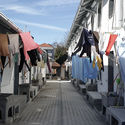
Heritage and Landscaping: João Mendes Ribeiro on the Rehabilitation of the Coimbra Botanical Garden - Image 1 of 4Heritage and Landscaping: João Mendes Ribeiro on the Rehabilitation of the Coimbra Botanical Garden - Image 2 of 4Heritage and Landscaping: João Mendes Ribeiro on the Rehabilitation of the Coimbra Botanical Garden - Image 3 of 4Heritage and Landscaping: João Mendes Ribeiro on the Rehabilitation of the Coimbra Botanical Garden - Image 4 of 4Heritage and Landscaping: João Mendes Ribeiro on the Rehabilitation of the Coimbra Botanical Garden - More Images+ 7

Conflict and Democratic Space: Interview with the Curators of Portugal at the Venice Biennale 2021

Subscriber Access | 

In a world that is increasingly polarized and intolerant of differences, Portugal's contribution to the theme of the Venice Architecture Biennale—How will we live together?—sheds light on public space as a stage for opposing forces, the confrontation of ideas, and social coexistence. Entitled In Conflict, Portugal's participation is curated by Carlos Azevedo, João Crisóstomo, and Luís Sobral from the office depA architects, with Miguel Santos serving as associate curator.

We spoke with the curators about some central aspects of the exhibition and the cycle of debates they propose—democracy, conflict, and opposing ideas in urban space. 

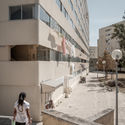
Conflict and Democratic Space: Interview with the Curators of Portugal at the Venice Biennale 2021 - 1 的图像 4Conflict and Democratic Space: Interview with the Curators of Portugal at the Venice Biennale 2021 - 2 的图像 4Conflict and Democratic Space: Interview with the Curators of Portugal at the Venice Biennale 2021 - 3 的图像 4Conflict and Democratic Space: Interview with the Curators of Portugal at the Venice Biennale 2021 - 4 的图像 4Conflict and Democratic Space: Interview with the Curators of Portugal at the Venice Biennale 2021 - More Images+ 4

"The House is the Most Flexible Space Ever": Interview with Pippo Ciorra and André Tavares

Subscriber Access | 

"The house is among the first concepts shared by society and architecture", states André Tavares and Pippo Ciorra, curators of the exhibition called At Home: Projects for Contemporary Housing, on display at Garagem Sul / Centro Cultural Belém, in Lisbon. The show, which is the unfolding of another one previously held at the MAXXI Museum in Rome, gathers pieces from the huge collection of the Italian institution and seeks intersections with contemporary Portuguese architectural production. Its main topic – the house, the home – has never been more discussed than right now.

Bringing together houses of different scales, built in diverse locations by various methods and techniques, and designed by Italian, Portuguese and international architects, the exhibition gathers, in groups of three, projects from which it is possible to weave relationships that go beyond geographies and materialities and foster reflections about the future of housing and what the home of tomorrow will look like.

We had the opportunity to talk with Tavares and Ciorra about the exhibition, its motivations and expectations with its opening in the physical venue of Garagem Sul. Read below.

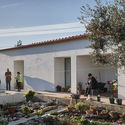
"The House is the Most Flexible Space Ever": Interview with Pippo Ciorra and André Tavares - Imagen 1 de 4"The House is the Most Flexible Space Ever": Interview with Pippo Ciorra and André Tavares - Imagen 2 de 4"The House is the Most Flexible Space Ever": Interview with Pippo Ciorra and André Tavares - Imagen 3 de 4"The House is the Most Flexible Space Ever": Interview with Pippo Ciorra and André Tavares - Imagen 4 de 4The House is the Most Flexible Space Ever: Interview with Pippo Ciorra and André Tavares - More Images+ 7

Google Maps to Start Showing Routes With the Lowest Carbon Footprint

The Google Maps application will direct drivers to more eco-friendly routes that generate the lowest carbon footprint using mainly traffic data, road slopes and inclines, and other factors.

The eco-friendly option will be the application's default route if comparable options take about the same time. When alternatives are significantly faster, Google will offer choices and let users compare estimated emissions.

Diversity is the theme for April at the 27th World Congress of Architects

The 27th World Congress of Architects is hosting, from April 19 to 22, the UIA2021RIO Open Week on Diversity and Mixture. The event will feature three debates and the Weekly Live Session – where specialists will delve deeper into the main issues raised in the discussions and answer questions from the public.

2021 Obra do Ano Award: Meet the Winners

Subscriber Access | 

Last week, we announced the 15 finalists for the 2021 Obra do Ano, an award celebrating the best of Lusophone architecture by inviting our readers to select their favorite projects built in Portuguese-speaking countries. The day has come to find out the winners of ODA 2021.

Other ways of building: women's production in the field of architecture

Subscriber Access | 

Through its Seminar on Culture and Contemporary Reality course, Escola da Cidade, in collaboration with the Carmen Portinho Feminist Collective, hosted seven women to discuss architectural production in today's context and how gender issues intersect with this field.

UIA2021RIO launches its virtual programming with debates on architecture, peripheries, and social inclusion.

Subscriber Access | 

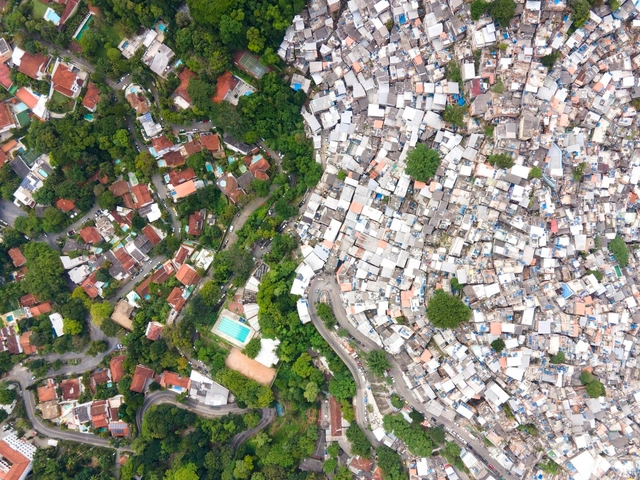
The 27th World Congress of Architects launched its online program this week, preceding the in-person events scheduled to take place between July 18 and 22. Social inclusion, the periphery, and architectural interventions in favelas were the topics of debates featuring Fabienne Hoelzel, Maria Alice Rezende de Carvalho, Alfredo Brillembourg, Jorge Mário Jáuregui, Alejandro Echeverri, and Adriana Levisky.

Brazilian Houses: 19 Residences on Narrow Lots

Subscriber Access | 

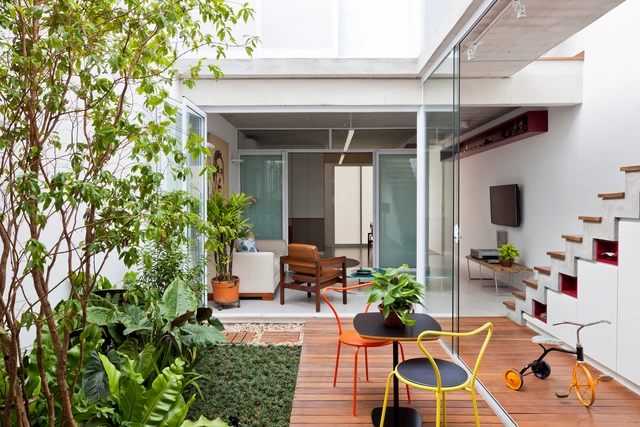
Brazilian Houses: 19 Residences on Narrow Lots - Image 1 of 4Brazilian Houses: 19 Residences on Narrow Lots - Image 2 of 4Brazilian Houses: 19 Residences on Narrow Lots - Image 3 of 4Brazilian Houses: 19 Residences on Narrow Lots - Image 4 of 4Brazilian Houses: 19 Residences on Narrow Lots - More Images+ 15

Urban densification and the demand for urban land have, among other things, led to a reduction in lot sizes in cities. Large parcels of land once destined for single-family homes have made way for multi-family buildings that, depending on their location, feature commercial establishments and services on their ground floors. Building a house in major urban centers is no easy task, largely due to the scarcity of available plots, or their reduced dimensions when they can be found.

Arquiteturas Film Festival explores the theme "Bodies Out of Space" with a selection of films from Angola

The 8th edition of the Arquiteturas Film Festival, taking place from June 1 to 6 in Lisbon, explores the theme “Bodies Out of Space” through an exploration of the social construction of space, connected by a thread running through its own narratives of domination. These are also narratives of identity, which is often stripped away or forced to represent our bodies.

Each year, the festival is dedicated to presenting documentaries, fiction, animation, and experimental films relevant to promoting contemporary Portuguese architecture both nationally and internationally. The 2021 edition is no different, structured around three distinct pillars: the official selection, the competition program, and the guest country program.

Design competition for energy efficiency in social housing: registration open

Gathering innovative, sustainable architectural designs for social housing that enable a reduction in energy consumption is the objective of the National Competition of Architectural Ideas for Energy Efficiency in Social Housing, launched this Monday (15) by the German governmental cooperation agency Deutsche Gesellschaft für Internationale Zusammenarbeit (GIZ) GmbH. Applications are open until April 26.

From Lina to Artigas: a friendly embrace

Closing out the week dedicated to publications focusing on women in architecture, as well as the week marking the posthumous recognition of Lina Bo Bardi with the Special Golden Lion from the Venice Biennale, the Virginia and Vilanova Artigas Institute shared with us a brief and touching letter sent by the Italian-Brazilian architect to Artigas on August 21, 1978.

14th CBCA Architecture Student Competition 2021: Registration Open

The Brazilian Center for Steel Construction (CBCA) has opened registration for the "14th CBCA Architecture Student Competition 2021," open to university students across Brazil. This year, the competition addresses the current context of the COVID-19 pandemic, with the theme "Health and Well-being." Consequently, students are tasked with presenting projects that offer efficient solutions, emphasizing the correct and appropriate use of steel in both conceptual and architectural design, as well as in technological and construction aspects.

ArchDaily Brazil 2021 Building of the Year Award: Voting Now Open

For the fifth time, we are giving our readers the responsibility of recognizing and awarding the projects that have made the greatest impact on the profession through the ArchDaily Brasil Building of the Year 2021 Award. By voting, you become part of an unbiased network of jurors recognizing the most relevant projects of the past year.

Over the next three weeks, the collective intelligence of our readers will filter through hundreds of projects from Portuguese-speaking countries – Brazil, Portugal, Mozambique, Angola, Guinea-Bissau, East Timor, Equatorial Guinea, Macau, Cape Verde, and São Tomé and Príncipe – published in 2020, selecting the best built works in the Portuguese-speaking world.

From hundreds of works published in 2020, readers will choose their favorites, with the 15 most-voted projects moving on to the second stage of the Award.

The 2021 Building of the Year Award is presented by Dornbracht, an internationally renowned company for kitchen and bathroom products.


Circular economy project transforms sururu shells into cobogós in Alagoas

Considered an intangible cultural heritage by the State Council of Culture (CEC) of Alagoas, the sururu is a mollusk whose harvesting is the main source of income for several communities in the state. Around the Mundaú lagoon alone, in Maceió, five communities living below the poverty line produce approximately 300 tons of sururu shells annually—a massive amount of waste that previously had no use and ended up in the Alagoas capital's landfills. 

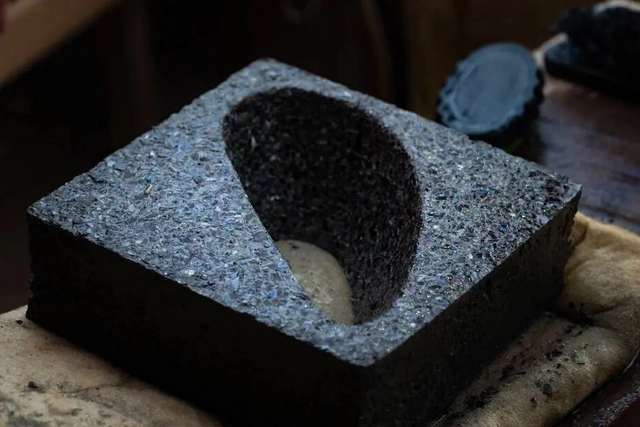
Recognizing its significant economic and social engagement potential, designers Marcelo Rosenbaum, Adriana Benguela, and Rodrigo Ambrósio developed the Cobogó da Mundaú project, which incorporates sururu harvesting waste into the manufacturing of architectural screen blocks.

Circular economy project transforms sururu shells into cobogós in Alagoas - Image 1 of 4Circular economy project transforms sururu shells into cobogós in Alagoas - Image 2 of 4Circular economy project transforms sururu shells into cobogós in Alagoas - Image 3 of 4Circular economy project transforms sururu shells into cobogós in Alagoas - Image 4 of 4Circular economy project transforms sururu shells into cobogós in Alagoas - More Images+ 5