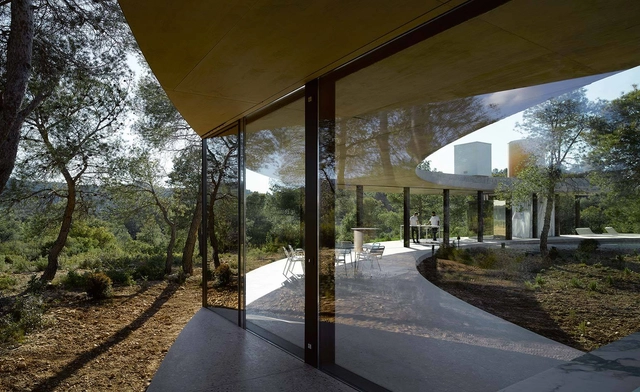
Belgium's renowned architectural practice OFFICE KGDVS joins The Architecture Foundation to discuss their recent projects and urbanist design.
Belgium's renowned architectural practice OFFICE KGDVS joins The Architecture Foundation to discuss their recent projects and urbanist design.

Registration is now open for the 2nd Regional Pre-Forum on ATHIS and University Extension.
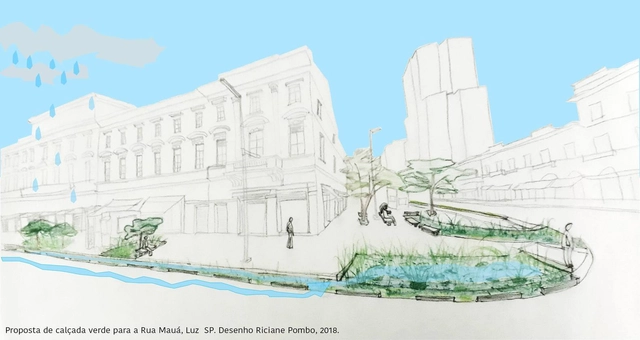
Sidewalks, also known as public walkways, can be understood as multifunctional open spaces where a range of activities occur, from pedestrian flow to social interaction.
In this context, public walkways have significant potential to house green infrastructure solutions—such as rain gardens, bioswales, and stormwater planters—capable of providing a range of environmental services for cities. These include mitigating urban pollution (water, air, and soil), providing habitats for urban fauna, contributing to the control of stormwater runoff volume and velocity, and offering improved local microclimatic quality and thermal comfort for adjacent buildings through shading and evapotranspiration, in addition to serving as an aesthetic element.
Emerging ecological sidewalk design techniques that add value and appeal to properties are currently well-known, utilized, and proven.

The School of Architecture at Universidad Finis Terrae is launching the fourth edition of "Atraviesos Urbanos" (Urban Crossings), a series of tours designed and led by architects that provide an alternative perspective on a specific section of the city.

A month of debates on the right to the city at the Legislative Chamber of the Federal District
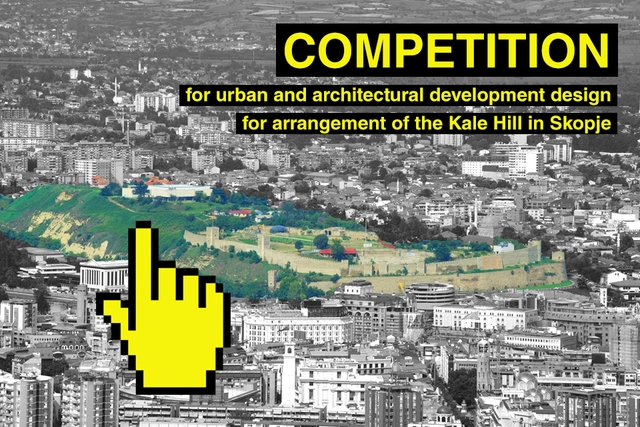
The Competition for preparation of preliminary urban and architectural development design for arrangement of the Kale Hill in Skopje constitutes an integral part of the project Kale – Cultural Fortress, organized by the Museum of Contemporary Art in Skopje, with the goal of encouraging the revitalization and spatial arrangement of the Kale Hill into an attractive and vibrant city attraction with various cultural, educational and recreational functions.

What would the Mies van der Rohe Pavilion look like if you could turn it into a workplace?
The goal of the 2019 Student Research Competition is to assist talented students, working in groups under the guidance of a professor, to focus on a relevant research question, and create an engaging output as a response. Research proposals should directly relate to the 2019 topic of “Sustainable Tall Buildings and Urban Habitat”. Proposals can come from any topic/discipline, including but not limited to: architecture, construction, energy issues, environmental engineering, façade design, financial & cost issues, fire & life safety, humanities, infrastructure, interiors, maintenance & cleaning, materials, MEP engineering, policy making, resource management, seismic, social aspects, structural engineering, systems development, urban planning, vertical transportation, wind engineering, etc.

In support of his Green New Deal and climate and energy agenda, New York State Governor Andrew Cuomo has launched The Buildings of Excellence Competition, which aims to accelconsumption and per capita carbon emissions in a manner which can be replicated at scale. Selected projects are eligible to receive up to $1,000,000 in direct funding, as well as support for initiatives focused on broad marketing and public awareness.
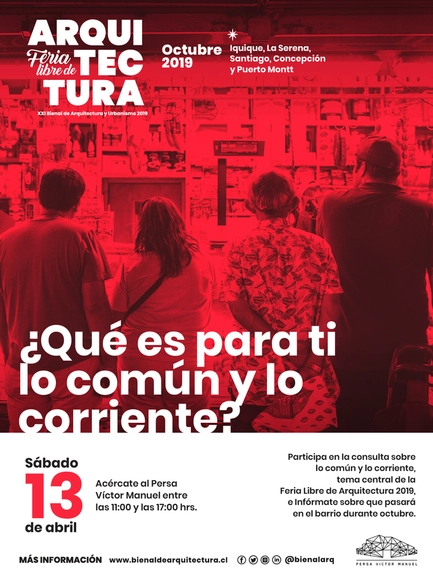
This year, the Chilean Biennial of Architecture and Urbanism will move from traditional buildings to the streets. Throughout the month of October, it will be presented as an "Open-Air Architecture Fair" in iconic spaces across five cities in the country: Iquique, La Serena, Santiago, Concepción, and Puerto Montt. The goal is to bring architecture closer to the general public while also directing the focus of architects toward the needs of the majority.

The John H. Daniels Faculty of Architecture, Landscape, and Design is pleased to announce its 2018/2019 public lecture series: Home and Away. The Faculty’s stunning 400-seat multichromatic Main Hall in the heart of the Daniels Building is now open. To inaugurate our first full year of public programming in this space, we are bringing together talent and ideas from near and far for a series of discussions and debates on design issues of global importance.
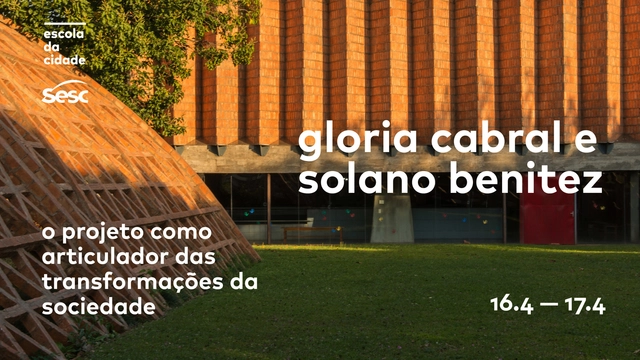
Escola da Cidade and Sesc host meetings with Paraguayan architects Solano Benitez and Gloria Cabral

Registration is now open for the fourth cohort of the short-term Executive Education course at Insper, "Urban Innovation: New Ways of Shaping Cities," in partnership with Arq.Futuro. With a 40-hour curriculum starting on May 6, the course aims to help train individuals capable of interpreting the reality of urban spaces and adopting a critical stance on the future of cities. Registration is available via the website: http://bit.ly/2mecfdN.

The fourth edition of the "Arquitetura Soteropolitana" course will visit a classic: the Solar das Mangueiras, by architect Assis Reis.
Featuring a testimonial from Márcia Reis and a guided tour, this is an incredible opportunity to gain a deeper understanding of the context that enabled the realization of this project.
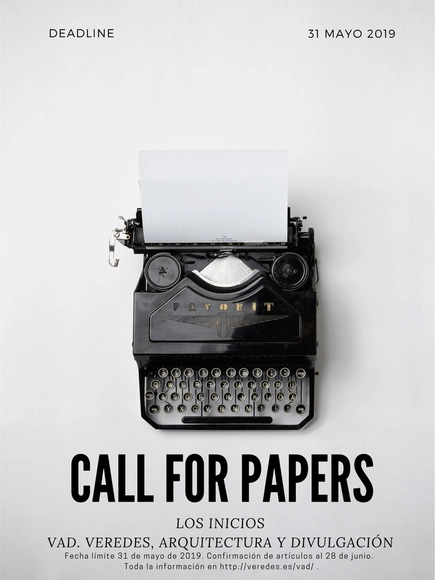
Derived from the Latin initium, the term "inicio" (beginning) is defined by the RAE itself as a synonym for "comienzo" (start), which in turn is revealed as the "principle, origin, or root of something." Therefore, a beginning can be approached from two perspectives: the tangible, related to the existence of an order or a series of elements structured according to specific parameters; and the symbolic, representing a milestone linked to a future event that marks the start of an expression of desire. Indeed, one cannot speak of architecture without speaking of desire—one of the materials from which initial decisions are constructed.
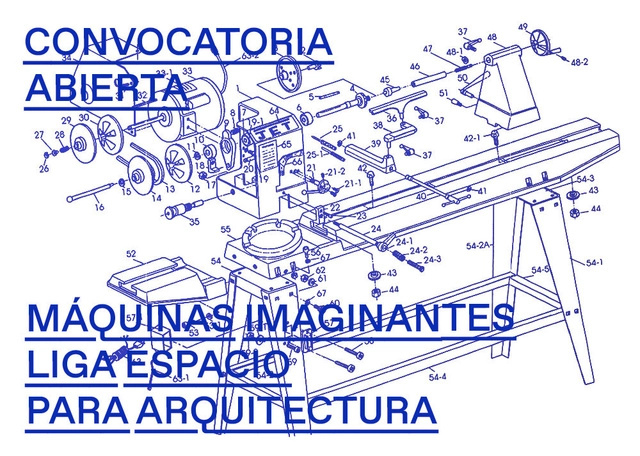
“The machine is invented to respond to specific needs. Once in existence, the operator can far exceed its original capabilities: by breaking the rules imposed by the machine itself, creative results emerge that were unimagined before using the machine, before breaking its rules.”

BURN-OUT. Exhaustion on a Planetary Scale
Since its founding in 2013, Het Nieuwe Instituut has pioneered research in architecture, design and digital culture, fostering programmes, exhibitions, lectures, archival investigations and publications in the Netherlands and internationally.
Through its annual Call for Fellows, Het Nieuwe Instituut’s Research Department acknowledges and gives visibility to research projects offering departures from established modes of thinking and practice. For this iteration of the Call for Fellows, the Research Department has selected the theme of BURN-OUT. Exhaustion on a Planetary Scale.

Torres Colón is the first example of suspended architecture in Spain. Designed in 1969 by Antonio Lamela (Madrid, 1927–2017)—one of the most significant Spanish architects of the late 20th and early 21st centuries, who passed away two years ago this April—the towers stand as a symbol of the country's architecture and the Madrid skyline.