
The Academy of Architecture and Urbanism invites submissions for the first edition of the AcAU-Gualter Colombo National Biennial Award.
The Academy of Architecture and Urbanism invites submissions for the first edition of the AcAU-Gualter Colombo National Biennial Award.
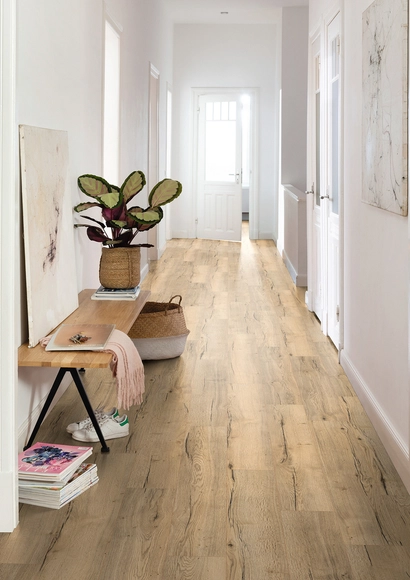
Cork is obtained from the bark of the cork oak, a slow-growing tree in the Mediterranean region that lives an average of 200 years. The valuable property of the cork oak is that it regenerates itself. After each peeling, the bark grows back. Therefore, no tree is cut down or permanently damaged for the cork harvest. In addition, a peeled cork tree binds more CO2 than an unpeeled tree.
Combining the benefits of laminate with the special properties of cork, EGGER Comfort flooring is made up of two layers of cork that provide warmth and special comfort when walking, coming from sustainable forestry.

The Secretariat of Culture, Youth, and Tourism of Tijucas, SC, launched a national design competition for the Casarão Gallotti Historic Center in Tijucas, SC, on August 31, 2021. Held in partnership with the Institute of Architects of Brazil – Santa Catarina Department (IAB-SC), the competition seeks to identify the best urban design and landscape proposal for the surroundings of Casarão Gallotti, the city's most significant building, through a legal and democratic process.

On October 12, a jury meeting of the open international competition for development of an architectural concept for the Galiasgar Kamal Tatar State Academy Theatre took place.

Creative Design Entries Needed to Change Single-Family Zoning

Organized jointly by the Departments of City and Regional Planning of Middle East Technical University (METU) and Yildiz Technical University (YTU), “AESOP 16th Young Academics Conference” will be held in Istanbul between 5-8 April 2022. The deadline for abstract submission is 15 November 2021.

Models and drawings are privileged tools for understanding architecture: they display the physical form and expression of buildings. This exhibition brings together a group of models that, after having been exhibited in the past to represent works of architecture, were kept safe by the Centro Cultural de Belém. Like the constructed buildings themselves, whose forms they replicate in miniature, time has passed over them and left its marks. Twenty years since they were originally presented, they are now like treasures that show more than reflections of an era. Transformed into fragments, they offer evidence of the way society, at a certain moment, perceived architecture made in Portugal: sometimes exacerbating or diminishing differences between authors and schools, sometimes scrutinising or acknowledging new authors, sometimes forging the possibility of the existence of a Portuguese architectonic culture with its own specific qualities.

What does it mean to lose your language, your voice? Join d.talks in partnership with the Esker Foundation on Friday, October 8, to hear this topic discussed by d.talks and Esker Foundation writer-in-residence, Sue-Shane Tsomondo in conversation with fellow African artists JustMoe and Mpoe Mogale.

Daring Cities is the global virtual forum for urban leaders boldly tackling the climate emergency, especially in light of COVID-19.
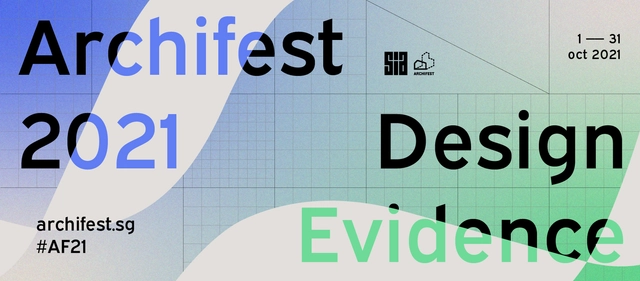
Archifest is back in October, as a bigger, better and more inclusive celebration of great design. With over 100 events spread out across the island and online, the month-long Architecture Festival - organised by the Singapore Institute of Architects (SIA) - promises to have something for everyone, appealing both to architecture enthusiasts, and to the general public.
Nesta Talks to... Joan Fitzgerald

Flexible Systems & Wooden Constructions for Challenging Environments

Like any other art form, architectural visualization has the power to move your audience, whether it be the design client, potential customers or future tenants. When they can actually experience the design, they’re more likely to interact, collaborate, and comment long before the final version, giving them a sense of contribution to the whole—all while providing you with confidence that the design is really what they want.

Architecture performs through bodies. Its
conceptualization entails choreographing
bodily movements. Drawings are spatial
scripts, to which bodies perform in
conformity, transgression, re-appropriation, or
indifference. Performances can be corporeal or
phenomenological, planned or spontaneous,
everyday or a singularity. They charge
architecture with vibrant energies disrupting
the exigencies and politics of built spaces.
The 10th issue of Room One Thousand,
“Body + Performance,” seeks for performance
to expand and challenge our understanding of
architecture and its impact. Performance can
be understood as an object, phenomenon,
commodity, or metaphor. The convergence
of architecture and performance captures
the corporeality, tactility, and sensuality of
a space. How can architecture be read
through the lens of performance? Who is the
performer, the building or the body? What
are the design implications of highlighting
the agency and plurality of bodies? What
happens when architectural practice shifts
from performance to production? How can
performance be a methodology in design?

A unique Charrette-style competition bringing together architects, designers and innovative solution providers (students and young professionals) to create a concept to re-generate a former industrial area into a sustainable Net Zero community.

Submission: December 25th, 2021 23:59 GMT
Registration: December 25th, 2021 23:59 GMT
Language: English
Location: Rukban, Jordan
Prizes: $2000 USD
Type: Open for All (Students, Professionals & Studios)

The Urban Rhetoric_ Issue 5_March 2022_ City in Dilemma

Designing for kids is not an easy task. The design process is undertaken by adults, with children being the end-users and therefore, it is a huge responsibility to deliver high-quality designs.