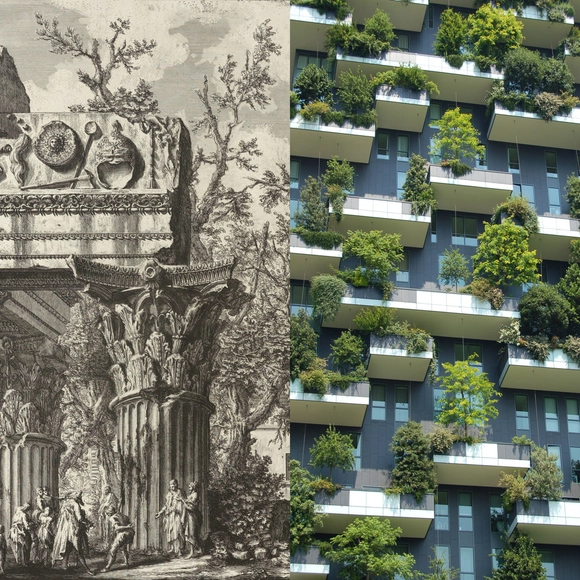
Architecture, as an act of human cultural artifice, has historically maintained an indissoluble relationship with Nature—as a site, enclave, environment, material, or mirror of the habitat for communal life, and as a factor of language. Both the symbolic tradition—monument, tomb, idol—and the typological tradition—temple, hut, theater, palace—form the basis of the elemental corpus of Vitruvian formulation. Whatever the artifact to be built, the natural condition is unavoidable. Fire, water, earth, and air—the elements that compose the universe according to ancient philosophy—are, in turn, constitutive of architectural thought. However, arrogance, success, or disruption over pre-existing conditions have dominated human behavior toward Nature. The current state of extreme intervention on the Earth as a planet, on geography as a foundation, on climate as a resource, or on the atmosphere as a domain, demands a critical review of the diverse perspectives that architecture has adopted according to historical, political, and cultural contingencies and their consequences on lifestyles.