
Join us to open Generation Proxima: Emerging Environmental Practices in Portuguese Architecture. The exhibition provides an environmentally-oriented overview of emerging architectural practices in Portugal.
Join us to open Generation Proxima: Emerging Environmental Practices in Portuguese Architecture. The exhibition provides an environmentally-oriented overview of emerging architectural practices in Portugal.

Come join us for the SMC NOMAS Fall Lecture by Leo Marmol, FAIA on Wednesday, September 27th at 6:30pm. Center for Media and Design 1660 Stewart St. (Auditorium) Santa Monica, CA 90404. This event is free and we recommend parking at the CMD parking lot off of Pennsylvania Ave.

Matrix: How We Live Now is a timely new exhibition exploring the work of the Matrix Feminist Design Co-operative, a radical feminist architectural practice active in London from 1980 to 1996. The exhibition features items drawn from the collective’s open archive, alongside projects from researchers at the Faculty of Architecture, Building and Planning on gender, bodies and ecologies. Join us for a series of floor talks and panel discussions during the exhibition on important topics including architecture and community, bodies and cities, and writing diverse histories of architecture.

Join acclaimed Canadian architect Bruce Kuwabara as he discusses the influence of professor emeritus and former Daniels Faculty dean George Baird (by whom he was taught and for whom he once worked) on his approach to architecture and the public realm and on how it has informed the practice and work of KPMB Architects, the firm Kuwabara co-founded in the 1980s. In his lecture, Kuwabara will present KPMB buildings and projects that demonstrate how architecture contributes to the formation and vibrancy of the city while addressing the most pressing issues of our time, including climate change, affordability, mental health and reconciliation.

Join Harvard GSD professor Charles Waldheim for a discussion based on Technical Lands: A Critical Primer, which he co-edited with Jeffrey S. Nesbit. The book, published this year by JOVIS, assembles authors from a diverse array of disciplines, geographical specializations and epistemological traditions to interrogate and theorize the meaning and increasing significance of technical lands—spaces united by their “exceptional” characteristics, such as remote locations, delimited boundaries, secured accessibility and hyper-vigilant management.

Co-edited by Christina E. Crawford, the Daniels Faculty’s Claire Zimmerman and the late Jean-Louis Cohen, the recently published book Detroit-Moscow-Detroit: An Architecture for Industrialization, 1917-1945 examines spatial development, manufacturing, mass production and organizational planning across geopolitical lines in the 20th Century, exploring how capitalist and communist built environments were co-produced in a period of intense technical exchange. Also among its contributors, Crawford and Zimmerman will be in attendance to discuss their participation in the book as well as selected themes. The event is dedicated to the memory of fellow contributor Jean-Louis Cohen.

David Miller, mayor of Toronto from 2003 to 2010 and Managing Director of C40 Cities Center for City Climate Policy and Economy, and Jorge Pérez de Leza, the CEO of Metrovacesa, will engage in a discussion about the creative industries and their impact on city making, emphasising themes of inclusion, arts, residents engagement, and creative use of IT.

The First Ever Metaverse Architecture Biennale "Presence of the Future" 2023 Unites Global Creators to Reshape Web3 and the Metaverse

11/09/2023

Ozyegin University Building Envelope Design and Technology Lab is organizing an international conference on Resilience in Building Envelope Design and Technologies with tremendous speakers from academia and the building technology sector.
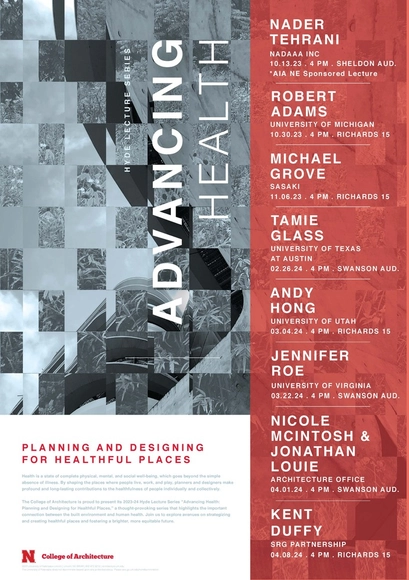
2023-24 Hyde Lecture Series:

Horror in Architecture presents an unflinching look at how horror genre tropes manifest in the built environment. Spanning the realms of art, design, literature, and film, this newly revised and expanded edition compiles examples from all areas of popular culture to form a visual anthology of the architectural uncanny.
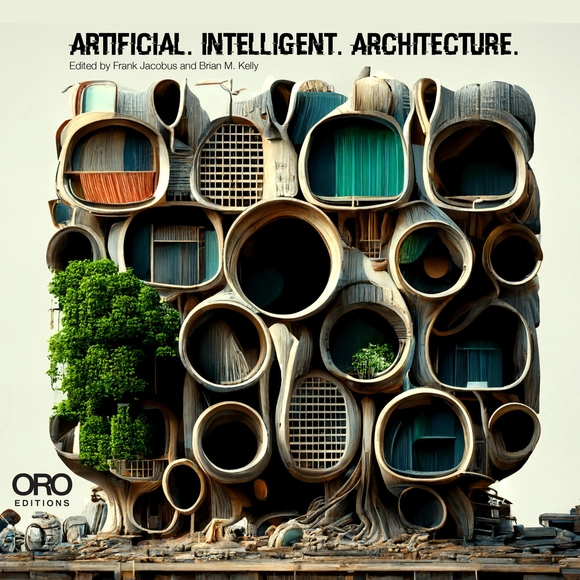
The impact of artificial intelligence in the discipline of architecture is unavoidable and undeniable. The recent mass adoption of highly accessible machine learning tools including DALL-E, Stable Diffusion, and Midjourney has allowed designers to test their limits and assess their role as an author in the design of the built environment. This book will include speculations on the introduction of artificial intelligence bots/apps into architecture and feature a collection of works from eighteen architects and designers who are interrogating current AI applications. Within each chapter, authors put forth a position through a framework consisting of theory and application lenses. Additionally, interviews from leading practitioners will offer insights into the current curiosities fueling investigation.

The business of architecture—shaped by anti-trust legislation and pro-corporate governmental policies—has created an extractive, inequitable, and precarious environment for its practitioners. These pressures have led many small firms, which make up roughly three quarters of architecture offices in the United States, to adopt diverse, ad-hoc organizational and survival strategies. In their very precarity, these small firms offer fertile grounds to test more resilient structures. One such model, the worker cooperative, offers a critical mode of practice that is equitable, democratic, and addresses the systemic inequalities that plague the profession.
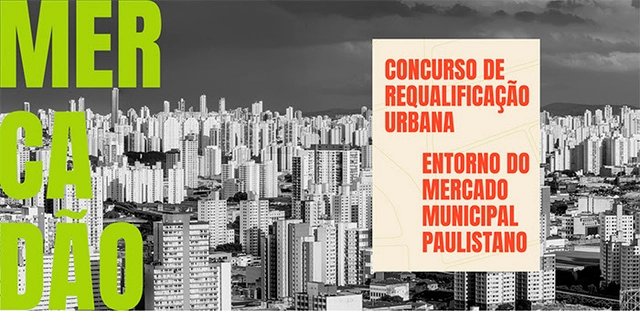
The competition aims to select an urban renewal project for the area surrounding the Mercado Municipal Paulistano. This area currently encompasses a range of functions beyond commerce, having evolved into a central tourist hub for the city.
The competition seeks two complementary approaches: a strategic intervention plan covering an area accessible within a 15-minute walk, with the Market at its center, and a set of physical interventions to improve the space within a broader twelve-block perimeter, addressing key urban challenges in the area, such as the relationship with the Tamanduateí River and the railway line.

SIMPLE/SOPHISTICATED
An exhibition by artist Paulo Roberto Leal at the Galeria de Arte Ipanema opens on September 12, curated by Paulo Venancio Filho.

In her series Acessibilidade de Norte a Sul: Todas as vozes do Brasil (Accessibility from North to South: All the Voices of Brazil), Mariana Bunn Architecture and Accessibility will host a conversation with architect Ingrid Etges Zandomeneco this coming Sunday, September 10.

“Naturas: As I See It” opens at the Paço Imperial on September 9