

The Independent Architect Observatory is the first forum for reflection aimed at redefining our profile to ensure our work remains relevant to societal progress.
The Independent Architect Observatory is the first forum for reflection aimed at redefining our profile to ensure our work remains relevant to societal progress.
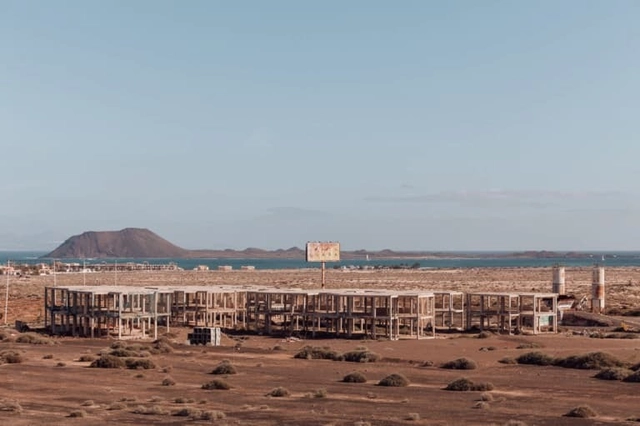
Universities are critical centers for the production of knowledge and innovation, and since the Triennale's inception, we have involved these institutions in the program of our most iconic event. Schools from around the world are invited to participate in the central program of the 6th Lisbon Architecture Triennale in 2022.
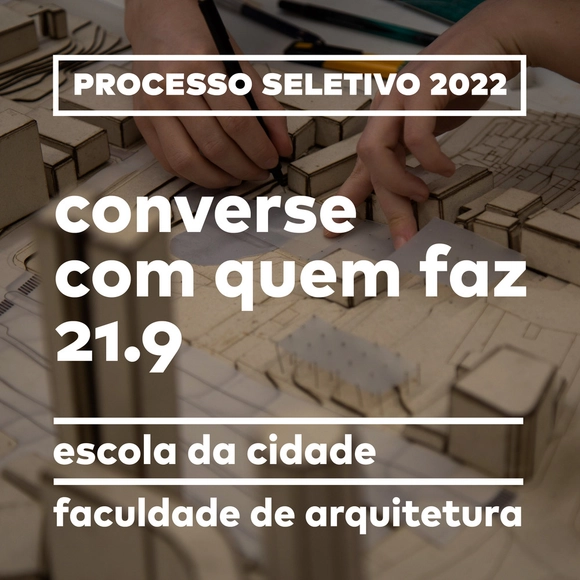
On September 21 at 6:00 PM, Escola da Cidade is hosting a conversation between alumni, current members of the school (students, faculty, or coordinators), and prospective students interested in our undergraduate program in Architecture and Urbanism. This free, online event will explore various perspectives on education and career paths in the field. Participants will receive a full application fee waiver for the 2022 admissions process.
After seven years, revista empena resumes its reflections on the city and those who inhabit it. We present ourselves, once again, as a student journal entirely organized, curated, and edited by students from Escola da Cidade.

The call for academic papers for the upcoming issue, rita_17, is now open at rita_ magazine. The call invites submissions in Spanish or Portuguese from faculty, graduate students, or professionals holding a master's or doctoral degree.

The Institute for Advanced Architecture of Catalonia (IAAC), one of the most prominent educational and research centers in Southern Europe, is offering a scholarship for students to enroll in the Master in Advanced Ecological Buildings & Biocities (MAEBB) for the 2021-22 academic year. Through this initiative, the institution reinforces its commitment to supporting young architects in their efforts to gain the training necessary to contribute effectively to a better future.

Applications for the Escola da Cidade lato sensu postgraduate program are open until August 13, 2021. Established over 10 years ago, the program consists of seven courses and is structured around two central pillars: practice and design, both understood as research and strategies for engaging with space across its multiple scales. The program’s overarching theme, "Civilization America: A Look Through Architecture," seeks to understand and address the historical, geographical, territorial, and social conditions that define us. With this perspective, the postgraduate courses at Escola da Cidade aim to connect professionals working in architecture, urbanism, and related fields with research and critical reflection applied to design and teaching.
Between 1950 and 1970, the Chilean state undertook a national modernization process for its institutions, establishing the state's responsibility to clearly improve the living conditions of its population. Consequently, the Housing Corporation (CORVI, 1953–1976) was established in 1953. Through this body, the state spearheaded the implementation of the Chilean Housing Plan (1959), concretely positioning the construction of housing and the city as a catalyst for social change.

The house has evolved from an individual concern into the built element with the greatest impact on the planet. In this study, Fernanda Canales analyzes the evolution of this space over the last two centuries through projects, exhibitions, and books that have transformed ways of living toward a collective understanding of housing.
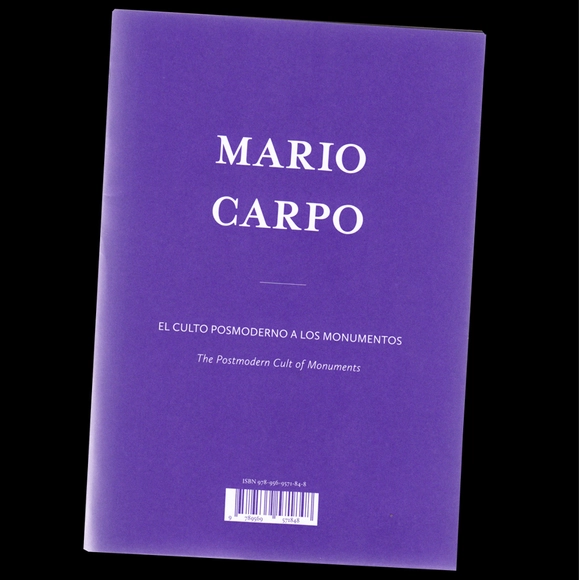
This ARQDocs book explores the work of Mario Carpo, a historian of architecture and technology. He holds a Dr. Arch from the University of Florence and a PhD from the European University Institute. He has taught at the Université de Genève, the School of Architecture of Saint-Étienne, the School of Architecture of Paris-La Villette, and the Georgia Institute of Technology. He served as the Vincent Scully Visiting Professor of Architectural History at the Yale School of Architecture (2010–2014), as the Reyner Banham Professor of Architectural History and Theory at The Bartlett, UCL (2014–present), and as director of the Study Centre at the Canadian Centre for Architecture (CCA) in Montréal (2002–2005).

“Our lives unfold through an exchange of nutrients with plants, even if we only remember them when it is time to water them. In one way or another, they are there, allowing us to continue existing here on this planet. However, forty years after the television broadcast of the series Cosmos, it seems we still do not understand plants as a fundamental part of our lives. We continue to view them as a mere source of energy or a raw material to be exploited (capable of defining vast economic sectors); we instrumentalize them when asked to explain the origins of architecture, or we even use their color to tint our projects and ventures with labels like “green,” “ecological,” or “sustainable”; yet it is not common for us to think about them—and with them—when designing. Perhaps to begin settling that debt, in this issue of ARQ magazine, we are seeking essays, projects, and research that challenge the secondary role we have assigned to vegetation, or that demonstrate new ways of including vegetation in architecture, with the minimum condition of moving beyond the paradigm of the primitive hut, as we believe it is time to take a step beyond their mere allegorical instrumentalization.”
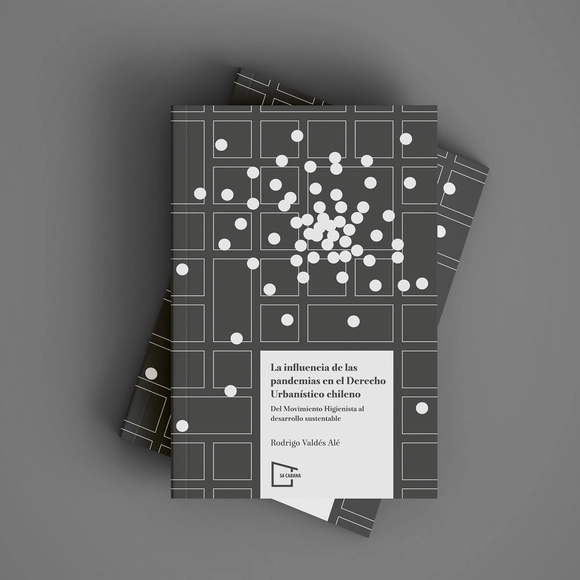
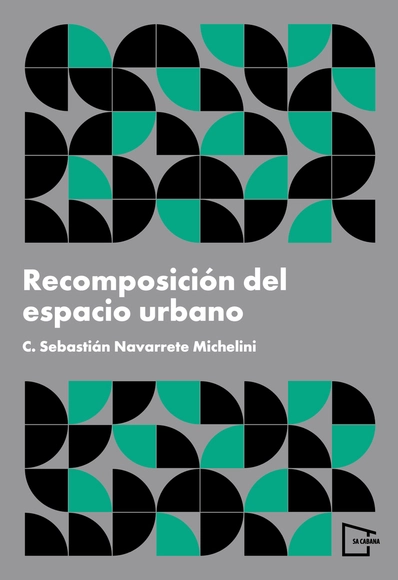
These times of pandemic and constitutional change offer an opportunity to analyze the relationship between the spread of COVID-19, urban living conditions, and the presence of hygienism in our urban planning law. Lawyer Rodrigo Valdés Alé examines these aspects, which lay the groundwork for the right to a healthy city, in the new book from Sa Cabana Editorial.
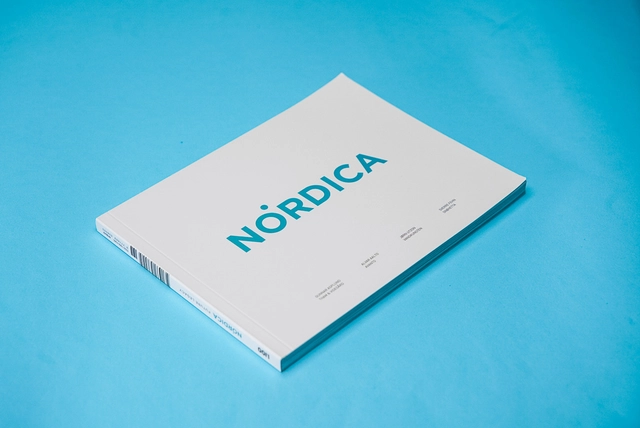
The inspiration that the masters of modern architecture in Sweden, Finland, Denmark, and Norway drew from their places of origin, combined with the experience they gained during their travels around the world, sparked a radical shift in history known as Nordic Architecture.

"Perhaps architecture is nothing more than the art of building climates that artificially correct what nature presents in its path," as Vitruvius maintained. For Swiss architect Philippe Rahm, architecture exists because the natural climate is often inhospitable to humans: too hot or cold, too dry or humid, too dark or sunny. Architecture must soften, intensify, mitigate, and regulate the natural climate to make it habitable.

In January 2021, Phaidon published Radical Architecture of the Future, which presents the world's most inspiring, innovative, and advanced architecture, offering new ways to view, understand, and build our environment and the spaces that surround us.

“The desert has enslaved me, and I am happy to say that I am still astonished to find that this is so,” writes Reyner Banham in this book, one of the last he wrote during his lifetime, not in his usual role as an architectural historian, but as a “desert fanatic”—a visitor intrigued and bewildered by the arid lands of the American Southwest.

In this book, French architects Anne Lacaton and Jean-Philippe Vassal, winners of the prestigious 2021 Pritzker Prize, present their work through three concepts, each illustrated by a specific type of content. In a conversation with Enrique Walker, they explain the thinking behind their entire body of work, particularly through one of their most significant projects: the Palais de Tokyo in Paris.

The ability to develop new advanced solutions in architecture, construction, urbanism, and design will be fundamental to responding to the challenges posed by the current crisis. A commitment to innovation and the education of professionals and students toward new models represents a key element in driving radical change, providing tools for the professionals of tomorrow.