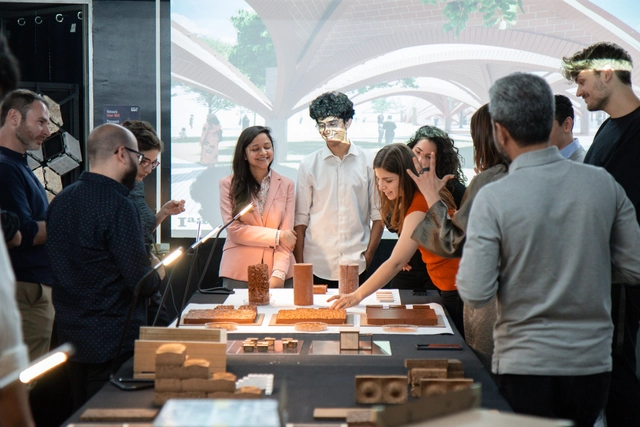
In this issue of Dearq "Perennial: Architecture's Timeless Dimensions" we are particularly interested in the relationships between materials, architectural elements, spatial and formal arrangements, as well as the instruments and methods we use to describe and classify these connections in order to better understand what stands the test of time and what does not.
Design a MODULAR, ADAPTABLE, and ASPIRATIONAL pre-school design appropriate to the social, environmental, and financial context of South Africa!
Designers are invited to envision the future of early childhood development (ECD) infrastructure in South Africa through a scalable, modular, and aspirational pre-school design. This competition challenges entrants to critically analyse their design approach, considering social impact, environmental sustainability, and financial feasibility to create a model that redefines the learning spaces of tomorrow. The winning proposal will be constructed in conjunction with Education Africa's - Social Architecture Program during 2026, serving as a prototype for the cost-effective development of high-quality pre-school infrastructure in the future. Entrants are encouraged to present bold yet practical proposals that respond to the realities of South Africa's diverse communities, reimagining the future of early childhood education - Beyond the Classroom.
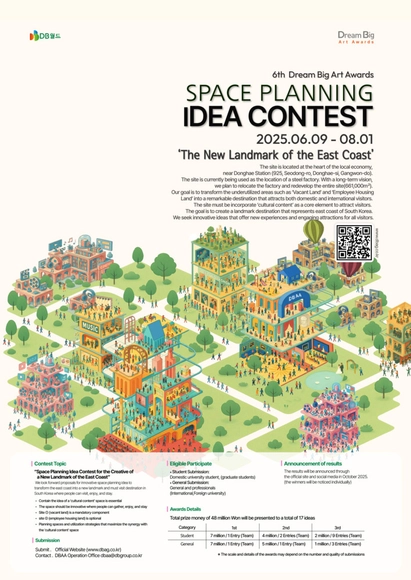
The site is located at the heart of the local economy, near Donghae Station (925, Seodong-ro, Donghae-si, Gangwon-do). The site is currently being used as the location of a steel factory. With a long-term vision, we plan to relocate the factory and redevelop the entire site(661,000㎡). Our goal is to transform the underutilized areas such as 'Vacant Land' and 'Employee Housing Land' into a remarkable destination that attracts both domestic and international visitors.
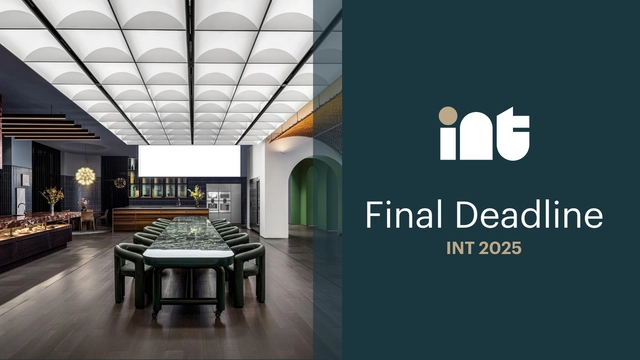
INT 2025: Final Call For Entries (featured project: INT 2024 Winner - Poggenpohl Shanghai Experience Center by Ippolito Fleitz Group GmbH)
Don't miss your last chance to join the world's most inclusive interior design awards. With the final days to enter upon us, INT urges designers from around the world to submit their most groundbreaking projects for global recognition.
Camposaz 45:45 Mis-Lapis25 - Wooden Self-Build Workshop The workshop will take place in Sagron Mis (TN) From June 29 to July 5, 2025 Applications must be submitted by midnight on June 14, 2025
Students from across the RCA will present their work before graduation at RCA2025 this summer. Join us to discover a globally engaged cohort of art and design practitioners.
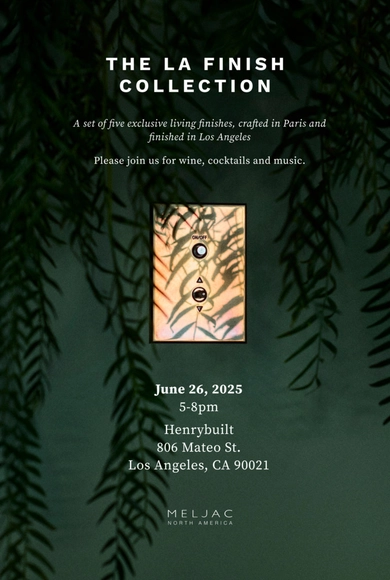
Meljac North America celebrates the launch of the "LA Finish Collection"
Please join us for the launch of Meljac North America's exclusive collection of hardware finishes, crafted in Paris and hand-finished in Los Angeles. Enjoy food, cocktails and music to celebrate the "LA Finish Collection".
Simone Leigh, Las Meninas, 2024_Credit Carol Quintanilha
Bringing together approximately 160 works by renowned Black artists from Brazil and the United States, the exhibition "Ancestral: Afro-Americas" arrives at the Centro Cultural Banco do Brasil Rio de Janeiro on June 4, 2025. Under the artistic direction of Marcello Dantas and curated by Ana Beatriz Almeida, the exhibition celebrates the shared heritage and bonds between Afro-descendant peoples in Brazil and the United States within the field of visual arts, promoting a critical reflection on the African diaspora. The show also features a collection of adornments commonly known as "joias de crioula"—attire worn by Black women who achieved freedom in colonial Brazil, particularly in Bahia, as a way to express their ancestry—and a selection of African art from the Ivani and Jorge Yunes Collection, curated by Renato Araújo da Silva. These segments seek to identify, on one hand, the spaces where African ancestry was present during colonial Brazil and, on the other, its elements in art produced in its territory of origin.
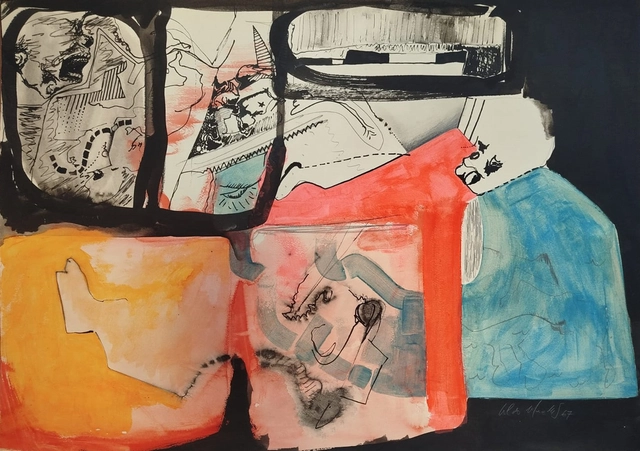
Gallery honors one of the greatest names in international contemporary art Exhibition recovers drawings produced in the 1960s, 1970s, and 1980s, and brings together prints and objects little known to the public, such as Fiat Lux, a work presented only once by the Rio-born artist in 1979, for just 24 hours
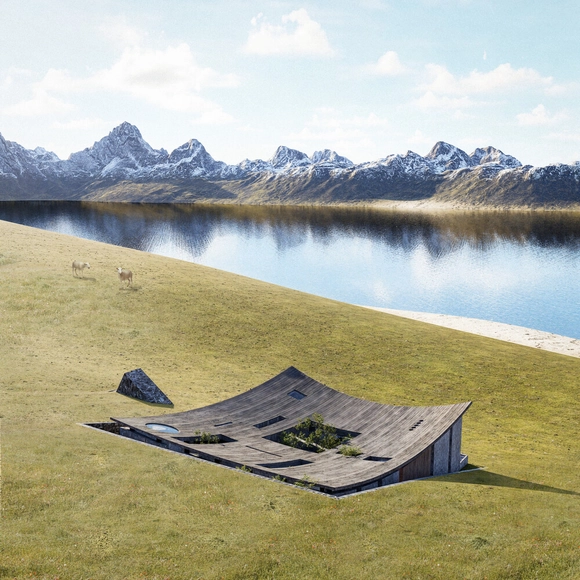
Buildner has announced the results of its third annual Home of Shadows international architecture ideas competition. The competition series is designed to focus on the vital interplay between light and shadow in creating functional and inviting living spaces. It highlights the importance of natural light in home design, essential for creating comfortable, inviting, and practical environments.
Light is viewed as a language through which architects communicate emotions in their designs, with shadows playing an equally significant role in influencing the ambiance of a space. The balance between light and shadow allows for the creation of spaces with depth and texture, setting different moods for various purposes. Often, this balance can be achieved through the strategic placement of windows and doors.
2025 ADMISSIONS OPEN – Professional Master's Program in Landscape Architecture (MPAP/FAU/UFRJ)
2025 ADMISSIONS OPEN – Professional Master’s in Landscape Architecture (MPAP/FAU/UFRJ) ⠀ Focusing on landscape design and sustainability, the MPAP trains professionals capable of critically addressing contemporary environmental, territorial, and urban challenges.
The Master in Advanced Architecture at IAAC celebrates its 25th anniversary as one of the most forward-looking programs in architectural education. Founded in 2000 in Barcelona, the program was created as a space for experimentation—where design meets technology, ecology and critical thinking, far from the conventions of traditional architectural training.
Over the years, the program has welcomed more than 1,000 students from over 80 countries. This international mix is no accident; it reflects IAAC's understanding of innovation as something that grows through dialogue, diversity and shared ambition. The result is a network of professionals working at the intersection of design, research, and systemic change.
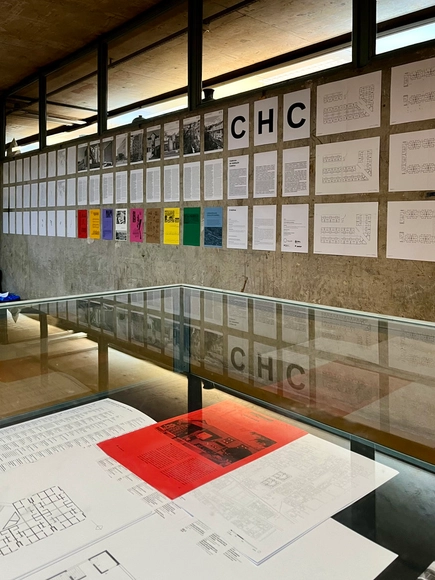
The exhibition of the Cadernos de Habitação Coletiva (CHC) is now open to the public at FAUUSP. The display features a showcase inside the library, presenting a selection of books on the documented projects. A public roundtable discussion will be held soon. The full schedule will be announced through our channels.
We invite everyone to the launch discussion for Log 62, featuring a special session dedicated to architectural criticism in South America. The issue features essays from several countries, including Chile, Bolivia, Colombia, and Brazil. The panel will include editor Jaime Solares Carmona (PhD candidate, Yale University) and contributors Frederico Costa (PhD candidate, Unicamp), Mariana Alves (professor, U. Presb. Mackenzie), and Mariana Wilderom (professor, U. São Judas Tadeu).
Camposaz 43:43 Conca della Campania – Wooden Self-Build Workshop
The 2025 Camposaz Cultural Association workshop season kicks off in Southern Italy, in the small yet charming town of Conca della Campania, located within the Roccamonfina Foce Garigliano Regional Park. The event is organized as part of the first edition of Mostra Mercato, one of the many initiatives of Borghi - Ruralità, biodiversità, innovazione grant. The workshop will take place in the town center, in close contact with the local community and the summer 2025 events. Participants will build a series of mobile structures to support the market, with the ultimate goal of visually connecting the urban space involved in the exhibition. These installations, which will be entirely designed and built on site, may be inspired by the surrounding landscape and the three time periods that guide the selection of displayed objects: antiques, vintage, and modern design.