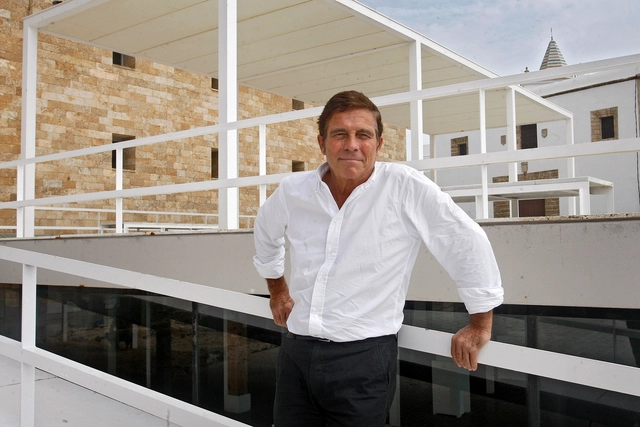
The National University of Rosario, one of the most prestigious universities in Argentina, will award an honorary doctorate (Doctor Honoris Causa) to Spanish architect Alberto Campo Baeza on June 24, 2021, during a public online ceremony.
English: Architect from the Faculty of Architecture, Design and Urban Planning of the University of Buenos Aires (FADU-UBA). Collaborator at ArchDaily. Her interests involve projecting and thinking about urban planning and architecture from people. Born and raised in Buenos Aires, Argentina. Instagram: @agustinainiguez_
The National University of Rosario, one of the most prestigious universities in Argentina, will award an honorary doctorate (Doctor Honoris Causa) to Spanish architect Alberto Campo Baeza on June 24, 2021, during a public online ceremony.
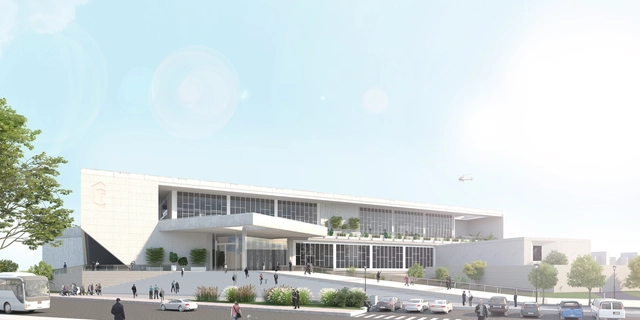
Under the agreement between the Government of San Juan and the province's Association of Architects, a preliminary design competition was held for the construction of a new police headquarters. The winning project, designed by ABCH Arquitectura, proposes an urban piece that fosters a relationship between society and the police department as an institution.
Eleven projects were submitted to the competition, evaluated by a jury consisting of an architect from the State Secretariat for Security and Public Order, two architects from the Ministry of Public Works and Services, an architect representing the College of Jurors for FADEA, an architect from the Argentine Federation of Architects' Associations, an architect chosen by the participants, and a representative from the San Juan Provincial Police.

One of the greatest challenges of urban planning lies in managing city growth. Year after year, major cities see their populations increase, and it is estimated that by 2050, 70% of the world's population will live in urban areas. But how can we build sustainable, healthy, and equitable cities that foster urban diversity?

Synonymous with light and loyalty, the lighthouse takes us back to antiquity. Conceived for utilitarian purposes, these architectural structures have accompanied thousands of sailors for decades, illuminating the coasts and warning of potential dangers and geographic hazards. Rooted in the collective memory, they represent specific historical moments depending on the country or region in which they stand.
Along Argentina's uninterrupted coastline, which stretches from Buenos Aires to Tierra del Fuego, lighthouses rise like columns. Emerging from the waves, they mark the edge of civilization, enabling dialogue and integration with nature.
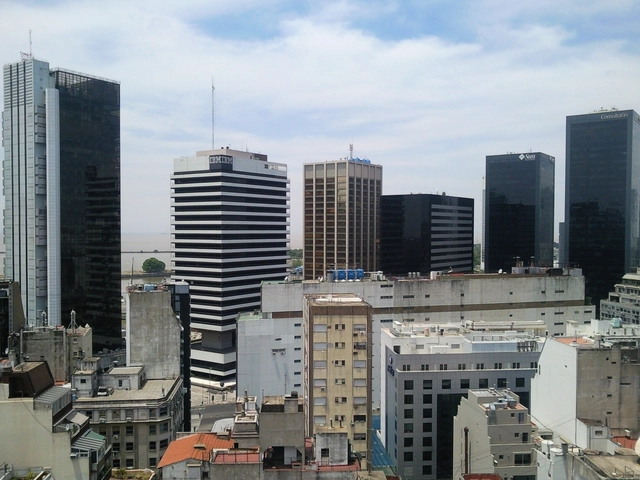
The impact of the pandemic on urban centers has laid bare the issues we seemed to have been avoiding in recent years. Today, the historic downtown of Buenos Aires is one of the city's most affected areas. Desolate streets, absolute silence, and endless shuttered storefronts reflect the crisis currently facing the city's downtown.
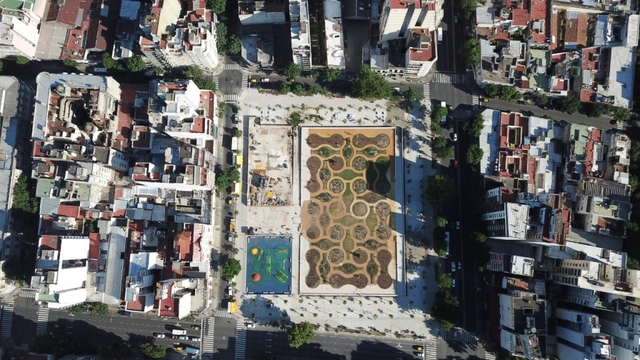
Located in the Balvanera neighborhood of Buenos Aires, Manzana 66 is an example of community resistance and collective action. Its name originates from its designation in the Buenos Aires City Land Registry; the block is bounded by Belgrano and Jujuy Avenues, and Moreno and Catamarca Streets. This section of the city was a point of contention for several years, having been initially demolished to build an indoor arena for music events, destroying housing from the 1920s and displacing its residents.