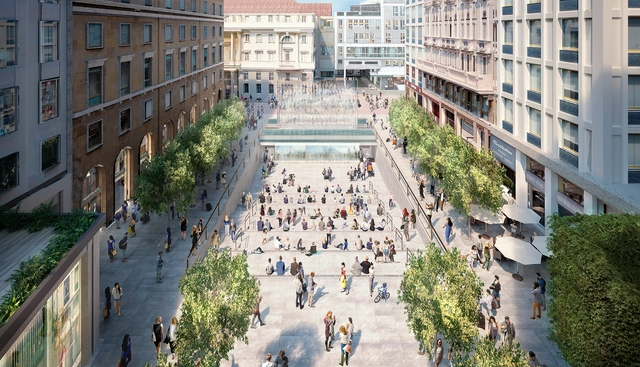
Renderings have been revealed for the upcoming apple store in Milan’s Piazza Liberty, designed by Foster + Partners in their latest collaboration with the technology giant. Following an extremely site-specific approach, the new flagship store will be located under the existing piazza, introducing a new public amphitheater and waterfall feature that will double as the store’s entrance.
Frank Lloyd Wright and Le Corbusier are both architects who were known for their grand and innovative ideas—as well as for their high esteem for their own opinions. The two did not, however, see eye to eye in their visions for the future of American cities and civilization. Both architects had utopian, all-encompassing plans for their ideal American city, combining social as well as architectural ideas. In 1932, both described these ideas in The New York Times; in these two articles Frank Lloyd Wright and Le Corbusier made their differing beliefs perfectly clear to the public.
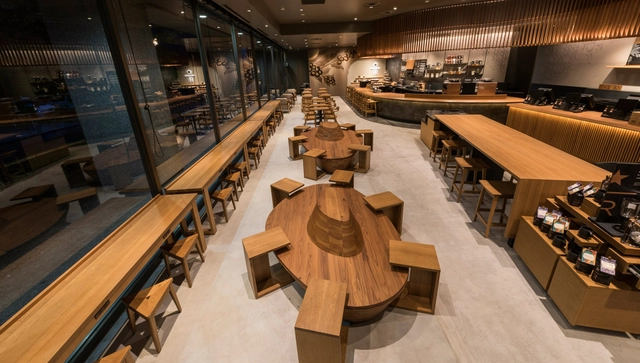
The Sanjo Karasuma Starbucks in Kyoto was renovated and re-opened in September 2016. The latest coffee flavors are presented within an aesthetic incorporating the concept of “beauty in simplicity” espoused by tea master Enshu Kobori. Image Courtesy of Starbucks Japan
It’s been 20 years since Starbucks opened its first shop in Japan, bringing a new paradigm to the country’s coffee shop culture—and creating a new, appealing “third place” option between home and work or school.
Notably, almost all of Japan’s 1,245 shops—across all 47 prefectures—are directly run by the parent company. As such, they are planned by Starbucks designers who, instead of settling for standardized designs for all locations, have worked diligently to incorporate features expressing regional, historical contexts and the lifestyles of locals—in short, to appeal specifically to the Japanese market.
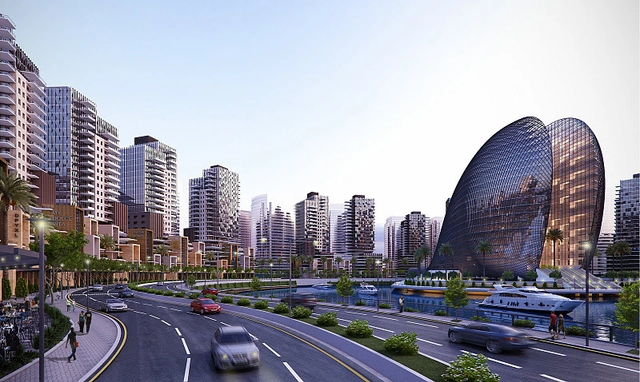
In the last two decades, the African narrative has changed phenomenally. The tired, age-old storyline—largely woven around the stereotypes of poverty, disease, and bloody civil wars—has been replaced with one celebrating the continent’s unprecedented economic growth and relative political stability. This new narrative is also about Africa’s gleaming skyscrapers, massive shopping malls, and ambitious “smart” cities being designed and built from scratch: Ebene Cyber City in Mauritius; Konza Technology City in Kenya; Safari City in Tanzania; Le Cite du Fleuve in DR Congo; Eko Atlantic in Nigeria; Appolonia City in Ghana, and others.
There are currently at least twenty of these new cities under construction in Africa and about twice that number in the works. These developments have permanently altered the continent’s urban outlook, and have offered it something different from the bland pastiche of colonial architecture that it was once known for. As a designer, I was initially excited by the quality of some of the architecture. Though I must admit that these new cities are eerie mimicries of similar developments in China, Singapore and even the UAE, and that they’re largely bereft of any cultural connection to Africa.
Over the following weeks we will be sharing a selection of unrealized student projects, alongside realized schemes by practices who explore representational techniques, in collaboration with KooZA/rch. The aim is "to explore the role of the architectural drawing as a tool for communication" and, in the process, provoke a conversation about the contemporary use, format, and role of drawing.
Your majesties, the Emperor and Empress of Japan; Deputy Prime Minister Taro Aso; your excellencies ambassadors and ministers; Tom and Margot Pritzker and members of the Pritzker family; ladies and gentlemen.
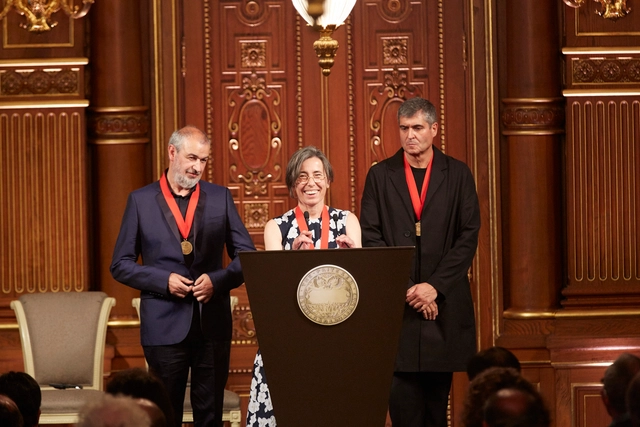
Emotions, happiness, pride, humility, respect, responsibility, admiration for those who have gone before us and for those who will receive this award in the future: there is an infinite mixture of many overlapping feelings that we are experiencing now, but the strongest sensation is one of gratitude: To the Pritzker Family, who for years have been generously supporting and bringing attention to architecture, and we ask that they continue to do this.
https://www.archdaily.com/871902/rcr-arquitectes-rafael-aranda-carme-pigem-ramon-vilalta-pritzker-prize-acceptance-speechRafael Aranda, Carme Pigem, and Ramon Vilalta
Construction is an exercise in frugality and compromise. To see their work realized, architects have to juggle the demands of developers, contractors, clients, engineers—sometimes even governments. The resulting concessions often leave designers with a bruised ego and a dissatisfying architectural result. While these architects always do their best to rectify any problems, some disputes get so heated that the architect feels they have no choice but to walk away from their own work. Here are 6 of the most notable examples:
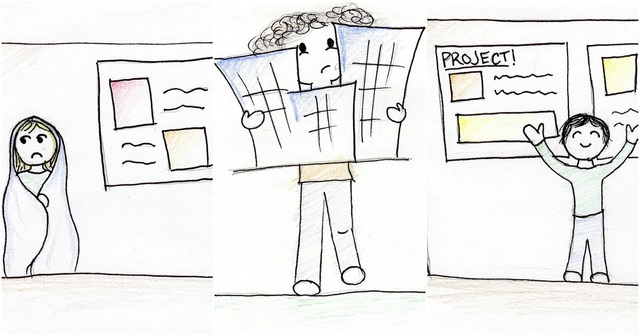
Scrolling through memes of cats in disguise. Checking if food has magically appeared in your refrigerator every ten minutes. Obsessively arranging books on your shelf by color. Renaming your computer's folders. In short, we seem to thrive on any irrelevant activity to avoid starting a reading, essay, model, or project. Procrastinate now, work later. Your future self can take care of business, after all.
As we suffer through long and strenuous projects, it is likely that we have all slipped into procrastination in order to avoid our next task. Not only do we avoid confronting work at the office or university studio, but also those personal errands which, if we dedicated ourselves, would enhance our daily lives. Below, based on our own experiences and expert opinion, and in order to avoid a host of other jobs around the ArchDaily office, we present 10 tips for architecture procrastinators, helping you to focus on the site analysis diagrams you should probably be doing right now!
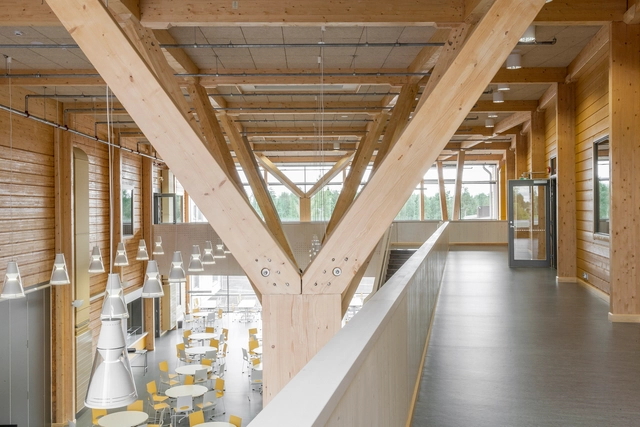
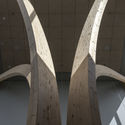
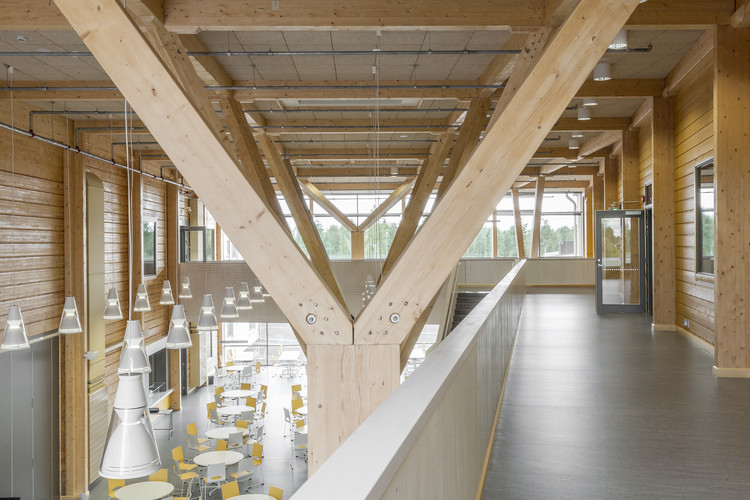
An environmentally-concious material response by Lukkaroinen Architects, the structural design for the Pudasjärvi Wood Campus in northern Finland highlights the potential of large-scale structural timber.
The project features a primary structure of assembled logs and three types of non-traditional pillars, specially constructed in laminated wood for different areas.
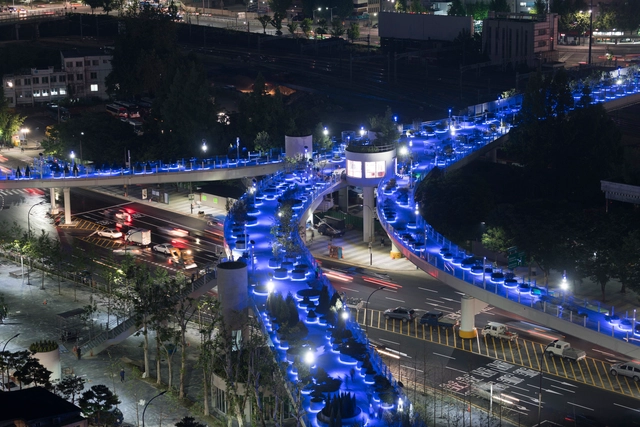
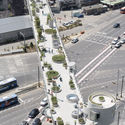
Today the Mayor of Seoul opened the Skygarden, a 983-meter elevated walkway designed by MVRDV which utilizes a formerly abandoned highway in the center of the South Korean capital. Located in Seoul's Central Station district, the 16-meter-high linear park features a living catalog of Korea's indigenous plants, featuring over 24,000 individual plants from 228 species and sub-species. The Skygarden is known in Korean as Seoullo 7017, a name which references the Korean for "Seoul Street," and the 1970 and 2017, the years in which the structure was originally built and subsequently transformed.
It happened in the middle of the night: the stealth whitewashing of 5Pointz, Long Island City's unofficial graffiti museum. In 2013 owner Jerry Wolkoff, of G&M Realty, wanted the building razed in order to erect new luxury condominiums, and the artists sued to preserve their work. A judge denied the artists' request and Wolkoff had the murals destroyed under cover of darkness, ostensibly to prevent them from attaining landmark status. Though graffiti was born as a subversive act, these artists had painted with Wolkoff's permission since 1993 and had turned the warehouse into “the world's premiere graffiti mecca” and the largest legal aerosol art space in the United States. This was a serious betrayal.
The article is an expansion on one part of Archipreneur's interview with Craig Applegath, Founding Principal of DIALOG’s Toronto Studio. The architect spoke from his experience of running a 150-person practice and listed 10 tips for archipreneurs interested in starting their own business. Archipreneur shares that list here.
When I first started my own practice I thought everyone wanted to run their own practice. It turns out not. Most people just want to work in a great practice run by someone else. But for those who are real archipreneurs – and you know who you are – there is nothing so thrilling and fun as starting your own business; and nothing so scary and anxiety producing as starting your own business! They are the flip side of the same coin. But in terms of general advice for people starting their own practice or business here are ten key lessons I have learned over the past twenty-five years of practice:
https://www.archdaily.com/871581/important-lessons-learned-in-25-years-of-architecture-practiceCraig Applegath for Archipreneur.com
Designing a museum is always an exciting architectural challenge. Museums often come with their own unique needs and constraints--from the art museum that needs specialist spaces for preserving works, to the huge collection that requires extensive archive space, and even the respected institution whose existing heritage building presents a challenge for any new extension. In honor of International Museum Day, we’ve selected 23 stand-out museums from our database, with each ArchDaily editor explaining what makes these buildings some of the best examples of museum architecture out there.
https://www.archdaily.com/871555/23-examples-of-impressive-museum-architectureAD Editorial Team
Architects are economically bipolar; for us it is either the best or the worst of times. And it’s not just architects. The entire construction industry is tuned to these extremes, but only architects are psychologically validated by booms and crushed by busts. All professions have a larger source of dependency—medicine needs insurance, law needs the justice system—but the construction industry has a starker equation: building requires capital.
Contractors tend to react to market flows in purely transactional ways. Booms mean more work, more workers, more estimates, business expansion. For architects, a boom means life validation. Every architect wants to make a difference, and many want to offer salvation, like the architect Richard Rogers, who once said, “My passion and great enjoyment for architecture, and the reason the older I get the more I enjoy it is because I believe we—architects—can affect the quality of life of the people.” But salvation can only be earned if buildings are created.
Like a reader hooked on a bestselling thriller, the design of libraries has enthralled architects and the general public for centuries. From the classical mahogany grandeur of the world-famous Long Room at Trinity College Dublin to the post-war, brick modernism of the British Library in London, the important role of libraries in our lives has historically demanded a degree of architectural thought and consideration.
In recent times, however, that historic role has changed. With the digital age revolutionizing how we access, research, and communicate information, libraries are no longer reserved exclusively for books. Libraries today must act as ‘information hubs’, with the flexibility to accommodate a diverse range of media and arts. Architects have responded to the challenge of a new era, reimagining how libraries are built, experienced, and utilized, without entirely throwing away the rule book.
Below, we have rounded-up 12 libraries from around the world, all with architecture from the top shelf.
During a conversation with the New Yorker, a window washer who worked on the Empire State Building says that some of his toughest moments have been cleaning the trash that tenants toss out the windows. In his many years working on the Depression-era skyscraper, he’s wiped numerous half-empty coffee cups off window panes, and even scraped 20 gallons of strawberry preserves from the building’s facade. Tossed out in the winter, it stubbornly clung to the outside of the skyscraper.
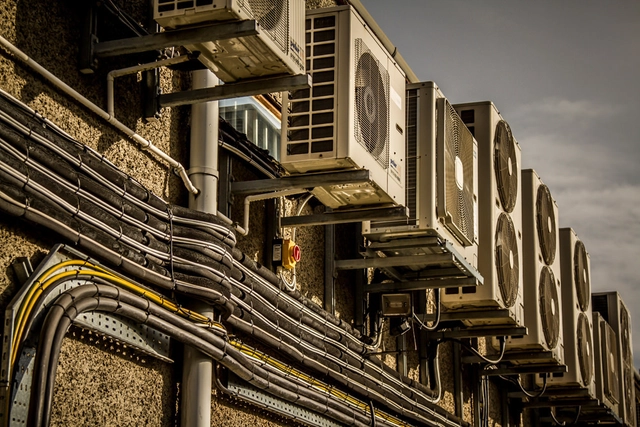
Cracking a window open in a skyscraper seems like a quirk, especially today, when hermetically sealed steel-and-glass giants offer the promise of climate-controlled comfort. But ever since Chicago’s Home Insurance Building, considered one of the first skyscrapers, opened in 1884, the challenge of airflow, ventilation, and keeping tenants cool has been an important engineering consideration shaping modern architecture.
The great commercial buildings of the modern era owe their existence, in many ways, to air conditioning, an invention with a decidedly mixed legacy.
Architecture school is a long haul and we all know it. Whether you get a 5-year professional degree or choose to take on a few years of graduate school (or both), it’s a grueling process. However, most would hopefully agree, it’s worth it for the knowledge you gain throughout those years (not to mention the friendships you form in the close quarters of the studio). Architectural education is about more than learning to design great spaces and whether or not you realize it at the time, architecture school is also a great teacher of other life lessons. All the skills below are those you’ll likely attain incidentally during your tenure in architecture school, but which will be an asset outside of academia as well.