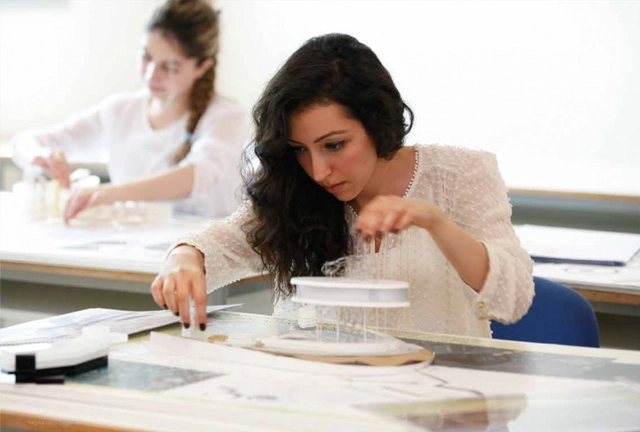
Is your child suddenly wearing angular clothes and pretending to need glasses and talking about things like maylines (sorry, forgot we’re not in the 90s anymore) and 3d-printing and the power of the research lab to change the world studio? Has your child started rejecting your Frank Lloyd Wright photo books and started asking for that super sweet punched-out Chora L Works thing that makes no sense to you because there are literally holes in it? Has your child refused to go on anymore holiday house tours because, seriously mom, this is what I do all day at school?
Then congratulations! You now have an architecture school student child. And as much as we have—and need—the framework of, say, Adult Children of Alcoholics, just as deeply do we need a framework for Adult Parents of Architecture Students. You may be panicking right now. You may be wondering why Bessie is suddenly hating prints (unless she’s wearing all the prints at the same time); why Mark is rolling his eyes when you say there’s a nice-looking house for sale down the block. Rest assured, these are phases that will pass.
I would like to offer you the Phases of Architectural Education, so that you may feel calmer as you embark on this new journey:
In this episode of GSAPP Conversations, Fabrizio Barozzi—who co-founded the Barcelona-based practice Barozzi/Veiga with Alberto Veiga in 2004—discusses the practice's process and obsessions, including how they position themselves in the architectural landscape and why they are sceptical of defining their own architectural "language". For Barozzi, research and an engagement with history are integral to the way his practice works operates.
https://www.archdaily.com/875918/fabrizio-barozzi-veiga-obsessions-process-and-position-within-the-architectural-landscape-gsapp-conversationsAD Editorial Team
You did it! You finished those grueling years of architecture school, perfected your portfolio and your interview pitch, and you landed your first job with an architecture firm. Everyone told you that working in a firm would be lightyears different from what you were used to doing in school, but until you get out there yourself, there is really no way to know just what that might entail. Once you’ve tackled life’s bigger questions about surviving outside of architecture school, you still have to learn to function in a day-to-day job. The learning curve is steep and it can certainly be overwhelming, but you’ve made it this far and there are a few lessons and skills you are sure to gain quickly as you start your career.
Is your life lacking in dragons? Do you long for the excitement and danger of a constant, treacherous struggle for governing power? If you find yourself simply biding your time waiting for new seasons of Game of Thrones to air (or for George R.R. Martin to finally write another book) one option is to spend some time traveling to the real-life locations used in the filming of the show! From Iceland to Morocco, the show’s creators have traveled all over the world to bring the mythical world Martin describes in his novels to life on screen. While much of the filming is done in a studio, and of course there’s plenty of CGI involved, many of the landscapes and buildings seen throughout the show’s 6 seasons are real places open to the public. We can’t promise you dragons or control of the Iron Throne, but what you will get are some spectacular sights that might just make you feel like a real Westerosi.
In honor of the show’s seventh season beginning later today, here’s a list of 7 Game of Thrones filming locations you can visit! (This list is mostly spoiler-free, but you may want to read with caution if you’re not caught up!)
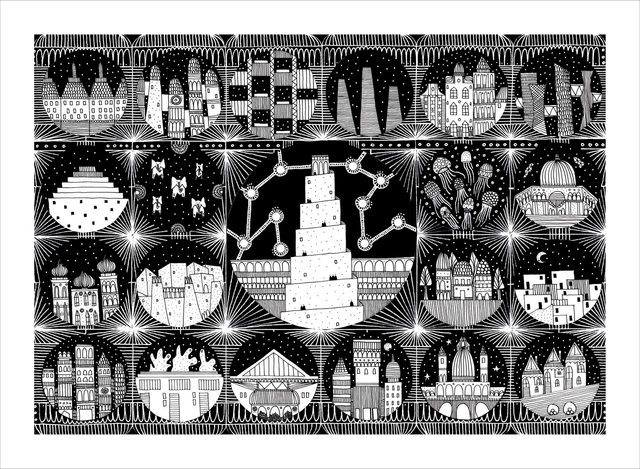
Ah, Invisible Cities. For many of us, Italo Calvino’s 1972 novel reserves a dear place in our libraries, architectural or otherwise, for its vivid recollections of cities and their curiosities, courtesy of a certain Marco Polo as he narrates to Kublai Khan. And while the book doesn’t specifically fit the bill in terms of conventional architectural writing, it resists an overall categorisation at all, instead superseding the distillation of the cities it contains into distinct boundaries and purposes.
For though there is a certain kind of sensory appeal that is captured in the details of places, the real beauty of Invisible Cities lies in the masking of underlying notions of time, identity and language within these details – a feat that is skillfully accomplished by both Marco and Calvino. With this in mind, here are three of many such principles, as revealed by the layered narrative of Invisible Cities.
https://www.archdaily.com/875409/three-principles-of-architecture-as-revealed-by-italo-calvinos-invisible-citiesOsman Bari
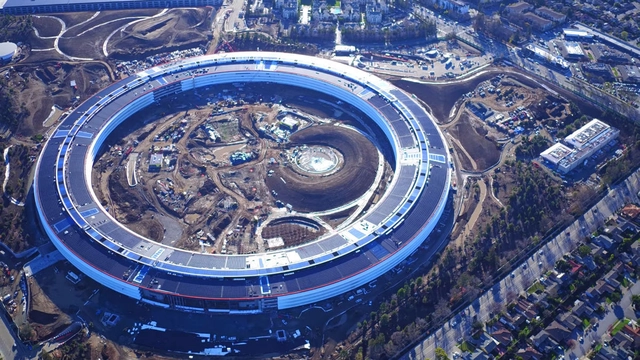
Apple is planting a forest in Cupertino, California. When the company’s new headquarters is completed later this year, 8,000 trees, transplanted from nurseries around the state of California, will surround the donut-shaped building by Foster + Partners. The trees are meant to beautify Apple’s 176 acres (dubbed Apple Park). But they will also absorb atmospheric carbon.
That’s a good thing. Carbon, in greenhouse gases, is a major cause of global warming. Almost everything humans do, including breathing, releases carbon into the atmosphere. Plants, on the other hand, absorb carbon, turning it into foliage, branches, and roots—a process known as sequestration.
Videos
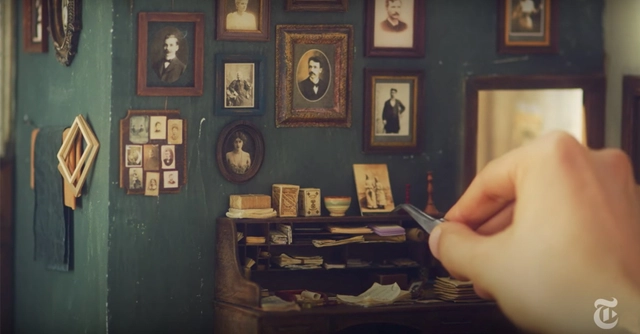
Ali Alamedy's miniature worlds. Image via The New York Times
Although trained as a Control and Computer Engineer,Ali Alamedy has since turned his hand to manufacturing scaled, miniature dioramas. After being forced to leave his home in Iraq, he and his family are now based in Turkey – and it is here that he has honed a skill in constructing these tiny, intricate worlds from a broad range of ordinary materials. All scaled at 1:12, these complex and often hyper-realistic models are inspired by the environments around him, complemented by his experiences and, of course, his imagination. In this study of Alamedy's work, ArchDaily asks: how do you do it?
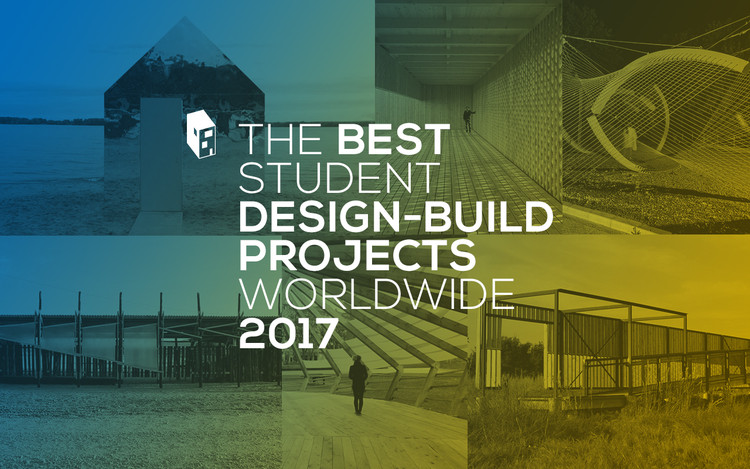
For the third year in a row, in June we asked our student readers to submit the design-build projects which they have recently worked on. And, for the third year in a row, the response we received was excellent. With hundreds of submissions to ArchDaily, ArchDaily Brasil and allfourArchDailyen Español sites, in 2017 our readers gave us more projects to choose from than ever before; we’ve narrowed this selection down to bring you the 34 best student design-build projects around the world from the past year.
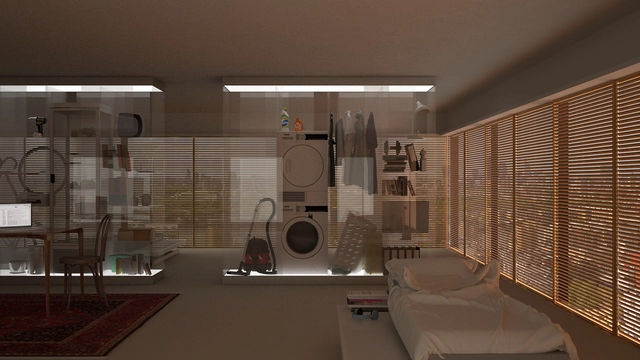
Interior design by REAL Foundation for Common Stock: Sharing as Luxury, the fourth tower in the Derivative Architecture series. Image Courtesy of Real Foundation
The Chicago Architecture Biennial is the largest platform for contemporary architecture in North America, and the blog invites designers and other contributors to express their perspectives in a range of formats. The 2017 exhibition, entitled Make New History, will be free and open to the public between September 16, 2017 and January 6, 2018.
Chicago Architecture Biennial (CAB): We want to start by noting that REAL foundation, which stands for "Real Estate Architecture Laboratory," is not a typical design practice. You design spaces, but you also make books, exhibitions, a magazine, and tools for advocacy. Why?
Jack Self (JS): The REAL foundation is an unusual model for an architectural firm. We're a normal architectural practice, but we are governed by a very strict set of conditions that allow us to pursue certain political and economic ideologies. We see the social role of the architect, as well as the structure of the architectural firm, as a subject for design as much as buildings.
I spent four glorious days in Copenhagen recently and left with an acute case of urban envy. (I kept thinking: It’s like... an American Portland—except better.) Why can’t we do cities like this in the US? That’s the question an urban nerd like me asks while strolling the famously pedestrian-friendly streets, as hordes of impossibly blond and fit Danes bicycle briskly past.
Copenhagen is one of the most civilized cities on the planet. The world’s “most livable,” it’s often called, with some justification. (Although a Danish relative did caution me, “Spend a few weeks here in January before you make that pronouncement.”) But the seemingly effortless civility, Copenhagen’s amazing level of grace, is not an accident of place or happenstance. It’s the product of a shared belief that transcends urban design, even though the city is a veritable laboratory for pretty much all of the best practices in the field.
A view of Sean Gallagher's work as seen in Morpholio's Trace App. Image Courtesy of Morpholio
If you visit an architecture office today, you may sense a slight change. The days of bulky desktops, ergonomic mouse pads and tower-high stacks of drawing sets are slowly giving way to digital pencils, tablets, and tons of architects’ hand-drawings—both physical and digital. Architects across the globe are clearing their desks, literally, and utilizing emerging touchscreen tools and software for designing, sharing and collaborating. It seems possible that, for the first time in years, the architecture profession could revisit Bernard Tschumi’s “paperless” studio which formed a key part of his tenure as dean of Columbia University’s GSAPP in the mid-1990s. However, this time, “paperless” starts with a pencil, instead of a click.
Courtesy of OFFICE Kersten Geers David Van Severen
In this episode of GSAPP Conversations, Kersten Geers—co-founder of OFFICE KGDVS—and Amale Andraos discuss their shared obsession with books, and the integral role that book-making plays in their professional offices and teaching. In this podcast, Geers echoes Aldo Rossi’s call to evaluate architecture within a cultural context, positioning books as the best tool to create a place in which architectural work acquires value and meaning; a device to establish a context of ideas.
https://www.archdaily.com/875464/kersten-geers-office-kgdvs-on-the-role-of-book-making-in-architectural-practice-amale-andraos-gsapp-conversationsAD Editorial Team
This article was originally published on Brandon Hubbard's blog, The Architect's Guide.
According to a new study released by TheLadders, recruiters spend only six seconds on average looking at your resume. This proves the importance of having a concise, well-formatted resume that emphasizes your greatest skills and experience.
I have the "benefit" of reading hundreds, if not thousands, of architecture resumes throughout the year. This gives me a unique opportunity to see a range of good and bad examples. Often the weaker samples come from younger candidates who haven't been in the job market for very long. If you are just starting out in your career the task of creating a resume can be daunting.
Creative, expressive, visual, a little bit edgy – tattoos convey many of the same qualities we as architects strive to achieve both in designing buildings and crafting our own personal identities. Whether it’s a small geometric motif or a full-back masterpiece, a tattoo is an immediate statement of who you are and what interests you.
Luckily for architects, the subjects of our affections just so happen to also make great source material for tattoos, from your favorite Miesian plan to a simple city skyline to the elaborate facade of a gothic cathedral.
Here, we’ve rounded up 118 of the most impressive architectural tattoos from across the internet and from submissions by our own ArchDaily readers. Each tattoo has its own story to tell (one reader even shared that his tattoos were inspired by scars obtained through model making mishaps).
Feeling inspired for some ink? Check out the list below!
https://www.archdaily.com/875208/118-impressive-architecture-tattoo-designsAD Editorial Team
In this visual essay, Greek filmmaker Yiannis Biliris documents the all-pervasive pall of glass that covers the modern city. The three-and-a-half-minute-long film, produced by Visual Suspect and shot entirely in Hong Kong, captures the vivid reflections seen in the facades of the city’s buildings, as Biliris selectively pans and zooms his camera to instill a strong sense of urgency in the viewer’s mind.
The essay, beautifully haunting in its imagery, might be seen as a reflective commentary on the state of our built environment today. Inspired by Albert Einstein’s general theory of relativity, which states that mass causes a distortion in space and time, it seems to subtly ask if our understanding of reality is warped itself. Describing the video as "a visual essay about perception and knowledge as [a] reflection of our reality," Biliris comments that "mass curves space and time, while the observer has his own perspective."
Of the Pritzker Prize’s illustrious list of laureates, the 1994 winner Christian de Portzamparc is perhaps the least covered by the media. However, this relatively low profile belies the subtle and insightful understanding of architectural and urban issues that in many ways puts him decades ahead of the curve – with the sociologically-led principles he has been developing since the early 1980s now becoming widely popular in architectural circles. In this interview, the latest in Vladimir Belogolovsky’s “City of Ideas” column, Portzamparc explains the journey that led to this unique take on architecture.
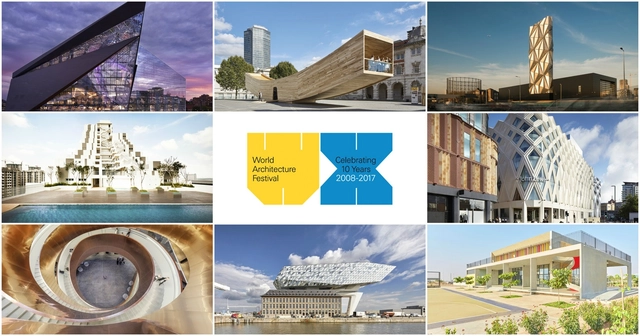
The World Architecture Festival has announced the shortlist for their 2017 awards slate, featuring 434 projects ranging from small family homes, to schools, stations, museums, large infrastructure and landscape projects. The world’s largest architectural award program, the WAF Awards year saw more participation this year than ever before, with a total of 924 entries received from projects located in 68 countries across the world.
https://www.archdaily.com/875217/shortlist-revealed-for-world-architecture-festival-awards-2017AD Editorial Team
#donotsettle is an online video project created by Wahyu Pratomo and Kris Provoost about architecture and the way it is perceived by its users. Having published a number of videos on ArchDaily over the past two years, Pratomo and Provoost are now launching an exclusive column, “#donotsettle extra,” which will accompany some of their #donotsettle videos with in-depth textual analysis of the buildings they visit.





.jpg?1499902448 "Castle Ward: Winterfell. Image © <a href='https://commons.wikimedia.org/wiki/File:Castle_Ward_Castle,_June_2011_(01).JPG'>Wikimedia user Ardfern</a> licensed under <a href='http://https://creativecommons.org/licenses/by-sa/3.0/deed.en'>CC BY-SA 3.0</a>")





.gif?1499957974)









Wade_ZIMMERMAN_15nb_p325.jpg?1499405889&format=webp&width=640&height=580)
Nicolas_BOREL_100.jpg?1499404690 "Paris Opera Ballet School, Nanterre, 1987. Image © Nicolas Borel")
Wade_ZIMMERMAN_2008_07_7983REC_p242.jpg?1499405668 "Credit Lyonnais Tower, Lille, 1995. Image © Wade Zimmerman")
Hufton_Crow_005-P399.jpg?1499406792 "Cidade das Artes, Rio de Janeiro, 2013. Image © Hufton + Crow")
CDP.jpg?1499408011 "Suzhou Cultural Center Proposal, Suzhou, 2017. Image Courtesy of Christian de Portzamparc")
Wade_ZIMMERMAN_15nb_p325.jpg?1499405889)