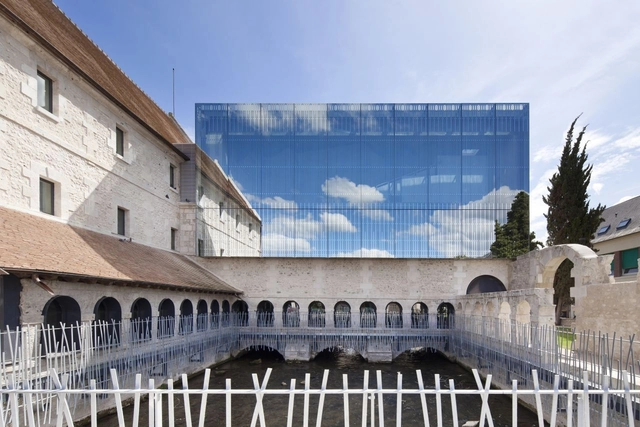
When an extension on an existing historical building is requested, often architects opt for glass, transparent and reflective interventions. Some decide to stay neutral and subtle when dealing with an older structure, while others choose a bold and outspoken design to manifest their contemporary character. With each project having its own conceptual motivation and reasoning, the outcomes are different and diverse.
Read on for some relevant examples, each responding to a different program.
Superstudio and Archigram were the pioneers of the dystopia they had popularized in 1960, when they experienced a crisis that tore world economies, positioning Italy in a historic moment of boom and bust that harbored dreams and despair.
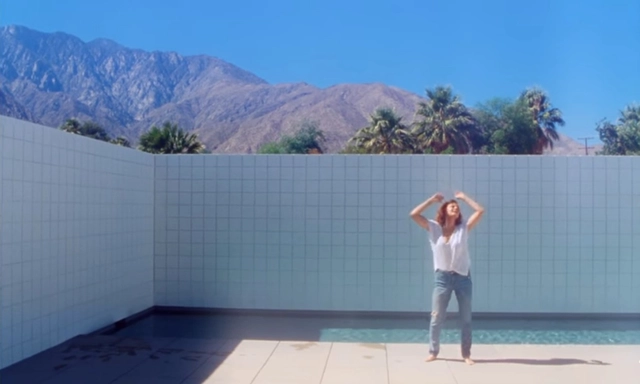
Creative duo another : have collaborated with music composer Yu Miyashita and released a short film that explores the geometric composition of the museum's structure in an exceptional way.
Earlier this year, the L’Abre Blanc Residential Tower was completed in Montpellier, France. Designed by Sou Fujimoto, Nicolas Laisné, Manal Rachdi, and Dimitri Roussel, the tree-like structure features cantilevered balconies protruding from its ‘trunk’ in all directions. An eccentric but unique silhouette, the building is hoped to become an object of pride for the people of Montpellier as well as a tourist attraction.
https://www.archdaily.com/922217/sou-fujimotos-labre-blanc-through-the-lens-of-laurian-ghinitoiuLilly Cao
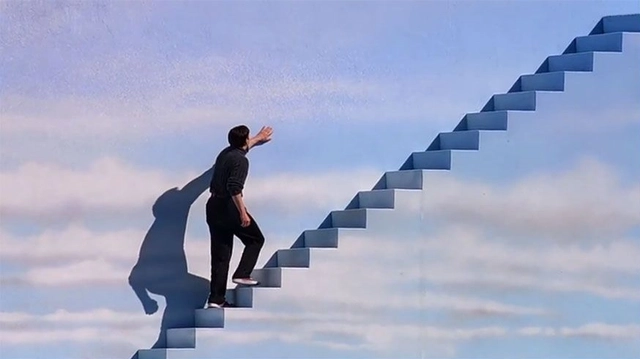
"Films have been studied by architects and other professionals who are interested in the field of architecture and urbanism because they offer a more subtle and responsive perspective of our discipline," Finnish Architect and Professor Juhani Pallasmaa tells us. Through its technical and aesthetical particularities, the cinema can go beyond simple representation to be a powerful instrument for conveying ideas and concepts related to architecture and urban space.
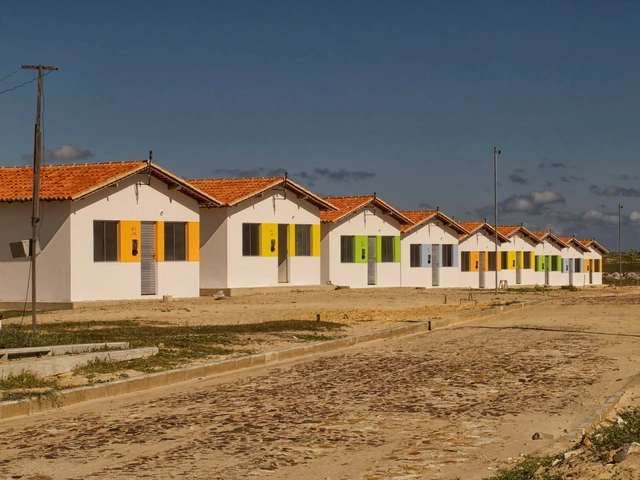
Program Minha Casa Minha Vida - Luís Correia/PI. Foto: Otávio Nogueira, via Flickr. Licencia CC BY 2.0
Having explored the design that establishes 'emotional ownership' and the antipatrons of social housing, Nikos A. Salingaros, David Brain, Andrés M. Duany, Michael W. Mehaffy and Ernesto Philibert-Petit continue their series of articles on social housing in Latin America. This time, the proposal studies how control influences the urban form and the form of housing.
https://www.archdaily.com/917182/socially-organized-housing-the-geometry-of-controlNikos A. Salingaros, David Brain, Andrés M. Duany, Michael W. Mehaffy & Ernesto Philibert-Petit
It is expected that within the next few of decades, Earth will have absolutely nothing left to offer whoever/whatever is capable of surviving on it. Although the human race is solely responsible for the damages done to the planet, a thin silver lining can still be seen if radical changes were to be done to the way we live on Earth and how we sustain it.
Since architects and designers carry a responsibility of building a substantial future, we have put together an A-Z list of every sustainability term that you might come across. Every week, a new set of letters will be published, helping you stay well-rounded on everything related to sustainable architecture and design. Here are the terms that start with letters J, K, and L.
In 1919, the creation of the Bauhaus school in Germany marked an important moment in the history of architecture, one that would ignite innumerable debates about architecture and design for years to come. This school, which later became more of a movement than an institution, faced an array of political resistance throughout its existence, eventually closing its doors in 1933 during the Nazi regime. However, the knowledge instilled by the Bauhaus transcended time and space to travel across the globe and make its mark on cities worldwide.
Islam, other than describing a religious belief, is a word that identifies a unique type of architecture that dates back thousands of years. It has been formed by a civilization that transformed the qualities of this belief into visible and tangible material, building structures with a striking focus on details and experiences within enclosed spaces.
Islamic architecture is an architecture that does not change its form easily. In fact, its principles have been more or less the same since thousands of years ago, with minor changes based on functional adaptations. To this day, hundreds of buildings still stand as a representation of the history of Islamic architecture and are still used just as they have been in the past.
War, however, has no religion or cultural nostalgia, and even the holiest, most historically-significant sites are threatened with complete destruction. The Great Umayyad Mosque in Aleppo, originally built by the first imperial Islamic dynasty and currently situated within a UNESCO World Heritage Site, stood yet again as a battlefield during the recent Syrian War, but this time, lost its most significant and resilient element, an 11th-century Seljuk Minaret.
Designing a home will always be the true challenge for an architect. With these projects, the architect needs to fulfill the user's wishes, while simultaneously reinvent new ways of living the day-to-day. Therefore, it is no surprise that residential works are the most popular project category on ArchDaily.
We've recently passed the halfway point of 2019, and already, we've published more than 1,000 houses, offering projects with a variety of scales, contexts, and typologies. An immense diversity of possibilities that showcase the creativity of architects and serve as a great source of inspiration for those seeking references for their own residential project.
In the list below, you'll find the houses that arouse the most interest in our audience. Check out the 50 most popular homes of 2019 (so far).
https://www.archdaily.com/921425/the-50-best-houses-of-2019-so-farArchDaily Team
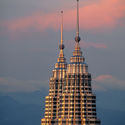
Cities’ greatness should be judged by whether they have succeeded in accumulating extraordinary works of architecture. They can be fantastic for their food, music, or lifestyle overall, but if there is no architecture, they are hard to grasp, they are not anchored, not grounded, not memorable… not real, in a way. Maybe I am a maximalist but there are a number of cities that I visited with just one goal in mind – to see a single extraordinary building. For the record, these cities are Fort Worth, Bilbao, Valencia, San Sebastian, Guangzhou, Sydney, and Kuala Lumpur, among others. The last one on this list has acquired its instantly recognizable image in 1996, when the 88-story Petronas Twin Towers have risen high above it. These unique buildings remained the world’s tallest until 2004. This iconic structure was designed by Argentine-American architect César Pelli who passed away last week at the age of 92.
Though born in Tehran and remaining deeply inspired by her native Iran, architect Yasaman Esmaili has worked on projects all around the world. These primarily include humanitarian and crisis intervention works that deeply engage the local communities in which they are situated. A recent article by Metropolis Magazine discusses these projects in depth, as well as Esmaili’s story and inspirations.
https://www.archdaily.com/921281/yasaman-esmailis-architectural-work-engages-with-communities-around-the-worldLilly Cao
With no shortage of historical buildings in need of expansion or repurposing, alterations of older architecture via contemporary interventions have flourished in the past four decades – particularly in service of new or growing art museums. These spaces represent the resilience of our historical legacy through contemporary times, demonstrating that the combination even of two vastly different architectural styles can be both beautiful and impressive. Here are ten of the best examples of contemporary interventions on historical buildings in art museums around the world.
https://www.archdaily.com/920474/10-historical-museum-buildings-with-contemporary-interventionsLilly Cao
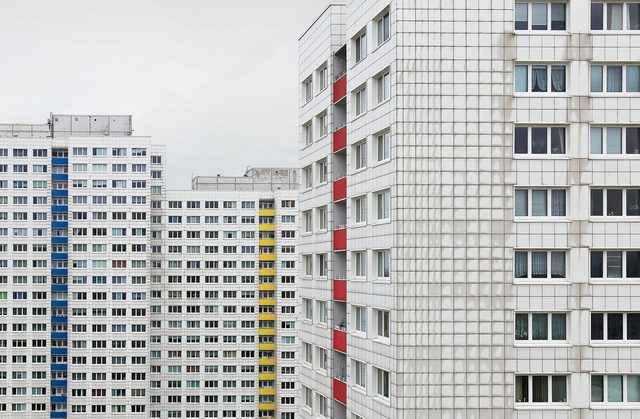
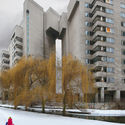
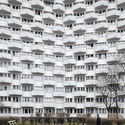
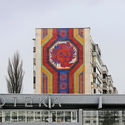
Post World War II, Brutalism found its way across Europe, redefining modernist architecture and establishing a new style for mass housing and communal buildings. Although most of the light was shed on concrete landmarks in major cities, European suburbs have also housed many exceptional brutalist buildings such as the 'Hammer-shaped Tower Blocks' or the 'Houses on Chicken Legs'.
Unlike its TV and film counterparts, which imagine the future as an over-populated dystopian nightmare overrun with violence and chaos, Black Mirror paints a picture of a near future that aligns far more with our current reality--and nowhere is this more apparent than in the architecture shown in the series.
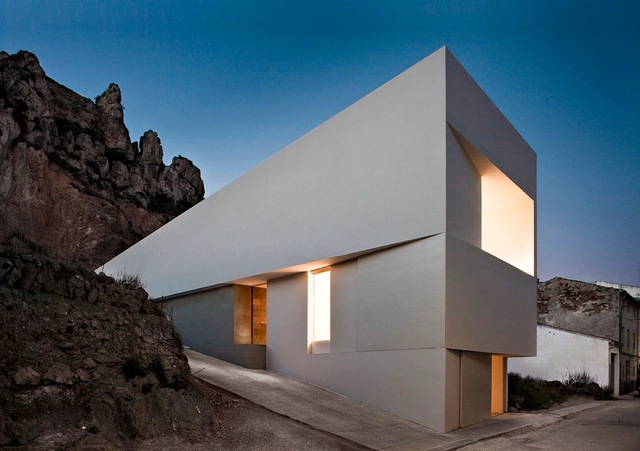
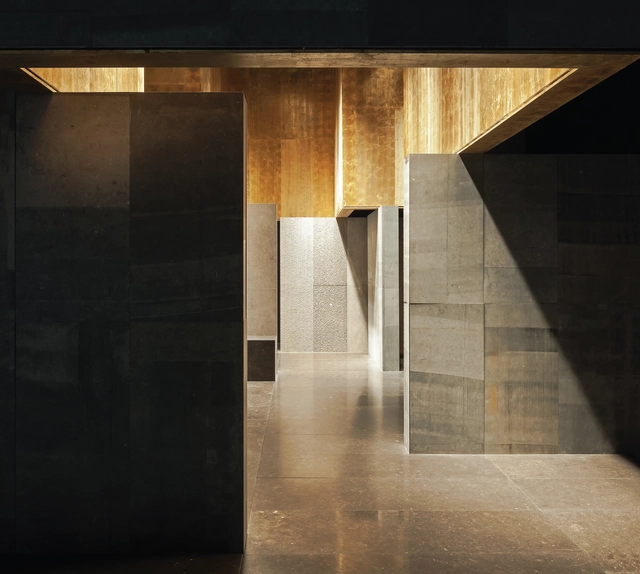
There are many kinds of white, all have no color but they are very different from each other: some silent, others deafening; there is the white of absence and also the one of eloquent presence; neutral white is very common, which one day may be painted with other tones; but there are also things born to be white, which could not be of any another color. Fran Silvestre’s architecture is composed of few essential signs, lines, planes and volumes thought and built with great geometric control.
https://www.archdaily.com/920230/types-of-white-the-work-of-fran-silvestrePaolo De Marco
In the context of the AIA Conference on Architecture 2019, Turkish architect Emre Arolat (EAA) gave ArchDaily some insights about technologies in architecture, how will the future role of the architect evolve, and the importance of the materials in his projects.
https://www.archdaily.com/920301/you-dont-choose-the-material-the-material-appears-itself-with-the-idea-in-conversation-with-emre-arolatAD Editorial Team
The course that Vincent Van Duysen has covered since 1990 shows a great consistency and a coherent design vision. From the start, he has focused on making a profile for himself with the design of a number of retail projects. This focus was no coincidence. Van Duysen has said on many occasions that if he had not had the opportunity to study architecture he would undoubtedly have pursued a career in fashion. It is therefore unsurprising that after his studies in Sint Lucas Gent he moved to Milan, a city renowned as one of the world capitals of design and fashion. In Milan he became convinced that a designer should not only express a concept as clearly as possible, he should also pay attention to every significant detail.










_8918.jpg?1564659851&format=webp&width=640&height=580)
_9105.jpg?1564659862 "© Laurian Ghinitoiu")
_9331.jpg?1564659818 "© Laurian Ghinitoiu")
_9283.jpg?1564659903 "© Laurian Ghinitoiu")
_8623.jpg?1564659967 "© Laurian Ghinitoiu")
_8918.jpg?1564659851)




.jpg?1563871474 "Courtesy of SSNP Media Wars")
.jpg?1563871762 "Courtesy of SSNP Media Wars")
.jpg?1563871762)