In late October, the Guardian’s architecture critic Oliver Wainwright reported that the United Kingdom’s first architecture union had been formed. The Section of Architecture Workers (UVW-SAW) is a section of the United Voices of the World, a new model of grassroots trade union that supports the expansion of union ideals to professions and sectors which traditionally did not have such representation. The launch of the union, and the reasons behind it, serve as the latest episode in long-running concern over the working conditions faced by architects in the UK and across the world.
https://www.archdaily.com/928339/is-it-time-for-architects-to-unionize-the-uk-says-yesNiall Patrick Walsh
The Kingdom of Cambodia has a rich history of Khmer architecture. Built from the latter half of the 8th century to the first half of the 15th century, these structures are embodied by the iconic Angkor Wat temple complex. But new architecture is being built throughout Cambodia, projects that reinterpret culture and tradition to create modern spaces for contemporary life.
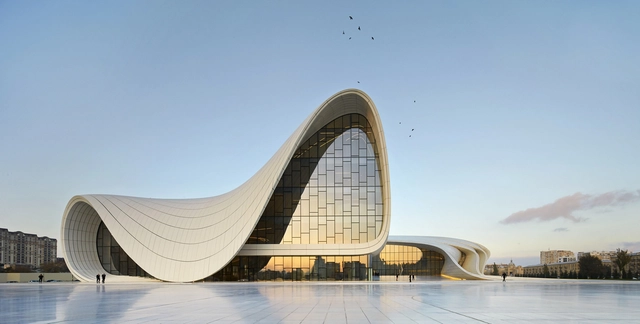
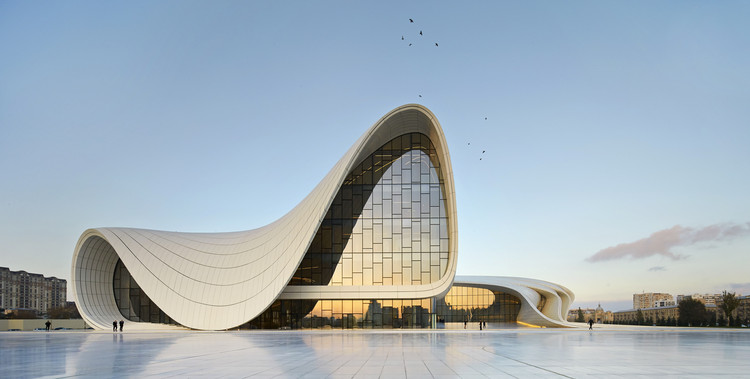
In her lifetime, Pritzker prize-winning architect, fashion designer and artist Zaha Hadid (31 October 1950 – 31 March 2016) became one of the most recognizable faces of our field. Revered and denounced in equal measure for the sensuous curved forms for which she was known, Hadid rose to prominence not solely through parametricism but by designing spaces to occupy geometries in new ways. Despite her tragically early death in March of 2016, the projects now being completed by her office without their original lead designer continue to push boundaries both creative and technological, while the fearless media presence she cultivated in recent decades has cemented her place in society as a woman who needs just one name: Zaha.
By 2050, the world’s population is expected to have exceeded 10 billion people, making overcrowded cities one of the most pressing issues of the present. Data analysis, machine learning, transportation developments, and the rapid development of new social technologies are increasingly changing the needs of people and communities, which will have a direct impact on the issue of overcrowding and on our built environment more largely.
Lyndon Neri (b. 1965, Philippines) graduated from Harvard and Rossana Hu (b. 1968, Taiwan) from Princeton; they met while pursuing their undergraduate degrees at the University of California at Berkeley. Before establishing Neri&Hu in 2004 in Shanghai, a prolific, multidisciplinary practice with over 100 international architects and designers, the husband-and-wife partners worked for a decade at Michael Graves & Associates in Princeton. Among their most recognized works are The Waterhouse at South Bund in Shanghai, The Walled – Tsingpu Yangzhou Retreat, and Suzhou Chapel. Apart from running an architectural practice and design studio the partners lead a retail store Design Republic and serve as creative directors of a furniture brand Stellar Works. The following is an excerpt from our candid conversation at their Shanghai office.
ArchDaily is the most visited architecture website in the world. It is an experiment in the field of documentation, discussion and dissemination of the main themes of architecture and urbanism. Today we are happy to announce that our team is continuing to grow!
We are looking for new and talented curators. Are you passionate about architecture and the internet? Then this opportunity could be yours!
https://www.archdaily.com/924740/be-part-of-archdaily-we-are-looking-for-our-next-projects-curatorArchDaily Team
Accessibility and mobility. When perceived through the architectural lens, these terms often evoke a range capped by two extremes. On the one end, the flexibility of circulation systems; the universality of egress networks; and the technicalities of minimums and maximums. On the other end, a project’s capacity to support broad ranges of socioeconomic narratives; its malleability in the face of rapid fluctuations of program and function; and its reactivity in maintaining a productive role amidst the ebbs and flows of societal dynamics.
Recent years have seen a dramatic transformation in population distribution: today, more than half of the world's population now lives in cities. In parallel fashion, housing and work spaces have all increasingly embraced the communal, resembling the impulse toward public spaces in new cities.
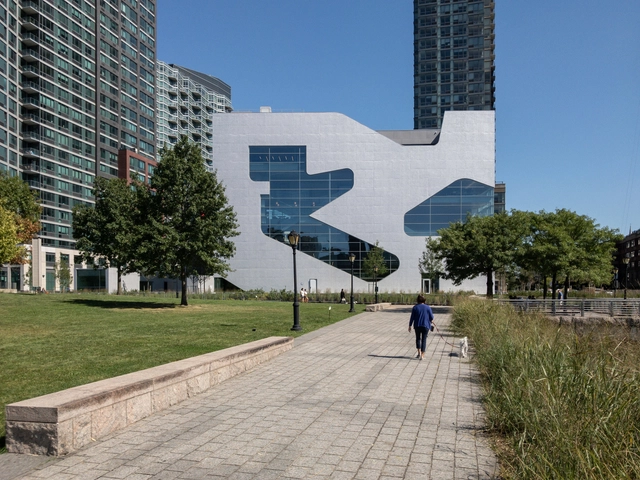
New York City now has three buildings by Steven Holl – Higgins Hall Insertion at Pratt Institute in Brooklyn (2005), Campbell Sports Center for Columbia University in Upper Manhattan (2013), and Hunters Point Community Library in Long Island City, Queens that will open its doors to the public on September 24th. The event coincides with publishing Holl’s new book Compression with the Library’s abstracted image on its cover; it is the fifth volume of the architect’s written manifesto, 30-years-in-the-making series by Princeton Architectural Press. The new building, the size of the nearby landmarked Pepsi-Cola red neon sign, is a robust concrete parallelogram distinguished by softly outlined multi-story glazed cut-outs. It sits prominently on a new public promenade just feet away from the East River, directly across the United Nations complex in Midtown Manhattan and the southern tip of the Roosevelt Island with its Franklin D. Roosevelt Four Freedoms Park memorial by Louis Kahn. The new building is at once an iconic reference point, visible from Manhattan’s East Side and the ferries, and although it took nine years to finish, its completion is a positive sign of New York’s commitment to public projects being designed by our best architects.
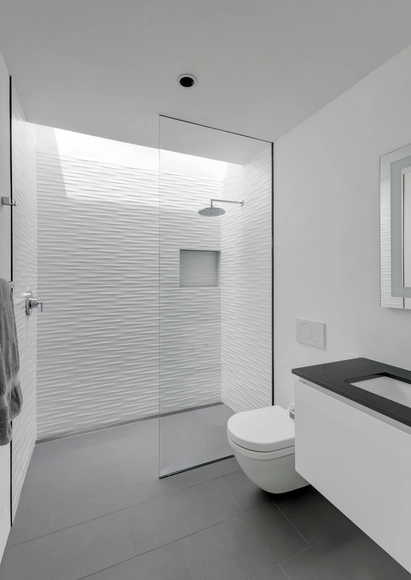
Because it doesn't include a bathtub, or require doors, screens, or curtains, the walk-in shower often makes bathrooms appear larger, cleaner, and more minimalist.
However, some precautions must be taken when designing them. Most importantly, the shower cannot be left completely open, even if it appears to be at first glance. Most designs incorporate a tempered glass that prevents water from "bouncing" out of the shower space, subtly closing the area. When this transparent division doesn't have a frame, the appearance of fungi due to accumulation of water and moisture becomes less likely.
Accessibility is often approached as a field related to disability, whether physical or mental. When it comes to architectural design, it always comes up as a peripheral consideration of the project and not as something fundamental. However, there are other barriers.
In this edition of Editor's Talk, editors from ArchDaily Brazil share their thoughts on what they understand as accessibility and whether it's possible to create a neutral architecture.
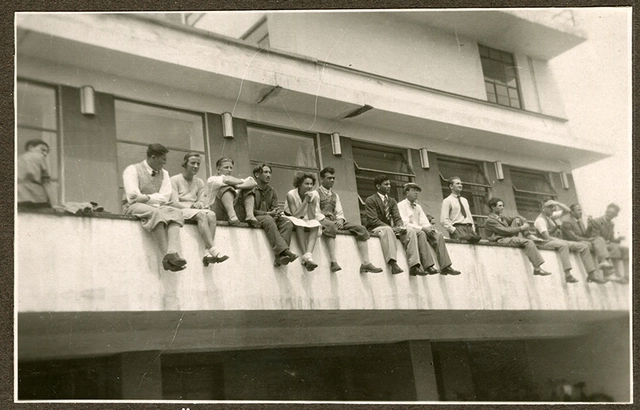
Students on the balustrade of the canteen terrace, around 1931 (photographer unknown). Image Courtesy of Stiftung Bauhaus Dessau
Women are imperative members of the design community, creating innovative and inspiring work in the fields of architecture, design, and urban planning. However, even with the rise of the women's movement, their contributions are still being questioned, compared, or taken for granted.
Metropolis Magazine looked back at the history of feminism in architecture, shedding the light on the times when the advocates witnessed unprecedented progress, and times when they lost their advantage.
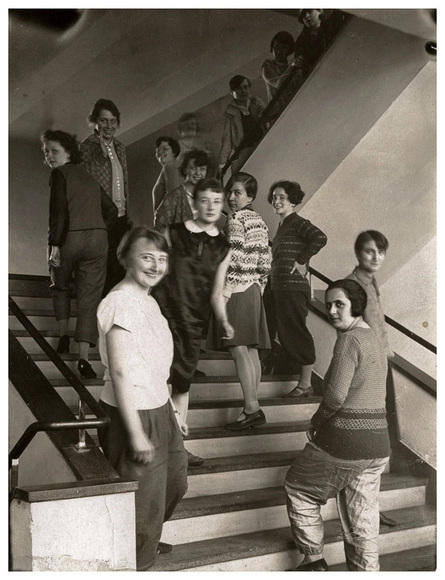
Weavers on the Bauhaus staircase, 1927. From top to bottom: Gunta Stölzl (left), Ljuba Monastirskaja (right), Grete Reichardt (left), Otti Berger, (right), Elisabeth Müller (light patterned sweater), Rosa Berger (dark sweater), Lis Beyer-Volger (center, white collar), Lena Meyer-Bergner (left), Ruth Hollós (far right) and Elisabeth Oestreicher.. ImagePhotograph by T. Lux Feininger; collection of the Bauhaus-Archiv Berlin
The Bauhaus was founded on the promise of gender equality, but women Bauhauslers had to fight for recognition. A new book recounts the achievements and talents of 45 Bauhaus women.
After the end of World War I, a spirit of optimism and a euphoric mood prevailed in Germany. Thanks to a new republican government and women’s suffrage, the war-torn nation was experiencing a radical new beginning.
As part of that convention-breaking wave, in 1919 German architect Walter Gropius assumed leadership of what would become the legendary Bauhaus. Initially, he declared that there would be “absolute equality” among male and female students.
Concrete, a material commonly used in the construction industry, is made of a binder combined with aggregates (or gravels), water, and certain additives. Its origins reach back as far as Ancient Egypt, when the construction of large structures created the need for a new kind of material: one which was liquid, featured properties of natural stones, could be molded, and communicated a sense of nobility and grandeur.
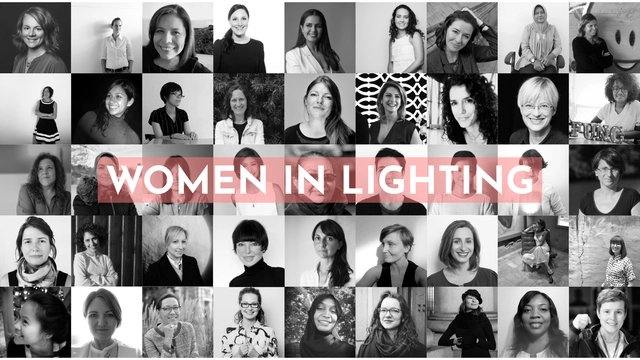
Light Collective, founders of the project "Women in Lighting", conclude that although female designers seem to make up possibly half of the lighting design profession, their profile appears much lower than men when looking at judges in awards and speakers at major conferences. Sharon Stammers and Martin Lupton started a project with interviews of female lighting designers and contacted conference organizers to enhance their visibility.
The winners have been selected by readers of ArchDaily and Strelka Mag from a shortlist of 15 architectural projects which were decided in the first round of voting.
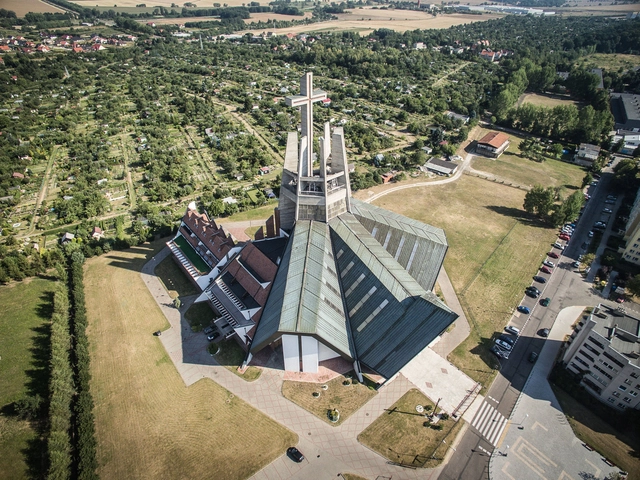
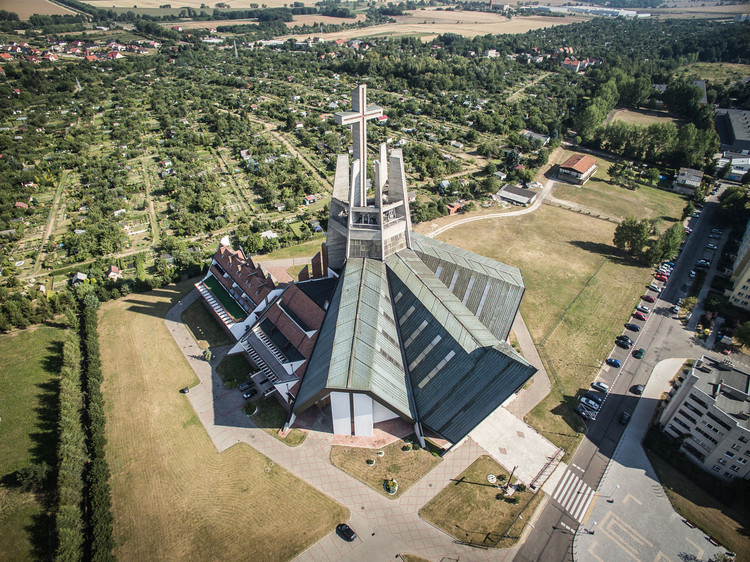
In the mid-to-late 20th century, a secular, socialist Poland served as the backdrop for the construction of thousands of Catholic churches. In their book Day-VII Architecture, Izabela Cichonska, Karolina Popera, and Kuba Snopek analyze the paradoxical facets of this architecture born at the intersection of secularity and religion, charting how its development was influenced by liturgical reform, political movements, and the growth of postmodernism. In the excerpted introduction below, the authors unfold this history, touching on the Second Vatican Council, Solidarity, the Iron Curtain, and more in relation to the development of Day-VII Architecture's ultimately unique postmodern style. The publication has collected photographs of 100 Polish churches built after the year 1945, accompanied by interviews with their architects. To read more about the authors' original Day-VII documentation project, which served as the groundwork for this book, be sure to visit the original article "These Churches Are the Unrecognized Architecture of Poland's Anti-Communist 'Solidarity' Movement."
https://www.archdaily.com/922363/day-vii-architecture-how-the-architecture-of-polish-churches-developed-in-a-secular-socialist-stateLilly Cao
Russia is an enigmatic country known for its sublime constructivism developed during Soviet times, its greatness and enormous scale. It comes as no shocker — architects, such as Ivan Leonidov and his student Leonid Pavlov, and artists like El Lissitzky, have definitely contributed to the history and image of a strong Russian personality.
Considering the prevalent poverty in Russia, the reason for the fixation on cheap construction is rather clear. However, even local leading architects find something attractive and beautiful in the suburban barns and flimsy dwellings. Creating authentic installations in the shape of houses or changing and enhancing the experience of existing structures with materials at hand, Russian artists and architects express the country's skill of turning the ruined and inhabitable into the lively and cozy.









.jpg?1571738052&format=webp&width=640&height=580)

.jpg?1571737432 "Schindler City. Image © Dirk Weiblen")
.jpg?1571737969 "The Foreplay. Image © Pedro Pegenaute")

.jpg?1571738052)
.jpg?1613264611&format=webp&width=640&height=580)














.jpg?1566229073&format=webp&width=640&height=580)