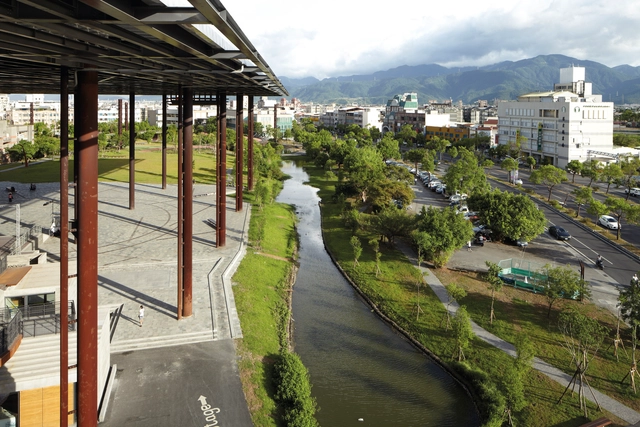
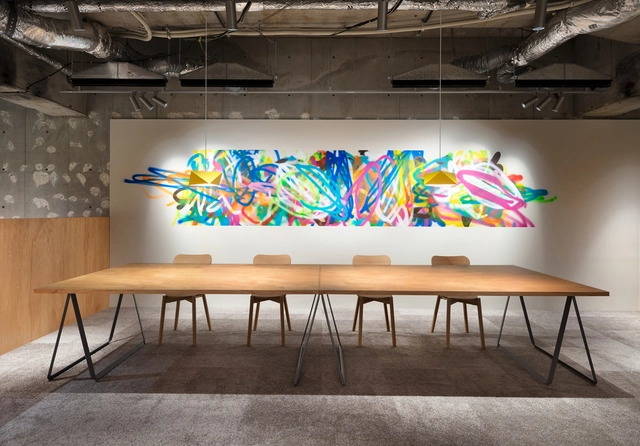
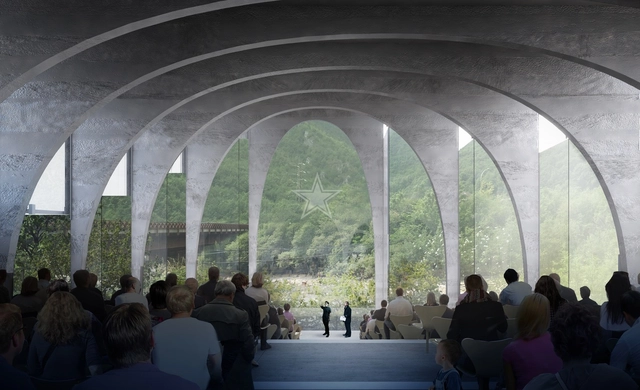
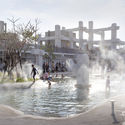
Taiwan proposes that architecture can transform a place, and to represent this idea, the work of Sheng-Yuan Huang and his practice, Fieldoffice, were chosen for the Taiwan Exhibition at La Biennale di Venezia in 2018, entitled Living with Sky, Water, and Mountain: Making Places in Yilan. Sheng-Yuan and Fieldoffice demonstrated that the notion of making places is more than building a physical space, but is equally about establishing a linkage between people, as well as people and their environment.
Alessandro Martinelli explores Sheng-Yuan and his colleagues at Fieldoffice as the avant-garde of a new architectural movement in his book, The City Beyond Architecture, which seeks to produce a new form of collective living through the lens of design and culture, touching on what the design culture of the majority of future urbanization could become. In the following, we will discuss Shen-Yuang's impact on Taiwanese architecture as he spearheaded the call to integrate and imagine public spaces that inhabited the capacity to structure a particular landscape to provide both social spaces and a sense of identity to its occupants.
There is so much more to know about architects and their projects when you begin to learn the stories behind their work. When you know where and how they draw their inspiration from and how an idea becomes a reality that you can touch, feel and experience, you get a better idea of why the project ended up the way it did.
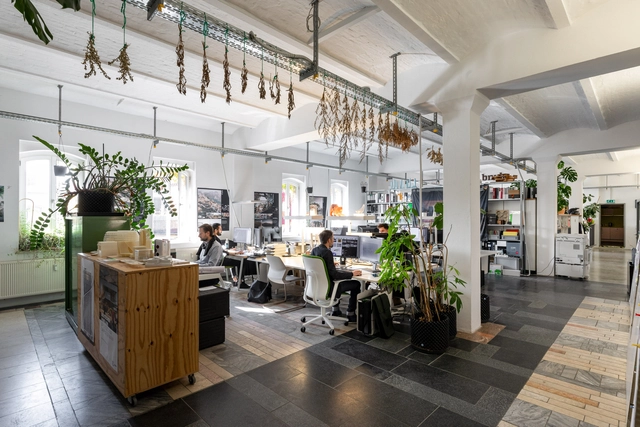
Together with photographer Marc Goodwin, as part of his project Atlas of Architectural Atmospheres this time in the city of Berlin, we had the opportunity to meet with German architect Christoph Hesse, of Christoph Hesse Architects, based in Korbach and Berlin, and we spoke about all these things that make up his idea of architecture and his work. Meeting a creator on their own workspace is also an added value; we went through different projects while looking at the physical models and the narrative of his work became a beautiful story about a place, a countryside town in Germany, its people, and their lives, and a sustainable future in nature.
Videos
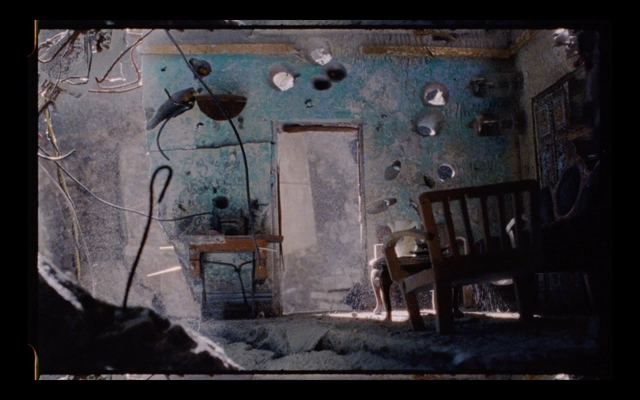
Courtesy of A Broken House, The New Yorker Documentary directed by Jimmy Goldblum
“A Broken House” is a documentary directed by Jimmy Goldblum that highlights the story of Mohamad Hafez, a Syrian native that moved to the US on a single-entry visa to study architecture and was not able to return home. Facing his fate, he channeled his homesickness in his artwork, and started producing miniature sculptures of his hometown, in order to build the “Damascus of his memories”.
“If you can’t get home, why don’t you make home”. Telling the story of the human being that lived within, the architectural project gained a political dimension after the eruption of the Syrian civil war, portraying the extent of the destruction suffered by the city, humanizing refugees, and sharing their stories.
'Innovation' and 'design thinking' could possibly be two of the most extensively-used phrases both online and offline during the past decade. To respond to the global need of "changing the status quo", established companies, start-ups, and even universities have used this framework to generate novel ways of solving problems and create new products, taking into account their desirability, feasibility, and viability. And with that, a new archetype was conceived: the design thinker, someone who has the creative toolkit to generate something disruptive. So what is the meaning behind design thinking and what is its relationship with architecture?
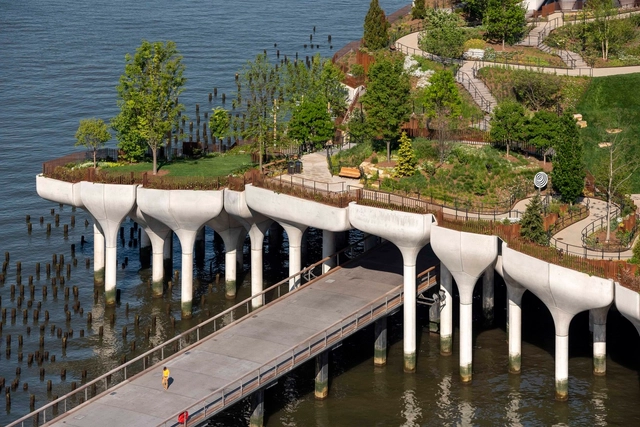
As the new year kicks off, we're taking a look ahead to the projects we're most looking forward to in 2022. With a mix of cultural and commercial programs, the designs are located across five continents, with many under construction for multiple years. Designed across a wide range of scales, they represent a mix of interconnected landscapes, museums, and new skyscrapers.
When we started ArchDaily 14 years ago, we wanted to represent it through the archetypal image of a building, in an isometric view, blue color. After a quick sketch, we had the first version of our logo, which iterated throughout the years, adapted to diverse applications from wooden trophies to stickers, becoming a staple brand among architects.
As we continue into a new era, that started in 2020 together with Architonic and that continues today with the announcement of our new group DAAily Platforms, we thought it was time for an upgrade and we started to explore what we want to represent as a symbol, connected with our mission and views about architecture.
When we decided to join Architonic, we saw a big opportunity to combine our expertise on curating projects and products, enriching the quality of the content we deliver to millions of professionals and enthusiasts around the world, with one vision: to help everybody who is part of architecture to do a better job, having a positive impact in our environment.
As complementary platforms we look at this big challenge from each one's lenses: project inspiration, materials knowledge, product research and specification.
Aiming to provide inspiration, knowledge and tools, and always seeking to "empower all who make architecture happen to create a better quality of life" we summarise this year's topics by presenting the publications that most impacted our readers. Goodbye 2021, Hello 2022!
Biodiversity has become ubiquitous in project descriptions as yet another mark of the design's environmental accomplishments. The increasing focus on sustainability, the standard inspired by the UN Sustainable Development Goals, prompts a deeper understanding of what biodiversity in urban environments means and how can architecture and urban design actively contribute to it. With species extinction rates soaring and urbanization over natural land continuing, cities become an essential factor in sustaining biodiversity, and the following explores how the built environment can foster multi-species habitats.
Documenting diverse architecture and design studios, Goodwin captured 13 different office spaces in Berlin, including Hesse, LAVA, JWA, Tchoban Voss, Richter Musikowski, Barkow Leibinger, FAR frohn&rojas, studio Karhard, Jasper, Kleihues + Kleihues, Graft, Bundschuh Architekten and Sauerbruch Hutton.
After a 2020 that will be remembered as a point of inflection for our global society, 2021 only reminded us that the fast phase of change was here to stay, and that a new attitude towards the way we see and embrace the world was needed. A challenge that we took with optimism.
During this year we continued with our mission to connect our global community through inspiration and knowledge, taking you on an endless journey around the world, through which we saw how architecture, often slow to react, was up to the challenge and architect embraced a new attitude, becoming aware of the new scenario, bringing adaptable, hybrid, scalable, reusable solutions.
The year 2021 has been a turbulent one –coronavirus rages on, and the design and construction industries have been forced to keep adapting two years into a global pandemic. As virtual methods of working and communicating continue to be tweaked and honed, a plethora of virtual events has meant that architectural discourse outside the western canon and Eurocentric gaze, in a small way, has been able to claim space front and center in the global architectural conversation.
This week's curated selection of Best Unbuilt Architecture highlights designs submitted by established architecture practices, featuring conceptual works, competition entries and projects in different stages of development. From a pollinator park designed for an EU initiative to a greenhouse residential project in Germany, to a museum in the Arctics or an innovative proposal for harvesting renewable energy in the Netherlands, the following showcases a variety of design approaches, programs and scales.
Featuring firms like Vincent Callebaut Architectures, 10 Design, Antonio Citterio Patricia Viel, or Sweco, this week's selection of unbuilt projects highlights worldwide interventions that illustrate a variety of ideas, from new models for collective housing and community-living, to design for ecology and sustainability, to community-oriented cultural architecture.
Every year, ArchDaily's curatorial team publishes thousands of new architectural projects. From this experience, we know that no one builds alone and that these projects would not have been possible without the collaboration of many other professionals that are as much involved as the architects and designers themselves.
Another year comes to an end and with it, another round up that explores the most important events that took place over the past twelve months. In this article, we look into the photos that received the most interactions (likes, comments, shares, and saves) on ArchDaily's Instagram.
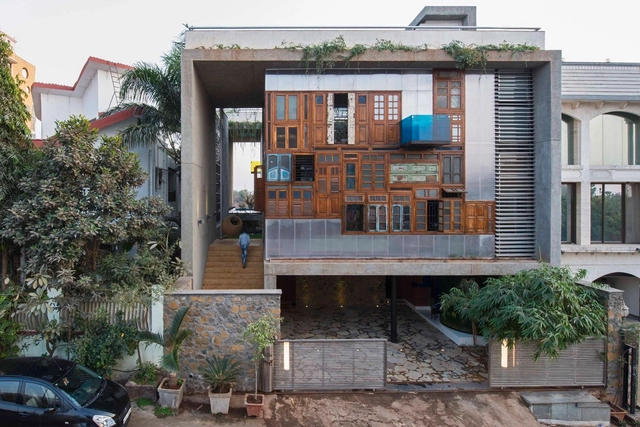
Casa Collage / S+PS Architects. Image Cortesia de S+PS Architects
Reform and adaptation of spaces represent a significant parcel of projects ordered to architecture firms, and reuse of preexisting structures is not newness. Functions and needs change over time, therefore adaptations are required to meet new demands. However, no matter how much the maintenance of a building is, in most cases, preferred in economic and ecological sense to its demolition and a new construction from the beginning, the logic of the reuse of a space does not usually extend to its parts that become, thus, rubble.
The climate crisis has been one of the focal points of 2021, both within political discourse and the architectural field, accompanied by a newfound acknowledgement of the issue's severity. Over the past year, the IPCC report revealed the severe consequences of inaction, while COP26 and G7 summit resulted in an insufficient commitment to immediate and palpable measures. The AEC sector, responsible for a staggering 39% of global greenhouse gases, can bring a significant contribution to curbing climate change and the following looks at the decarbonization efforts of 2021 that target this industry.
More than 5000 new projects published throughout 2021 make ArchDaily the largest online architecture library in the world. ArchDaily Curatorial Team researches, contacts offices, prepares, and delivers the built projects in the world on a daily basis, with the objective of providing inspiration, knowledge, and tools to our users who take part in the creation of better built environments.
https://www.archdaily.com/974013/best-architectural-projects-of-2021Clara Ott