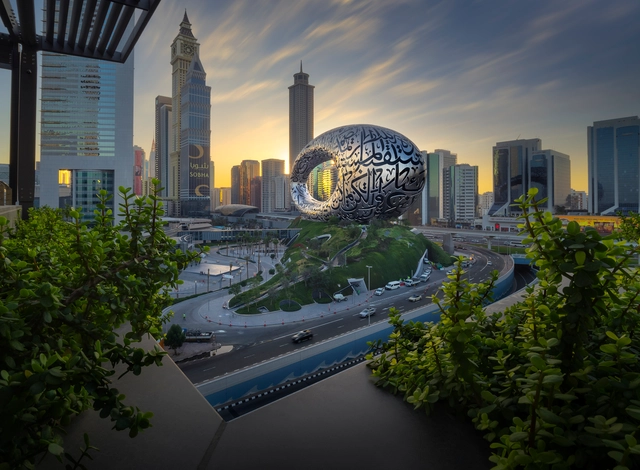
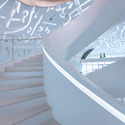
New images of Dubai's Museum of the Future by Killa Design and Buro Happold have been unveiled ahead of its official opening on February 22nd, 2022. The museum promises a one-of-a-kind experience that merges science, technology, and the environment through distinct themes and immersive environments that tap into all five senses. The project aims to "transform the very perception of the future as we know it", showcasing a world that is imaginable 50 years from now.
The term ‘Architect’ can be open to interpretation much like the reverence of an Artist. However, the universally recognized definition of the role is regarded as one who designs and plans buildings, a key member in terms of building construction. Architecture as a profession presents itself as a very diverse occupation. As an Art and Science in every sense, it offers insight into a vast range of subjects that can be applied to a range of different ventures.
Often Architecture students are offered with such a rigid path, constrained with these short-sighted ideas that an Architect must follow a particular direction to flourish in the field. When in fact it is interesting to note the vast opportunities that arise when given opportunity to diversify. Here are the Architects that have branched out and become successful fashion designers …
Michael Sorkin used to regard criticism as "a service profession", highlighting the field's ability to shape public opinion and the direction of architecture at large. Intellectually expansive architecture criticism not only evaluates the merits and shortcomings of a project but reveals how buildings are situated in relation to history and theory and how they contribute to current economic, social and environmental dilemmas. The following explores the field of architecture criticism, highlighting some of its key figures while reflecting on how this role has changed with the emergence of digital media.
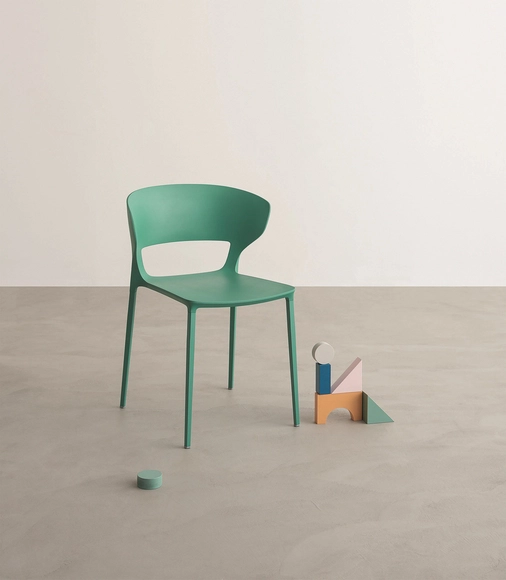
During their university years, architects acquire a wide range of skills apart from learning to design buildings. Some of these include creative problem solving, project management, high attention to detail, coordinating teams and accurately responding to consumer needs. Therefore, a degree often provides the necessary tools to design at any scale – from urban to product design – and to explore other creative fields, such as art, photography, journalism or industrial design. Of the many possibilities that open up, it is especially common for many to make the leap towards furniture design, particularly chair design, instead of following the traditional route.
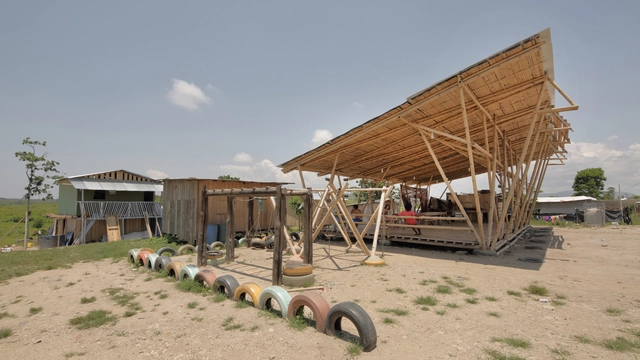
Following decades of ongoing socio-cultural and economic crises across the globe, the design community has realized that it is time to “design like they give a damn”. And with that, they embraced a movement that saw architects and designers use their acquired skills to develop design-based solutions to humanitarian crises, ranging from building modular housing and mapping landscapes, to developing mobile applications and documentaries, all from an altruistic standpoint. But since pro bono work is not yet ingrained in the ethos of architecture, how have architects broken out of the traditional model of “corporate” architecture and established a way to ensure ethical responsibility for human welfare?
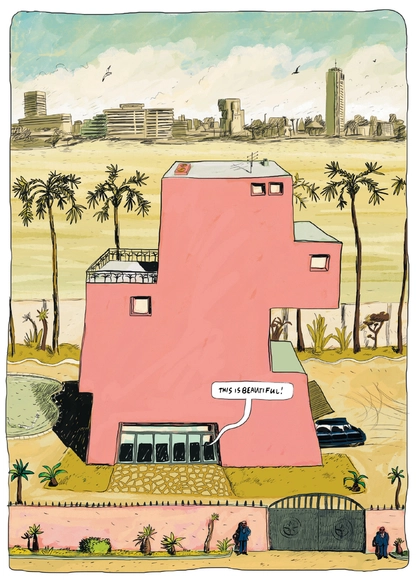
Modernist House - From Aya: Life in Yop City by Marguerite Abouet and Clément Oubrerie, translated by Helge Dasche. Image Courtesy of Drawn & Quarterly
The comic strip, la bande dessinée, the graphic novel. These are all part of a medium with an intrinsic connection to architectural storytelling. It’s a medium that has long been used to fantasise and speculate on possible architectural futures, or in a less spectacular context, used as a device to simply show the perspectival journey through an architectural project. When the comic strip meshes fiction with architectural imagination, however, it’s not only the speculation on future architectural scenarios that takes place. It’s also the recording and the critiquing of the urban conditions of either our contemporary cities or the cities of the past.
Architecture education is not only about learning how to design and construct buildings but it gives a whole new perspective on our built environment and on how design can contribute to create quality spaces and experiences. Moreover, a big percentage of this design thinking can be used by professional architects as a resource to create other spatial configurations that vary from the traditional building, opening up to a diverse world of possibilities in terms of spatiality and materials.
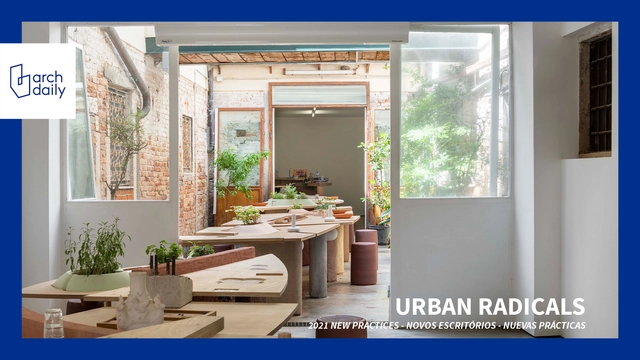
Urban Radicals is a design collective based in London, founded in 2019 by Era Savvides and Athanasios Varnavas. The practice operates at the intersection of multiple disciplines, exploring public space and the notion of collectivity across a variety of scales, contexts and design expressions. One of Archdaily's Best New Practices of 2021, Urban Radicals shrinks and grows organically through the projects, dissolving the boundaries between diverse fields of knowledge and circumventing traditional office structure to integrate a multiplicity of perspectives within architecture.
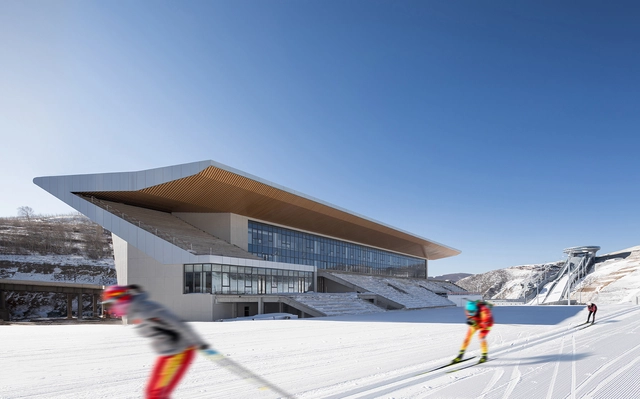
Beijing 2022 Winter Olympic Games and Paralympic Games have officially opened on February 4, 2022. The Winter Olympics made a brave move by adding two snow zones in Zhangjiakou and Yanqing to the ice zone in Beijing, creating an unprecedented three-zone system for the Winter Olympics.
Architectural Design & Research Institute of Tsinghua University (THAD), has led the planning and architectural design of the whole and all venues in Zhangjiakou Zone and Shougang Venue in Beijing Zone. Planning and Venue design for Yanqing Zone was elaborated by the China Architectural Design & Research Group. Chinese architects took the initiative to create while serving the principle of sustainable development and closely integrating architectural planning methodologies and architectural design during the approximately six-year construction cycle. They proposed the design framework of "full-scale spatial intervention" based on the "General Plan, Regulatory Plan, Urban Design, Architecture Design and Equipment System Design," completing the Chinese practice of sustainable Winter Olympics.
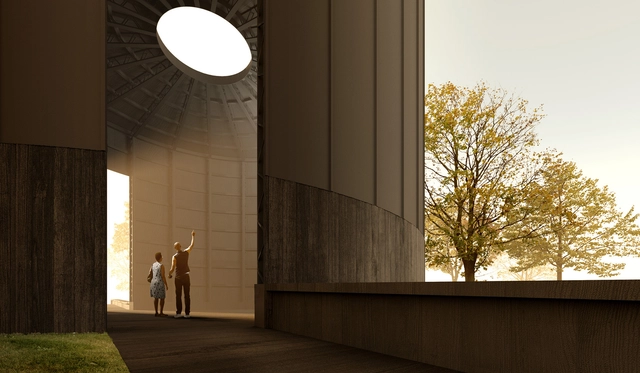
Serpentine Pavilion 2022, Black Chapel, designed by Theaster Gates. Design render, interior view. Image Courtesy of Theaster Gates Studio
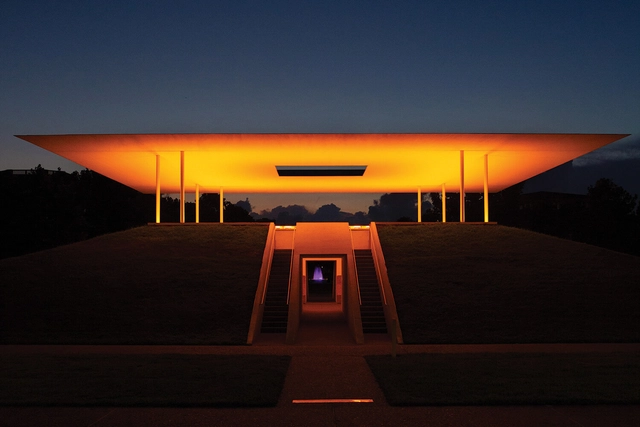
American artist Theaster Gates unveiled his design for the 21st Serpentine Pavilion. Curated for the first time by a non-architect, the 2022 edition named Black Chapel, “will pay homage to British craft and manufacturing traditions”. Realized with the architectural support of Adjaye Associates, the pavilion will open to the public on Friday 10 June 2022, in Kensington Gardens.
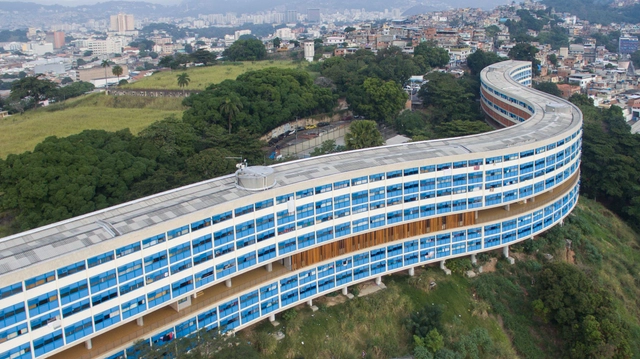
In the early 1920s, a time when women could not even work without their husband's authorization, Carmen Portinho started an engineering course at the Polytechnic School of the University of Brazil. At the vanguard of the profession, as one of the first three women to graduate as engineers in Brazil, she was opening up a field in a space dominated entirely by men.
The built environment we inhabit can be hostile, both on an individual architectural scale and in a wider urban context. Homeless people, for instance, are dissuaded from resting on public benches by the menacing presence of spikes and other forms of exclusionary design. From a global lens, we see the impact that borders have amidst anti-immigration hostility, imposingly exemplified by the Melilla border fence on the Morocco-Spain border. This “hostility” can be found in a large number of settlements around the world, settlements that have been formed as a result of organic migration or settlements predicated on control – like company towns.
While research seems intrinsic to the design process, architectural research is a professional path in itself, whose purpose is to highlight scientific evidence and explore alternatives outside of pre-established norms or empirical considerations. Its purpose is to create a framework of knowledge that can inform the design to reach objectively better outcomes. The following discusses the role and state of research in architecture, some prominent areas of inquiry, and the architects or institutions that dedicate their work to these subjects.
Whether or not architecture is an art, buildings and spaces shape daily life. Pushing the boundaries of architecture and the categorization of art, contemporary investigations between disciplines are rethinking tradition. As transformations grounded in human experience, these installations and structures share qualities of purpose, function and creative expression. At the same time, they reorient the limitations and possibilities of each profession.
Focused on 3 main titles, "the European city: a model for the sustainable smart city", "defining common European culture while reflecting the diversity of expression" and "an architecture that has social impact and transmits a cultural message", we have grouped the selected projects, nominated by a jury formed by Tatiana Bilbao, Francesca Ferguson, Mia Hägg, Triin Ojari, Georg Pendl, Spiros Pengas and Marcel Smets to give a better understanding of the selection criteria and the architectural situation in Europe.
It has been said that we are living through a trans-apocalyptic era. Not pre-or post-apocalyptic, but something in between: a series of interconnected crises that demand action, at a time when it’s too late to prevent the world from changing, but not late enough that all hope has been lost for a (changed, yet positive) world. Architecture is deeply involved in this process, as the transformation of the built environment and the construction industry are key to the way we live.
For ArchDaily, this means our mission rings truer than ever. After a record-breaking 2021, with over 22 million monthly visits across the ArchDaily network, we continue to ask ourselves and our readers: how can we continue to provide inspiration and tools to a new and evolving generation of architects, designers, and - increasingly - architecture enthusiasts, home-owners and anyone who is interested in how we live, where we live and how to move forward? One of the most important ways that we have of doing this is through the Building of the Year Awards.
ArchDaily exists thanks to our readers - you - and so it makes sense that you are also the ones that continue to pick the best of the year in architecture, this time for the 13th consecutive year of the Building of the Year Awards. It is your turn to recognize and reward the outstanding projects that are making a difference, as part of an unbiased, distributed network of jurors and peers that has elevated the most relevant projects over the past decade. Over the next two weeks, your collective intelligence will filter over 4,500 projects down to just 15 stand-outs for the best in each category on ArchDaily.
The 2022 Building of the Year Awards is brought to you thanks to Dornbracht, renowned for leading designs for architecture, which can be found internationally in bathrooms and kitchens.
Over the last century, cars have been the dominant element when designing cities and towns. Driving lanes, lane expansions, parking garages, and surface lots have been utilized as we continue our heavy reliance on cars, leaving urban planners to devise creative ways to make city streets safe for pedestrians and cyclists alike. But many cities, especially a handful in Europe, have become blueprints for forward-thinking ideologies on how to design new spaces to become car-free and rethink streets to make them pedestrian-friendly. Are we experiencing the slow death of cars in urban cores around the world in favor of those who prefer to walk or ride bikes? And if so, how can it be done on a larger scale?
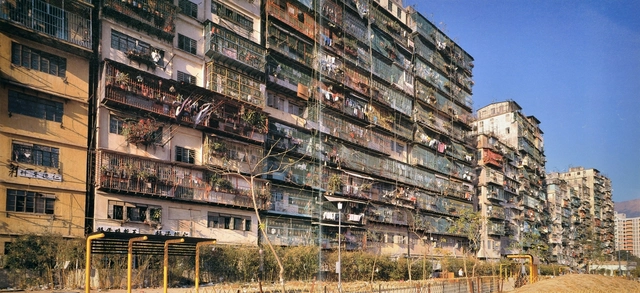
Kowloon Walled City, Hong Kong. Image Courtesy of 'City of Darkness Revisited’
Cities are growing, and they are growing upwards. This is far from just being a contemporary phenomenon of course – for more than a century, high-rises have been an integral part of urban settlements worldwide. This growing of cities encompasses a complex web of processes – advancements in transport links, urbanisation, and migration to mention a few. This growth of cities, however, is all too often linked with governmental failure to adequately support all facets of the urban population. Informal settlements are then born – people carving out spaces for themselves to live amidst a lack of state support.