1. ArchDaily
  2. Editor's Choice

Editor's Choice

Student Thesis Project Turns Bus Into Tiny House

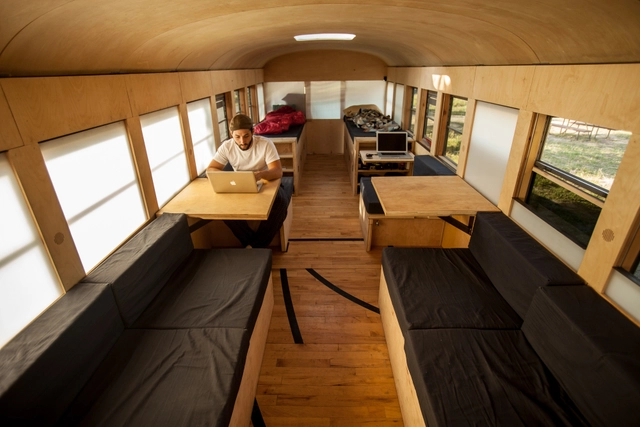
Like many architecture students, Hank Butitta was frustrated. Frustrated that the projects he and his fellow classmates were painstakingly, time-consumingly crafting at architecture school resulted—almost always—in nothing.  But Hank Butitta, unlike many architecture students, decided that, for his thesis, he would buy an old school bus and turn it into a flexible living space. The result: a 225 square foot mobile home—complete with reclaimed gym flooring and dimmable LED mood lighting. 

On his website (www.hankboughtabus.com), Butitta says, “This project was a way to show how building a small structure with simple detailing can be more valuable than drawing a complex project that is theoretical and poorly understood.” Since the project (which was envisioned with a nod to the tiny house movement) was picked up by the media last week, fans and commenters have flooded the site, asking Hank how he resolved certain problems and where he sourced the materials.

Student Thesis Project Turns Bus Into Tiny House - Image 1 of 4Student Thesis Project Turns Bus Into Tiny House - Image 2 of 4Student Thesis Project Turns Bus Into Tiny House - Image 3 of 4Student Thesis Project Turns Bus Into Tiny House - Image 4 of 4Student Thesis Project Turns Bus Into Tiny House - More Images+ 25

AD Interviews: Saskia Sassen

Subscriber Access | 

Sociologist Saskia Sassen's researches and writes about the social, economic and political dimensions of globalization, immigration, and networked technologies in cities around the globe. Her books and writings—published in over sixteen languages—have sustained the interests of architects and planners who seek to better understand the city via the systemic conditions that find expression in the reality of urban space.

Now actively involved in teaching Columbia University, we caught up with Sassen at the Arquine Congress in Mexico City, where she shared some interesting views on the role of architects, her contemplations on the future of the city, and her thoughts on the impact of the internet on the city.

Check out a full transcript of our interview with Sassen after the break.

Landscape Design In Our Time of Climate Change

Subscriber Access | 

In this article, which originally appeared in Metropolis Magazine's Point of View Blog as "Q&A: Kim Mathews and Signe Nielsen," Susan Szenasy interviews the principals of Mathews Nielsen Landscape Architects about how climate change has re-focused landscape architecture today on three important issues: Research, Redevelopment, & Resiliency.

In this season of Architecture’s Lean In Moment, I’m asking principals of three successful female-owned firms in architecture, graphic communication, and here landscape architecture, to talk about the work they do, how they connect with their clients (usually in the messy public realm), how they hone their skills and add to their knowledge base—all to provide the essential design services that they set out to do as idealistic young practitioners.

Here the principals of the New York firm, Mathews Nielsen Landscape Architects, Kim Mathews, RLA, ASLA and Signe Nielsen, RLA, FASLA, talk about the evolution of their profession, their commitment to teaching, writing, lecturing, their research-informed work, as well as the new appreciation of design in the public realm. The firm’s new Green Team reports here regularly on topics like the importance of soil composition, working within the urban infrastructure, and waterfront remediation and redevelopment in a time of climate change.

Boulevards in Paris: A Mathematical Success?

Since Baron Georges-Eugène Haussmann began his comprehensive redesign of central Paris in the mid-nineteenth century, the Hausmann Plan has been a topic of discussion for architects, planners and social theorists. The network of wide, open boulevards lined by regular (and regulated) neoclassical buildings has come in and out of favor over the years, and now is one of the key factors in the city's popular reputation as a beautiful city.

Now though, a different set of academics have entered the conversation to offer a new way of looking at the Haussmann Plan: a group of mathematical physicists from the CEA Institute of Theoretical Physics in Gif-sur-Yvette have collaborated with a group of social scientists to analyze the changes of the Haussmann Plan using sophisticated network theory, as reported by BBC Worldwide.

Find out about their study's findings after the break

Hello Wood 2013: Step Closer!

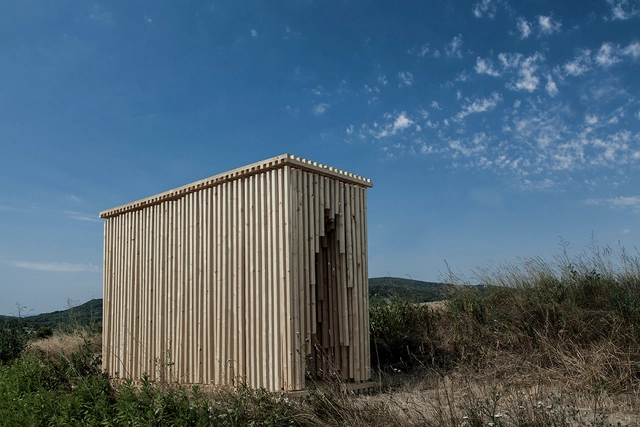
Back for its fourth year, the creative camp Hello Wood was held last month in Hungary, set in the countryside north of Lake Balaton. At Hello Wood, 120 young designers and architects worked with leading experts to create installations which approach issues of society and community in architecture, ideas encompassed by this year's motto "Step Closer!" Twelve teams had one week to create these installations using timber as their primary material, with the projects being judged and a winner awarded at the end of the week.

Read on to find out about the installations, and which one was judged the winner, after the break

Hello Wood 2013: Step Closer! - Landscape ArchitectureHello Wood 2013: Step Closer! - Landscape ArchitectureHello Wood 2013: Step Closer! - Landscape ArchitectureHello Wood 2013: Step Closer! - Landscape ArchitectureHello Wood 2013: Step Closer! - More Images+ 9

Why Good Architectural Writing Doesn’t Exist (And, Frankly, Needn’t)


Subscriber Access | 

The Architects’ Journal recently announced its call for entries for the “AJ Writing Prize,” its annual search for “the best new architectural writer.”

Back in 2011 (how did I miss this?) they published a treatise on the qualities of good architectural writing penned by one of the prize’s judges, architect Alan Berman.

Now, please consider that I am butchering his essay by removing this quote from the stream of his thinking, but, that being said, this paragraph stands out:

Architectural writing should aid everyone’s understanding of buildings and assist architects to design better ones. This is not to say that it should be an instruction manual or ignore the importance of the myriad intellectual endeavours which explore the human predicament –about which architects should always be conscious. Rather it is to say that architectural commentary should aim for clarity and precision of expression by means of lucid terminology and simplicity of structure.

This strikes me as a very technical and precise way of producing writer’s block. If this is the extent of good architectural writing, or writing that is in the service of architecture, then “Abandon all hope, ye who enter here.”

MoMA Releases First Storybook: “Young Frank, Architect”

Inspiring builders of all ages, MoMA has released their first storybook, following the adventures of a young, New York City architect and his architect grandfather: Young Frank and Old Frank. The creative pair - with matching bow ties, straw boater hats and, of course, Le Corbusier-inspired glasses - optimistically views the world as an endless supply of inspiration and possibilities. Everything, from macaroni to old boxes, inspires them to create - especially after discovering the works of Frank Gehry and Frank Lloyd Wright at The Museum of Modern Art.

I Wept But About What I Cannot Say: Martin Filler's Moving Tribute to Michael Arad's 9/11 Memorial

Subscriber Access | 
I Wept But About What I Cannot Say: Martin Filler's Moving Tribute to Michael Arad's 9/11 Memorial - Image 3 of 4
North Pool looking Southeast. Image © Joe Woolhead

Beginning with Charles McKim, William Mead, and Stamford White and concluding with Michael Arad, Makers of Modern Architecture, Volume II examines the people behind the work at the forefront of 20th and early 21st century architecture. Critic Martin Filler masterfully integrates each person’s unique biography and distinctive character into the architectural discussion. Here is his revealing profile of Michael Arad, the young architect whose design for the National September 11 Memorial at Ground Zero brought him into the national spotlight. It was originally published on Metropolis Mag's Point of View Blog.

I wept but about what precisely I cannot say. When I first visited Michael Arad’s newly completed National September 11 Memorial of 2003–2011 at Ground Zero, which was dedicated on the tenth anniversary of the disaster—the ubiquitous maudlin press coverage of which I had done everything possible to ignore—it impressed me at once as a sobering, disturbing, heartbreaking, and overwhelming masterpiece. Arad’s inexorably powerful, enigmatically abstract pair of abyss-like pools, which demarcate the foundations of the lost Twin Towers, came as an immense surprise to those of us who doubted that the chaotic and desultory reconstruction of the World Trade Center site could yield anything of lasting value.

Yet against all odds and despite tremendous opposition from all quarters, the design by the Israeli-American Arad—an obscure thirty-four-year-old architect working for a New York City municipal agency when his starkly Minimalist proposal, Reflecting Absence, was chosen as the winner from among the 5,201 entries to the Ground Zero competition—became the most powerful example of commemorative architecture since Maya Lin’s Vietnam Veterans Memorial of 1981–1982 in Washington, D.C.

WKCDA Abandons West Kowloon Park Competition in Hong Kong

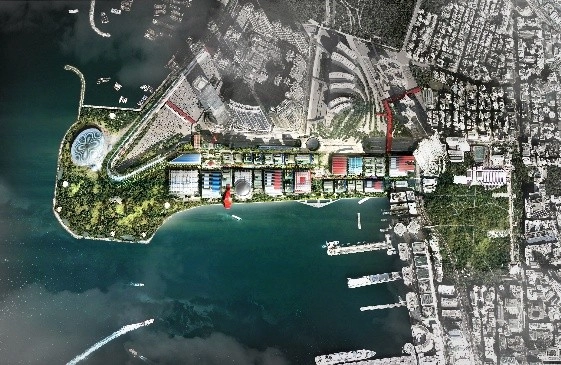
A major competition for a 40ha waterfront park in Hong Kong has been scrapped by the West Kowloon Cultural District Authority (WKCDA). Thus, Foster + Partners' competition-winning City Park will be abandoned, despite its potential to transform the Victoria Harbour's reclaimed edge into an important Asian hub for artistic exchange.

Read on to find out why the WKCDA has called it quits.

Details Unveiled for Elon Musk's California, Solar-Powered "Hyperloop"

Imagine driving your car into a sizable aluminum pod and being shot 800 miles per hour through an elevated, shotgun-like barrel to arrive at a city 400 miles away within 30 minutes. According to Elon Musk, CEO of SpaceX and co-founder of Tesla Motors, Californians will be doing this within the next decade.

It's Time to Envision A Better Built Detroit. Are Architects Ready?

Subscriber Access | 

There is an intimate connection between people, power, poverty and place and there is no better city in the world to see this than Detroit. With the impending bankruptcy we cannot lose sight of the human issues that face our city.

For decades money and power have moved away from Detroit’s center. The complex reasons for this are well known so there is no need to rehash them here. Even in the face of city government’s failure to manage its assets properly, this is changing. There is slow and halting movement back to the center.The movement back to the center is a good thing for many reasons. It will help bolster the tax base and that is the basic financial problem the city faces. But more importantly it will create a stronger spatial connection between power and poverty that we haven’t had in this region for a century.

Power will see poverty and poverty power. They will feel each other’s existence. They will see the humanity of each side and be nudged to recognize the shared responsibility caring for this shared place. This is how successful vital, dense urban cities operate. There is an acceptance of diversity on all levels. Barriers are reduced and human interaction encouraged. This is how creativity is bred. Exposure to diverse people, places and ideas excite and promote the imagination and a sense of the common good that includes everyone.

Successful Workplaces Balance Focus and Collaboration, Gensler Study Finds

Successful Workplaces Balance Focus and Collaboration, Gensler Study Finds - Offices
AOL Offices by Studio A + O . Image © Jasper Sanidad

Gensler, who recently topped out on the world's second tallest skyscraper in Shanghai, have just released a report outlining the keys to designing a successful workplace. Using their custom 'Workplace Performance Index' they surveyed 2035 office workers in the US to find out what makes employees happy and productive in their workplace.

One surprising result which they uncovered is that, in opposition to the trend of workplaces being designed to encourage collaboration, workers are actually spending more time on focused, individual tasks than they were 5 years ago. Consequently, over 50% of respondents said that they were distracted by others when they needed to focus. What's more, the survey found that when employees could not focus individually, collaborative work was also less productive.

Read on after the break to find out more results from the survey

AD Classics: Ville Radieuse / Le Corbusier

AD Classics: Ville Radieuse / Le Corbusier - Master Plan, Facade
via land8.com

Ville Radieuse (The Radiant City) is an unrealized urban masterplan by Le Corbusier, first presented in 1924 and published in a book of the same name in 1933. Designed to contain effective means of transportation, as well as an abundance of green space and sunlight, Le Corbusier’s city of the future would not only provide residents with a better lifestyle, but would contribute to creating a better society. Though radical, strict and nearly totalitarian in its order, symmetry and standardization, Le Corbusier’s proposed principles had an extensive influence on modern urban planning and led to the development of new high-density housing typologies.

AD Classics: Ville Radieuse / Le Corbusier - Master Plan, Facade, CityscapeAD Classics: Ville Radieuse / Le Corbusier - Master PlanAD Classics: Ville Radieuse / Le Corbusier - Master PlanAD Classics: Ville Radieuse / Le Corbusier - Master PlanAD Classics: Ville Radieuse / Le Corbusier - More Images+ 9

BIG, OMA Shortlisted by HUD to "Rebuild by Design" Post-Sandy

U.S. Housing and Urban Development (HUD) has announced ten shortlisted teams to compete in the multi-stage regional design competition “Rebuild by Design.” Each team will aim to “promote innovation by developing regionally-scalable but locally-contextual solutions that increase resilience in the region, and to implement selected proposals with both public and private funding.”

The 10 multidisciplinary teams are:

The Flinders Street Station Winning Proposal / HASSELL + Herzog & de Meuron

The winning proposal for the Flinders Street Station competition comes from HASSELL + Herzog & de Meuron. The design integrates the station with the surrounding urban context, which has evolved and changed significantly since the building was designed 100 years ago. The station concept draws from many aspects - the site's historic fabric, location, and linear nature; the original 19th century design and existing heritage fabric; the river and city edge, rail, public and river-based operations as well as the station's place within the city fabric and public realm. More images and architects' description after the break.

Six Flinders Street Station Proposals Battle It Out for "Public Choice Award"

The Victorian Coalition Government’s design competition to re-imagine Melbourne’s historic Flinders Street Station has entered its final phase as the public submits their last minute votes for the “People’s Choice Award” today. Though each proposal is dramatically different, ranging from Zaha Hadid Architects’ carefully calculated, sinuous curves to Herzog & de Meuron’s extrusion of vaulted canopies, all promise to elevate the stations status to the 21st century whilst respecting its historic context.

Form your own opintion and vote for your favorite after the break...

INTERIORS: Justin Timberlake's "Mirrors"

Subscriber Access | 

Interiors is an online film and architecture journal, published by Mehruss Jon Ahi and Armen Karaoghlanian. Interiors runs an exclusive column for ArchDaily, analyzing and diagramming films in terms of space.

The rise of the director in music videos came in the early 1990s, when MTV started crediting directors alongside artists and song titles. The influx of visionary directors such as Michel Gondry, Spike Jonze and David Fincher emphasized that music videos were becoming an auteur’s medium, much in the same way as film. The shift from stylized and performance-based music videos into narrative-based works, however, came much later, as the medium became more “cinematic” in its look and narrative structure.

Video: Nightvision / Luke Shepard

Subscriber Access | 

With the help of crowdfunding, Luke Shepard journeyed with a friend through 36 cities in 21 countries over the course of three months to capture over 20,000 images of some of Europe’s greatest structures. The end product resulted in a four-minute film entitled Nightvision, which aims to inspire appreciation for the "brilliance and diversity of architecture found across Europe".

The list of buildings featured in this film can be found on Shepard's site here.

You've started following your first account!

Did you know?

You'll now receive updates based on what you follow! Personalize your stream and start following your favorite authors, offices and users.