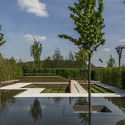
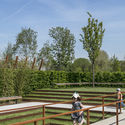
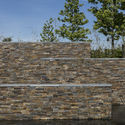
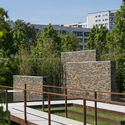
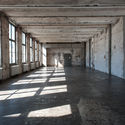
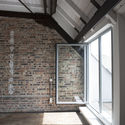
The Landhaus Lemke is a private residence designed by Mies van der Rohe in 1932, while he was working as the director of the Bauhaus. Completed one year later, the Mies van der Rohe House is filled with rich history and is focused today on organizing exhibitions by contemporary international artists in dialogue to the architecture of the house.
A symposium on the occasion of the exhibition opening Two Sides of the Border: Reimagining the Mexico–United States Region by Tatiana Bilbao and Nile Greenberg at Aedes Architecture Forum
A collaboration between ANCB and the Centre for the Future of Places at KTH Royal Institute of Technology, Stockholm.
Date: Saturday, 26 January 2019, 12-5 pm Place: ANCB The Aedes Metropolitan Laboratory, Christinenstr. 18 – 19, 10119 Berlin.
n the past decade, we have witnessed a radical expansion of the space, remit, and role of the museum as a public institution. This has taken the form of an increasing shift from public space to public programme, from the spatial organisation of artefacts to the temporal organisation of events that places the museum’s activities solidly in line with the production of discourse, atmospheres, experiences,
Videos
High-rise building at the railway station Friedrichstraße, Berlin-Mitte Perspective view 1921 Charcoal on tracing paper 109,9 x 77,5 cm
With this exhibition of drawings by Hans Poelzig, the Museum for Architectural Drawing in cooperation with the Architecture Museum of the Technical University Berlin present the work of an architect who, with Walter Gropius, Bruno Taut, Mies van der Rohe and Peter Behrens, was undoubtedly one of the most important German architects of the first half of the 20th century. His oeuvre was diverse as his personality was colourful: in parallel with his architecture, he painted and created stage designs and film sets. He was director of the School of Art and Design in Breslau and later taught at the
With this first comprehensive European exhibition the Aedes Architecture Forum presents the work of Kashef Chowdhury/URBANA from Bangladesh, who received the prestigious Aga Khan Award for Architecture in 2016 for the Friendship Centre on the flood plains of Gaibandha in northern Bangladesh. With further projects such as the Gulshan Society Mosque in Dhaka and the Cyclone Shelter in Kuakata, he gained widespread international acclaim. Careful arrangement of structures in areas marked by extreme climatic conditions, combined with local building techniques and materials, Kashef Chowdhury’s buildings are exemplary of an architecture that serves society with radical simplicity and poetry. With an
The role of architecture is to create strong and sustainable identities for cities and their communities. With well-conceived design, we can help things run more fluidly, improve people’s well-being, and make life more enjoyable. Every project is a unique expression of the ethos of its users, climate, and context. A built environment can be seen as a point of departure: it is where the architecture starts to communicate, the point from where it starts to interact with the public and its users. Followed by a talk with Jette Hopp of SNØHETTA.




PhilippObkircher_7012.jpg?1558101842&format=webp&width=640&height=580)







PhilippObkircher_7054_crop.jpg?1558101629 "© Philip Obkircher")
PhilippObkircher_courtyardpano.jpg?1558101822 "© Philip Obkircher")
PhilippObkircher_7258.jpg?1558101735 "© Philip Obkircher")
PhilippObkircher_7407.jpg?1558101770 "© Philip Obkircher")
PhilippObkircher_7012.jpg?1558101842)
_10.36.40.jpg?1557239827&format=webp&width=640&height=580)