Vania Masalías

BROWSE ALL FROM THIS AUTHOR HERE
↓
Subscriber Access

Cerro de Pasco: A City Disappearing Due to Mining

What happens when streets, squares and buildings start to disappear in a city?

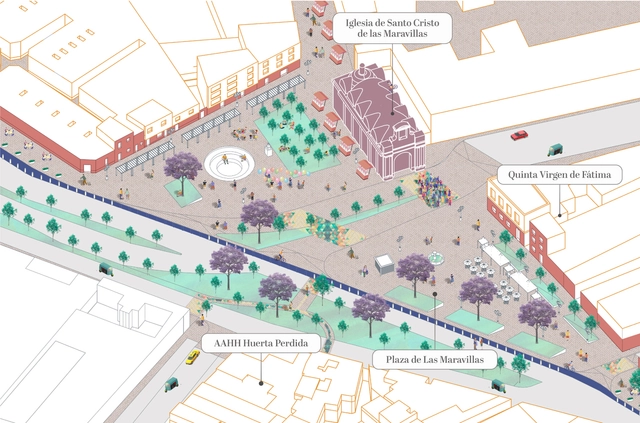
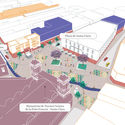
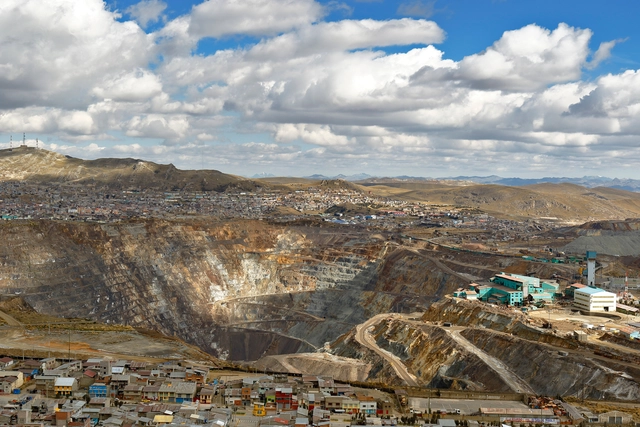
This is the case of Cerro de Pasco, capital of the district of Chaupimarca and at the same time of the province of Pasco, located at 4380 m.a.s.l. in the highlands of the Peruvian Andes. It is in this place that the constant expansion of the "open-pit" mining method has devoured the urban fabric, resulting in permanent damage to the territory as its public spaces, heritage buildings and, consequently, its history, disappear.

Cerro de Pasco: A City Disappearing Due to Mining - Image 1 of 4Cerro de Pasco: A City Disappearing Due to Mining - Featured ImageCerro de Pasco: A City Disappearing Due to Mining - Image 2 of 4Cerro de Pasco: A City Disappearing Due to Mining - Image 3 of 4Cerro de Pasco: A City Disappearing Due to Mining - More Images+ 1

Subscriber Access

Culinary Experiences: 10 Restaurants and Cafes in Lima

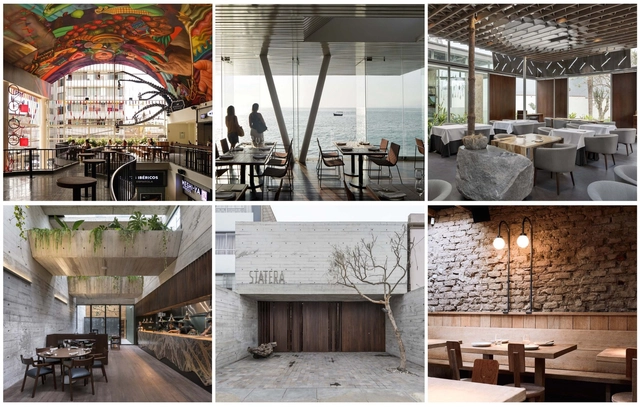
The world of gastronomy is about far more than just food; space plays a vital role in the overall dining experience. To achieve this, architecture transcends mere functionality to cultivate distinct atmospheres through the meticulous curation of light, acoustics, color, texture, and form, ensuring both intimacy and comfort for diners.

The city of Lima—capital of Peru, a preeminent culinary destination—features a diverse array of restaurants and cafés that reflect the country's rich heritage. Below, we present a selection of 10 restaurants and cafés offering unique dining experiences across the city.

Culinary Experiences: 10 Restaurants and Cafes in Lima - More Images+ 16

Subscriber Access

Peruvian Houses on Sloping Ground: 10 Examples in Section

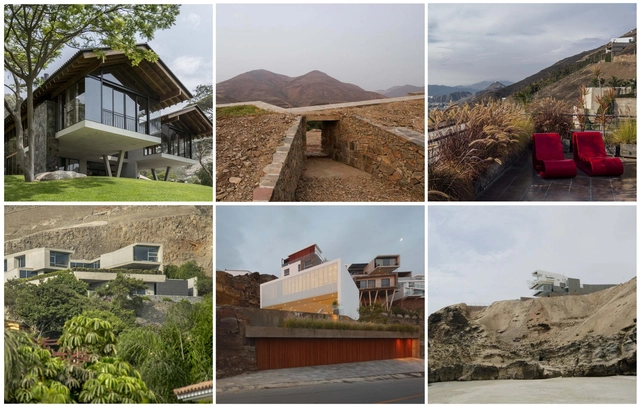
In architecture, one of the challenges faced by professionals is the design with sloping terrain. The steep slopes make it possible to think of an architecture that faces this context, being an opportunity to work in contact with the place, the spatiality, the visuals and the different heights.

Peru in the western and central part of South America, with its multiple geographical conditions in its three large regions -coast, andean and jungle-, has an architecture that is particularly committed to its landscape. The range of varied solutions has a unique and contextual architecture. The following list shows 10 residential projects in Peru, which reveal diverse architectural approaches.

Peruvian Houses on Sloping Ground: 10 Examples in Section - Image 1 of 4Peruvian Houses on Sloping Ground: 10 Examples in Section - Image 2 of 4Peruvian Houses on Sloping Ground: 10 Examples in Section - Image 3 of 4Peruvian Houses on Sloping Ground: 10 Examples in Section - Image 4 of 4Peruvian Houses on Sloping Ground: 10 Examples in Section - More Images+ 20

Subscriber Access

From Chile to Mexico: 30 Houses on the Coast of the Pacific Ocean

Is there only one way to inhabit the coast? The Pacific coast, the largest ocean on earth, is a vast territory with a great diversity of temperature, winds, and topography, among others. Consequently, it has a great variety of ecosystems, ranging from the freezing point near the poles, vast deserts and forests, to the hot tropical rainforest. Such majestic diversity is no stranger to architecture, responding to the different contexts in which it is placed. As a result, there is a great variety of architectural works, all of which share in framing the views of the sea.

The following list shows 30 residential projects along the Latin American Pacific coastline, revealing the diverse architectural approaches that exist along the coast.

From Chile to Mexico: 30 Houses on the Coast of the Pacific Ocean - More Images+ 27

Living in the Amazon in the 21st Century: A Planning and Urban Design Guide for Cities in the Peruvian Lowland Rainforest

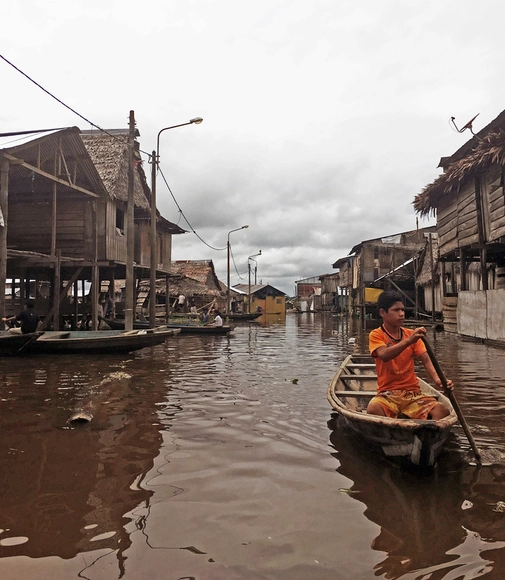
Addressing the universe of the world's largest tropical forest, the book 'Living in the Amazon in the 21st Century: A Guide to Urban Planning and Design for Cities in the Peruvian lowland rainforest', has been selected as a finalist in the category of publications at the 12th Ibero-American Biennial of Architecture and Urbanism. The issue, published in 2019 as part of the PUCP Architecture Publications, in the framework of the CASA (Self-Sustainable Amazonian Cities) project of the Climate Resilient Cities initiative of IDRC, FFLA and CDKN, focuses its research on the department of Loreto, presenting itself as "a guide for architecture and urban design, for settlements in the Amazon forest, including the social processes to be considered".

Living in the Amazon in the 21st Century: A Planning and Urban Design Guide for Cities in the Peruvian Lowland Rainforest - 1 的图像 4Living in the Amazon in the 21st Century: A Planning and Urban Design Guide for Cities in the Peruvian Lowland Rainforest - 2 的图像 4Living in the Amazon in the 21st Century: A Planning and Urban Design Guide for Cities in the Peruvian Lowland Rainforest - 3 的图像 4Living in the Amazon in the 21st Century: A Planning and Urban Design Guide for Cities in the Peruvian Lowland Rainforest - 4 的图像 4Living in the Amazon in the 21st Century: A Planning and Urban Design Guide for Cities in the Peruvian Lowland Rainforest - More Images+ 2

Urban Life: Ideas for the Sustainable Urban Transformation of Lima

The first “Urban Life Competition: Ideas for Sustainable Urban Transformation” was launched as part of an initiative by the Spanish Agency for International Development Cooperation (AECID) in collaboration with the Ibero-American General Secretariat (SEGIB), under the framework of the LAIF City Life initiative and with the support of the European Commission. On June 15, 2022, the appointed jury announced the winning ideas, selected from over 90 proposals from 15 Latin American countries.

Urban Life: Ideas for the Sustainable Urban Transformation of Lima - Imagen 1 de 4Urban Life: Ideas for the Sustainable Urban Transformation of Lima - Imagen 2 de 4Urban Life: Ideas for the Sustainable Urban Transformation of Lima - Imagen 3 de 4Urban Life: Ideas for the Sustainable Urban Transformation of Lima - Imagen 4 de 4Urban Life: Ideas for the Sustainable Urban Transformation of Lima - More Images+ 3

Subscriber Access

Luis Miró Quesada Garland: A Forerunner of Modern Architecture in Peru

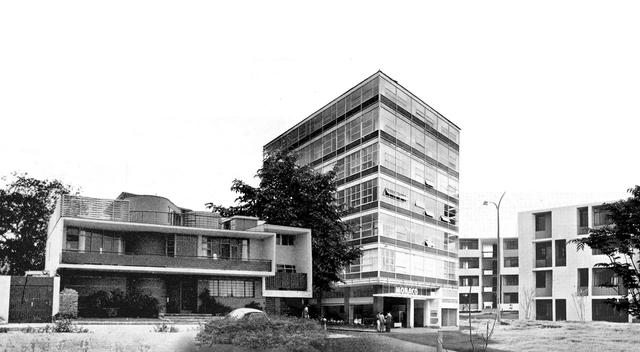
During the first decades of the twentieth century, when a traditional architectural outlook of classical languages and order still ruled, the architect Luis Miró Quesada Garland (1914-1994) was a fundamental precursor to the change of mentality that would lead Peru towards a contemporary and modern architecture.

Luis Miró Quesada Garland: A Forerunner of Modern Architecture in Peru - Image 1 of 4Luis Miró Quesada Garland: A Forerunner of Modern Architecture in Peru - Image 2 of 4Luis Miró Quesada Garland: A Forerunner of Modern Architecture in Peru - Image 3 of 4Luis Miró Quesada Garland: A Forerunner of Modern Architecture in Peru - Image 4 of 4Luis Miró Quesada Garland: A Forerunner of Modern Architecture in Peru - More Images+ 18

Subscriber Access

DIT Project: Building a Space for Children in Rímac

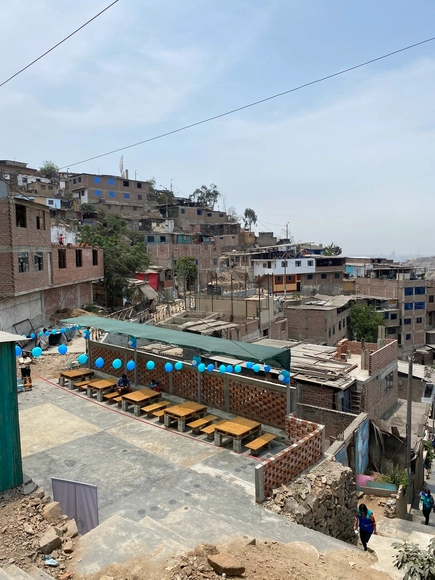
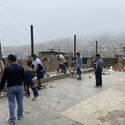
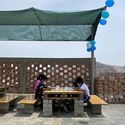
In Peru, communal kitchens (ollas comunes) are self-managed neighborhood initiatives located in vulnerable areas. Driven by the food and educational insecurity triggered by the pandemic, these spaces have assumed a vital role in child development, transforming themselves into neighborhood schools. Within this context, "DIT: Building a Space for Children" emerged—a project selected for the XII Ibero-American Biennial of Architecture and Urbanism. Through this initiative, architects Gian Franco Pedreschi, Sergio Iván Puch, and Jhordano Zabanick, together with the community of the AA.HH. Horacio Zevallos, intervened in the public space adjacent to a communal kitchen in the Rímac district, improving the residents' quality of life.

DIT Project: Building a Space for Children in Rímac - Image 1 of 4DIT Project: Building a Space for Children in Rímac - Image 2 of 4DIT Project: Building a Space for Children in Rímac - Image 3 of 4DIT Project: Building a Space for Children in Rímac - Image 4 of 4DIT Project: Building a Space for Children in Rímac - More Images+ 5

Subscriber Access

Moray, the Lost Territory in Peru: Experiencing Muyus

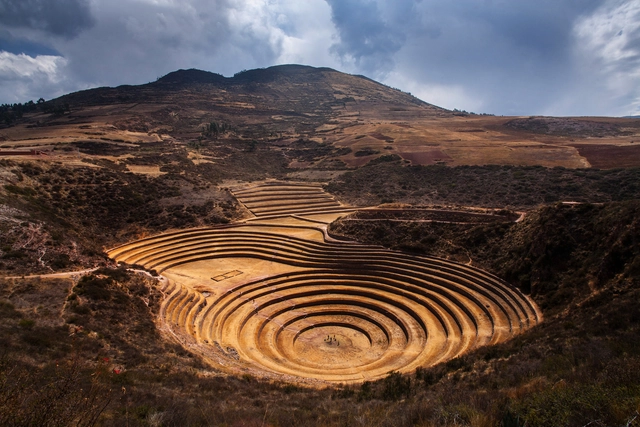
The project “Moray, the lost territory – Experiencing Muyus” was developed as part of AAVS Nanoturismo, an experimental teaching, research, and development program by the AA Visiting School of the Architectural Association, School of Architecture in London, United Kingdom. It was carried out by a multidisciplinary team in 2019 in Maras, Cusco, Peru.

Nanotourism reconsiders traditional tourism, shifting it toward a critical, creative, and local perspective. Accordingly, the study utilized the PAR (Participatory Action Research) method, which, through participation, action, and research, identified key “hidden” aspects within this context.

Subscriber Access

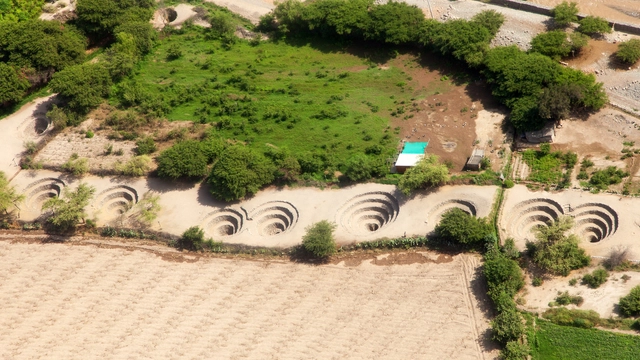
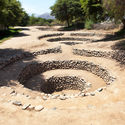
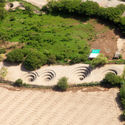
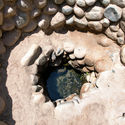
The Nazca aqueducts, an ancient hydraulic system that enables water collection in the desert

Set in the heart of one of the world's most arid deserts, the Nasca aqueducts form a hydraulic system that, for nearly two thousand years, has demonstrated advanced geological and hydrological knowledge. This system allows water to be sourced for both human consumption and agriculture, creating fertile oases in the desert. The Nasca Aqueducts represent a unique hydraulic system in the Americas, owing to their distinct design, construction technique, location, and function. They serve as an exceptional testament to the capacity of ancient societies to overcome adverse conditions, offering solutions that could be applied to the climate challenges of our time.

The Nazca aqueducts, an ancient hydraulic system that enables water collection in the desert - Imagen 1 de 4The Nazca aqueducts, an ancient hydraulic system that enables water collection in the desert - Featured ImageThe Nazca aqueducts, an ancient hydraulic system that enables water collection in the desert - Imagen 2 de 4The Nazca aqueducts, an ancient hydraulic system that enables water collection in the desert - Imagen 3 de 4The Nazca aqueducts, an ancient hydraulic system that enables water collection in the desert - More Images

Aesthetics: The Different Uses of Color in Latin American Houses

How relevant is the use of color in architecture? Throughout history, we find various scenarios where color takes centre stage in its integration with the architectural work. Nowadays this is no exception. This is because colour is a medium that can be used to provoke deep and immediate emotions and reactions in the person observing. Because of this, colour plays an important role in the architectural reading, as it has the power to clarify the components that make it up or, on the contrary, to change the perception of the work or space.

The following list shows various Latin American housing projects that have had a particular approach to color in their composition. In them, we see the conception of color as the integrator of the work, or as a means of enhancing a particular element, be it interior or exterior.
Subscriber Access

Femingas: Participatory Construction with a Gender Perspective in Ecuador

In the field of design and construction, the question of gender is a point of conflict: who has the possibility of building? What are the alternatives for us architecture professionals? These are the questions that Taller General (re)think about. It is from these questions that Femingas, a participatory construction conference with a gender perspective, arose. These are manifested as an alternative to the construction of "mingas", days of joint work between the members of a community to achieve a common good.
Femingas: Participatory Construction with a Gender Perspective in Ecuador - Image 1 of 4Femingas: Participatory Construction with a Gender Perspective in Ecuador - Image 2 of 4Femingas: Participatory Construction with a Gender Perspective in Ecuador - Image 3 of 4Femingas: Participatory Construction with a Gender Perspective in Ecuador - Image 4 of 4Femingas: Participatory Construction with a Gender Perspective in Ecuador - More Images+ 16

Subscriber Access

3D Data Capture to Virtualize Cultural Heritage: The Example of the Puruchuco Palace in Lima

Peru is a country with an extensive, rich, and deeply significant archaeological heritage. Unfortunately, the passage of time has brought severe deterioration. In their article, "Captura de datos 3D para virtualizar el patrimonio cultural" (3D Data Capture to Virtualize Cultural Heritage), authors Norma León Lescano, Yann Barnet, and Alvaro Racchumi outline the method they used to capture a three-dimensional replica of the Palace of Puruchuco. By doing so, they aim to provide the necessary information to guide and promote the virtualization of this remarkable cultural heritage, expanding its reach, appreciation, and preservation.

Subscriber Access

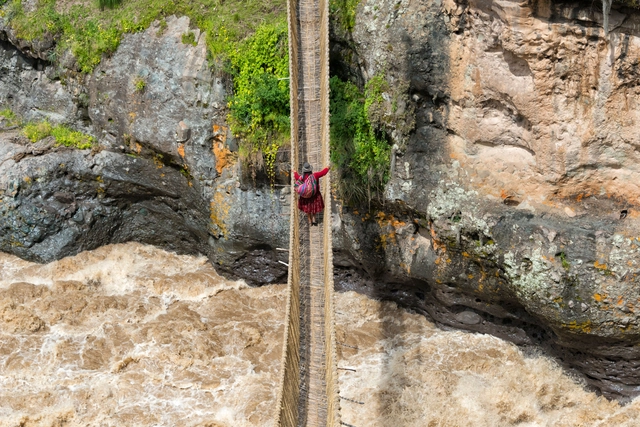
Q’eswachaka, a handwoven rope bridge rebuilt every year

In the mountain range of the Andes in Peru, at over 3,700 meters above sea level, lies the Q'eswachaka suspension rope bridge, declared an Intangible Cultural Heritage of Humanity by UNESCO. The hand-woven bridge, which connects both sides of a gorge over the Apurímac River, has become the last remaining Inca bridge in use to survive modern times. This has been made possible through the transmission of Inca culture and engineering across generations, which renew the bridge every year to ensure its preservation.

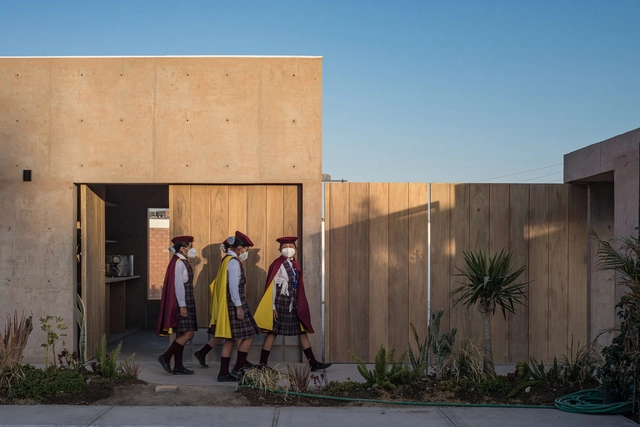
The Kindergarten in the Cerro Colorado Community of Arequipa is a Finalist in the 2022 FAD Awards

In the latest edition of the FAD Awards for Architecture and Interior Design, the Kindergarten in the Cerro Colorado Community, located in the city of Arequipa, was selected as a 2022 International FAD Finalist. Designed by architects Ander Bados Sesma and Betsaida Curto Reyes, the school was developed as an expansion of the Villa Magisterial school by the NGO All Hands and Hearts following severe flooding in the city.

The Kindergarten in the Cerro Colorado Community of Arequipa is a Finalist in the 2022 FAD Awards - Image 1 of 4The Kindergarten in the Cerro Colorado Community of Arequipa is a Finalist in the 2022 FAD Awards - Image 2 of 4The Kindergarten in the Cerro Colorado Community of Arequipa is a Finalist in the 2022 FAD Awards - Image 3 of 4The Kindergarten in the Cerro Colorado Community of Arequipa is a Finalist in the 2022 FAD Awards - Image 4 of 4The Kindergarten in the Cerro Colorado Community of Arequipa is a Finalist in the 2022 FAD Awards - More Images+ 12

Vía Crisis: Visual poetry that transforms a highway into an art gallery

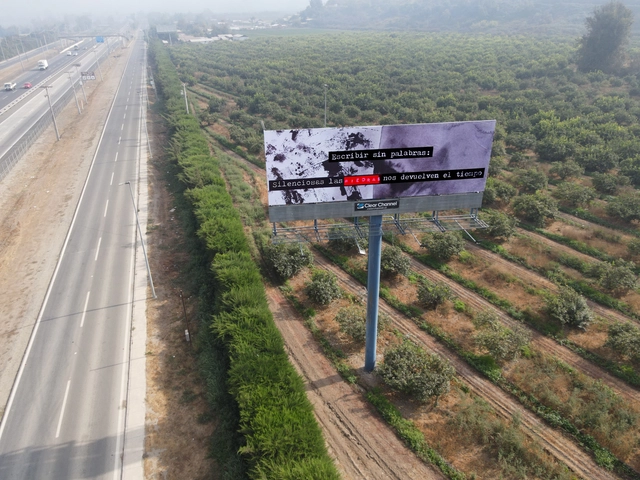
The visual poetry exhibition "Vía Crisis" invites motorists traveling along Route 68—from Santiago toward Valparaíso—to pause, observe, and discover territories that often go unnoticed. The exhibition, which brings together the work of various visual poets, consists of 15 billboards placed along 110 kilometers starting from Curacaví, Chile. This project is organized by the urban art gallery Metro21 with funding from the National Fund for Cultural Development and the Arts (Fondart). It will be on display along the highway from April 15 to May 15 of this year, creating an artistic journey meant to be appreciated at speed.

Subscriber Access

How Sasaki Is Shaping the Future of the World’s Higher Education Campuses

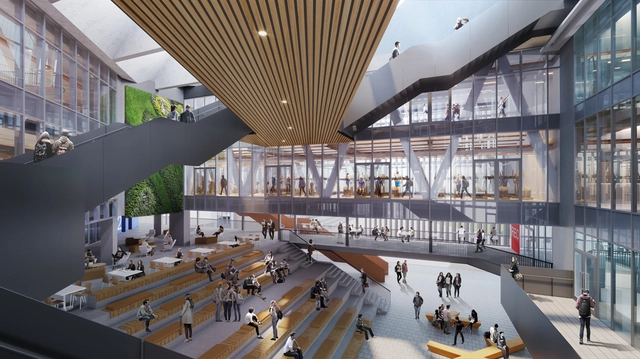
Over the past few years, educational campuses around the world have been confronted with various trends and challenges of change, such as pandemic adaptation, climate crisis, the responsibility for sustainable design and online teaching. Sasaki Architecture, with offices in Boston, Denver and Shanghai, specialises in planning educational campuses around the world. With a broad portfolio of projects at various scales of intervention, recent projects in the United States, China, Mexico and Peru stand out.

How Sasaki Is Shaping the Future of the World’s Higher Education Campuses - Image 1 of 4How Sasaki Is Shaping the Future of the World’s Higher Education Campuses - Image 2 of 4How Sasaki Is Shaping the Future of the World’s Higher Education Campuses - Image 3 of 4How Sasaki Is Shaping the Future of the World’s Higher Education Campuses - Image 4 of 4How Sasaki Is Shaping the Future of the World’s Higher Education Campuses - More Images+ 8

The Power of Data: Exploring Architectural Language through the Use of Artificial Intelligence

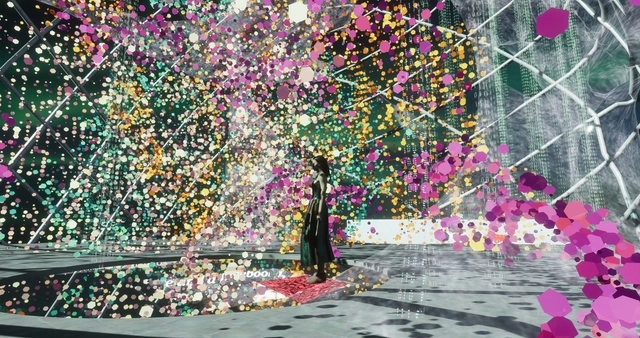
The Power of Data is an exhibition created in a virtual building, conceived by three-dimensional geometries based on various artificial intelligence algorithms. The project was created by the OLA (Online Lab of Architecture) team of research architects formed by Jennifer Durand (Peru), Daniel Escobar (Colombia), Claudia Garcia (Spain), Giovanna Pillaca (Peru) and Jose Luis Vintimilla (Ecuador).

The Power of Data: Exploring Architectural Language through the Use of Artificial Intelligence - Imagem 1 de 4The Power of Data: Exploring Architectural Language through the Use of Artificial Intelligence - Imagem 2 de 4The Power of Data: Exploring Architectural Language through the Use of Artificial Intelligence - Imagem 3 de 4The Power of Data: Exploring Architectural Language through the Use of Artificial Intelligence - Imagem 4 de 4The Power of Data: Exploring Architectural Language through the Use of Artificial Intelligence - More Images+ 11