Thiago Jardim

BROWSE ALL FROM THIS AUTHOR HERE
↓
Subscriber Access

The rise and fall of New York's urban density

For two hundred years, New York City has been the largest metropolis in the United States and continues to outpace its competitors. The city is one of the oldest and most prosperous in the country. Its metropolitan area produces goods and services equivalent in monetary terms to half of Brazil's total GDP. Its urban structure, productive capacity, and high per capita income reflect its privileged global standing. One of the keys to understanding its rise lies in the very beginning of its history and its long developmental path. In 1624, the land of Manhattan Island was purchased from the indigenous Lenape people by Dutchman Peter Minuit of the Dutch West India Company, who founded New Amsterdam. The island is an extensive, flat 59-square-kilometer area situated at the mouth of the Hudson and East rivers. The bay allowed large ships to anchor and offered a strategic, easily defensible position. 
Subscriber Access

What is the role of markets in urban policy?

The relationship between the market and the state has traditionally been understood as a three-tiered framework. The state guarantees property rights and other preconditions for markets. Markets operate within this structure and deliver efficient outcomes. The state corrects market failures through complementary institutions, such as, in some cases, social welfare policies. Managing cities is no different, and issues such as economic development, accessibility to goods and services, mobility, sustainability, freedom, and well-being depend on the relationship between markets and the state.

Subscriber Access

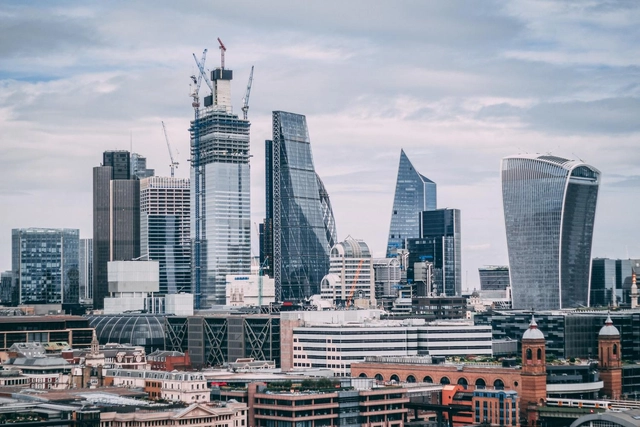
London: The Economic History of a Resilient City

The existence of urban centers as hubs of trade and culture spans millennia. As construction, water supply, and transportation technologies developed—especially vessels capable of carrying large volumes of goods and people—small villages transformed into major cities.

By 500 BCE, there were already one million inhabitants in Rome. Yet it was only after 1760, following the Industrial Revolution in England, that cities began to take center stage. Since then, cities have faced monumental challenges, and so far, absolutely nothing has been able to disperse populations or dismantle large urban centers.

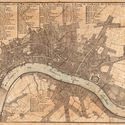
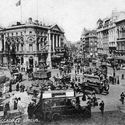
London: The Economic History of a Resilient City - Imagen 1 de 4London: The Economic History of a Resilient City - Imagen 2 de 4London: The Economic History of a Resilient City - Imagen 3 de 4London: The Economic History of a Resilient City - Imagen 4 de 4London: The Economic History of a Resilient City - More Images+ 3