Romullo Baratto is an architect with a PhD from FAUUSP and Managing Editor of ArchDaily. He previously coordinated the editorial team of the 11th São Paulo Architecture Biennial and served as Managing Editor of ArchDaily Brasil, where he led the platform to win the FNA Award—the first time the honor was granted to a media outlet. He collaborated on the editing of the book "Concrete Jungle", published by gestalten, and has curated architecture exhibitions in Brazil, Chile, Denmark, and Italy, as well as delivered lectures and moderated debates in Spain, the United States, and Portugal. His doctoral thesis investigates the urban landscapes of São Paulo through cinema. His work spans academic research and editorial practice, communicating architecture through texts, interviews, lectures, curatorship, and photography. Follow him on Instagram @romullobf.
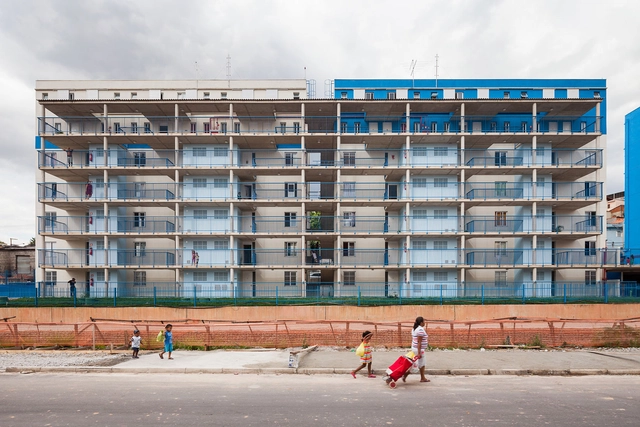
Gathering innovative, sustainable architectural designs for social housing that enable a reduction in energy consumption is the objective of the National Competition of Architectural Ideas for Energy Efficiency in Social Housing, launched this Monday (15) by the German governmental cooperation agency Deutsche Gesellschaft für Internationale Zusammenarbeit (GIZ) GmbH. Applications are open until April 26.
One hundred and twenty civil society organizations (NGOs, institutes, foundations, collectives, and social movements) advocating for the right to the city sent an open letter to the Mayor of São Paulo, Bruno Covas, demanding that the Strategic Master Plan (PDE) review process be conducted by the Municipal Government in a way that guarantees full public participation, respecting the principles of democracy, popular sovereignty, and transparency, even amid the pandemic.
Through its Seminar on Culture and Contemporary Reality course, Escola da Cidade, in collaboration with the Carmen Portinho Feminist Collective, hosted seven women to discuss architectural production in today's context and how gender issues intersect with this field.
The 27th World Congress of Architects launched its online program this week, preceding the in-person events scheduled to take place between July 18 and 22. Social inclusion, the periphery, and architectural interventions in favelas were the topics of debates featuring Fabienne Hoelzel, Maria Alice Rezende de Carvalho, Alfredo Brillembourg, Jorge Mário Jáuregui, Alejandro Echeverri, and Adriana Levisky.
Last week, we announced the 15 finalists for the 2021 Obra do Ano, an award celebrating the best of Lusophone architecture by inviting our readers to select their favorite projects built in Portuguese-speaking countries. The day has come to find out the winners of ODA 2021.
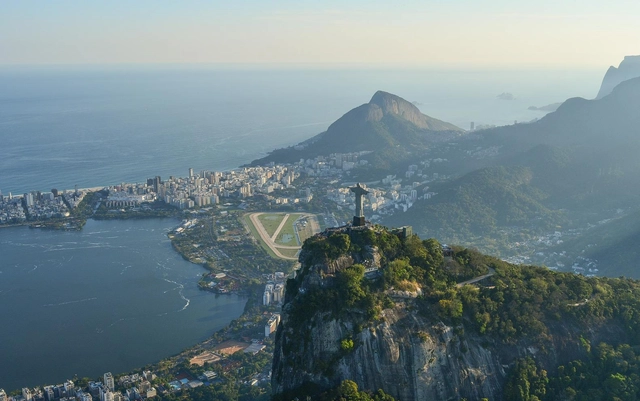
The 27th World Congress of Architects is hosting, from April 19 to 22, the UIA2021RIO Open Week on Diversity and Mixture. The event will feature three debates and the Weekly Live Session – where specialists will delve deeper into the main issues raised in the discussions and answer questions from the public.
Portugal is a fascinating country when it comes to architecture. With a population of just over 10 million, its architectural output far exceeds what its population or territorial scale would suggest, and this art is not only a part of but deeply rooted in the national culture. With the aim of exploring the architects, projects, and stories behind landmark Portuguese architecture, Sara Nunes, from the architectural film production company Building Pictures, launched the podcast No País dos Arquitectos, where she talks with leading figures of contemporary Portuguese architecture.
These conversations offer a chance to discover the people, behind-the-scenes moments, processes, and references of prominent architects. For the first episode, Sara talks with none other than João Luís Carrilho da Graça about his design for the Lisbon Cruise Terminal, completed in 2018. Read the full interview or listen to the podcast below.
The 6th edition of the Lisbon Architecture Triennale, taking place in 2022, is themed Terra. Carrying different meanings depending on the scale and the observer, Terra expresses territory, the city, the landscape, the place where we belong, or a continent seen from the sea. It can be a habitable planet or matter for cultivation. It can be in excess or lacking, and it can be an obstacle or an element in building communities. Driven by a sense of urgency, the Triennale 2022 calls for reflection on all these dimensions, which are closely related to architecture.
With the aim of getting to know the architects, projects, and stories behind landmark Portuguese architecture, Sara Nunes, from the architectural film production company Building Pictures, launched the podcastNo País dos Arquitectos, where she talks with leading names in contemporary Portuguese architecture.
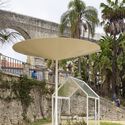
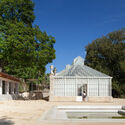
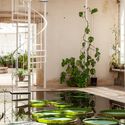
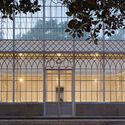
In her first episode, Sara spoke with architect João Luís Carrilho da Graça about his Lisbon Cruise Terminal. Now, for the second interview, she welcomes João Mendes Ribeiro for a conversation about heritage, the adaptive reuse of historical structures, and landscape architecture, focusing on the rehabilitation of the greenhouse at the Botanical Garden of Coimbra, the city where the architect is based. Read the full interview or listen to the podcast below.
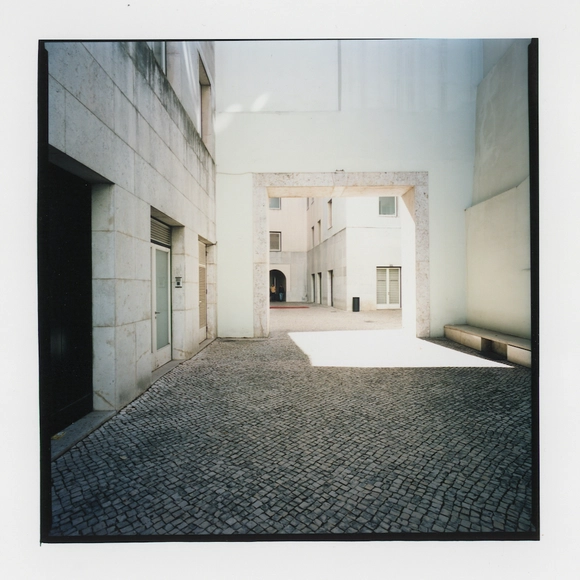
Arquigrafias. Guido Guidi and Álvaro Siza is the exhibition marking the public reopening of Casa da Arquitectura after the lockdown. Curated by Paula Pinto and Joaquim Moreno, the exhibition of photographs by Italian photographer Guido Guidi of the work of architect Álvaro Siza is on display at the Casa Gallery from April 17 to October 3, 2021.
The curators selected eight projects located in Lisbon, Porto, and Matosinhos, represented through 97 images captured by Guido Guidi's lens. Arquigrafias thus offers a “dialogue between the photographic work of Guido Guidi (Cesena, 1941) and the architectural work of Álvaro Siza (Matosinhos, 1933), constituting a unique encounter between two singular figures in their respective fields.”
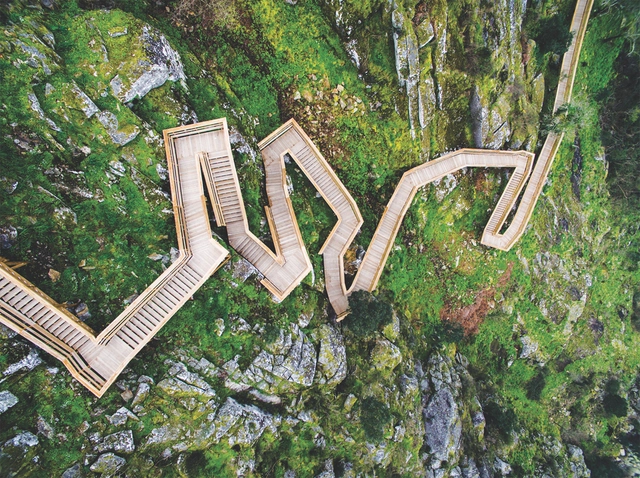
Applications are now open for the National Wood Architecture Award, PNAM’21. Submissions for this prestigious Portuguese architecture award are open until June 30, 2021. Held biennially, PNAM aims to encourage and promote Portuguese forest reserves through innovation, enhancement, circularity, and the promotion and use of wood and wood-derived products in buildings.
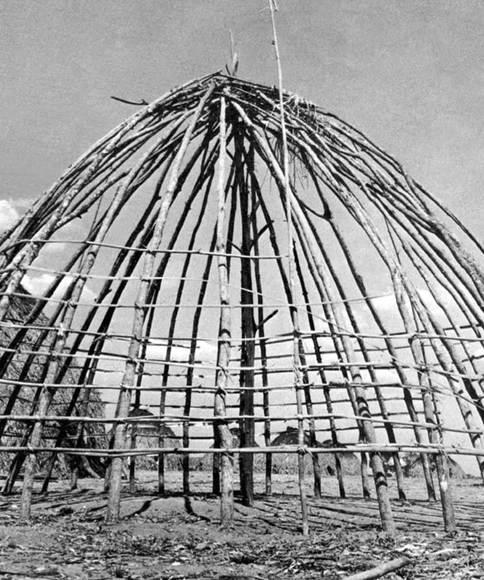
The Center for Studies and Research in Indigenous Technologies, Tecnoíndia—founded by UFMT professor José Afonso Botura Portocarrero, an architect with a PhD from the School of Architecture and Urbanism at USP, and retired UFMT anthropologist Maria Fátima Roberto Machado, who holds a PhD from the National Museum of the Federal University of Rio de Janeiro—is releasing a new book that compiles articles produced over 20 years of research and teaching on Indigenous technologies and architecture in Mato Grosso.
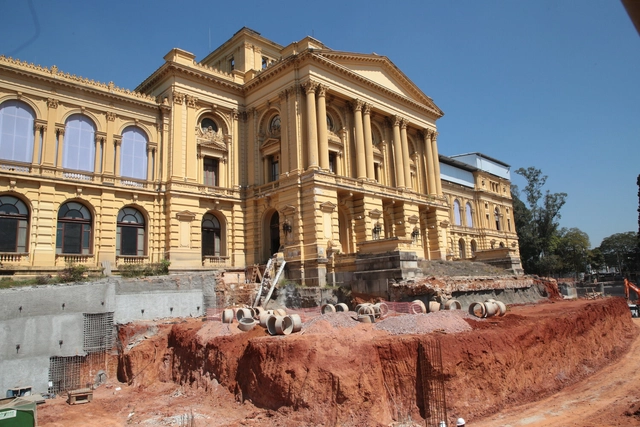
Photo: Governo do Estado de São Paulo, via VisualHunt.com
The Ipiranga Museum, located in São Paulo's south zone, has launched a virtual tour that allows users to follow the progress of the restoration and expansion of the building and its immediate surroundings. The digital tour features 360-degree camera footage captured across various spaces of the building and construction site, providing an overview of the renovation's progress.
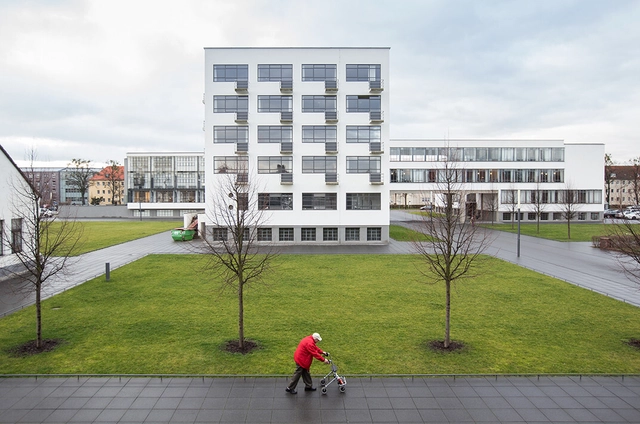
Portugal is the host country for the 2021 European Conference on Architectural Policies — CEPA, and as such, will organize, through the Portuguese Association of Architects (Ordem dos Arquitectos), a discussion forum to analyze, discuss, and present proposals for architectural policies at the European level. CEPA 2021 presents an opportunity to respond to the challenge launched by the President of the European Commission, Ursula von der Leyen, toward building a New European Bauhaus, proposing a dialogue on current challenges for a post-pandemic future at the intersection of architecture, art, the city, and politics.
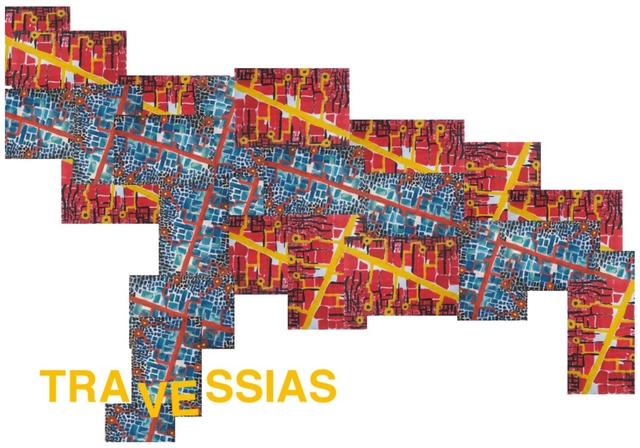
Today, the IABsp announced the winning team of the co-curatorship competition for the 13th International Architecture Biennale of São Paulo. Titled Travessias, the team comprises nine Brazilian members from various fields: Carolina Piai Vieira, Larissa Francez Zarpelon, Louise Lenate Ferreira da Silva, Luciene Gomes, Pedro Cardoso Smith, Pedro Vinícius Alves, Raíssa Albano de Oliveira, Thiago Sousa Silva, and Viviane de Andrade Sá.
With the goal of discovering the architects, projects, and stories behind landmark Portuguese architecture, Sara Nunes, of the architectural film production company Building Pictures, launched the podcastNo País dos Arquitectos, where she talks with key figures of contemporary Portuguese architecture.
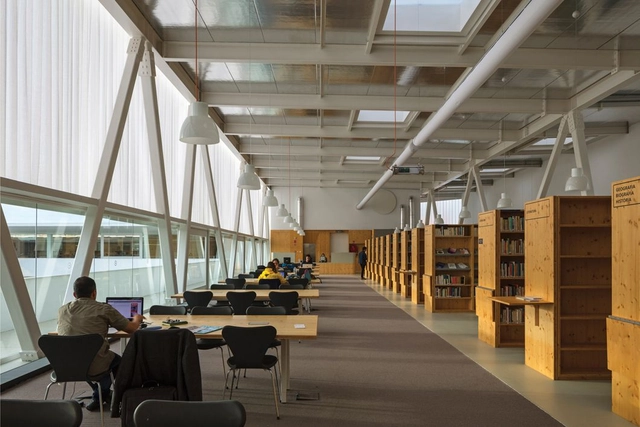
In its first episóde, Sara spoke with architect João Luís Carrilho da Graça about his Lisbon Cruise Terminal, and then welcomed João Mendes Ribeiro for a conversation on heritage, the reuse of old structures, and landscape architecture, based on the rehabilitation project of the Coimbra Botanical Garden greenhouse. In this third episode, Sara talks with architect Inês Lobo about the Public Library and Regional Archive of Angra do Heroísmo. Read the full interview or listen to the podcast below.
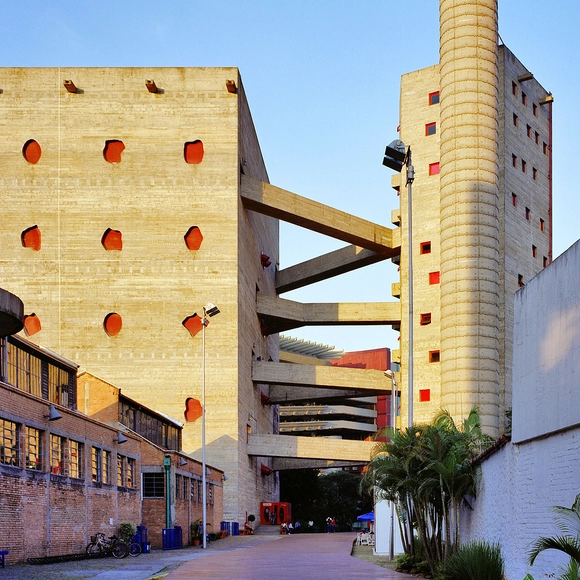
Few public figures were more deeply Brazilian than the Italian architect Lina Bo Bardi. Arriving in Brazil shortly after World War II, she grew so attached to Brazilian culture that she became one of its main interpreters, capable of an understanding of local traditions that was both rigorous and comprehensive.
Architecture critic and essayist Francesco Perrotta-Bosch examines the trajectory of this brilliant artist in light of the following question: how was a foreigner able to see so much of a country that was not her own, to the point of translating it for Brazilians themselves?
Applications are open until June 30 for the 4th Tomie Ohtake Institute Leroy Merlin Design Award, aimed at college students and recent graduates from all fields. The award seeks to recognize proposals that highlight and conceptualize the relationship between design and other disciplines, such as communication, architecture, biology, engineering, fashion, technology, economics, physics, education, mathematics, and chemistry, among others. The theme of this fourth edition is the verb to welcome.