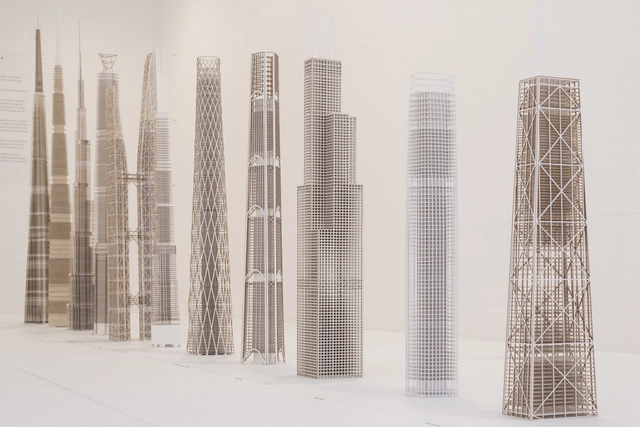
With its 80 years of experience in bringing together architecture and structural engineering Skidmore, Owings & Merrill (SOM) remains groundbreaking to this day, particularly in the construction of gigantic skyscrapers, the so-called “supertalls”. The exhibition and the accompanying DETAIL volume present the approaches, the roots and the theoretical background of the SOM Structural Group. One central question is how far architecture can go – in terms of height. Typical structural concepts and individual details from numerous projects across the world serve to illustrate processes of solution finding. The results illustrate the firm’s core values: simplicity, clarity, hierarchy, efficiency, economy and advancement. A number of iconic SOM buildings such as the John Hancock Center and the Sears Tower help to position the example projects – ranging from James Turrell’s Skyspace to Burj Khalifa – within the context of SOM’s complete work. The innovative structural solutions presented here indicate how SOM enables the creation of “next generation” buildings.
Annual AIA National Photography Competition is open to all actively registered architects in the US, AIA members, Assoc. AIA members and member of student organizations of AIA.
Deadline is April 1, 2016.
Subject must be of architecture and taken by the entrant; color or black & white accepted.
14 top winners will be exhibited at AIA National Convention in Philadelphia and note cards made from those winners.
All entry presentation will be made available for public showing to interested chapters of AIA
For architects, drawing is a thinking process. Sketching by hand onto paper without having any predetermined built form in mind is often the springboard for new hypotheses. With the rise of digital representation in architecture, has the computer superseded the hand in the exploration of ideas?
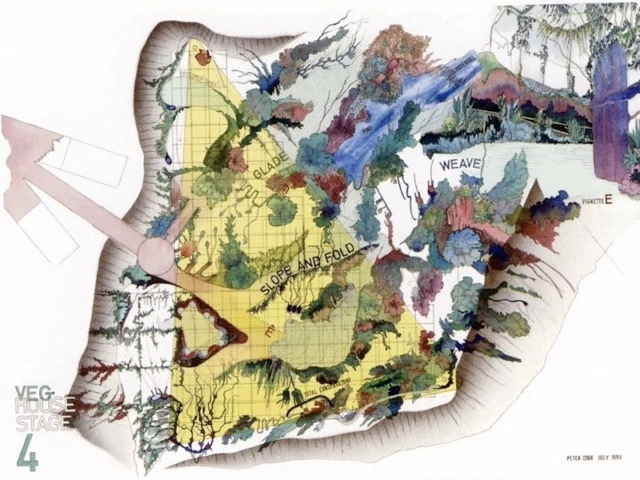
This RIBA London seminar sees Professor Sir Peter Cook (co-founder of Archigram, director of CRAB Studio) and Professor Marcos Cruz (Bartlett) discuss the boons and limitations of digital representation in architecture, and the hybrid possibilities of using both in tandem.
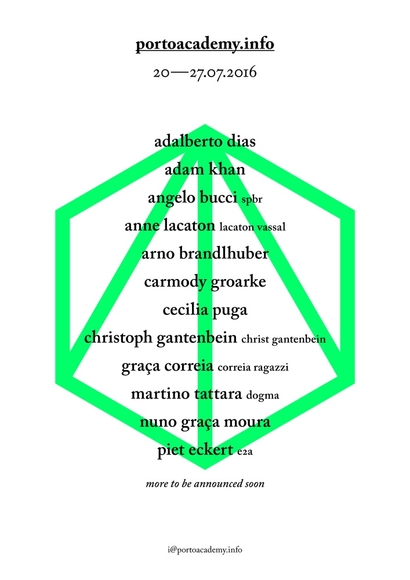
Porto Academy will happen from the 20th to the 27th of July 2016 at the Faculty of Architecture of the University of Porto (FAUP), one of the most prestigious Faculties in the world which was designed by the Pritzker awarded Álvaro Siza. The summer school includes lectures, workshop studios and bus trips.
ABOUT :: [TRANS-] is a critically-reviewed academic journal published in print and online, inviting expressions of interest for submitting works of design, writing, or multi-media on the topic of design process and design communication for Vol. No. 2 to be published in May 2016.
TOPIC :: In the second volume, [TRANS-] will explore the topic of [TRANS-]lation. In a largely results-based society, how do designers evaluate process? How can a more thorough assessment of the translation that occurs during creative activities make us better communicators and collaborators with end users, consultants, clients, and all others we affect through design?
This open idea and concept competition is seeking solutions for the development of a future business campus in Vantaankoski. Competitors are invited to present concepts that focus on the area's business ecosystem and the new opportunities it will create in the fields of business operations, work, occupational wellbeing and the promotion of creativity.
These concept descriptions should include an operational idea for the area and a description of the ecosystem formed by the businesses, services, functionalities, transport connections, buildings and infrastructure there. The competition entries may cover all of these aspects, or focus on only some of them.
The RAMSA Travel Fellowship is a $10,000 prize awarded annually by the Partners of Robert A.M. Stern Architects for the purpose of travel and research. More specifically, the Fellowship seeks to promote investigations of the perpetuation of tradition through invention – key to the firm’s own work. The prize is intended to nurture emerging talent and will be awarded to an individual who has proven insight and interest in the profession and its future, as well as the ability to carry forth in-depth research.
WHY: When it comes to the climate crisis, buildings have been a problem. According to Architecture 2030, nearly half of US CO2 emissions comes from buildings, mostly to heat, cool, and power them. But today we have the science, materials, and components to make buildings that can generate more energy than they consume. Buildings can be part of the solution.
Still, the idea of “green building” conjures up images of bad design for some. The misconception persists that sustainable buildings are inherently ugly, and beautiful buildings wasteful. Furthermore, both “green building” and great design have earned a reputation of elitism.
Deep Ellum developed in the late 1800s as a residential and commercial neighborhood on the east side of Downtown Dallas. The early 1900s flourished with industrial development, serving factory facilities for the Continental Gin Company and Henry Ford’s Model T. Deep Ellum’s real claim to fame was found in its music. By the 1920s, the neighborhood had become a hotbed for early jazz and blues musicians, hosting the likes of Blind Lemon Jefferson, Huddie “Leadbelly” Ledbetter, Texas Bill Day and Bessie Smith. Following WWII, the success of Deep Ellum started to fade. The ever-growing availability and use of the automobile
The 6th annual AZ Awards is now open for submissions!
The competition is open to architects, landscape architects, interior designers, product designers, clients, manufacturers and students for work completed before December 31, 2015. Entries will be juried by a panel of international design experts. (Keep an eye open for the jury announcement soon!)
Winners will be announced at the AZ Awards Gala in Toronto on June 17, 2016 in the presence of 400 attendees, industry leaders, architects, designers and AZ Awards finalists, joining the Gala from all over the world.
New York City has seen rapid redevelopment that has capitalized on previously undesirable locations. Sitting at the top of these locations are the sites that have access to waterfront. Most of the ventures in these areas are private economic interests that only address public value when there is a direct return on profit. If not taken into consideration many of these waterfronts will be absorbed and, with the constant return of people to the urban core, there lies a need to create public and cultural infrastructure. In a city that is filled with numerous icons, parks, theaters, and museums an
Dallas Architecture Forum, a non-profit organization dedicated to providing public education about architecture, design and the urban environment, will continue its 2015-2016 Panel Discussion Series on January 26, 2016 with “Making Fair Park Work.” Moderated by Mark Lamster, Dallas Morning News Architecture Critic, this panel is presented in partnership with the Dallas Festival of Ideas and the College of Architecture Planning and Public Affairs (CAPPA) at the University of Texas at Arlington.
The art installation, Salt - Microcosm of Life[Style] is currently exhibiting at 2015 Bi-city Biennale of Urbanism\Architecture (Hong Kong Edition). Stanley Pun and Rina Ko are recent graduates from London and Hong Kong and the work is a reflection of what ability do we have to influence the way we want to live - by changing our perspectives - and in turn, how it could shape our future city.
The Los Angeles Conservancy is now accepting applications for their 2016 Preservation Awards, which recognize outstanding achievement in the field of historic preservation in Los Angeles County. Applications are due by 5 p.m. on Friday, January 29, 2016.
An independent jury of experts in architecture, historic preservation, and community development will select the award recipients. Submissions that illustrate the value and power of preservation are encouraged from across Los Angeles County.
Projects honored in the past have varied widely, from sensitive restoration, rehabilitation, and adaptive reuse projects, to groundbreaking advocacy and education efforts undertaken by individuals or groups.
The Shivaji Competition seeks actual and impossible ideas to maintain human habitation on islands and deltas doomed by the predicted sea level rise of at least one meter in the 21st century. All entries will be submitted as animated GIFs for social media broadcast and museum exhibition. One finalist will be selected to participate in the Rising Waters Confab 2016 to be held on Captiva Island, Florida, USA in May, 2016. Roundtrip transportation provided. Visit Shivaji2016.com. All entries due on March 10, 2016. Free to enter.
With a population of 3.4 million inhabitants, Berlin is the largest city in Germany and one of the major enclaves of power and culture in Europe. The division of the city during the Cold War doubled the cultural offer. Two theaters, two philharmonic and two stadiums were built generating a great amount of establishments that after the unification enrich the collective culture. Berlin is the cultural capital of the country by excellence. Despite the atrocities it suffered in the past, the city is known for its religious tolerance and multiculturalism. Today the city coexists exemplarily withdifferent religions and cultures from
The competition includes offering a proposal for station 7, line 1 of Tabriz urban train (Tabriz University) which covers the following two axial subjects: 1. Design of station entrances 2. Design and interior architecture of the station
Participation Conditions and Enrollment in the Competition
Interested individuals, experts and designers (architects, interior designers, industrial designers, graphic designers, etc.) can take part in the competition. Participation in the competition in terms of individual, team and legal companies will be free. Competition secretariat recommends interested people to participate in the competition in terms of professional groups consisting of experts in the fields of architecture, interior
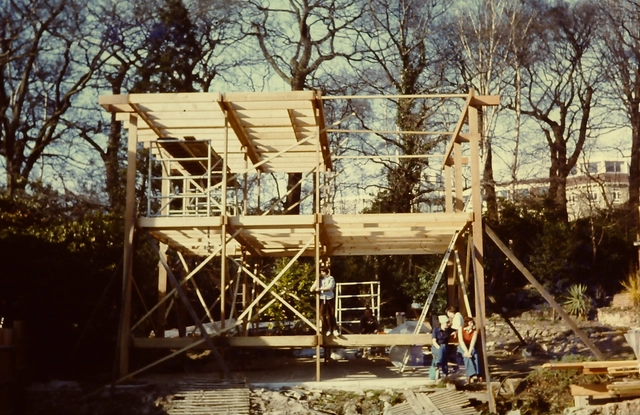
Presenting the work of the revolutionary architect Walter Segal, Walter’s Way – The Self-Build Revolution focuses on Segal’s work with the Lewisham self-builders of the 1980s and displays the application of Segal’s method today. Housed in and around a newly constructed section of a Segal house, from which visitors can experience the fundamental elements of the style, are original drawings, documents and furniture designed by Segal alongside archival films and photographs, plus contemporary photographs by Taran Wilkhu and a new interpretation of Segal’s technique by 2015 Turner Prize winner Assemble.



![Call For Submissions: [TRANS-] lation - Featured Image](https://snoopy.archdaily.com/images/archdaily/media/images/5694/f06b/e58e/cec2/8000/00d0/slideshow/open-uri20160112-18439-x06j8r.jpg?1452601447&format=webp&width=640&height=580)


![Installation: Salt - Microcosm of Life[Style] - Featured Image](https://snoopy.archdaily.com/images/archdaily/media/images/5692/f7b6/e58e/ce1b/2100/0151/slideshow/open-uri20160111-22598-j19b3h.jpg?1452472224&format=webp&width=640&height=580)