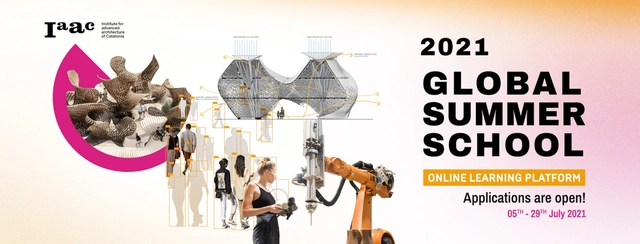
The Institute for Advanced Architecture of Catalonia (IAAC) is glad to launch another edition of the Global Summer School (GSS21), the 14th edition of the international summer educational program focussing on designing the future of our cities. The programme will take place online from IAAC Barcelona from July 5 through July 29.
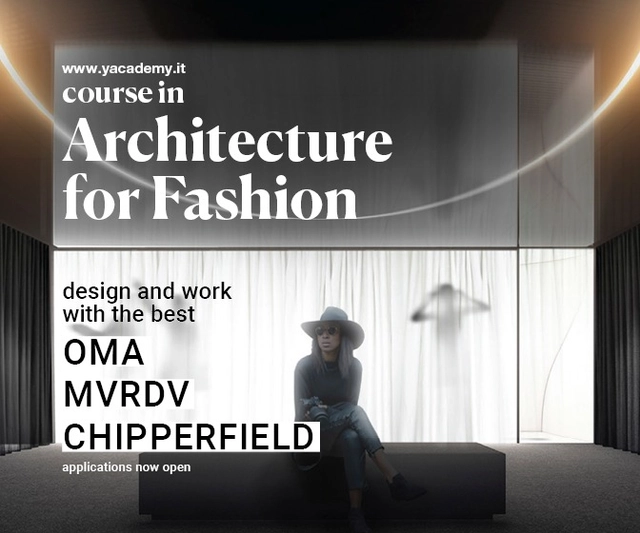
Architecture is a privileged tool of those brands characterized by an elevated positioning and that, beyond the quality of their own products, need to feed an imaginary of prestige, style, and refinement. From the showrooms to the stores, fashion needs architects as much as stylists, photographers, and modelers.
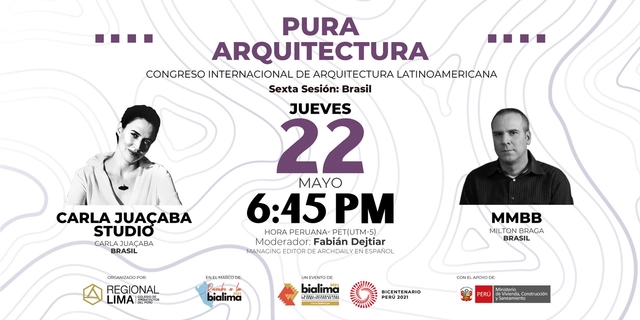
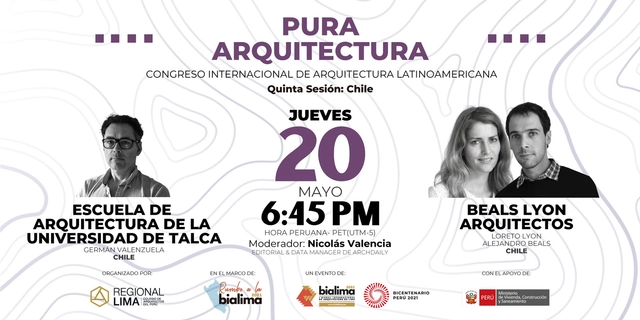
Pura Arquitectura: International Congress of Latin American Architecture takes place within the framework of Rumbo a la BIALIMA, the pre-biennial event of the Lima International Architecture Biennial - BIALIMA 2021, organized by the CAP Regional Lima.
The first issue of Revista Pliego is dedicated to the content developed during the Introduction to Design Knowledge course, which originated at the National University of La Matanza.
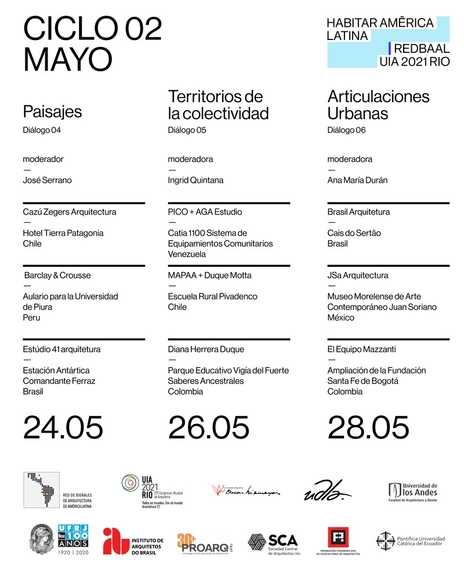
"Diálogos Habitar América Latina" (Latin American Living Dialogues) marks the presence of REDBAAL and the ON Award at the 27th UIA2021RIO World Congress: “All the worlds, just one world.” This program is scheduled for April, May, and June 2021, as well as during the Congress itself, held from July 18 to 22, 2021, in Rio de Janeiro, Brazil.
The Institute for Advanced Architecture of Catalonia (IAAC) is pleased to launch a new edition of the Global Summer School (GSS21), the 14th edition of the international summer educational program focused on designing the future of our cities. The program will take place online from IAAC in Barcelona, from July 5 to 29.
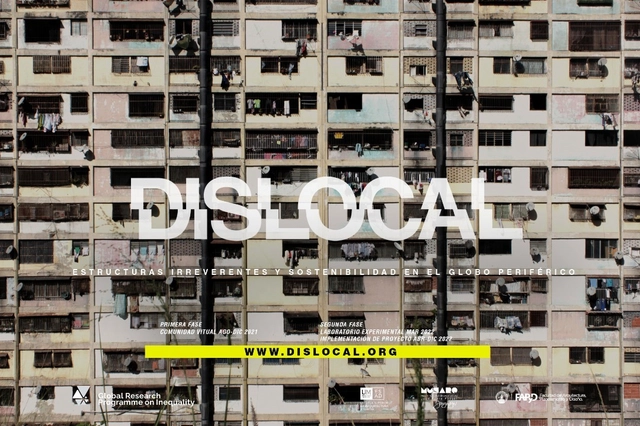
DISLOCAL: Irreverent structures and sustainability in the peripheral world, led by Venezuelan architects and a global network of gentle cooperation
Venezuelan architects from various latitudes have joined forces with global allies through an experimental university that seeks to "build, not simulate, reality with an eye on the global periphery."
The second cycle of the "Habitar América Latina" [Inhabiting Latin America] dialogues will take place this May. As a reminder, the first cycle occurred in April and featured three sessions: "Memoria de la Materia," "Memoria del Territorio," and "Materia del Territorio."
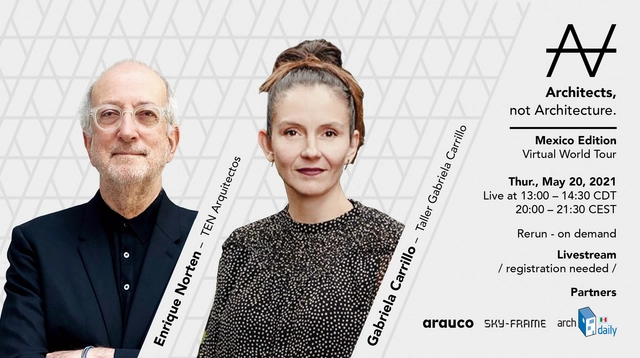
The unique AnA format offers a personal look into the architecture of renowned international firms. Speakers follow one rule: they cannot discuss their projects. Instead, the event focuses on their careers, influences, and key experiences, sharing the intellectual biography that has shaped the architects they are today.
Online and free, the Estadão Summit Urban Mobility 2021 discusses the future of cities
"Transitioning to a New City" is the theme of the Estadão Summit Urban Mobility 2021, which runs through Friday (21) and is entirely online and free of charge. Experts from Brazil and around the world are discussing the transformations the current pandemic has brought to how we move. Highlights include socio-spatial inequality, urban planning, the boom in active mobility, and trending concepts such as Paris's "15-minute city."
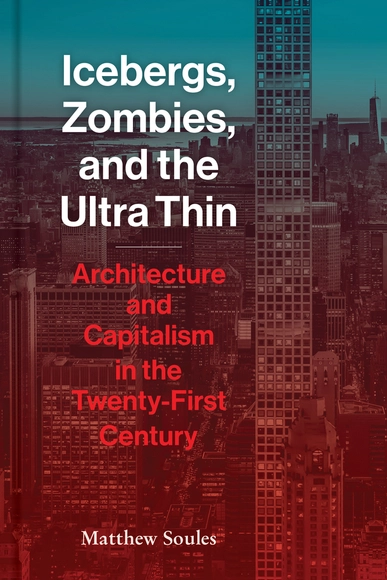
The global financial crisis of 2008 revealed the damage done by unchecked housing speculation, yet in the ensuing years, the use of architecture as an investment tool has only accelerated, heightening inequality and contributing to worldwide financial instability. We rarely consider architecture to be an important factor in contemporary economic and political debates, yet sparsely occupied ultra-thin "pencil towers" develop in our cities, functioning as speculative wealth storage for the superrich, and cavernous "iceberg" homes extend architectural assets many stories below street level. Meanwhile, communities around the globe are blighted by zombie and ghost urbanism, marked by unoccupied neighborhoods and abandoned housing developments.
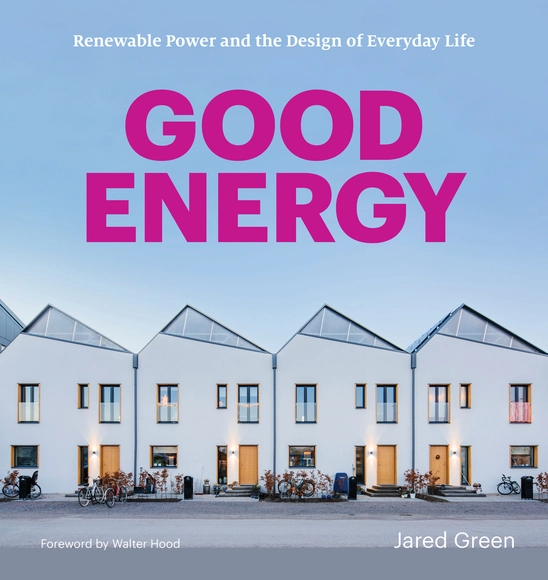
Smart design can make solar, wind, and geothermal energy beautiful, affordable, and accessible to all. Thirty-five projects from around the world that demonstrate how clean, healthy energy is within reach in every sector and field. Projects include homes for all income levels and climates, schools, parks, offices, and even power plants. Harmonizing nature, technology, and space, each project in Good Energy shows how design can improve planetary well-being while producing cost savings and creating green jobs.
Pura Arquitectura: International Congress of Latin American Architecture takes place within the framework of Road to BIALIMA, the pre-biennial event of the Lima International Architecture Biennial - BIALIMA 2021, organized by the CAP Regional Lima.
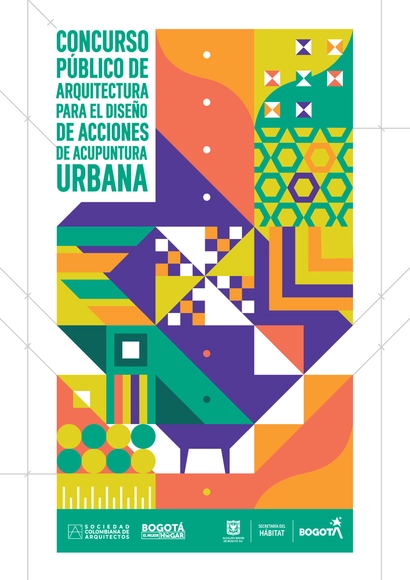
The concept of urban acupuncture stems from the intersection of urban planning and traditional Chinese acupuncture, which uses needles on specific pressure points to balance the body's energy. Much like its Chinese counterpart, urban acupuncture aims to generate comprehensive, chain-reaction improvements within a sector through targeted interventions in strategic locations, based on the understanding of the city as a connected, systemic organism.
The home is a representation of the complexity and evolution of lifestyles over time. Through selected works, this course provides an overview of the key characteristics of residential architecture in Japan, ranging from traditional homes to contemporary examples.
Book cover and organizer - Images courtesy of Rio Books Editora
The Niemeyer Institute presents a new book organized by its board member, architect and urban planner Leila Marques, with the collaboration of Simone Feigelson and Denise Vogel. The book features 67 invited authors—masters and doctors from various scientific fields beyond architecture and urbanism, including engineering, law, tourism, biology, administration, communications, international relations, anthropology, history, geography, landscape architecture, economics, and the arts—who present 50 essays across nearly 300 pages published by Rio Books.
Office and commercial building Blissestrasse 5 in Berlin before total refurbishment and today. (Historical photo: Philipp Bauer; photo today: Klemens Renner)
The architectural language of post-war modernism shapes our cities to a large extent. From a historical point of view, the buildings constructed during this period, which are now getting on in years, often have an important significance, but do not usually fall within the scope of listed building protection.