
Designing for the ‘NoWhere’ People


Designing for the ‘NoWhere’ People

The COVID-19 pandemic puts health and safety in homes and workplaces to the test. Improved ventilation and sanitation have taken on special urgency among the many performance aspects of building design. ESD Global executive chairman Raj Gupta and International WELL Building Institute president and CEO Rachel Hodgdon will present examples of office towers being adapted for safe re-occupancy, such as Chicago’s 150 North Riverside, and explain the growing use and relevance of the WELL Building Standard (a certification akin to LEED for energy efficiency) in the healthy buildings movement. Chicago Architecture Center President and CEO Lynn Osmond moderates a discussion to follow, during which speakers will delve into the challenges and opportunities of implementation and competitive advantages for healthy buildings. What will it take to transform our work environments?

After the big success of the first virtual tour series by Guiding Architects, which took place in October and was joined by more than 550 participants, Guiding Architects now offers a second series of online guided tours.
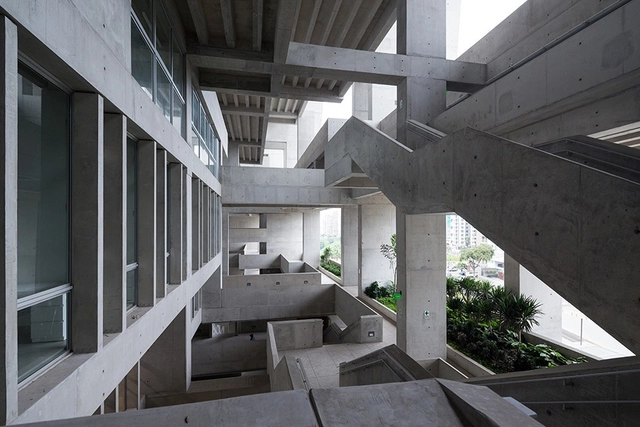
The Chicago Architecture Center’s ongoing series of Architect Talks continues with a conversation and guest lecture with 2020 Pritzker Prize laureates Yvonne Farrell and Shelley McNamara of Grafton Architects, co-presented with the Irish Consulate General in Chicago. Founded in 1978, Grafton lays claim to noteworthy projects from Lima to London and is known for embedding each building within its own unique context. The studio’s forward-looking, influential designs have helped elevate modern architecture, cementing Ireland’s reputation as a design capital. Farrell and McNamara will spotlight several civic and institutional works including Milan’s Bocconi University, awarded the inaugural World Building of the Year Award at the World Architecture Festival; UTEC University in Lima, Peru, which received the RIBA International Prize in 2016; and ongoing projects for the City of Dublin, London School of Economics and the University of Arkansas, in addition to recounting their experiences as curators of the 2018 Venice Architecture Biennale. A discussion afterward will further illuminate the architects’ process, work and lifelong commitment to mentorship.

feminist architecture collaborative (f-architecture) is a three-woman* architectural research enterprise aimed at disentangling the contemporary spatial politics of bodies, intimately and globally. Their projects traverse theoretical and material registers to locate new forms of architectural work through critical relationships with collaborators across continents and an expanding definition of Designer. They think, write, and design about blood, teenage dreaming, sovereignty, fakeness, and protest—among other supposedly extra-disciplinary fixations.

‘Support Black Designers.’ is a temporary mural featuring artwork & writing by Black creatives — curated by the Daniels Art Directive with designers Ashita Parekh and Tolu Alabi — installed on the north facade of One Spadina, the University of Toronto John H. Daniels Faculty of Architecture, Landscape, & Design.

DigitalFUTURES Talk: Interactive Design
23 January at 9:00am EST / 3:00pm CET / 10:00pm China

University of Tarumanagara Jakarta presents 24 best final projects of its architecture undergraduate programme in a virtual exhibition, Public Expose 8.30. Public Expose 8.30 is the 30th semi-annual event that will be showcasing a collection of projects which focuses on the theme, “future dwelling based on today”. Due to the ongoing pandemic, this exhibition will be held virtually therefore hoping to reach a larger scale of audience.

We’re excited to invite you to Danish Desire, our virtual event presented by The Royal Danish Consulate General and TORP, at DesignTO Festival, Saturday, January 23 from 2pm-3pm. Our panel of leading Danish and Canadian designers, makers and educators will be discussing the ongoing success of Danish Design, Denmark’s rich design history, and how a culture deeply immersed in and supportive of design positively affects design outcomes.
Register today at:
https://us02web.zoom.us/webinar/register/1016105024546/WN_V2wJTYPEReq79TEke5Ls9A

BAIDA, the Black Architects & Interior Designers Association, is a non profit organization of planners, interior designers, architects and students that aims to support diversity, equity and inclusion in the profession of architecture and interior design. One of the only organizations within Toronto connecting Architects and Interior Designers, BAIDA seeks to create opportunities for other minorities through advocacy, mentorship, networking and outreach.

In 2014, social theorist Brian Massumi authored What Animals Teach Us About Politics?, "an extended thought experiment in what an animal politics can be". Seven years later, humanity's belonging to the natural realm has never been so asserted, as human-induced climate change renders the entanglement of causes and consequences even more visible and epidemics expose how intimate are the transactions that continuously take place across different life forms. If the logic of "us" [humans] learning from "them" [animals] needs to be questioned alongside other extractivist legitimisations, it may also be time to widen the reflection on other-than-human politics to understand what other politics and ethics can living and non-living beings shatter, inaugurate and reveal. In this talk, I will explore the possibilities and limits of viral political wisdom and discuss what they disclose of our present and near future.

Mega Build Indonesia is the 19th Indonesian dedicated architecture, interior design, and building material exhibition, which will be held on 10-12th September 2021 at Jakarta Convention Center (JCC), Indonesia. (www.megabuild.co.id)
Sputniko! (Artist/Designer, Tokyo University of the Arts)
Respondent Georgina Voss (London College of Communication)

Archstorming is launching a new competition that will look for designs for the future schools of the NGO Abay Ethiopia, an organization founded in Spain in 2009 that operates in Walmara, Ethiopia, with the aim of fighting against poverty and promoting equal opportunities, mainly through the development of Education, Health and Community support projects in general.

Do you know a great example of high density living environments built within the last 30 years? Share your knowledge and contribute to the creation of an open repository via Crowd Creation. To be truly exemplary, the area should include a mixture of functions (at least some of them high-rise) where the physical fabric retains a human scale at street level despite the high density.

Through a collection of 13 chapters, Peggy Deamer examines the profession of architecture not as an abstraction, but as an assemblage of architectural workers.

Culturally Sustainable Design Talk by Zaha Hadid Architects + University of Calgary
January 14th, 2021 at 10:00-11:30 MST
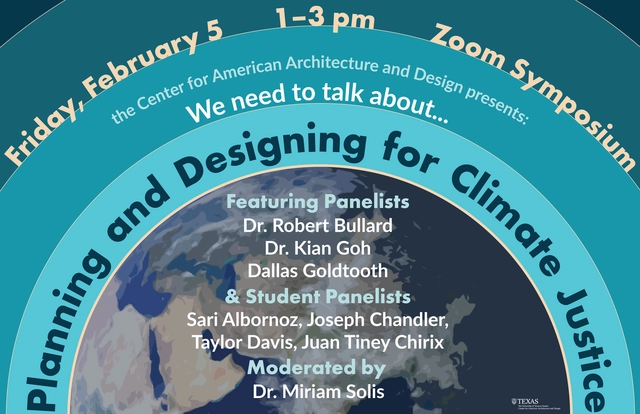
The cumulative effects of agriculture, industrialization, and urbanization are unequivocally changing our climate and producing globally unprecedented challenges related to food production, building materials, and human and ecosystem health, and exacerbating conditions that promote the spread of pandemic diseases, and these challenges are disproportionately affecting low-income communities and communities of color. This is not new. Our built environments create impacts on all of the above forces, and play a critical role in the creation of, and potential dismantling of, inequitable conditions of living and human and ecosystem health. How do we as designers of buildings and cities contribute to climate change and its deeply-rooted, systemic impacts, and what can we do now to turn our impact positive? How do we recognize, through our planning and building processes, the links between human health in our communities, particularly in communities of color, and the health of the planet and its ecosystems? How do we designing for climate justice, carbon neutrality, and equitable impact of positive change? And how do we reform our pedagogical approaches in our academies to ensure equitable climate considerations “go without saying”?