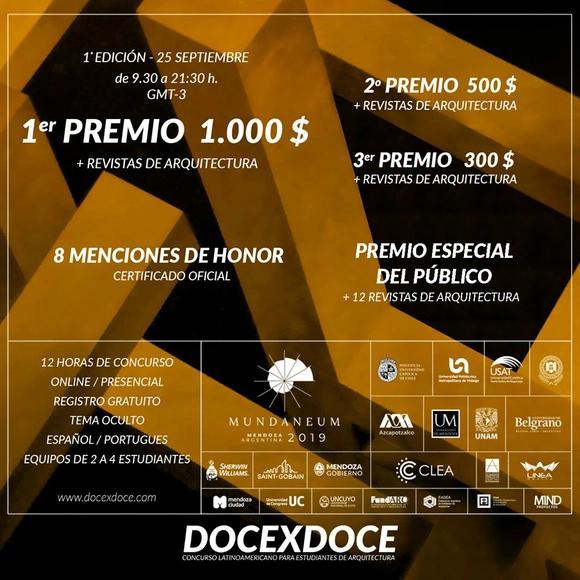
DOCEXDOCE Latinoamérica launches its first edition. This 12-hour competition for architecture students features free registration, 12 prizes, and a $1,000 first prize.
DOCEXDOCE Latinoamérica launches its first edition. This 12-hour competition for architecture students features free registration, 12 prizes, and a $1,000 first prize.
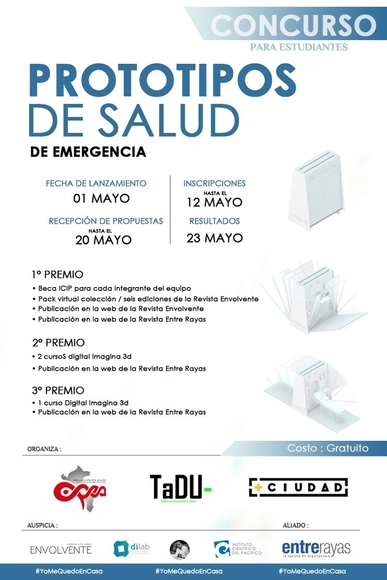
This is a single-stage, open ideas competition. It is jointly organized by the Taller de Desarrollo Urbano (TaDU - Venezuela), the Peruvian Organization of Architecture Students (OPEA - Peru), and Más Ciudad Arq. (Peru). The competition is open to students and recent graduates (thesis students) of architecture, landscape architecture, urban planning, design, or any related field. Teams of up to 5 people may be formed, with the option to include a maximum of one recent graduate or bachelor (thesis student) who has completed their university coursework within the last two years.
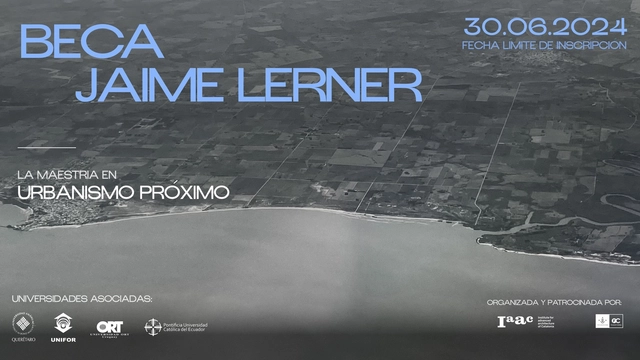
IAAC Jaime Lerner Scholarship 2024 – Online Master in Advanced Urbanism for Latin American students 2024/25
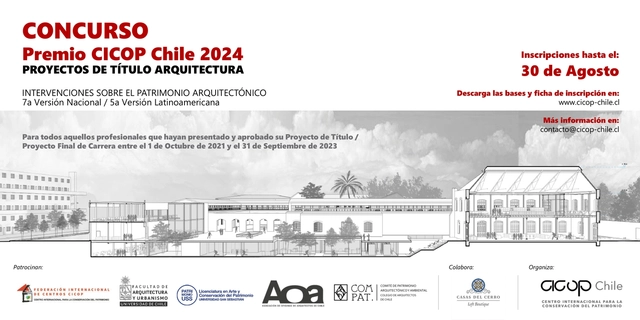
The CICOP Chile Award, now in its 7th national and 5th Latin American edition, aims to foster interest in architectural thesis projects and final degree projects that intervene in areas or buildings of heritage value, contributing to their enhancement, as well as to highlight and disseminate the best proposals developed in this field over the last few years.
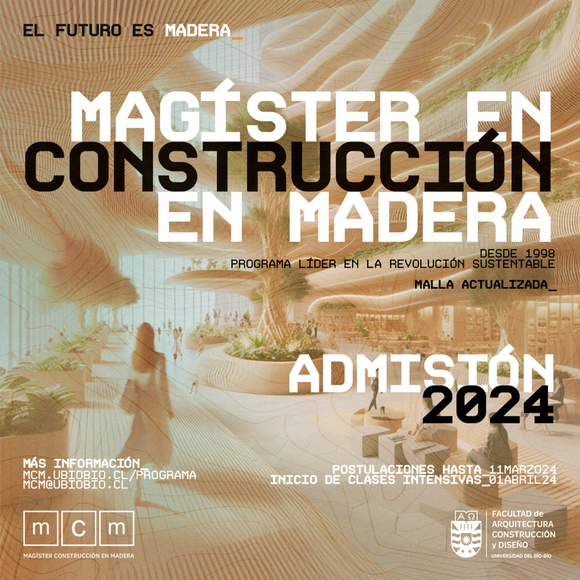
The Faculty of Architecture, Construction and Design at the Universidad del Bío-Bío, Concepción Campus, invites national and international applicants to participate in the 2024 edition of the Master in Wood Construction [MCM].
The Rogelio Salmona Latin American Architecture Prize 2024 was launched on Thursday, February 29.
.jpg?1600981532&format=webp&width=640&height=580)
The CICOP Chile Award aims to foster interest in architectural thesis projects that involve areas or buildings of heritage value, contributing to their enhancement, and to highlight the best proposals developed in this field over the last few years.
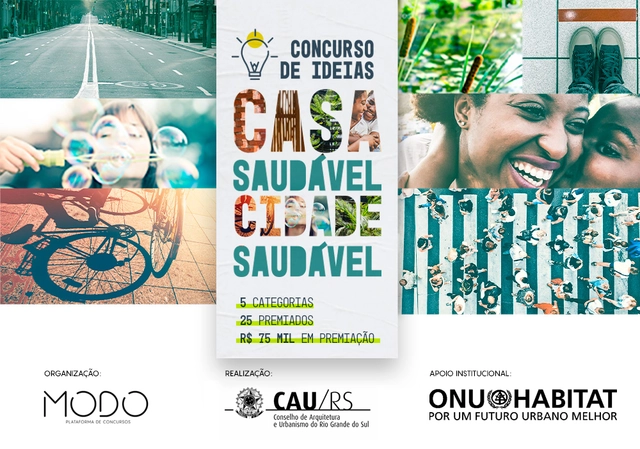
The COVID-19 pandemic has highlighted the need to seek new ways of living and daily solutions. The economic crisis triggered across various sectors has made it essential to invest in initiatives that contribute to overcoming these challenges, ultimately reflecting on the well-being and health of all. In response, the Council of Architecture and Urbanism of Rio Grande do Sul (CAU/RS) has launched the "Healthy House – Healthy City" public ideas competition, which reinforces the role of architects and urbanists as essential agents in developing solutions for a healthier and safer society. Furthermore, CAU/RS believes that hosting competitions is a democratic way to identify quality proposals that benefit society as a whole.
The COVID-19 pandemic has forced Latin American cities to rethink their policies to address the new local reality and the challenge of maintaining a balance between economic performance and the social well-being of their citizens, especially those who are most vulnerable.
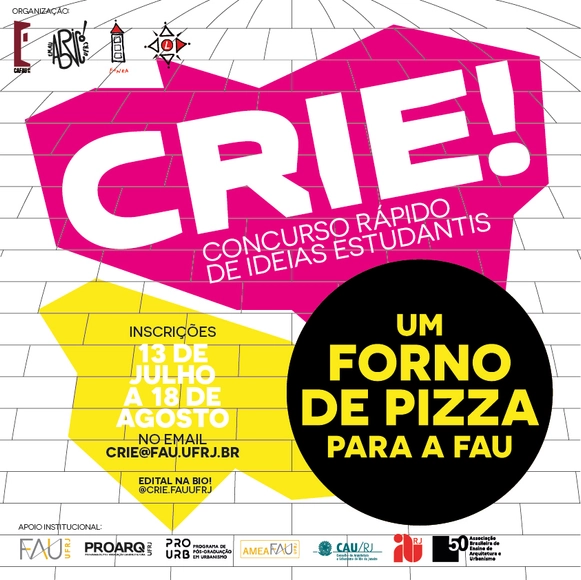
Open for Entries: CRIE! Student Rapid Ideas Competition - A Pizza Oven for FAU UFRJ
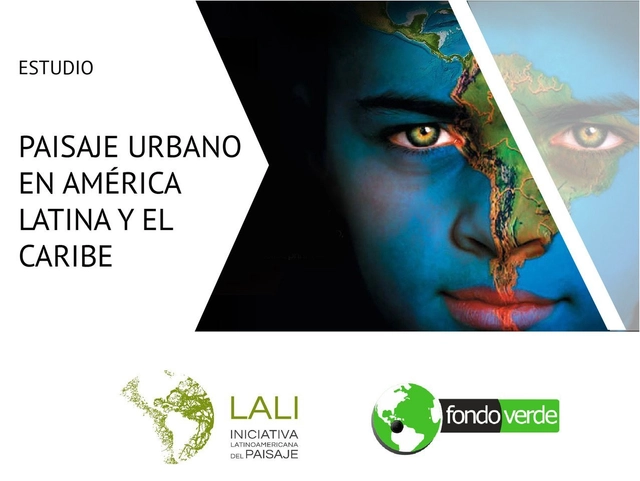
We believe that by gaining a deeper understanding of the realities faced by public sector professionals—including gardeners, urban planners, and municipal architects—we can better analyze and envision a brighter future for landscape management in spaces such as gardens and parks.

As part of the 4th International Forum on Urban Interventions (FIIU 2019)—which hosts the 3rd Placemaking Latin America gathering—the Inter-American Development Bank (IDB) Cities Lab, Ocupa tu Calle, and Lima Cómo Vamos are launching the 3rd Citizen Urban Innovation Competition. Citizens and social organizations from Peru and Latin America are invited to submit proposals for the design and implementation of urban interventions in two areas of Lima, previously selected by the Organizing Committee.
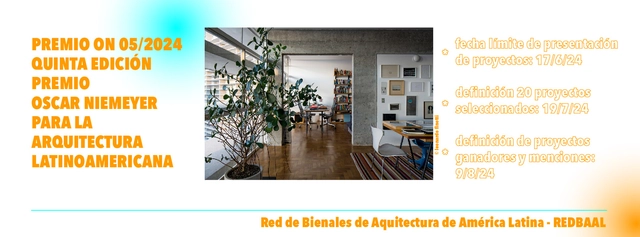
In response to the expectations of Latin American architects and following four successful editions, REDBAAL is now accepting entries for the Fifth Edition of the Oscar Niemeyer Award for Latin American Architecture—the ON Grand Prize—to be presented on August 9 of this year.
The finest architectural work, previously recognized at prestigious Latin American biennials, will take center stage in this international competition, which serves as the “Biennial of Biennials” for Latin American architecture.
We remain committed to bringing together our professionals and their outstanding work, which reflects diverse realities while serving as a testament to highly valuable collective social efforts.
The 2023 Di Tella Architecture Prize - Emerging Practices aims to celebrate the work of young professionals in Argentina and neighboring countries (Bolivia, Brazil, Chile, Paraguay, and Uruguay). The prize seeks to recognize the cultural value of architecture and its impact on the built environment.
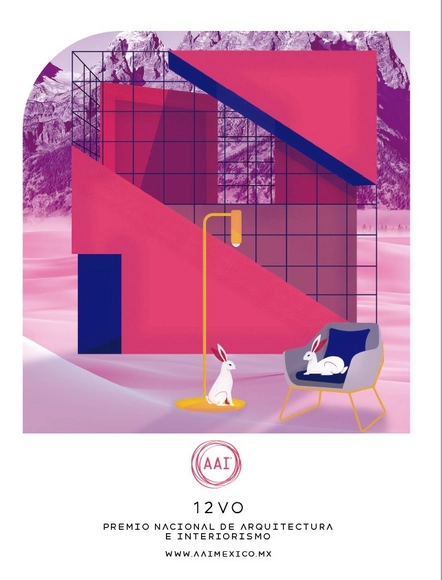
For the past 12 years, AAI México (Association of Architects and Interior Designers of Mexico) has presented this national award to celebrate and promote authentic Mexican design.
Thanks to the autonomy of the AAI, the award is independent of specific canons or corporate interests. All projects that meet the requirements of the call for entries are welcome, whether built or virtual, and whether they originate from emerging firms or established practices. There is a place for everyone here.
Each edition features a completely impartial jury, typically composed of prominent figures from the academic or industrial sectors. We are committed to fostering diversity of thought.
For this 12th edition, the jury will consist of:
- Arch. Gerardo Broissin Covarrubias (Director of the Faculty of Architecture at Universidad Anáhuac México, Tecamachalco campus)
- Arch. Gonzalo Pérez (Coordinator of Postgraduate Studies at the Faculty of Architecture at Universidad Anáhuac México, Tecamachalco campus)
- Arch. Paola Morales Orantes (Coordinator of Architectural Projects at the Faculty of Architecture at Universidad Anáhuac México, Tecamachalco campus)
The call for entries includes five categories: Residential, Corporate, Restaurants, Hospitality, Recreational Spaces, and Special Projects. Details regarding the types of projects eligible for the Recreational Spaces and Special Projects categories can be found on our website or in the official call for entries.
This edition introduces a new category: Sketch. This category is for those who appreciate freehand drawing, as we also believe in the power of traditional drawing.
The call for entries is now open and will close on May 19th, with no extensions.
Further information can be found at: www.aaimexico.mx

The EMPORIA award recognizes ephemeral projects across various sectors, including museums, exhibitions, trade fairs, retail spaces, festivals, sporting events, and conceptual or experimental architecture. The common denominator for all entries is that the architectural work must be ephemeral.
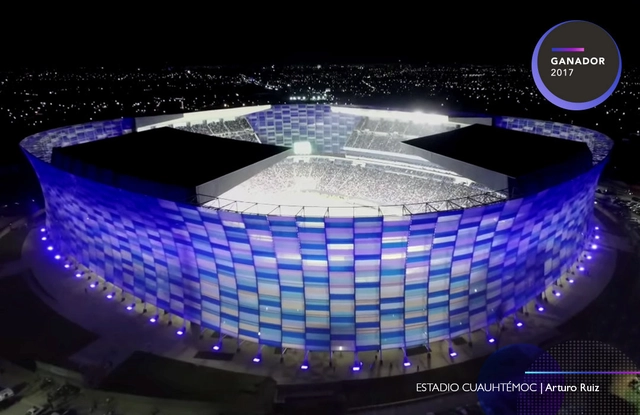
The CONSTRULITA Lighting Awards return in 2021 to recognize those who, even during the pandemic, continue to enhance spaces through light. Lighting design is an essential field for reaffirming the importance of light in our lives, spanning art, education, science, technology, and design. Accordingly, this competition invites anyone dedicated to lighting design or related fields to register their projects and showcase their talent to the world.
This initiative by Grupo Construlita aims to serve as a platform for new generations seeking recognition, providing a space where their talent and experience can continue to grow and become part of the lighting community in Mexico and Latin America.
Starting Monday, September 6, the online registration platform will be open to professionals and students in fields related to architecture, interior design, industrial design, product design, lighting design, and engineering who currently reside in Colombia, Costa Rica, El Salvador, Guatemala, Honduras, Mexico, Nicaragua, Panama, or the Dominican Republic.
Projects may be registered in five professional categories: Architectural Lighting, Interior Lighting, Light-Art, Product Design, and Connect +IoT—a new category focused on the integration of new connectivity technologies with lighting.
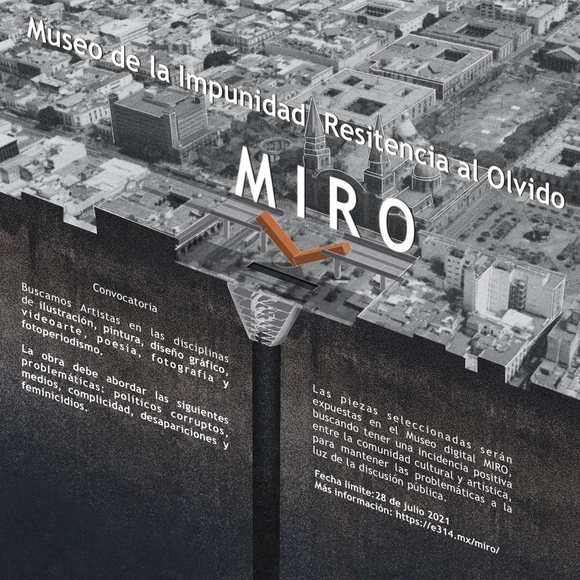
MIRO (Museum of Impunity: Resistance to Oblivion) is a digital museum exhibition project by the Estudio 3.14 Fellowship Program that seeks to showcase a diverse range of visual works with protest-oriented and subversive content. These works address various social issues stemming from the prevalence of impunity in Mexico and globally, through the power of imagery. Artists and designers are invited to submit existing works to be exhibited across the museum’s six constituent levels, each addressing the following issues: corrupt politicians, media, complicity, disappearances, and femicides.