Jerusalem Design Week invites a range of creative interpretations on its annual theme, ‘Lies and Falsehoods’, from designers, architects, artists, and tech-savvy experts worldwide. Those submitting a project for consideration should interpret the theme in their own way.
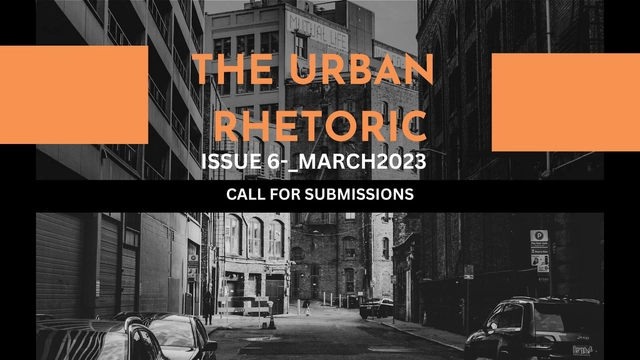
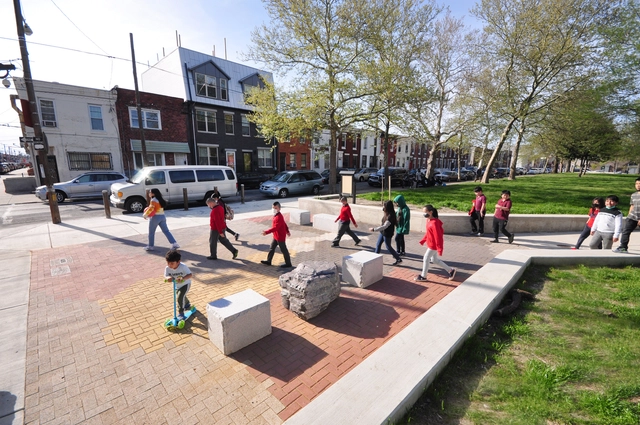
An urban space quipped to handle residents and strangers alike and to make safety an asset in itself. A thriving city neighborhood must have three main qualities: First, there must be a clear boundary between what is public space and what is private space. Public and private spaces can not ooze into each other as they do typically in suburban settings or projects. Second, there must be eyes upon the street, eyes belonging to those we might call the natural proprietors of the road. The buildings on an urban street should be equipped to handle strangers and ensure the safety of both residents and strangers. They must be oriented to the street. They cannot turn their backs or blank sides on it and leave it blind. Third, public spaces must have users on them reasonably continuously, both to add to the number of effective panopticons and to induce the people in buildings surrounding the space to perform as active characters responsible for the safety of the space.
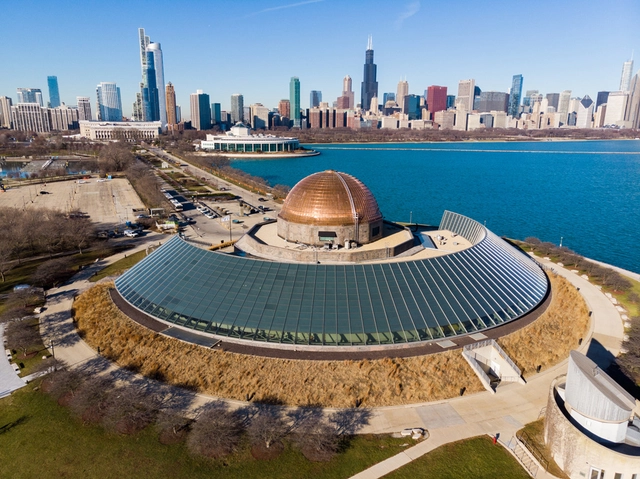
Adler Planetarium in Chicago, NACIA Winning Project
Submissions for the North American Copper in Architecture Awards (NACIA) 2023 are now open. Now in its 16th year, the awards presented by the Copper Development Association celebrate distinctive copper building projects. Projects of any size or type are eligible, but should feature architectural elements of copper, brass, or bronze; have been completed in the last 3 years; & be located in the United States or Canada. Entrants should submit basic project details & photos for consideration by March 31, 2023. There is no cost to submit. Submissions are evaluated based on design, craftsmanship, integration of copper alloys, excellence in innovation or restoration, & sustainable building strategies. Winning projects receive an award, extensive exposure in architectural/construction media, & recognition in CDA’s outreach programs. To learn more about the NACIA Awards & past winners, visit the Copper in Architecture Awards page at copper.org.
Videos
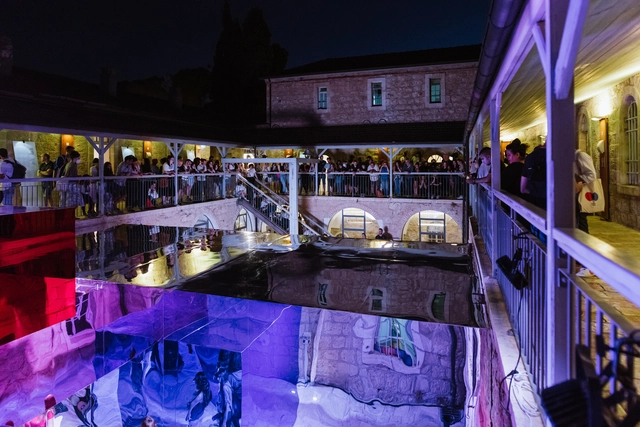
Hansen House during JDW 2022 Picture by Dor Kedmi
Jerusalem Design Week returns for its 12th edition from 22nd–29th June 2023 at the historic Hansen House Center for Design, Media and Technology. The flagship event of Hansen House and Israel’s leading design event, Jerusalem Design Week 2023 will build on its previous successful editions. Showcasing a wide range of unique exhibitions, installations, and projects, the event welcomes the participation of both Israeli and international designers.
January 2023 marks the 50th anniversary of the Roe v Wade ruling, just a year after this landmark legislation was overturned by the Supreme Court. In recognition of this historic event, and in response to the damaging repercussions of the recent Dobbs decision, the Beverly Willis Architecture Foundation is convening the panel discussion, “Where Are We Now: 50 Years After Roe.“
The School of Architecture Urban Planning Construction Engineering of Politecnico di Milano opens the renovated exhibition space by displaying some of the most significant projects designed by Kazuyo Sejima, founder with Ryūe Nishizawa of SANAA in 1995, Pritzker Prize in 2010, and Professor at Politecnico di Milano since 2015.
How were the concepts of the observer and user in architecture and urban planning transformed throughout the 20th and 21st centuries? Marianna Charitonidou explores how the mutations of the means of representation in architecture and urban planning relate to the significance of city's inhabitants. She investigates Le Corbusier and Ludwig Mies van der Rohe's fascination with perspective, Team Ten's interest in the humanisation of architecture and urbanism, Constantinos Doxiadis and Adriano Olivetti's role in reshaping the relationship between politics and urban planning during the postwar years, Giancarlo De Carlo's architecture of participation, Aldo Rossi's design methods, Denise Scott Brown's active socioplactics and Bernard Tschumi's conception praxis.
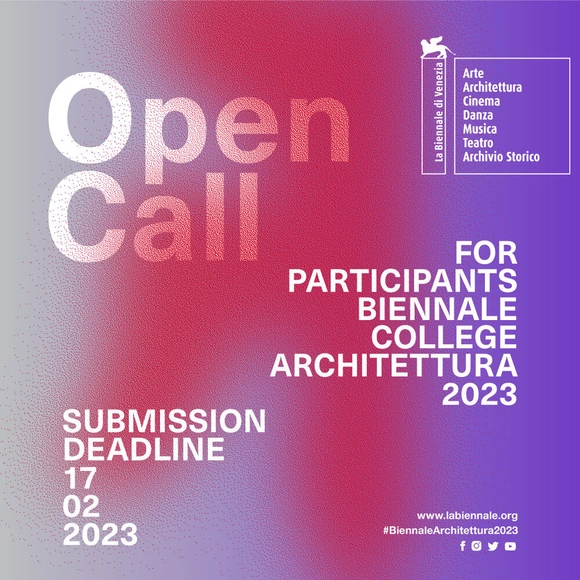
The College is open to graduate students, graduates under the age of 30, to early career academics (PhD candidates, researchers, assistant professors, tutors, teaching fellows, etc.), and emerging practitioners under the age of 35. In line with the general goals of all Biennale Colleges (cinema, dance, music, theatre, art), this first Biennale College Architettura will seek to complement and enrich the 18th International Architecture Exhibition, The Laboratory of the Future, at the 2023 Venice Architecture Biennale by exploring how to place the Exhibition’s central themes, decolonization, and decarbonization, at the heart of architectural education.
Utilities seeks to excavate and document the multilayers of Beirut’s economic collapse, and employs an ethnographic lens to explore the material manifestations of the crisis across the city’s urban fabric. The project unearths the material infrastructural apparatus that is emerging as a response to socioeconomic conditions; solar panels, water tanks, private generators, and prison-like façades of banks are all elementary fragments of this apparatus.
Iwan Baan is one of today’s leading photographers of architecture and urban design. His images document the growth of global megacities and portray buildings by prominent contemporary architects including Herzog & de Meuron, Rem Koolhaas, and Zaha Hadid. The first large retrospective of the Dutch photographer’s work will open at the Vitra Design Museum in autumn 2023. Baan’s vibrant realism puts the focus on people and their relationship to the built environment. His observant eye presents architecture not as an abstract ideal, but as the setting of everyday life, an organic part of the urban fabric – be it suburban sprawl or the booming metropoles of Africa and Asia. The exhibition will include a number of Baan’s iconic works, many of which are familiar from magazines and books, as well as photographs of vernacular and informal architecture all around the world, from the round Tulou of southern China to the rock-hewn churches of Ethiopia. Thanks to the great scope of his vision, Baan’s works offer a broad panorama of human building that impressively demonstrates the existential importance of architecture and urban design.
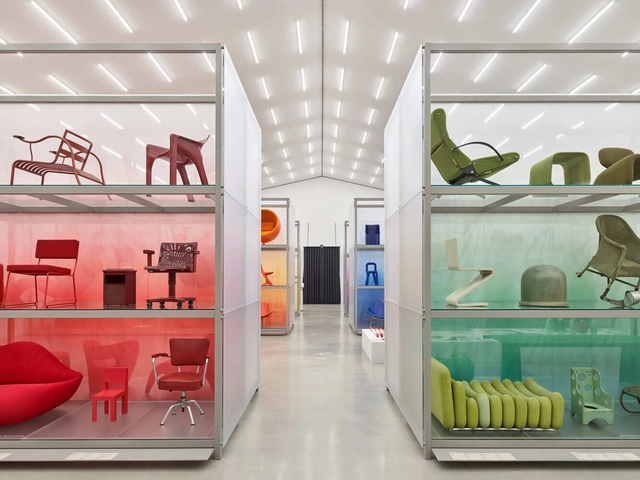
The new focus topic of the Vitra Schaudepot, which will be on display from May 2022 to May 2024, is wholly devoted to colour. Following an invitation from the Vitra Design Museum, Dutch designer Sabine Marcelis has transformed the Schaudepot in one simple, sweeping gesture by sorting its roughly four hundred exhibits by colour. The installation shows the collection from new perspectives and produces fascinating cross-references between periods and styles, at the same time providing visitors with an overwhelming immersive experience. The presentation is complemented by historical and contemporary objects and documents from the museum archives that illustrate how designers from different eras approached the subject.
This daytime roundtable uniting urban scholars, designers, planners, community developers and policy specialists will explore how to take some of the ideas of the Housing Multitudes exhibition forward. Discussion will be especially focused on what is being forgotten or ignored in the proposed “solutions” to housing shortages and affordability that Ontario’s Bill 23, and Toronto’s Housing Action Plan, seek to address.
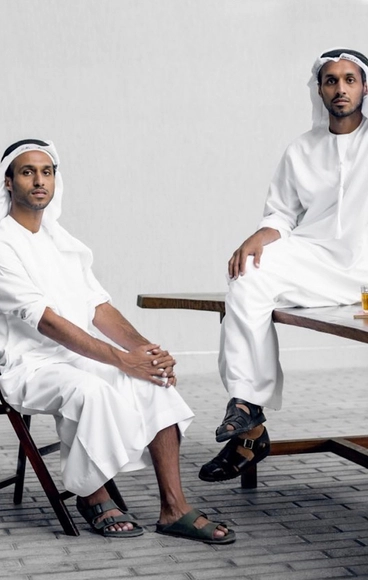
Rashid and Ahmed bin Shabib, Photo: Alex Wolfe for Kinfolk
As the effects of climate change make themselves felt, cities need to adapt to the global rise of temperatures. The exhibition »Hot Cities« will look at the metropoles of the Arab-speaking world to learn how they and their inhabitants cope with the region’s harsh climate, and whether the architectural and urban design solutions found there might help us make our own environments more climate resilient. »Hot Cities« shows how architects combine traditional vernaculars and modern technologies to respond to the challenges of the future. The exhibition presents urban case studies that provide answers to many questions now raised by climate change.
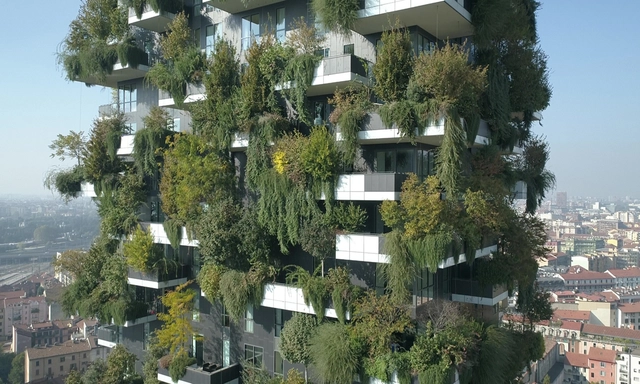
Stefano Boeri, Bosco Verticale, Milano, Italy, 2014. Courtesy Stefano Boeri Architetti, Photo: The Blink Fish (2018)
Gardens reflect identities, dreams, and visions; they are deeply rooted in our culture. Recent years have seen a resurgence of interest in the garden – not only as a romantic idyll, but as a field of experimentation for concepts related to social justice, climate change, biodiversity, and a sustainable future. Gardens have become places of the avant-garde. Designed by the Italian studio Formafantasma, the exhibition »Garden Futures« at the Vitra Design Museum will be the first to explore the history and future of the modern garden. Which movements and theories have influenced our contemporary garden ideals? How can horticulture contribute to a more sustainable future and a good life for everyone? The exhibition addresses these and similar questions using examples from design, everyday culture, and landscape architecture – from contemporary community gardens to green façades and vertical urban farms, from deckchairs to gardens created by designers and artists like Roberto Burle Marx, Mien Ruys, and Derek Jarman.
With questions such as Where do roads come from?, popular educators in the US Black Freedom Movement like Septima Clark have long used discussions about architecture and the built environment to unpack ideas of citizenship, politics and power. People’s observations and analyses of built form offer insights into the surroundings we share and opportunities for collective action to change it. In this lecture, Jae Shin and Damon Rich of HECTOR urban design will share stories from their attempts to learn from this tradition of popular education as a resource for architecture, urban design and planning.