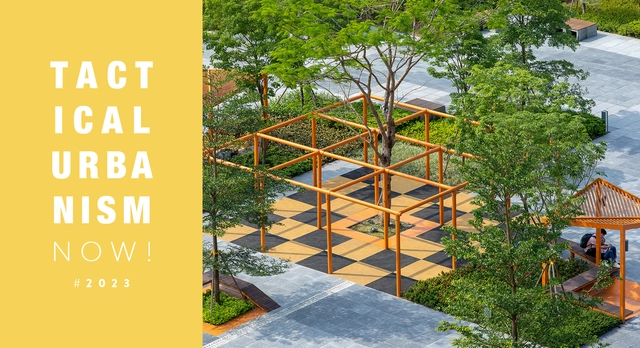
TerraViva Competitions launches TACTICAL URBANISM NOW! 2023, a new edition of the architecture competition that puts the focus on the transformation of public space all over the world. Prizes up to 7.000 € will be awarded to the winners selected by an international jury panel composed by, among others, Huicheng Zhong (Atelier Scale), Sarah Seigel (Hapa Collaborative), Jokin Santiago (Leku Studio), Marcos Coronel Bravo (Pico Colectivo);
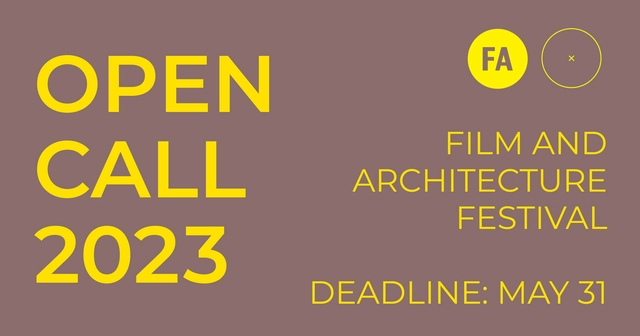
Open Call 2023, 12th edition of Film and Architecture Festival
Film and architecture festival announces an open call for films related to the topic of architecture and urbanism. It could be short films, mid-length or feature films. Selected works will be screened at the 12th edition of Film and architecture festival which will be held from September 29 to October 4. Please submit your movie using this form: bit.ly/opencall_FA2023
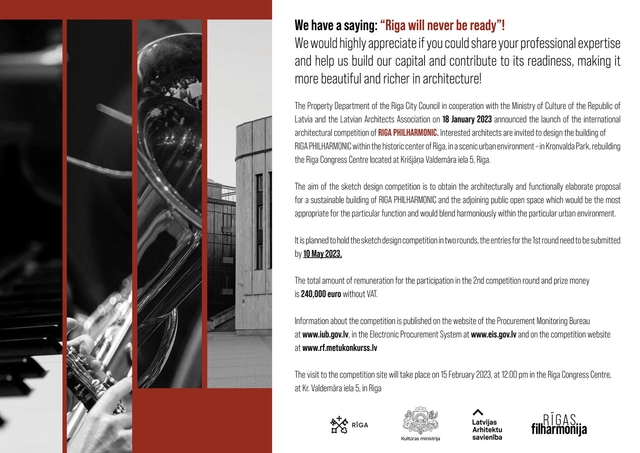
The Property Department of the Riga City Council in cooperation with the Ministry of Culture of the Republic of Latvia and the Latvian Architects Association on 18 January 2023 announced the launch of the international architectural competition of RIGA PHILHARMONIC. Interested architects are invited to design the building of RIGA PHILHARMONIC within the historic center of Riga, in a scenic urban environment – in Kronvalda Park, rebuilding the Riga Congress Centre located at Krišjāņa Valdemāra iela 5, Riga.
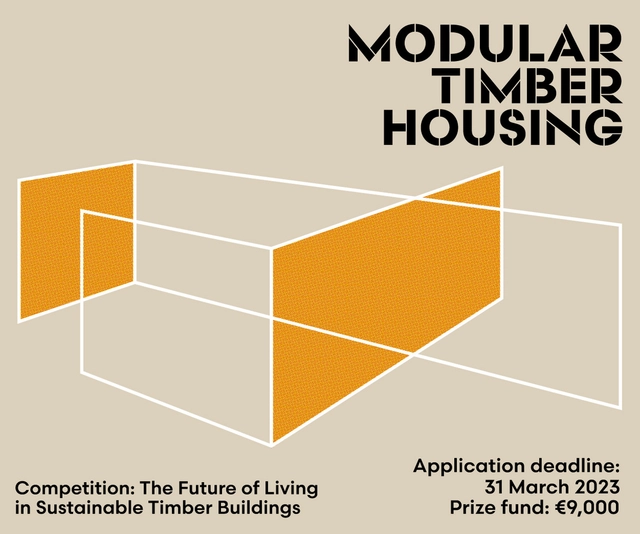
How can modular timber construction be used to respond to the contemporary housing crisis? How to achieve the greatest architectural variety with the fewest building elements possible? Can we redefine the construction industry as the production of standard elements and create a new, more efficient construction system that is both durable and sustainable?
Border crossing involves a change of state; the crossing of a barrier between two nations. The nature and meaning of this barrier are very specific to its location and the different characters of the nations involved. Borders can mark dramatic transitions between different cultures, political systems, economies, and levels of freedom. They range from open and undefended to closed and heavily militarized.
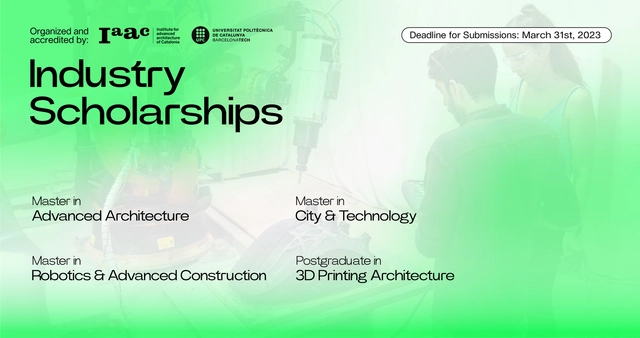
The Institute for Advanced Architecture of Catalonia (IAAC) wants to support a new generation of young talents and help them propose a new sustainable architecture, urbanism and rethink the future of the construction industry to face the challenges of our century. For this reason, IAAC and its industry collaborators offer scholarships to study in IAAC’s On Campus Educational Programmes listed below.
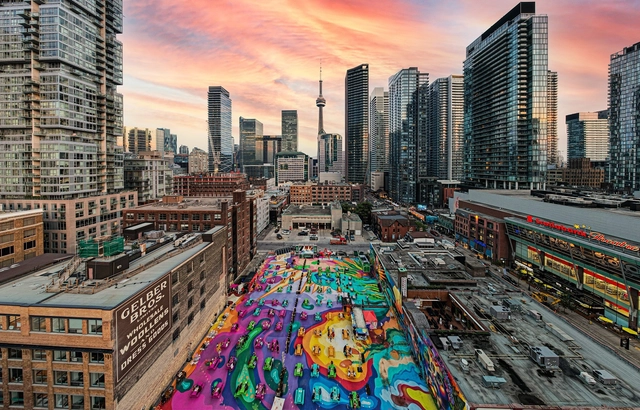
Artist rendering of view of open space that will become the new park
A new 2,600m2 park is coming to 229 Richmond St. W in downtown Toronto, Canada. The site is currently leased to a restaurant and used as an outdoor patio. It has been purchased by the City of Toronto for future park use.
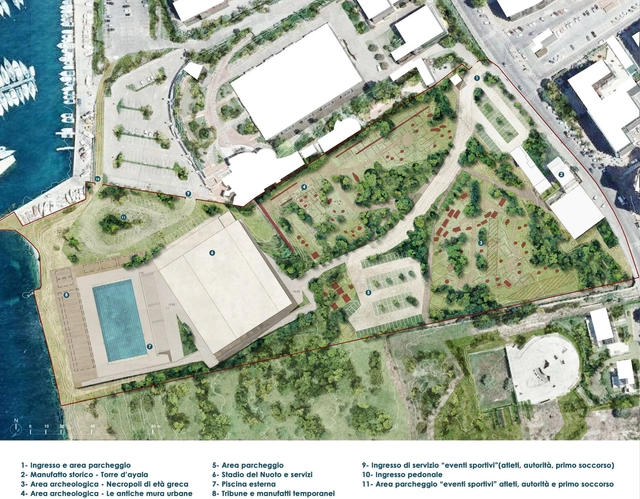
The Organizing Committee of the 20th edition of the Mediterranean Games - Taranto 2026 ‐ has promoted a two‐stage tendering for the realization, from scratch of the Swimming Stadium in Taranto and the recovery of the external area. The general objective of this International Design Contest is to start the construction of the Swimming Stadium for the XX Mediterranean Games 2026 in Taranto, in other words to allow competitive swimming activities on an international level connected with the creation of an architecture that enhances the landscape context and the historical pre‐existences. Taranto 2026 is an opportunity to change the image of the city and of the entire Ionian Arch, to give different life prospects to the citizens and to make the city more welcoming, for its inhabitants and consequently also for the massive incoming tourist flows. During the event, 32 sports will involve 25 facilities for the competitions and 15 for the training. A big part of the event will take place in the existing structures, in the perspective of a regional sports assets recovery. Only a few structures will be built from scratch and, through an integrated design with the local heritage, they can become iconic architectures for the city, representative of a process of transformation and renewal: a Swimming Stadium, a Federal Nautical Center and a multidisciplinary Sports Center. Sporting infrastructures play a strategic role in the urban and functional organization of the cities. These are architectures that also have a function as social aggregators with identity values and enhancement of the sense civic duty. A city with many sports facilities has repercussions on the promotion of health and sociality. These belong to the category of essential urban "services". The Area for the Swimming Stadium straddles an important jump in altitude, and this configuration of the soil, will allow the construction of a bridge‐building between the level of the road and the sea level. The project makes accessible, tangibly and through the creation of a series of optical cones, a coastal area not currently in use. Except for important urban tracts, such as the seafront “Vittorio Emanuele III”, the multiple and different sea fronts of the city of Taranto are often underused, or occluded by other latent resources, such as the buildings and properties of the Navy. The sea is recognized as a great opportunity for the redevelopment of the city: the sea as an extraordinary and diversified "endowment of public blue". The Swimming Stadium is seen as one of those projects capable to recover an important stretch of coast, now abandoned, and return it to civic uses. The overall size of the area necessary for the construction of the new Stadio del Nuoto is about 5,000 square meters for the indoor pool, about 4000 square meters for the outdoor pool; for a total of approximately 9,000 square meters, which can be spread over several levels by exploiting the changes in altitude and the irregularity of the ground. The swimming sports facility must therefore be equipped with two swimming pools, one indoor and one outdoor, which must comply with the minimum standards for the "Olympic Games" and the conduct of the Swimming and Water Polo disciplines, giving a more complete offer both for free time but above all for sport at a competitive level. The designers will have to evaluate and adopt solutions that contemplate building envelopes capable of creating positive effects on environmental parameters (reduction of the heat island, better management of rainwater, absorption of air pollutants) and that reduce the consumption that weighs on the management of the sports facility (winter heating of the pool room, air changes, water management in the pool). The containment of energy consumption will be essential for an economically and ecologically sustainable management. The main goal will be the realization of a greater environmental comfort of users, having the maximization of energy containment and lower operating costs in relation to consumption and maintenance.
The University of Banja Luka announces the International general public competition for the development of an architectural concept design of the summer stage, the memorial to the fallen students and employees of the University of Banja Luka in the defensive and patriotic war and the accompanying landscaping.
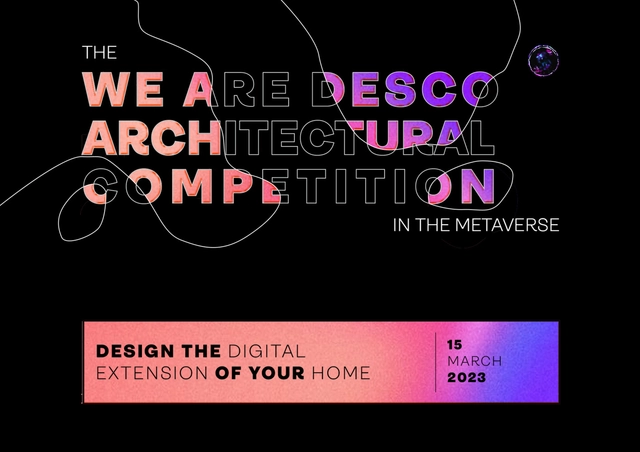
This Design Competition is an opportunity for architects to showcase their creativity and explore the potential of the metaverse. This competition challenges architects to create a unique digital space – a ‘Digital home’ in the metaverse – that expresses their individual style and reflects their skills and talents.
Logo for the Student Architecture and Design Challenge
Undergraduate and graduate architecture and design students and early-career architects are invited to participate in a design challenge in which teams of two to three participate to design an architectural element for the exterior structure of the National Air and Space Museum’s upcoming Bezos Learning Center building. The winning team will receive a one-to-three-year paid position.
Join editor Alissa North of the John H. Daniels Faculty of Architecture, Landscape, and Design as she discusses her new book Innate Terrain: Canadian Landscape Architecture, a collection of papers written by Canadian scholars and practitioners in the field of landscape architecture. Concerned with the practice and theories of landscape architecture in Canada, the book documents the breadth of contemporary practice from across the country, with each chapter author using works of landscape architecture to theorize a distinct approach practiced by Canadians in their national context. The book’s central argument is that Canadian landscape architecture is distinct because of the unique qualities of the Canadian terrain and the particular relationship that Canadians have with the landscapes of our nation.
Tectonics of Place II: The Architecture of Johnson Fain chronicles the architectural and interior design work of a preeminent international design practice based in Southern California. The firm, well-known for landmark projects throughout the United States and abroad, eschews any singular approach or style. Addressing issues of program, client, physical context, and sustainability, Johnson Fain crafts design solutions which are strikingly modern and unique. Tall buildings both elaborate their particular programs, whether residential or work-related, while becoming icons on the urban skyline. Single family dwellings, wineries and cultural facilities set in more rural landscapes interact instinctively with nature. Museums, clubhouses, and educational campuses create a sense of cohesion and shared purpose through the design of both the buildings and the open spaces that unite them. Forward-looking science and technology centers express state-of-the-art systems while reinforcing collegiality and reflection which lies at the heart of research. Beyond the brief, the architecture of Johnson Fain is human-centered, forward looking and interactive.
Building Practice features interviews with architects, designers, educators, curators, fabricators, strategists, critics, and activists who are advancing speculative design through the culture and politics of building, capturing critical and formative moments associated with building a practice. Each interview reveals strategies for linking practical and theoretical forms of knowledge and evidences the active creation of unique approaches to contributing positively to both architectural culture and the built environment. Collectively, an introduction, twelve short texts on topics that are pertinent to architecture today, and thirty-two interviews convey how architects claim conceptual territory regarding form, space, order, materiality, and aesthetics, and push for design to have meaning and value in relation to cultural, environmental, political, and social concerns. The individuals and practices profiled in this book collectively partition themselves from previous generations of experimentally motivated practices while individually exemplifying their own inimitable affinities, techniques, and sensibilities. Building Practice shares the first acts of an emerging generation of practices and identifies the peripheral yet pivotal aspects of building a practice today.