Patrick is ArchDaily's News Editor. Prior to this position, he was an editorial intern for ArchDaily while working full time as an assistant for a watercolor artist. Patrick holds a B. Arch degree from Penn State University and has spent time studying under architect Paolo Soleri. He is currently based in New York City.
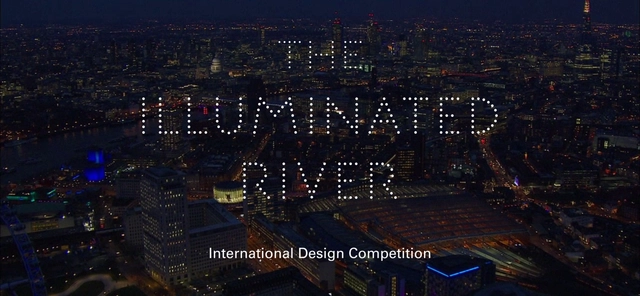
The Illuminated River Foundation has announced a shortlist of six firms that will compete to design a new permanent light installation along the Thames River in London. From a pool of 105 teams (made up of 346 different firms), the winners were selected based on experience, past projects and team composition. The six finalists will now continue on to develop lighting schemes for the Westminster, Waterloo, London and Chelsea Bridges, as well as a design masterplan for the 17 iconic London bridges between Albert and Tower.
Continue reading to see the list of six finalists.
With schools around the country starting back up again, it’s time for the latest edition of DesignIntelligence’s yearly rankings of the Top Architecture Schools in the US for both undergraduate and graduate programs. This year, CEOs, managing partners, and human-resource directors from more than 2,000 firms were asked to list the 10 programs from each category they felt best prepared students for success in the profession of architecture.
This information, along with detailed accounts on the best programs that teach skills in design, computer applications, sustainability and construction methods & materials, factored into the creation of the 2017 rankings. In addition, over 2,785 students were polled on the quality of their program and their plans for post-graduation. The two top schools, Cornell for undergraduates and Harvard for graduates, were once again named the best programs to attend, according to the study.
Read on to see the list of the top 10 undergraduate and graduate programs in the US.
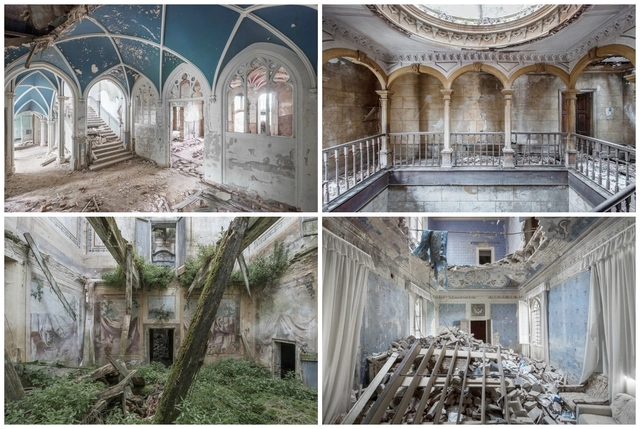
Architectural photographer Mirna Pavlovic has an obsession with abandoned places. For her, their appeal lies in their ability to exist on a different temporal plane from the rest of reality – both impossibly ancient and frozen in the present.
“They are never truly dead, yet never really alive,” Pavlovic explains. “Precariously treading along the border between life and death, decay and growth, the seen and the unseen, the past and the present, abandoned places confusingly encompass both at the same time, thus leaving the ordinary passer-by overwhelmed with both attraction and revulsion.”
For her latest series, Dulcis Domus, Pavlovic trekked over fences and past “no trespassing” signs to capture the once-glorious villas, palaces and castles of Europe that have now been left to decay, slowly returning to the Earth that existed before them. Through photography, Pavlovic attempts to highlight social issues through an aestheticised approach, allowing viewers to “see with fresh eyes what lies beneath those spots that we pass by on the street.”
Continue reading to see a selection of photographs from the series – hover over the images to see where each villa is located.
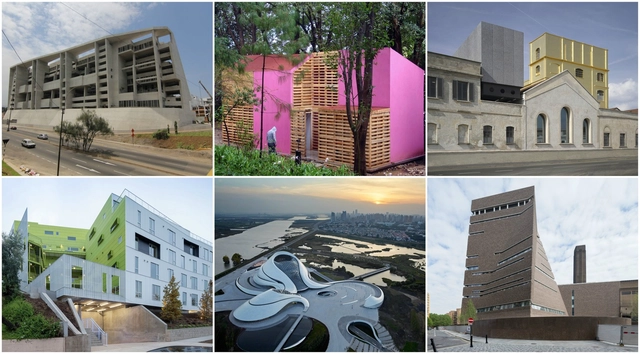
DETAIL Magazine has announced the winners of the DETAIL Prize 2016. This year, the jury selected five projects from a pool of 337 projects from 42 different countries by looking for “realizations in which the overall design concept and the detailing were brought together in a coherent way.” The winners were noted for being “future-oriented, innovative and pioneering projects from different disciplines that have outstanding architectural and technical qualities.”
This is the seventh edition of the biennial award, which aims to “strengthen architecture in public debate, strengthen the role of architects in public, and strengthen networking among architects, industrialists, developers and politicians.”
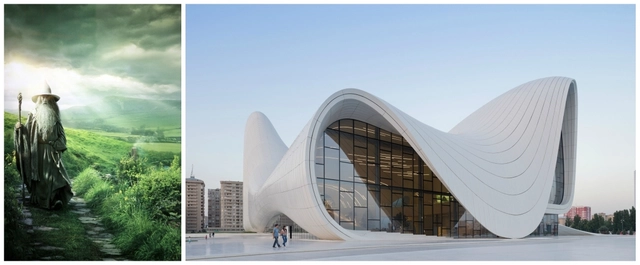
When it comes to expensive artforms, architecture undoubtedly tops the list (even if the artistic merits of some of the absolute priciest buildings are sometimes dubious). But what may not be so obvious is that many of architecture’s iconic works have been completed on budgets not so dissimilar to the work of another artistic industry: filmmaking. Each with their own set of merits, works from both categories have transcended time, confirming that (in most cases) they have more than returned on their initial investment.
To illustrate this point, we’ve complied a list of buildings from eras past, paired with movies of similar budgets completed in the same calendar year. Which buildings or movies have contributed the most based on their initial costs?
The award, now in its ninth year, “celebrates design that promotes or delivers change, enables access, extends design practice or captures the spirit of the year.” Nominees are selected in six categories, including Architecture, Digital, Fashion, Graphics, Product and Transport. An exhibition on the projects will be on display from 24 November 2016 – 19 February 2017.
A feature Instagram users have spent years longing for is finally here: Zoom. Just released today, the update to the iOS app finally will allow you to pinch to zoom in on photos and videos, just like you can in most photo viewing apps (no more screenshotting necessary!). This means you can now get a closer look at the architectural details of your favorite buildings on Instagram, from doorways to moldings to joints. Though be warned, just because you can make it bigger doesn’t mean it will necessarily be clearer - Instagram still will only support images 1080 pixels wide.
The scaffolding obscuring the facade of OMA’sTaipei Performing Arts Center has begun to come down, exposing the aluminum exteriors of the spherical Proscenium Playhouse and the Multiform Theatre for the first time. Upon completion, the experimental building will feature a looped public pathway, flexible auditoriums and unique stage environments. Construction on the building is now moving full speed ahead, with an expected opening date in June 2017.
Continue on for more images of the in-progress building.
Burning Man 2016 is underway in the temporary city of Black Rock City, Nevada – meaning for one week, thousands of festival goers will romp through the desert taking pictures of the hundreds of art and architectural installations constructed for the event. This year's theme is "DaVinci's Workshop," inspiring sculptures based off the artist's famous inventions and artworks, including a large-scale interpretation of the Vitruvian Man on a circular frame.
Read on to see some of the best structures and installations found at Burning Man 2016.
In this video, French architect and filmmaker Vincent Hecht takes us inside “Rental Space Tower,” Sou Fujimoto’s pavilion at HOUSE VISION Tokyo 2016. Designed in partnership with residential leasing and management company Daito Trust Construction, the structure aims to challenge the conventional typologies of rental housing, maximizing the amount of shared space within the complex.
Check out the video for a look inside the structure, and continue reading for more on the concept behind the design.
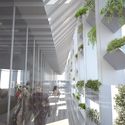
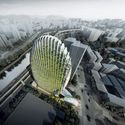
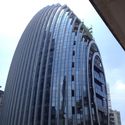
Aedas has released new renderings and photos of Lè Architecture as the 18-story building approaches completion. Inspired by the form and striations of river pebbles, the office building will provide a unique work environment along the Jilong River and will mark an important milestone in the revitalization of the Nangang District of Taipei.
Italian Prime Minister Matteo Renzi has asked architect Renzo Piano to lead in the reconstruction of the central Italian towns devastated by last week’s magnitude 6.2 earthquake that claimed the lives of at least 290 people. Renzi announced a national action plan for recovery and risk prevention on Monday after meeting with Piano to discuss strategies for housing the over 3,000 displaced survivors and rebuilding the historic towns in a manner that would mitigate damage caused by future seismic activity.
“We have to act quickly, with the utmost urgency,” said Piano in a telephone interview with The Guardian. “Anti-seismic requirements must be inserted in the laws of the country to make our homes safe, just as it’s compulsory for a car to have brakes that work.”
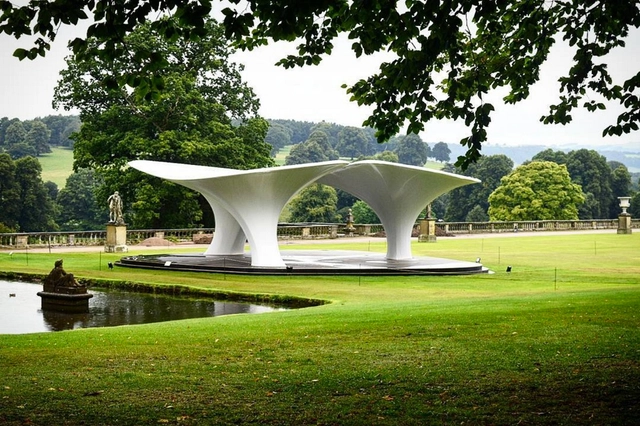
Lilas, Zaha Hadid Architects’ design for the 2007 Serpentine Gallery pavilion, has been reinstalled at a new location on the south lawn of Chatsworth House, the Derbyshire home of the Duke and Duchess of Devonshire. The mushroom-like pavilion has been put on display as part of Sotheby’s annual Beyond Limits sculpture exhibition, and is for sale through the international auction house.
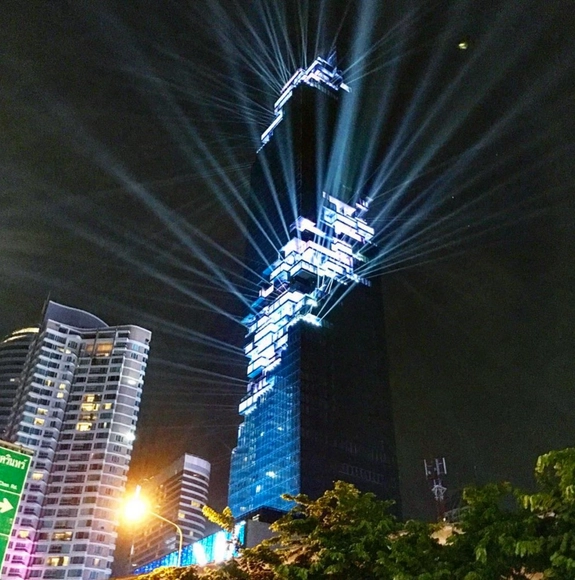
Thailand’s new tallest building, MahaNakhon, has opened to the public with a spectacular light show highlighting the pixelated-design of the 314 meter tall building. Designed by Büro Ole Scheeren, the 77-story mixed-use skyscraper contains space for a hotel, retail, bars, restaurants and an observation deck, as well as 200 condominium units managed by Ritz-Carlton Residences with unparalleled views out onto the Bangkok skyline and beyond. The building’s distinct appearance is created through carving a pixelated spiral up the building, creating “an architecture that encloses and protects its inhabitants while revealing the inner life of their city.”
Continue for more images of the completed building.
Wood has always been one of the essential materials used in construction, and with the ongoing trend of timber-framed tall buildings, it has become more important than ever to be conscious of the impacts on the environment from the types of wood we source.
Currently, there exist more than 50,000 tropical timber species in the world, yet only a small percentage of those are utilized in construction projects. This has led to the exploitation of the more well-known timber species, altering the diversity of the world’s tropical forests and putting those species in danger of disappearing completely. But what if we began building with the full range of species available to us?
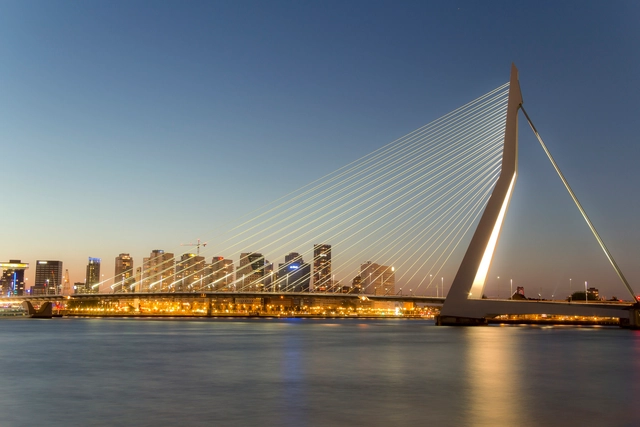
Marking the 20th anniversary of the opening of their iconic Erasmus Bridge in Rotterdam, UN Studio, along with the Kunsthal and Heerema Group, have organized an exhibition demonstrating “the many and varied ways that the bridge has been embraced by the public and become a symbol of the city of Rotterdam.”
Next Month, architecture will be hitting the mainstream media, as Bjarke Ingels has been selected to grace the cover of the September 2016 edition of WIRED UK. Titled “THINK BIGGER,” the issue will also feature profiles and stories from architects and designers Tom Dixon, Neri Oxman, David Adjaye and Rem Koolhaas. A Condé Nast Publication, the magazine focuses on the effects of science and technology on topics including design, architecture, culture, the economy, politics and philosophy.



.gif?1472762798)