Architect, urbanist, and Content Editor at ArchDaily, covering news and developments in architecture and the built environment. Editorial work focuses on the Gulf region and the Middle East, exploring contemporary regional architectural languages and their relationship to local contexts.
Courtesy of ATCHAIN | Chengdu Tianfu Software Park
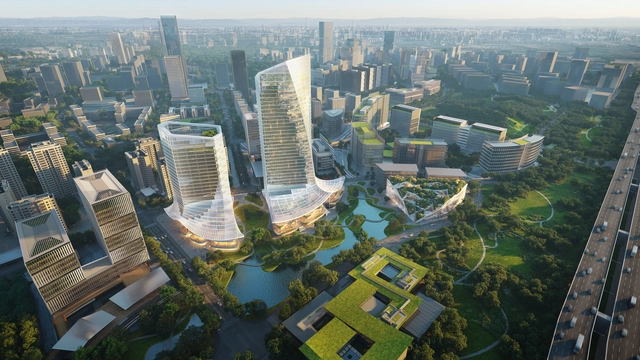
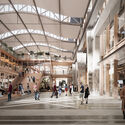
MVRDV has won the competition to design two structures within the Tianfu SoftwarePark in Chengdu, China. One of the structures is a 150-meter-tall tower that acts as a centerpiece to the entire campus. The other is a four-story cultural center featuring an art museum, conference hall, library, and exhibition space. Boasting a faceted sloping design, the scheme invites visitors to explore its interior.
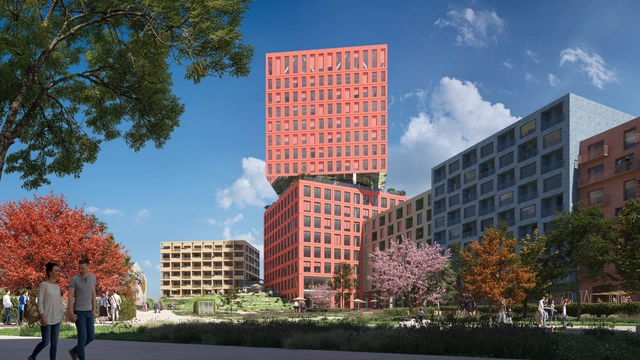
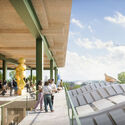
MVRDV and LOLA Landscape Architects have just revealed the new development of “Grüne Mitte” in Düsseldorf, Germany. Centered around open communication, negotiation, and compromise, the project aims to introduce 500 new apartments and community spaces to enhance the neighborhood. Approximately 50% of the scheme is designated as social or affordable housing, which was designed in participatory processes with the residents.
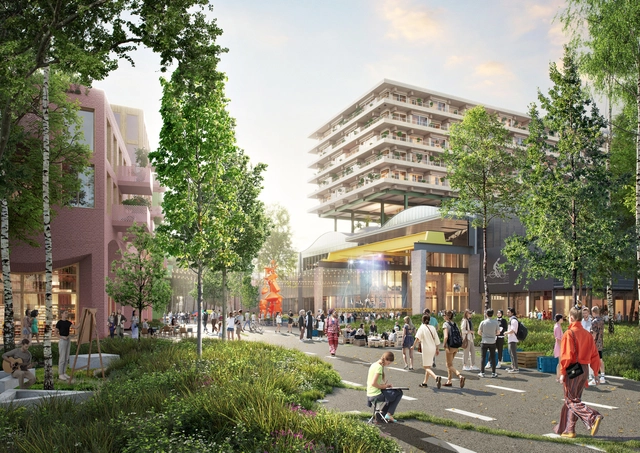
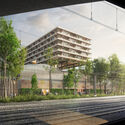
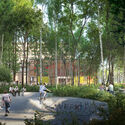
MVRDV has just announced the WärtZ masterplan, that repurposes a former business park near the railway station into a dynamic innovation hub. Developed by AM and designed by a team including MVRDV, Orange Architects, and LOLA Landscape Architect, the scheme introduces residential homes, creative workspaces, dining establishments, and various neighborhood amenities. At the core of the new design is the newly renovated Wärtsilä hall, a former factory redesigned with a signature undulating roof topped by a hovering wooden apartment block.
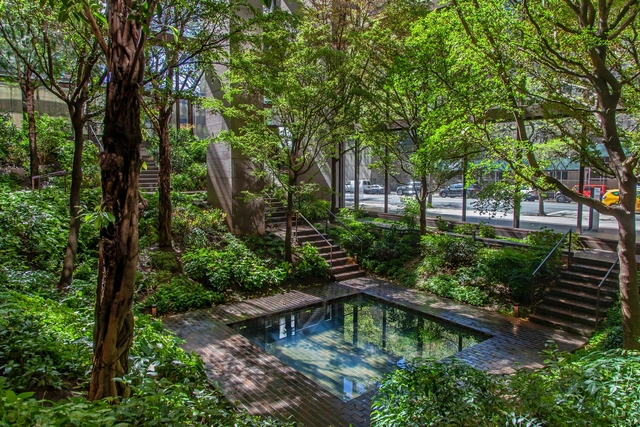
As a landscape architect, Dan Kiley has significantly contributed to the world of design. The designer worked with influential architects such as Louis Kahn, I.M. Pei, and Eero Saarinen. Influenced by the timeless landscapes of André Le Nôtre, most of his designs are well-known for their manner of merging grids and allées, striking a balance between natural and organized beauty.
Opening January 18th, “The Landscape Architecture Legacy of Dan Kiley” exhibition is a traveling photographic exhibition honoring one of the most critical Modernist landscape architects. Curated by The Cultural Landscape Foundation, the display aims to explore and spread awareness of the architect’s profound impact. Showcased at The Exhibition Space @ ABC Stone in Brooklyn, the show offers a captivating journey through 27 carefully chosen designs by Dan Kiley.
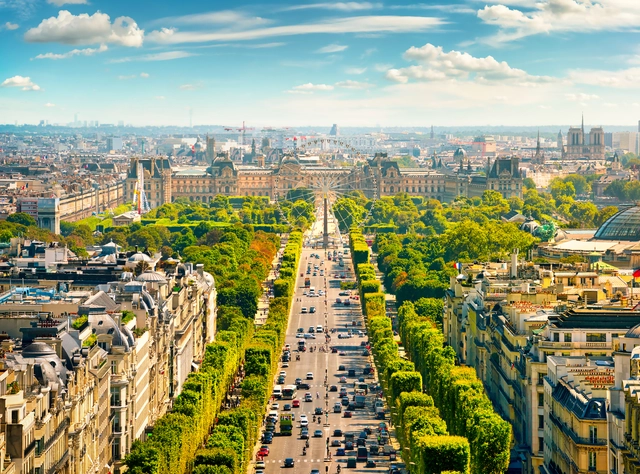
via Shutterstock | givaga | View on Avenue des Champs Elysses
As the countdown to the XXXIII Olympic Games in Paris ticks away, the city is making preparations that will completely shift its urban landscape and infrastructure. Set to be the largest event ever organized in France, the games will start on 26 July and continue till 11 August 2024. With only 200 days left, the Paris City Council has approved around 43 new initiatives acting as a catalyst for the city's transformation – aiming for a greener, healthier, and mobile Paris. From cleaning the Seine River to building a cycling lane, activating a transit line, and banning non-essential city traffic, the heart of the French capital is on a mission against time to revitalize its historic urban core.
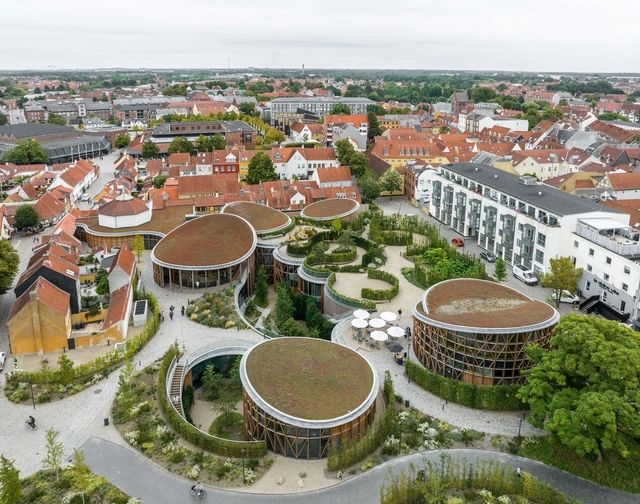
Courtesy of Danish Landscape Award | H.C. Andersen Garden
The Danish Landscape Award 2023 has been awarded to the H.C. Andersen Garden, designed by MASU Planning. The award focuses on honoring landscape architectural works with character, serving as “inspiration” for the industry. Situated in Odense in Denmark, this year’s winner was praised for reviving urban renewal in the city center by creating an escape that blends with the existing context.
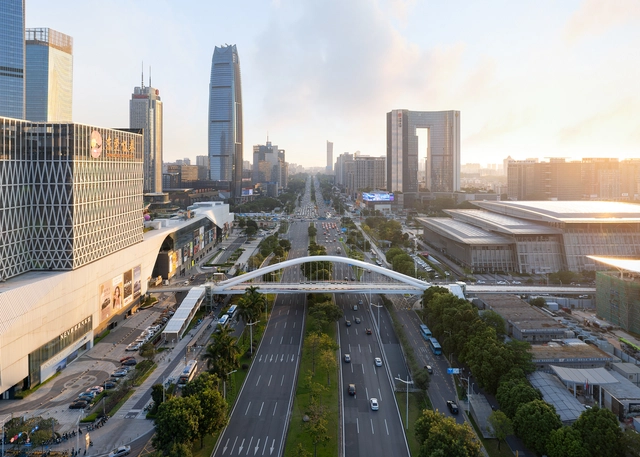
In a city, celebrating the act of walking has become a form of non-traditional planning. In the age of cars, challenging the dominance of vehicular transportation by championing the pedestrian experience is not very common. For this reason, pedestrian bridges worldwide stand as symbols of connectivity and architectural ingenuity. These soaring structures embody the urban experience for its core user: the pedestrian. Although the structures began as practical solutions to traffic management, they have evolved into iconic landmarks and pivotal components of city planning.
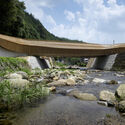
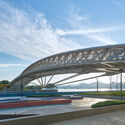
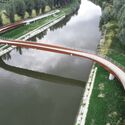
The significance of these projects represents a shift towards human-centric design in urban landscapes. The Kusugibashi Bridge in Japan, rebuilt by Kengo Kuma & Associates symbolizes resilience, while the Hangzhou Riverfront Public Space’s Silk Bridge showcases urban connectivity through revitalizing the waterfront. The Donnguan Central Area Slow-Traffic Bridge addresses connectivity and greenery, and SBE NV’s Vlasburg Bridge dedicates itself to enhanced water routes for the community. Collectively, these bridges drive urban revitalization into the future, emphasizing sustainability and integrating with community needs.
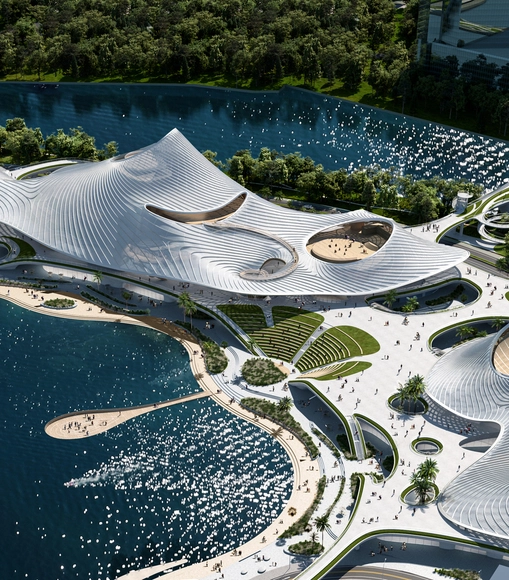
MAD Architects has revealed the designs for the Nanhai Art Center in Foshan City, Guangdong. Covering 59,445 sqm, the project features three main elements: a Grand Theater, a Museum, and a Sports Center. Aiming to encourage community and traditional culture, the center features a wave-like form with a new public gateway to the waterfront. Upon completion, the Art Center seeks to become a new waterfront public space blending social and creative aspects.
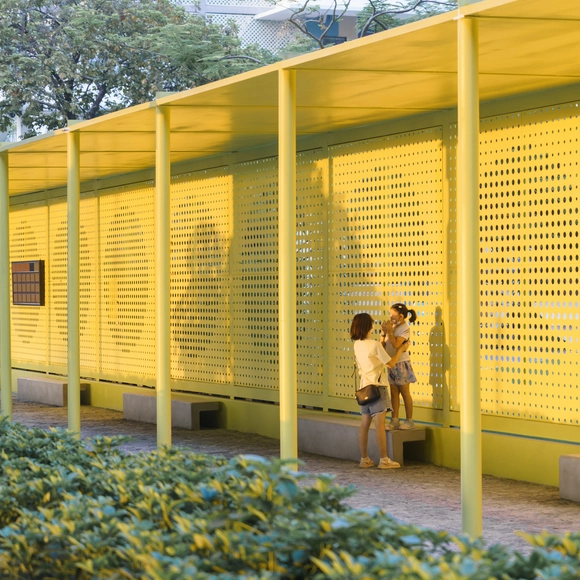
Spring Rain, portico, wall and staircase for the Qianhai Harbour School, Shenzhen, 2022. In collaboration with Tu'an Architecture Design Company (Guangzhou). Image Courtesy of studio ACF
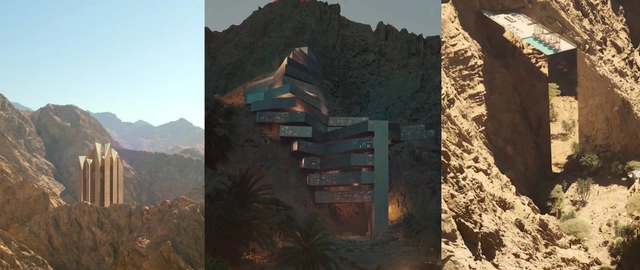
NEOM has just unveiled “Leyja” as a new tourism destination in Northwest Saudi Arabia. Featuring three different hotels by world-renowned architects, the Leyja region is located in an ancient valley overhung by mountains 400 m tall. The project includes a staggering hotel by Chris van Duijn, a mirrored hotel by Shaun Killa, and a vertical rock hotel by Mario Cucinella. In an attempt to support sustainable tourism, the destination is part of the Saudi Vision 2030.
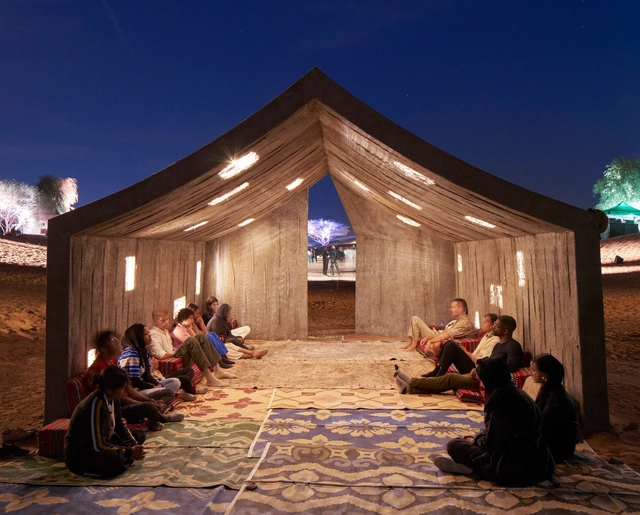
The Sharjah Triennial debuted on November 11th, 2023, with the theme of The Beauty of Impermanence: An Architecture of Adaptability. At the center of the abandoned 1970s “Al Madam,” in the eastern desert of Sharjah, the “Concrete Tent”, created by DAAR, an experimental Palestinian and Swedish Studio, combines elements of a mobile tent and a concrete house. Overall, the tent explores the notion of “permanent temporariness.”
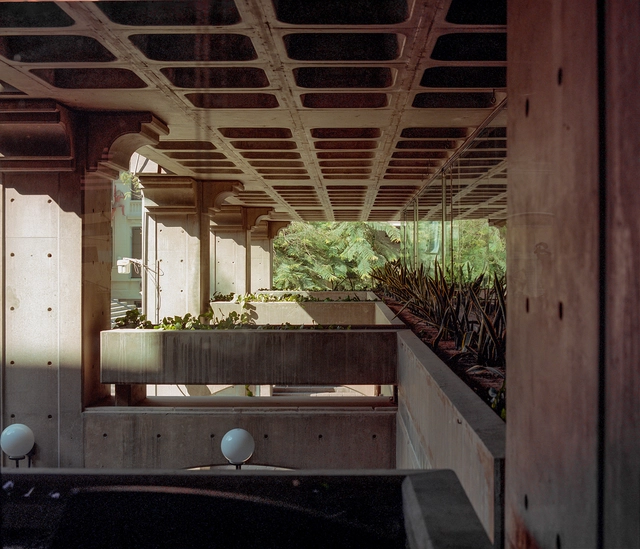
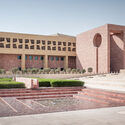
In Downtown Cairo, the Jameel Center pays homage to modernism and Mamluk architectural heritage. The Abdul Latif Jameel Center for Middle East Management Studies illustrates effective and adaptable architecture. The old business education building, a monument in Cairo's multi-layered architectural and academic heritage with staple elements such as concrete façades, has Mamluk-inspired arches, and wooden mashrabiyyas. Photographer Ebrahim Bahaa Eldin captures this unique architecture and its surrounding environment.
Urban environments are constantly evolving, with cities becoming the hubs of cultural diversity and economic life. In fact, the globe is speeding towards a future in which 70% of people will live in cities by 2050. Architects are at the core of this revolutionary movement, rethinking the nature of a city due to this urban surge. In response to this immense focus on newer and more diverse cities, architects and designers are leaning towards multifunctional and mixed-use projects. Attracting diverse crowds of people, mixed-use architecture explores the maximum potential of what a structure can serve.
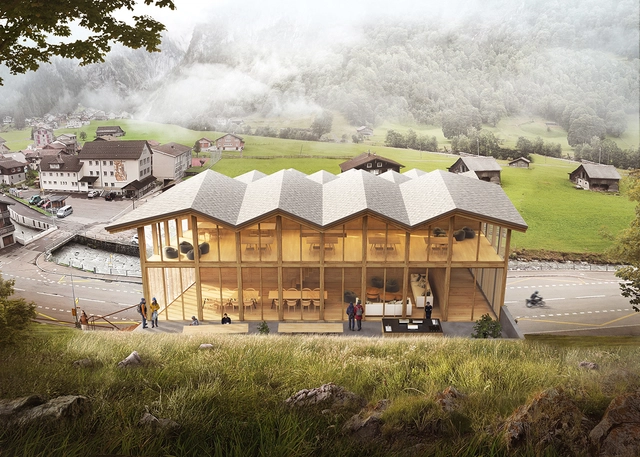
Highlighting architecture firms such as Atelier 333, MOR Architects, BXB studio Bogusław Barnaś, Beek Architects, Frey Architekten, and Kalbod Design Studio, among others, the forthcoming exploration unveils a collection of unbuilt architectural projects submitted to ArchDaily that champion multi-function in their design. From the innovative Plata.forma in Laqlouq to the maritime haven of The Ark and the Swiss House's harmonious alpine blend, these projects redefine urban living.
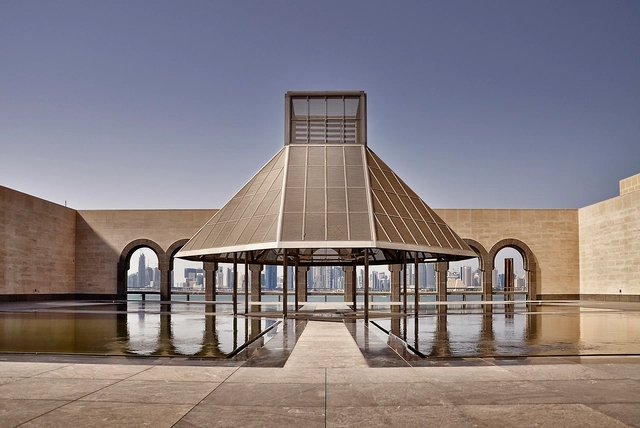
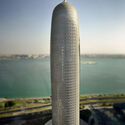
Doha, the capital of Qatar, is the residence of more than 90% of the country's population, which amounts to about 1.7 million people, with over 80% being professional expatriates. In its historical past, Doha was primarily a fishing and pearl diving town, characterized by numerous traditional individual houses until the mid-1960s. Modernizing the city occurred mainly during the 1970s, although its pace slowed in the 1980s and early 1990s. However, Qatar has recently emerged as one of the world's fastest-growing economies, lending significant geostrategic importance to Doha.
The country's development vision revolves around reducing dependence on natural resources and embracing a knowledge-based economy encompassing international universities, high-tech industries, IT services, and advanced producer services. Much of the coastline, including the corniche, has been artificially constructed. Several notable areas contribute significantly to the evolving character of the city. The city’s contemporary architecture has been captured through the lens of photographer Pygmalion Karatzas.
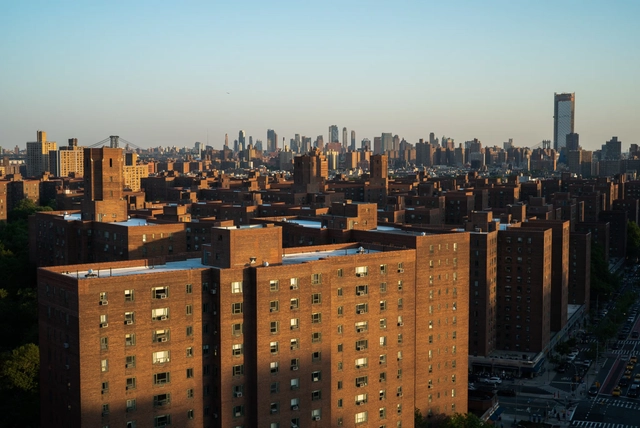
In the ever-evolving landscape of urban development, cities are faced with an array of challenges that demand quick and innovative solutions, ranging from the critical issue of affordable housing to the pressing need for efficient and decongested infrastructure and sustainable energy practices. As the demands of the built environment expand, local authorities worldwide are redefining policies and regulations to shape their cities. These innovative regulations can drive sustainable and consistent progress as cities stand at the intersection between their present challenges and future aspirations.
Foster + Partners Applied Research + Development team has created VARID (Virtual and Augmented Reality for Inclusive Design). Designed in collaboration with City, University of London (City) and UCL’s PEARL Lab, VARID is a design toolkit that uses virtual and augmented reality technologies. Its objective is to support academics, designers, and architects in better understanding how people with vision impairments perceive their environment.
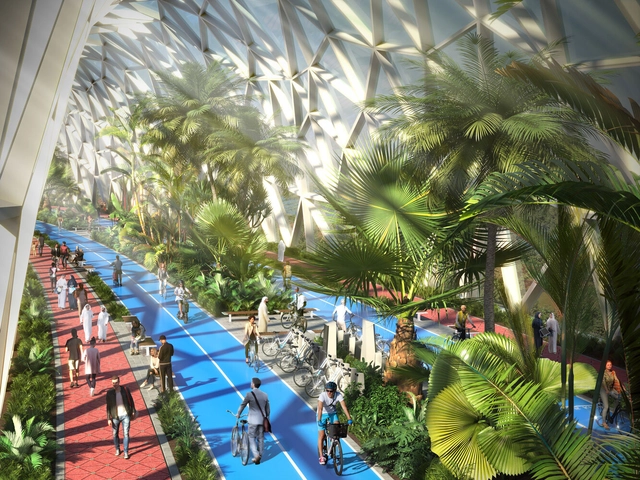
URB has released a study for “Dubai Cycle City 2040,” envisioning diverse cycling infrastructure in the Emirate. The initiative aims to revolutionize transportation in Dubai, allowing residents quick access to critical services and locations by cycling or walking. In a city where cars have reigned supreme as a transportation mode, plans are underway to transform urban mobility.