Architect, urbanist, and Content Editor at ArchDaily, covering news and developments in architecture and the built environment. Editorial work focuses on the Gulf region and the Middle East, exploring contemporary regional architectural languages and their relationship to local contexts.
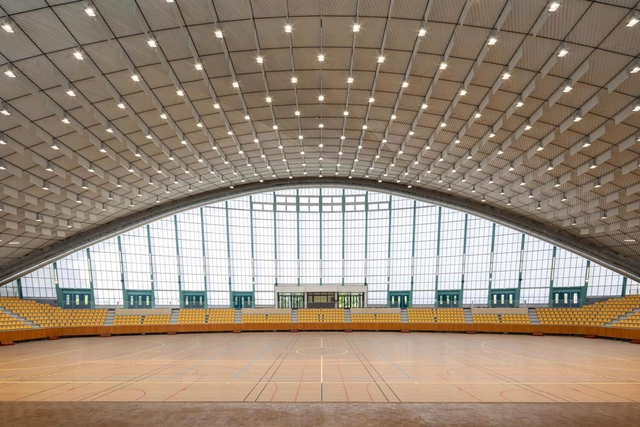
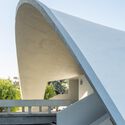
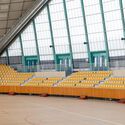
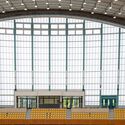
After a seven-year closure, Chatillon Architectes has renovated the Grande New de I’Île-des-Vannes in Paris, France. Transforming the building into an Olympic training site for the upcoming games, the renovation incorporates modern solutions and state-of-the-art facilities. Initially designed by Anatole Kopp, Lucien Metrich, and Pierre Chazanoff in 1971, the structure features a sweeping parabolic roof and striking translucent side paneling. The restoration involves adding contemporary energy solutions, structural repairs, universal accessibility upgrades, acoustic paneling, sports flooring, and enhancing lighting fixtures.
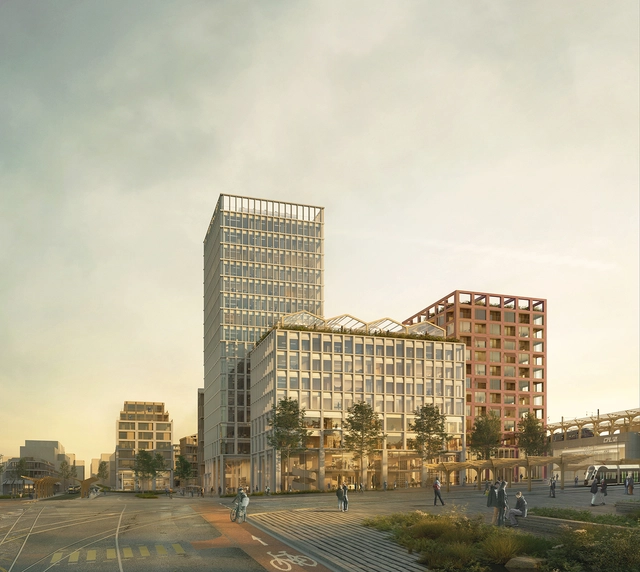
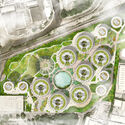
Schmidt Hammer Lassen (SHL) from Denmark and Assar Universum Architects from Luxembourg have collaborated to design a new urban hub for Hollerich in Luxembourg. The new development aims to create a green, vibrant space with mixed uses, transforming the area into an urban destination. Harnessing the city’s distinctive topography, the design integrates a dynamic program of residential, commercial, cultural, and public spaces. The hub, named “NEI HOLLERICH,” is also envisioned as one that addresses the need for affordable housing.
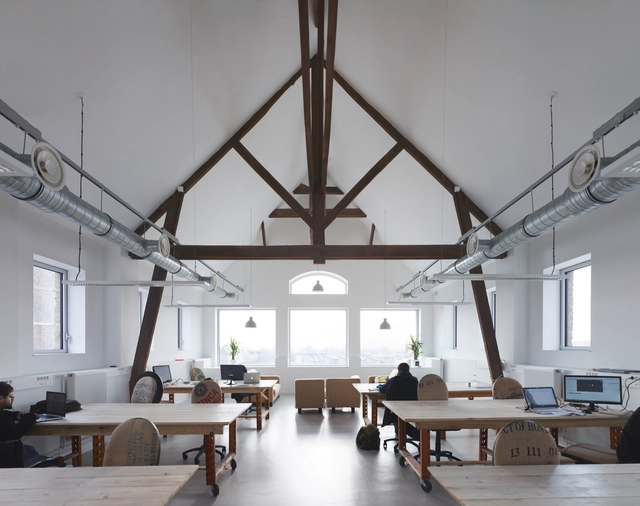
Industrial heritage, once central to urban growth and economic prosperity, is now often neglected and underused. Around the world, various factories, mills, and warehouses sit abandoned, and their distinctive structures fall into disuse. These buildings were typically constructed from materials such as brick, steel, concrete, and large glass windows. Known for their strength and longevity, these materials make the structures ideal candidates for refurbishment, maintaining structural integrity.
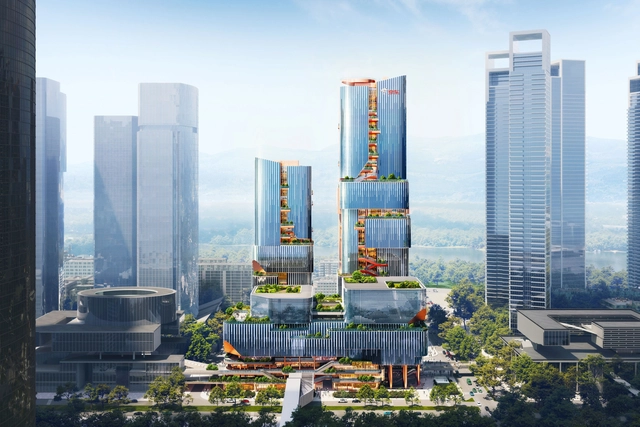
Büro Ole Scheeren’s latest project, Scenic City Towers, is currently under construction in the Shenzhen Bay Super Headquarters Base in China. This design for JD.com's new offices seeks to emphasize “in-between” spaces that blend the social fabric of urban life with nature, proposing a new model for working. Situated in Shenzhen’s Nanshan district, a booming business and financial area, the headquarters will join a community of global corporations around it.
Courtesy of Foster + Partners | Larnaka Masterplan
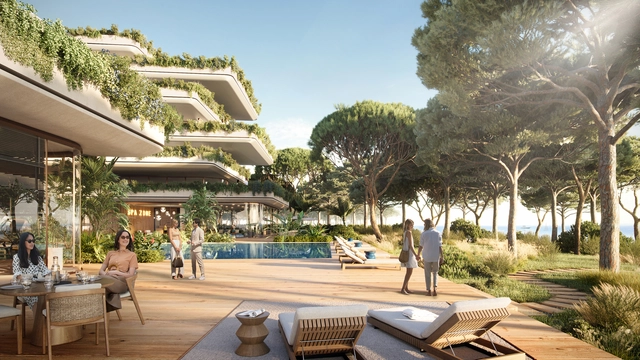
Foster + Partners has started the design work for the initial phase of the “Land of Tomorrow” master plan in Larnaka, Cyprus. Aiming to transform Larnaka’s seafront into a vibrant, sustainable community, the first phase focuses on residential developments. Featuring commercial shops, including shops, offices, and restaurants, the master plan focuses on seamless integration with the seafront and emphasizes connections to natural surroundings.
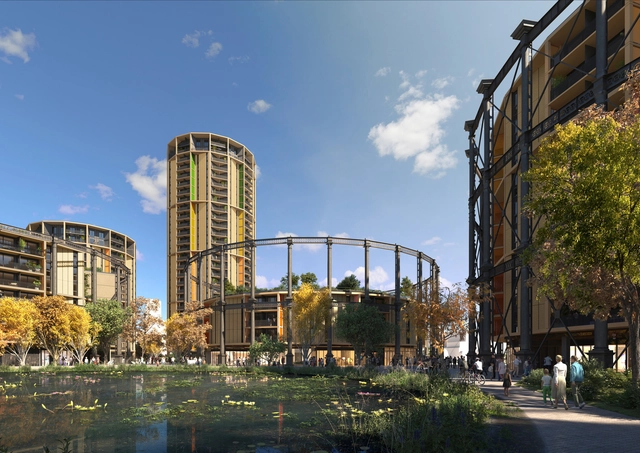
RSHP’s design proposal for the Bromley-By-Bow Gasworks regeneration project has just been approved by the London Borough of Newham’s Strategic Development Committee. The 23-acre site dates back to the 1870s, housing the largest collection of Victorian gasholders worldwide, making the project one of the largest regeneration proposals in the Lower Lea Valley in London. After three years of design development, the scheme reimagines the gas holders into a mixed-use development offering new high-quality residential architecture.
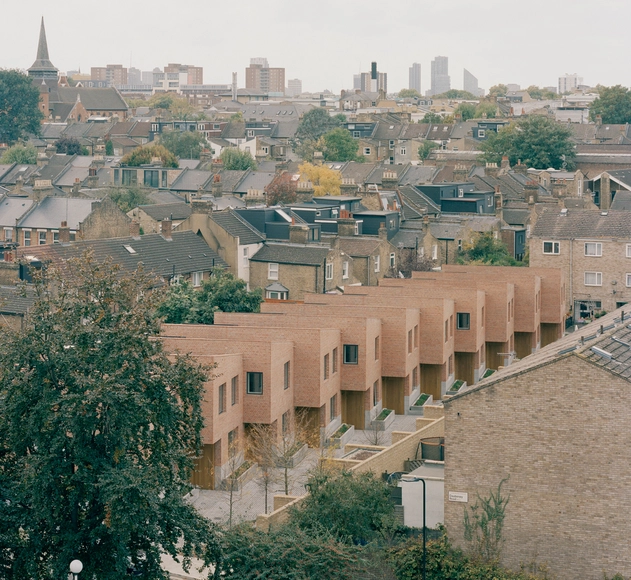
The Royal Institute of British Architects (RIBA) has unveiled the 26 winners of the 2024 RIBA National Awards for Architecture, recognizing the finest examples of UK architecture and showcasing the country's design and social trends. Established in 1996, the awards highlight outstanding architectural projects across the UK, from Northern Ireland and Scotland to the south of England. This year's award celebrates projects that feature "inspiring examples of existing buildings and structures that have been given a new lease of life." Recognized for intelligent design and collaboration with clients and local communities, the award winners also showcase innovative construction techniques and thoughtful material selections.
Restoration of Stirling Building | University of Cambridge. Image Courtesy of BDP
The University of Cambridge, in collaboration with BDP, has just unveiled plans to restore and rejuvenate the Grade II* listed History Faculty Building designed by James Stirling. This structure, home to the Seeley Library, is one of the renowned “Red Trilogy” buildings from the 1960s. Initially intended to showcase the significant library and “the act of reading,” the project is internationally celebrated as a landmark from the post-war architecture era. The revitalization project aims to enhance learning and working environments at the University’s Sidgwick site.
The Holcim Foundation for Sustainable Construction announced the winners of the 2023 edition, celebrating projects that showcase innovative approaches to sustainable construction practices. For the Europe region, the Gold Prize was awarded to Husos, Elli, and Ultrazul for their project “Composition of Knowledge House.” In a video interview with the winners, they explain the details of this rehabilitation project. Developed for the Carasso Foundation headquarters, the project uses an innovative “360° co-design process” to promote inclusivity and community involvement.
Celebrating groundbreaking projects that showcase sustainable construction practices, this year’s winners of the Holcim Foundation for Sustainable Construction 2023 highlight innovative approaches across various scales, forms, geographies, and forms. The Gold Prize for North America was awarded to Partisans Architects and Well-Grounded Real Estate with their high-tech, low-cost modular housing solution for urban living in Toronto. In a video interview for ArchDaily, Jonathan Diamond from Well-Grounded Real Estate discusses the development of the winning project and the forces that shaped it.
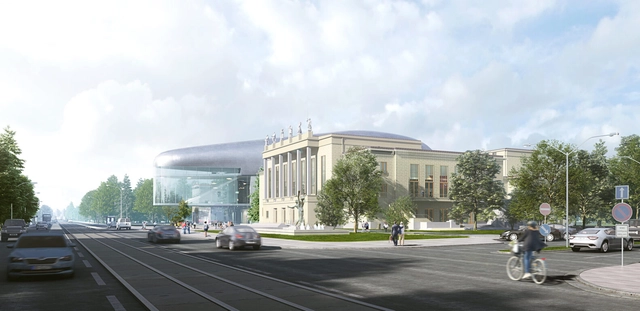
Ostrava Concert Hall . Image Courtesy of Steven Holl Architects
The Ostrava Concert Hall, designed by Steven Holl Architects, has just broken ground in the Czech Republic. Commemorating the start of construction, the concert hall “promises to be an inspiring venue for both locals and internationals who cherish Ostrava’s rich music heritage.” Designed for the Janacek Philharmonic Orchestra, it creates a dramatic contrast between old and new, aiming to create a cultural landmark.
Huvila by Jenni Reuter Architects, Finland. Image Courtesy of UIA 2030 Awards
The UIA, in collaboration with UN-Habitat, has revealed the finalists for the first stage of the second edition of the UIA 2030 Award. Celebrating architecture that contributes to the 2030 Agenda for Sustainable Development and the New Urban Agenda, this biennial award honors built projects that demonstrate design quality and alignment with the UN Sustainable Development Goals (SDGs).
The regional finalists will now proceed to Stage 2, where they will submit a three-minute video demonstrating their projects in action and explaining in detail how they align with the relevant SDGs and meet the eligibility criteria. During stage 1, the finalists were evaluated regionally, representing the five UIA regions: Western Europe, Central and Eastern Europe and the Middle East, the Americas, Asia and Oceania, and Africa. Winners in each of the six will be awarded a medal. The awards ceremony will be taking place in Cairo, Egypt, at the twelfth session of the World Urban Forum from November 4-8, 2024.
Harvard University Graduate School of Design (GSD) has just announced Thandi Loewenson as the winner of the 2024 Wheelwright Prize. The prestigious $100,000 grant is dedicated to supporting innovative research in contemporary architecture with a global perspective. Loewenson’s project, “Black Papers: Beyond the Politics of Land, Towards African Policies of Earth & Air,” explores the social and spatial dynamics in modern Africa.
In the evolving landscape of workplace design and office architecture, the boundaries of creativity and functionality are constantly being pushed. From futuristic skyscrapers to co-working spaces, the future of work environments respond to the dynamic needs of modern businesses and their employees. This week's curated selection of Unbuilt Architecture focuses on office, workplace, and administrative buildings submitted by the ArchDaily Community.
The realm of office architecture is a chance for designers to innovate and influence work cultures. From the Sinuating Flow High-Rise in Chongqing, China, drawing inspiration from the surrounding mountains and valleys to the Parisian GRDF Headquarters reimagining urban offices as small city districts. The ABS Workspace integrates maritime elements into its workplace design, while the FUTURA tower in Kyiv breaks conventional norms with artistic and sculptural forms and the use of black. Together, these projects showcase the diversity in office architecture, each working within a context to offer unique solutions to sustainable work environments.
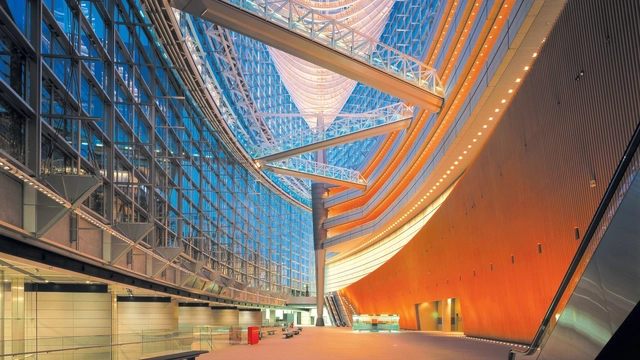
Rafael Viñoly Architects’ Tokyo International Forum has been honored with the prestigious AIA Twenty-five Year Award. Celebrating its “distinctive transparent character and capacity to engage with the public in the largest metropolitan area in the world.” Rafael Viñoly Architects was first selected to design the structure through Japan’s first international design competition facilitated by Kenzo Tange, the architect of Tokyo’s City Hall and the first Japanese laureate of the Pritzker Prize.
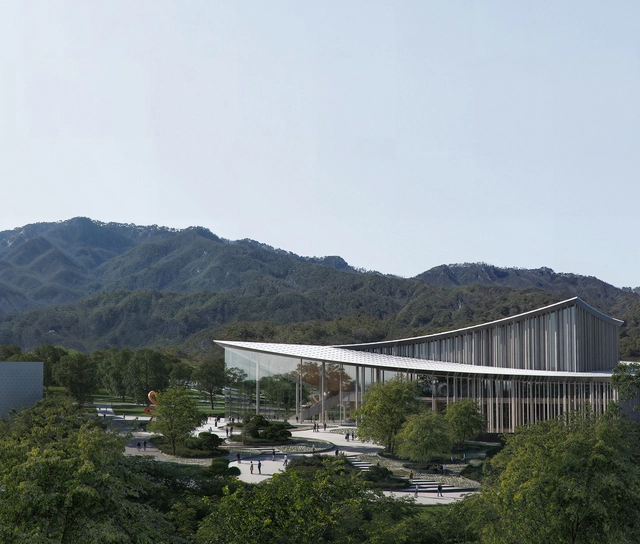
3XN has just won an international competition, which they were invited to participate in, to design the Chungnam Art Center in Chungcheongnam-do, South Korea. Designed in collaboration with SIAPLAN and MDA, the new art center aims to serve as a key destination for creative expression. Drawing inspiration from the dynamic movements of art, the center seeks to create a space where everyone can both experience and participate in the arts.