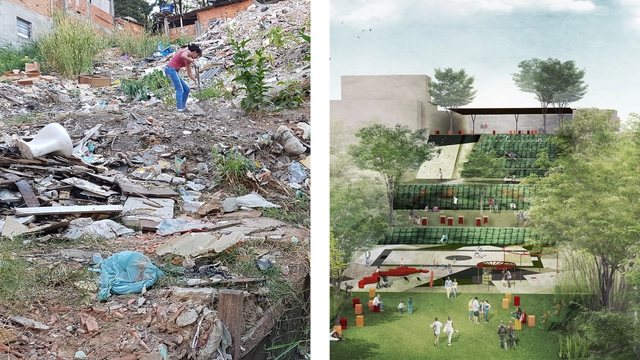
The landscape of Brazilian cities shifts between two striking realities. On one hand lies the formal city, where the rule of law prevails, the right to the city is exercised, and high-quality infrastructure and public and private investments are concentrated. This is also the reality used as the baseline for formulating laws and urban planning guidelines, and where the presence of the state is most visible.
On the other hand, there is the informal city—occupying the peripheries and favelas, with an identity marked by exposed clay bricks and excessive density. Here, self-built housing dominates, regardless of land ownership, alongside informal occupation and a chronic absence of public policies and basic infrastructure. Leisure spaces, cultural venues, and green areas are deeply lacking.