Meli Malatesta

BROWSE ALL FROM THIS AUTHOR HERE
↓
Subscriber Access

Is tactical urbanism an action provided for by law?

Recently, many Brazilian cities have turned to tactical urbanism as a way to intervene in the design of their streets, making them safer and more appealing—all at a low cost and on a short timeline.

The volume and nature of these interventions have been particularly remarkable in addressing the immediacy imposed by the pandemic in our cities. They seek to adapt street layouts to modes of travel that reduce the risk of transmission during daily commutes, even amidst scenarios of restricted activities.

Subscriber Access

Walking Through Anhangabaú: A Brief History of the Valley from the Perspective of Those on Foot

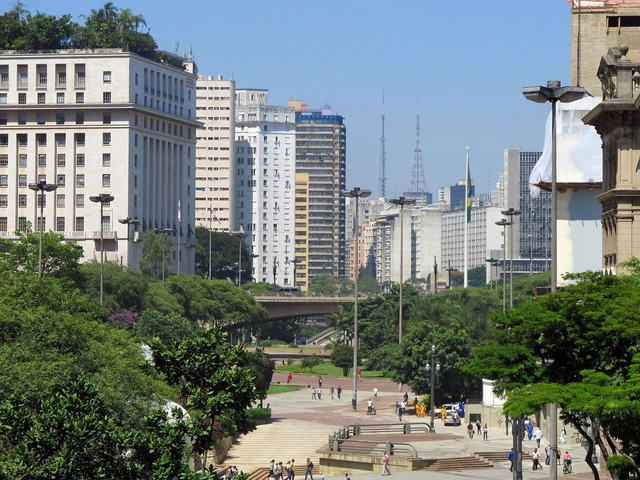
The Vale do Anhangabaú, or simply Anhangabaú, is the area of São Paulo that separates the so-called Centro Velho (Old Center) from the Centro Novo (New Center). True to its name, the Valley is the region bordering the stream of the same name—a somewhat ominous moniker that in Tupi-Guarani means “river or water of the evil spirit.” And indeed, judging by the various unsuccessful ways the space has been used over time, the “curse” embedded in its name seems to linger to this day. 

Walking Through Anhangabaú: A Brief History of the Valley from the Perspective of Those on Foot - Image 1 of 4Walking Through Anhangabaú: A Brief History of the Valley from the Perspective of Those on Foot - Image 2 of 4Walking Through Anhangabaú: A Brief History of the Valley from the Perspective of Those on Foot - Image 3 of 4Walking Through Anhangabaú: A Brief History of the Valley from the Perspective of Those on Foot - Image 4 of 4Walking Through Anhangabaú: A Brief History of the Valley from the Perspective of Those on Foot - More Images+ 1