A total of sixteen projects have been shortlisted for RIBA South West 2015 Awards, featuring buildings by Glenn Howells Architects, Feilden Clegg Bradley Studios, AHR, and Stonewood Design. All shortlisted buildings will now be assessed by a regional jury. Regional winners will then be considered for a RIBA National Award in recognition of their architectural excellence, the results of which will place some projects in the running for the 2015 RIBA Stirling Prize.
See the complete list of shortlisted projects after the break.
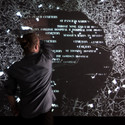
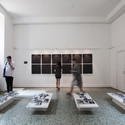
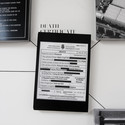
At the 2014 Venice Biennale, away from the concentrated activity of the Arsenale and Giardini, was Death in Venice: one of the few independent projects to take root that year. The exhibition was curated by Alison Killing and Ania Molenda, who worked alongside LUST graphic designers. It saw the hospitals, cemeteries, crematoria and hospices of London interactively mapped creating, as Gian Luca Amadei put it, an overview of the capital's "micro-networks of death." Yet it also revealed a larger message: that architecture related to death and dying appears to no longer be important to the development of architecture as a discipline.
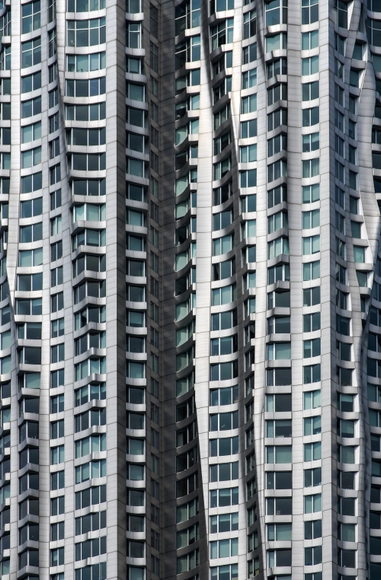
Nikola Olic is an architectural photographer based in Dallas, Texas, with a focus on capturing and reimagining buildings and sculptural objects in "dimensionless and disorienting ways." His photographs, which often isolate views of building façades, frame architectural surfaces in order for them to appear to collapse into two dimensions. According to Olic, "this transience can be suspended by a camera shutter for a fraction of a second." As part of his process, each photograph is named before being given a short textual accompaniment.
See a selection of Olic's photographs after the break.
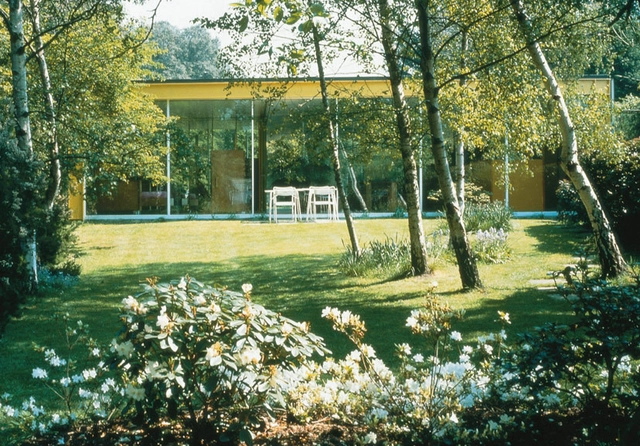
Richard Rogers has announced that the home he built for his parents in Wimbledon, London, will be gifted to Harvard’s Graduate School of Design (GSD) for the training of doctorates in the field of architecture. The home, which will be donated by his charity, the Richard Rogers Charitable Settlement, was completed between 1967 and 1968 by Richard and his then wife Su Rogers. Originally designed for his parents, Dr. William Nino and Dada Rogers, the Grade II* listed pre-fabrictated single storey dwelling was later adapted for Rogers' son Ab and his family, before being put on the market in 2013 for £3.2million ($4.8million).
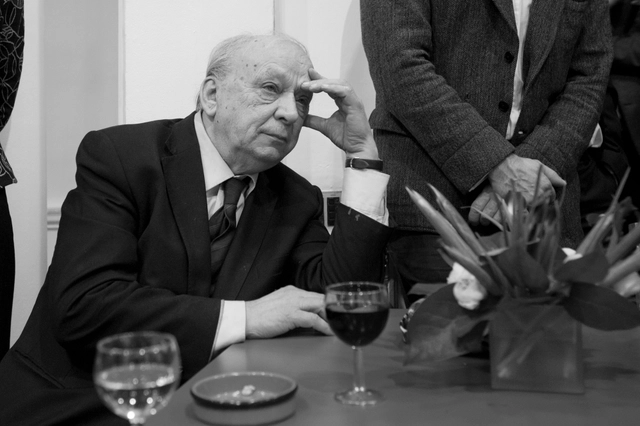
Vesely was born in Prague in 1934, five years before the Nazi occupation of Czechoslovakia. Following World War II, he studied engineering, architecture, art history and philosophy in Prague, Munich, Paris and Heidelberg. He was awarded his doctorate from Charles University (Prague) having been taught and supervised by Josef Havlicek, Karel Honzik, and Jaroslav Fragner. Although later he would be tutored by James Stirling, it was the philosopher of phenomenology Jan Patočka who, in his own words, “contributed more than anyone else to [his] overall intellectual orientation and to the articulation of some of the critical topics” explored in his seminal book, Architecture in the Age of Divided Representation, published in 2004.
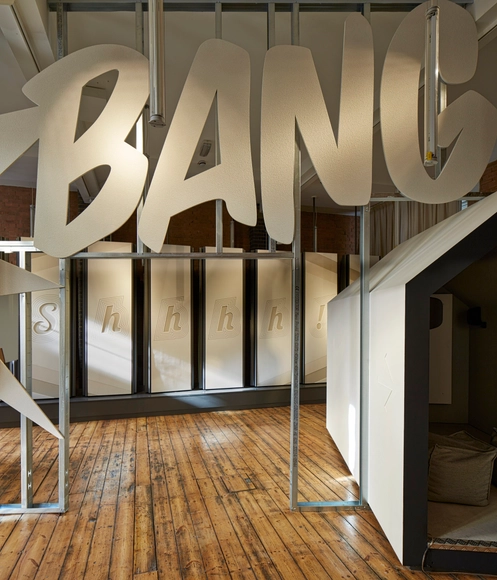
Look & Listen, a new sound responsive exhibition at the recently opened Sto Werkstatt gallery in London, explores "the often unnoticed, yet vital role acoustics play in our experience of place." Designed by The Klassnik Corporation, the exhibition offers a variety of "sonic experiences" which encourage the visitor to focus on the audible aspects of architecture. It creates a unique set of environments built using Sto’s range of acoustic systems, "utilising the perfect balance of design flexibility and technical leadership the acoustic materials offer." The installation also demonstrates the materials‘ capabilities in reducing reverberation and promoting clearer sound.
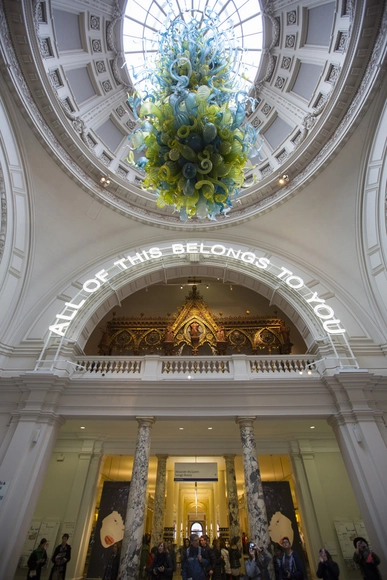
The Victoria and Albert Museum (V&A), named after the Queen and Her Consort, has its foundations in the Great Exhibition of 1851 amidst the wealth, innovation and squalor of the Industrial Revolution. Britain was flooded by prosperity which allowed for the development of major new institutions to collect and exhibit objects of cultural significance or artistic value. The institute’s first director, Henry Cole, declared that it should be “a schoolroom for everyone,” and a democratic approach to its relationship with public life has remained the cornerstone of the V&A. Not only has it always been free of charge but it was also the first to open late hours (made possible by gas lighting), allowing a more comprehensive demographic of visitor.
Their latest exhibition, which opens today, seeks to realign the museum’s vast collection and palatial exhibition spaces in South Kensington with these founding concepts. The interventions of All of This Belongs to You attempt to push the V&A’s position as an extension of London’s civic and cultural built environment to the fore, testing the museum’s ability to act as a 21st century public institution. To do this in London, a city where the notion of public and private is increasingly blurred, has resulted in a sequence of compelling installations which are tied together through their relevance either in subject matter, technique, or topicality.
A total of eleven projects have been shortlisted for RIBA East Midlands 2015 Awards, featuring buildings by Evans Vettori, Make, Orms, and Studio Gedye. All shortlisted buildings will now be assessed by a regional jury. Regional winners will then be considered for a RIBA National Award in recognition of their architectural excellence, the results of which will place some projects in the running for the 2015 RIBA Stirling Prize.
See the complete list of shortlisted projects after the break.
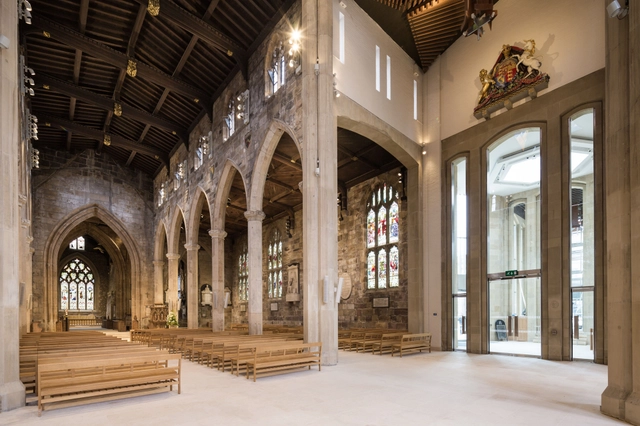
A total of eleven projects have been shortlisted for RIBA Yorkshire 2015 Awards, featuring buildings by Populous, HLM, and Studio Gedye. All shortlisted buildings will now be assessed by a regional jury. Regional winners will then be considered for a RIBA National Award in recognition of their architectural excellence, the results of which will place some projects in the running for the 2015 RIBA Stirling Prize.
See the complete list of shortlisted projects after the break.
Exactly one year ago an important event took place. A gathering of seventy student delegates, organised by the Architecture Students Network (ASN), met to discuss the future of architectural education. Their meeting was sparked by the latest directive from the European Union which seeks to “establish more uniformity across Europe by aligning the time it takes to qualify”, making mutual recognition of the architect’s title easier between countries.
The ASN’s discussions concluded that the course content throughout the UK system of ‘Part I, II, and III’, and the duration of said course, urgently needs to be re-evaluated in order to reflect the changing needs of the profession - especially in light of the recent rise in tuition fees and associated university costs. Back then, a spokesperson for the ASN said that “it really felt like momentum for change has finally reached a tipping point.”
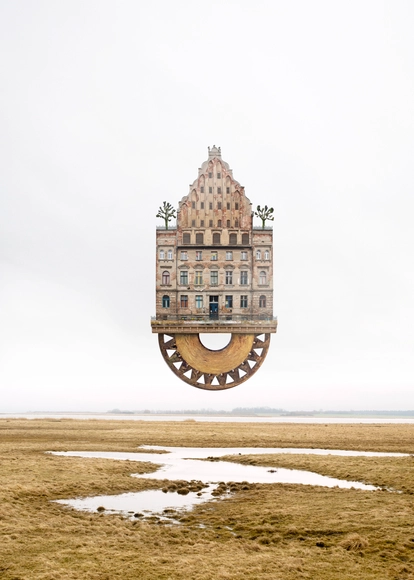
Matthias Jung's fascination for the medium of collage began in his father's photolab. And so, "with scissors and glue, the first fantastic buildings were made." In early 2015 Jung, a German artist and graphic designer, created seven images as part of a series which he entitled 'Houses', of which many of this selection originate. Uniquely, every piece of each collage originates from one of Jung's original photographs which are collected and then reassembled. The majority of these photographs were taken during trips in northeastern Germany.
See a selection of Jung's fantastical architectural collages after the break.
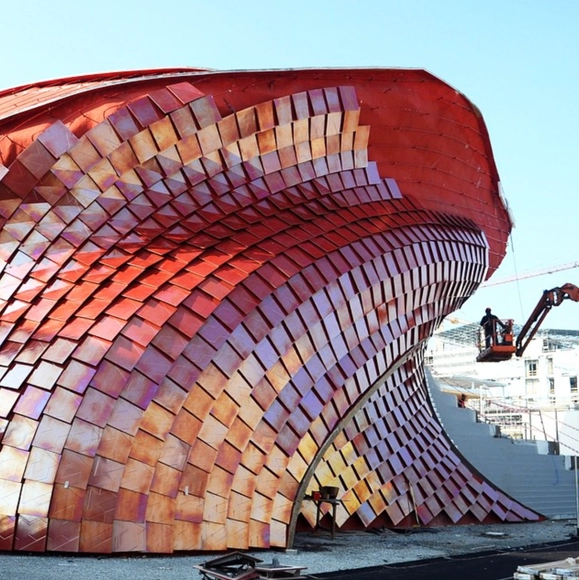
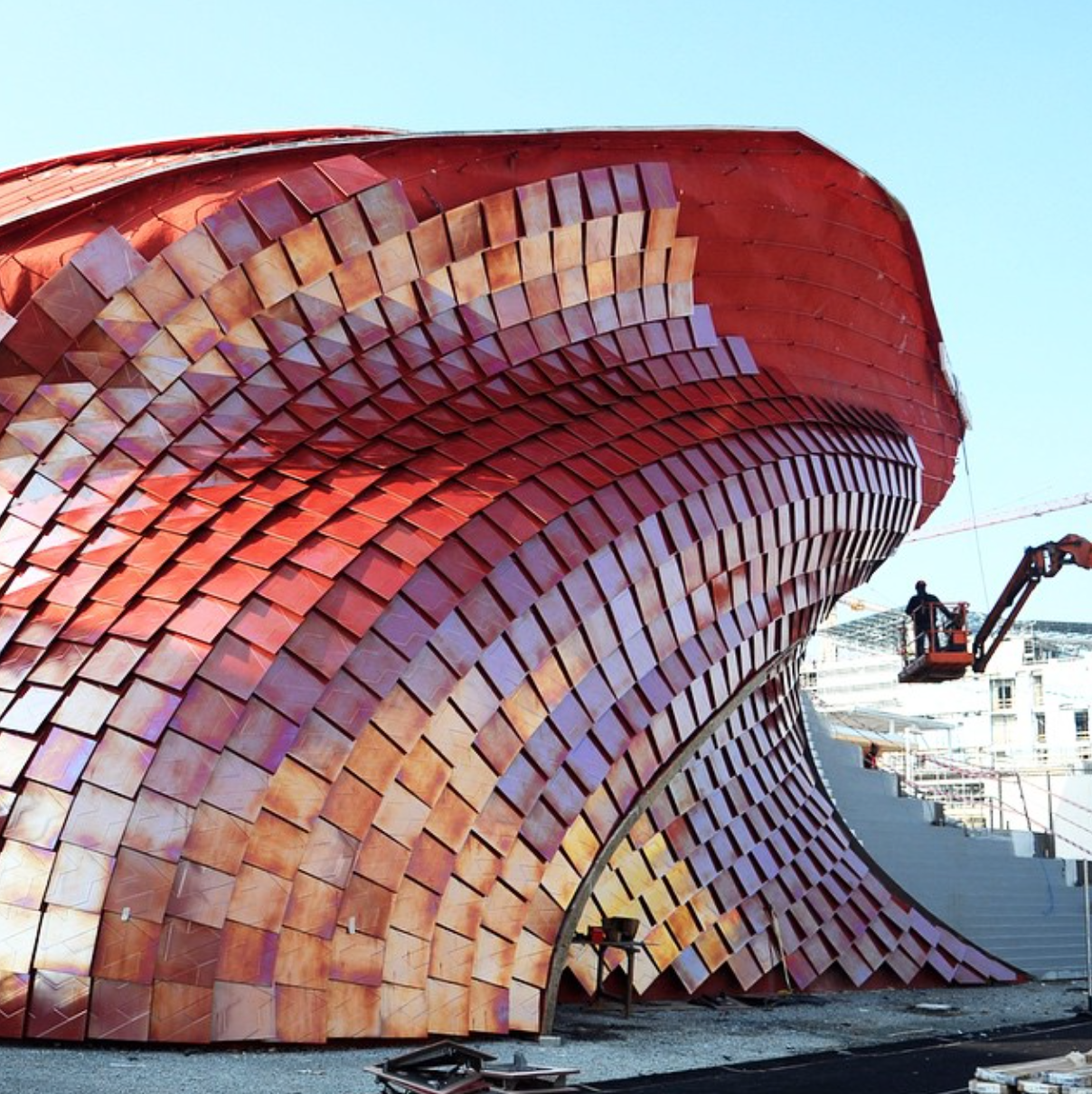
Pavilion of Vanke. Image Courtesy of Milan Expo 2015 / Archilovers
This tour - made possible through the Expo's Instagram account - gives us fresh insight into the development of projects like Daniel Libeskind'spavilion for Vanke, which is clad in a self-cleaning, air purifying, metalised tile, to Nemesi's 'smog-eating pavilion' for Italy. With the opening of the 2015 Universal Exposition set to take place in a little over one month's time Milan, for a six month period, will become a global showcase for the thematic study of food. With over 140 participating nations tackling the question of "how to be able to guarantee healthy, safe and sufficient food for everyone, while respecting the planet and its equilibrium," new innovations in architecture, engineering and material design will be central to the exhibitions.
See snapshots of the pavilions under construction after the break.
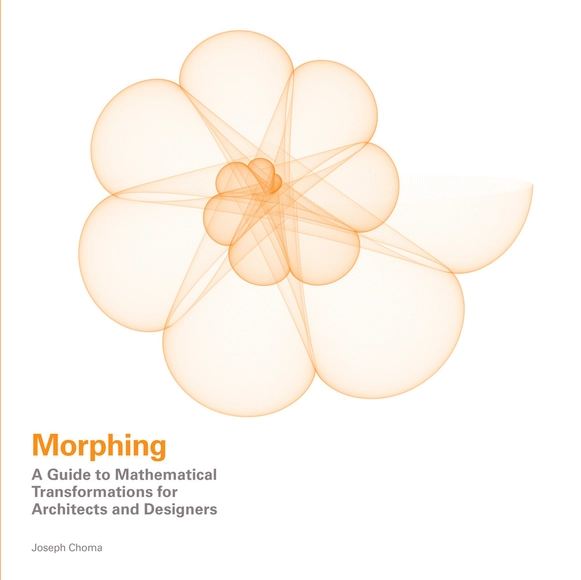
Cylinders, spheres and cubes are a small handful of shapes that can be defined by a single word. However, most shapes cannot be found in a dictionary. They belong to an alternative plastic world defined by trigonometry: a mathematical world where all shapes can be described under one systematic language and where any shape can transform into another. As digital tools are becoming increasingly complex, this book seeks to use mathematics "as a means to demystify the inner computational workings of digital tools" by proposing a framework to convey mathematical transformations as design tools.
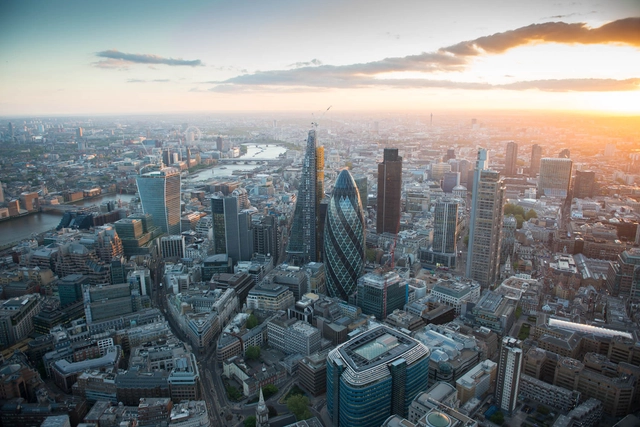
"If London doesn’t grow up, it will need to grow out." Following last year's report, New London Architecture (NLA) in cooperation with GLHearn (an independent property consultancy) have released the results of their annual London Tall Buildings Survey. In 2014, they forecast 236 new tall buildings for the British capital, a figure which has risen to 263 buildings over twenty stories for 2015. Alongside this, they believe that around 14,800 new homes are "under construction for London."
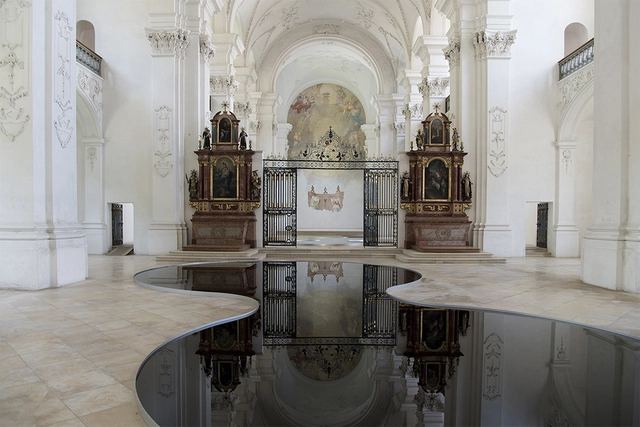
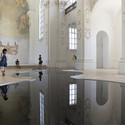
This sculptural installation, created by Swiss artist Romain Crelier, was exhibited at Bellelay Abbey in 2013. Although the structure dates back to the 12th century, the current Abbey Church of the Assumption was built by Franz Beer in a Vorarlberg Baroque style and completed in 1714.
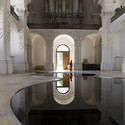
Almost three hundred years later Crelier's piece, entitled La Mise en Abîme (which roughly translates to, 'to have put into an abyss'), placed two shallow pools of used engine oil to act as reflective mirrors. These 'puddles' "allow the viewers to interact with the architecture of the church by being pulled into the reflection so that they, in turn, become part of the sculpture themselves." According to We Find Wildness' interpretation, "the installation not only dispenses multiple visual thrills and mysteries but also offers a moment where sculpture creates another reading of space."
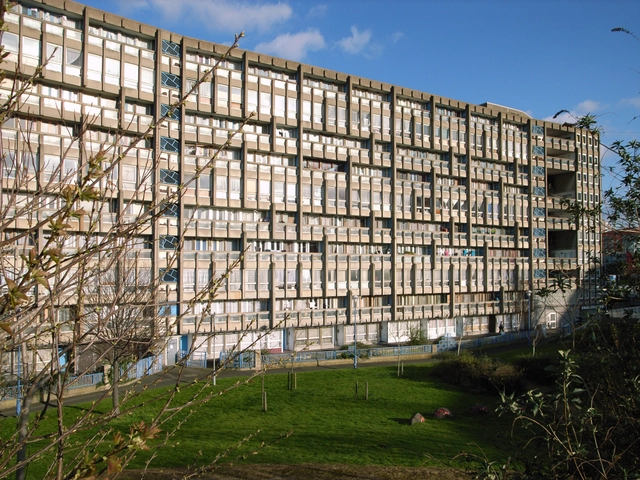
It has been reported that London's Robin Hood Gardens housing estate, which was thought to be finally condemned in March 2012, has re-entered a state of flux due to governmental indecision. The former UK Culture Secretary, Andy Burnham, gave the housing scheme an immunity from listing certificate in 2009, meaning that no concerned party could bid for it to gain protected status under British law. This certificate, designed to ensure that the buildings would be swiftly demolished, has now expired. This has led the Twentieth Century Society (C20) to launch a new bid for the estate to be both saved and protected.
Buddhas of Bamiyan (1963, 2008). Image via Wikipedia
In an article for the Financial Times(FT), writer and historian Simon Schama examines world conflict zones and the efforts to protect some of the world’s most vulnerable architectural and cultural sites. If history is a measure, then Schama's study of William “Basher” Dowsing - an Englishman who, in the winter of 1643, "made it his personal mission to obliterate as much as he possibly could of sacred art in the churches and colleges of East Anglia" in the name of religion - is pertinent now more than ever.


_JoChambers-Cropped-764x500.jpg?1428504204&format=webp&width=640&height=580)










AlanWilliams.jpg?1426489201&format=webp&width=640&height=580)