Guto Requena

BROWSE ALL FROM THIS AUTHOR HERE

Hacked Architecture? Facade Responds to Stimuli and Air Pollution

Subscriber Access | 

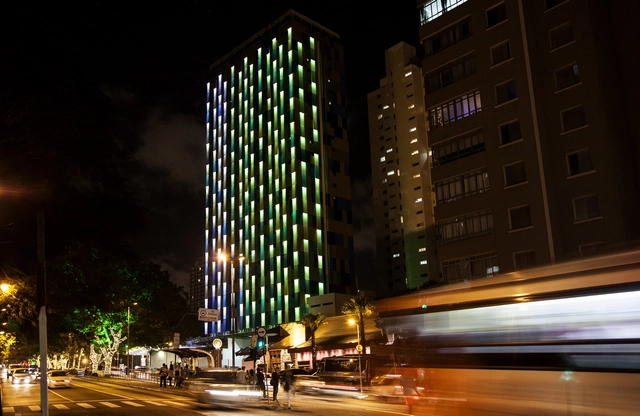
São Paulo, like so many other Brazilian cities, has a standardized, monotonous, and gray architecture, with its aesthetic defined by real estate developers and builders, offering very little architectural value.

To be sure, there are highly significant buildings—including historical downtown classics like the Martinelli Building, modernist examples by Rino Levi and Artacho Jurado in Higienópolis, and contemporary experiments in Vila Madalena designed by Isay Weinfeld and Triptyque. Unfortunately, these examples are few, dwindling to almost zero as we move toward the outskirts.

I am obsessed with the idea that we can change this reality by hacking existing buildings, fostering a new urban identity, boosting civic pride, improving quality of life, and promoting innovation and sustainability at viable costs.
Interactive Facades: Architecture as a Communication Tool

Subscriber Access | 

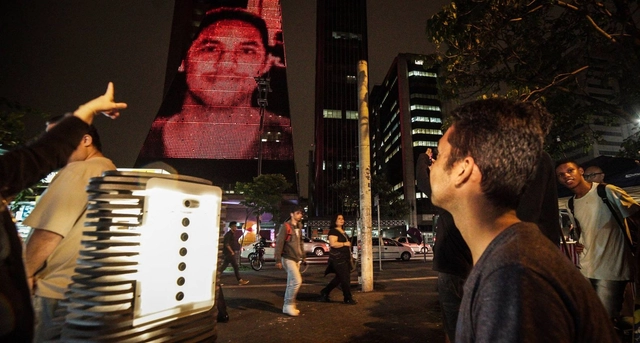
Among the images of protests along São Paulo’s Paulista Avenue that have circulated in recent years, the most recurring certainly featured as their backdrop the iconic 1979 Fiesp-Ciesp-Sesi building by architect Rino Levi, which fittingly displayed the Brazilian flag.

Since December 2012, this building has housed Brazil’s first "media facade", the Sesi-SP Digital Art Gallery, which showcases new forms of digital art expression across its immense urban screen.

A New Industrial Revolution? The Infinite Possibilities of 3D Printing

Subscriber Access | 

The First Industrial Revolution took place in the United Kingdom in the late 18th century with the mechanization of the textile industry. Over the following decades, instead of making things solely by hand, the use of machines spread across the globe.

The Second Industrial Revolution began in the United States in the early 20th century with the assembly line, ushering in the so-called Era of Mass Production.

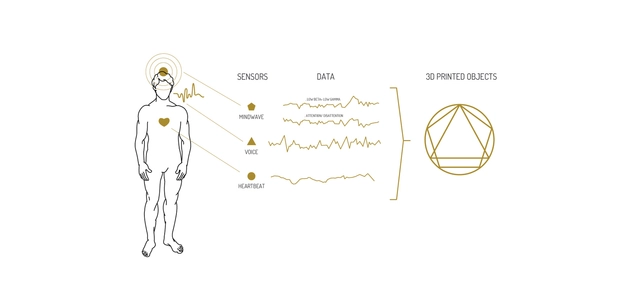
Today, we are living through a new industrial revolution, driven by digital culture and technology, with 3D printers serving as one of its key catalysts. And believe it or not, you will eventually own one. As they become increasingly affordable, these machines are capable of printing three-dimensional objects. The most common technique involves depositing and bonding, layer by layer, minute particles of materials such as plastic, ceramic, glass, or metal.