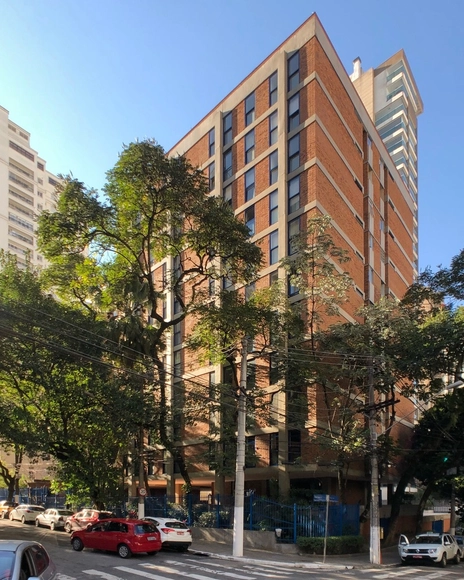
The real estate market and construction industry in São Paulo, which had been booming since the mid-1960s thanks to the creation of the National Housing Bank, allowed for broad architectural experimentation, such as a novel program: vertical multifamily housing. Nevertheless, as early as the 1950s, Revista Pilotis was already calling for architects to take a stance on the issues generated by this new program:
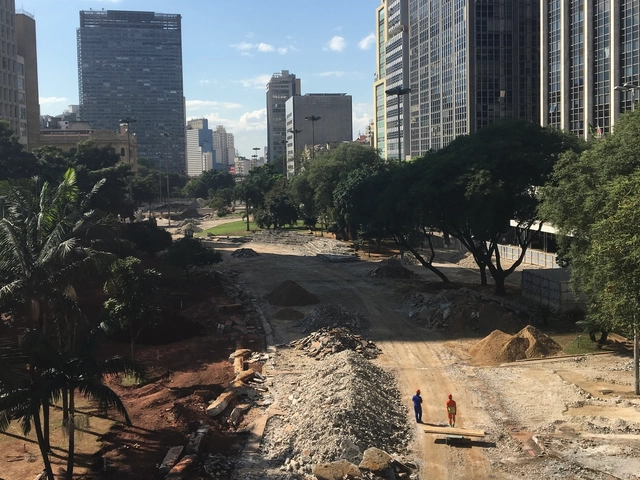
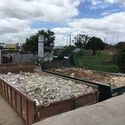
Start of the revitalization works in Anhangabaú Valley. Men coexist with mountains of rubble generated by the demolition of the pre-existing pavement. June 2020. Prepared by Guilherme Trevizani Ribeiro. Image courtesy of Guilherme Trevizani Ribeiro
How can waste become a resource? Or rather, when did waste stop being a resource? Why does contemporary architecture still build as if our buildings were great titans that will survive different eras and adversities? These are all questions that cross the mind of a recent architecture graduate. One of the current challenges of architectural production in a metropolis like São Paulo is understanding that, after demolition, the building does not disappear. What does our National Solid Waste Policy indicate?
Although latent, this issue is still rarely debated within academia, a space that should be constantly proposing alternatives to our way of life. And even when it is debated, where is the benefit to the public? How can we disseminate these lessons? Education is still the key to getting our future back on track.