Evelia Peralta

BROWSE ALL FROM THIS AUTHOR HERE
↓
Subscriber Access

Rafael Vélez Calisto, an icon of Quito's contemporary and cosmopolitan image

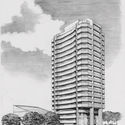
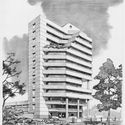
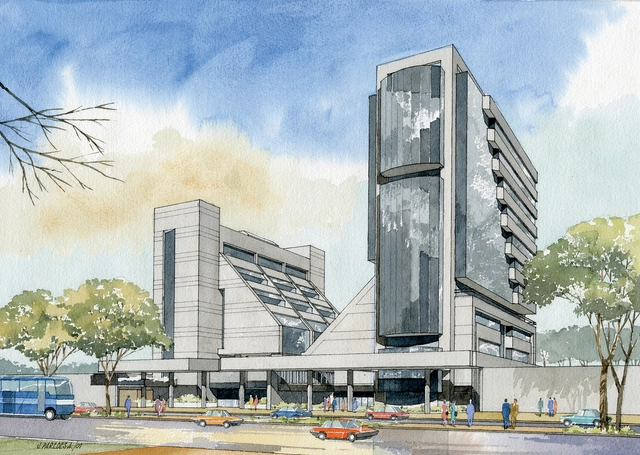
The 1970s and 1980s witnessed a new urban image in the Ecuadorian capital. Rafael Vélez Calisto graduated in 1970, going on to become one of its most prominent and prolific architects. He expressed his architecture for a thriving country and capital that offered unique opportunities to professionals, driven by oil exploitation, the growth of the public and private sectors, and rapid urban expansion.

The capital shifted the profile of its main corridors, gradually shaping itself as a vertical city. Along Quito's Avenida Amazonas, the dominant presence of large, still-functional estates gradually disappeared, replaced by high-rise buildings (1)—an urban landscape that continued to spread along new arteries toward the north.

In these areas, several of his notable, contemporary, and cosmopolitan buildings stand out.
Rafael Vélez Calisto, an icon of Quito's contemporary and cosmopolitan image - 1 的图像 4Rafael Vélez Calisto, an icon of Quito's contemporary and cosmopolitan image - 2 的图像 4Rafael Vélez Calisto, an icon of Quito's contemporary and cosmopolitan image - 7 的图像 4Rafael Vélez Calisto, an icon of Quito's contemporary and cosmopolitan image - 11 的图像 4Rafael Vélez Calisto, an icon of Quito's contemporary and cosmopolitan image - More Images+ 7

Subscriber Access

Fausto Banderas Vela, an icon of architecture in Ecuador

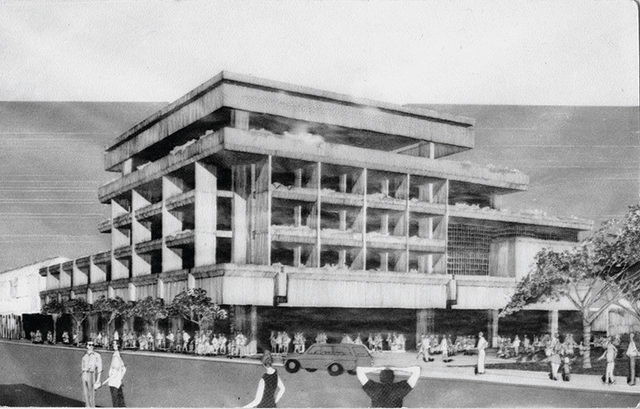
The practice and work of Fausto Banderas Vela stood out significantly within a generation of architects working since the 1960s, forging new paths in Ecuadorian architecture. His projects do not go unnoticed; into them, he poured research, reflection, and experience. He embraced the complex dimension of architecture, conscious of the need to transcend an individual vision and focus in order to emphasize the confluence of multiple contributions.

“Architecture is a complex and collective endeavor. To my understanding, there is no possibility of confronting the subject individually; not in design, where dialogue and mutual contribution are required, nor, obviously, in construction, since a work of architecture only begins to exist when it transitions from graphic and written documents into a material reality”1. He pointed out that architecture only truly exists when materialized. Thinking, designing, and constructing it are stages of the process embraced by Fausto Banderas, enabling him to achieve coherence and quality.

Subscriber Access

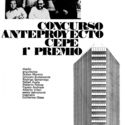
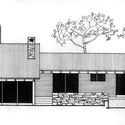
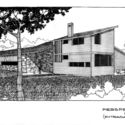
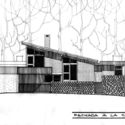
Rubén Moreira, a valuable legacy in Ecuadorian history and architecture

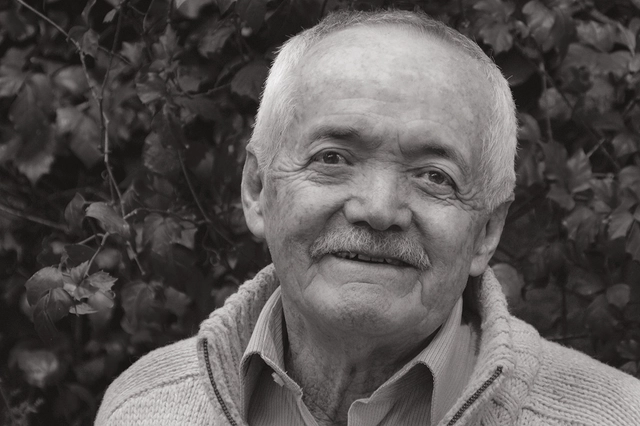
It is rare to find architects who engage with such a wide range of both the theoretical and practical dimensions of the profession. This is the case of Rubén Moreira [1], who approaches architectural design, research, criticism, architectural history, and teaching with equal and outstanding competence [2].

Rubén Moreira not only began his professional practice during a highly fertile period of Ecuadorian architecture, but also witnessed its key quests and transformations [3]. He was part of a generation of architects that reflected deeply on architectural processes, methods, and products [4]. His intellectual curiosity is clearly reflected in his postgraduate studies in Italy under two leading figures of architectural theory: Bruno Zevi and Manfredo Tafuri [5]. He taught design studio and history while pursuing research in architectural history. He also championed the creation of the MAE [6], as well as the Exhibition and Critical Guide of the "Architecture of Quito 1915-1985," which analyzes the context, authors, and landmark projects of each decade.

Rubén Moreira, a valuable legacy in Ecuadorian history and architecture - Imagem 1 de 4Rubén Moreira, a valuable legacy in Ecuadorian history and architecture - Imagem 2 de 4Rubén Moreira, a valuable legacy in Ecuadorian history and architecture - Imagem 3 de 4Rubén Moreira, a valuable legacy in Ecuadorian history and architecture - Imagem 4 de 4Rubén Moreira, a valuable legacy in Ecuadorian history and architecture - More Images+ 5