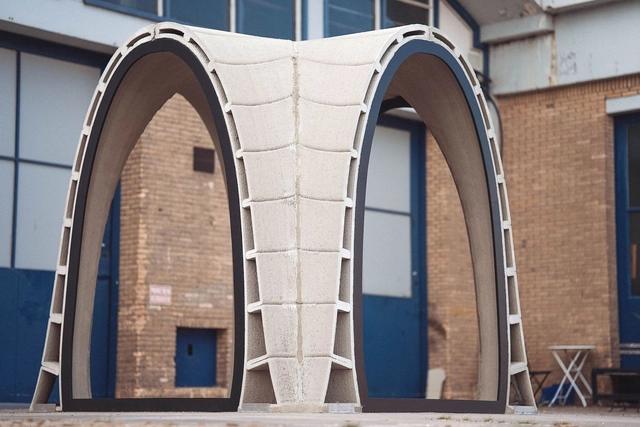
When browsing the 3D printing tag on ArchDaily, it is clear that this technology has developed at an incredibly fast pace. If in the early years we observed the concept as a distant possibility for the future or with small-scale examples, in recent years we have observed entire printed buildings and increasingly complex volumes being produced. Developed by reading a computer file, the fabrication is carried out through additive manufacturing with concrete - or other construction materials - and presents numerous difficulties in providing an efficient process that enables the constructive technique to become widespread. The pavilion printed by the Huizenprinters consortium, for example, illustrates this process well.
Forests cover about a third of the planet and play a fundamental role for life on Earth. According to Peter Wohlleben, author of the book “The Secret Life of Trees”, through fungal weaves, specimens of a forest can communicate with each other, exchange nutrients, help out the weakest plants, and organize survival strategies, which is essential for the healthy growth of individuals. The preservation of existing forests and the creation of new ones are essential for biodiversity and natural recovery, but also to meet the demand for wood. According to a report by the WWF (World Wide Fund for Nature), it is estimated that the amount of wood harvested in the world will triple by the year 2050, with the increase in population and income in developing countries. In addition, it is estimated that there will be an increased use of wood to manufacture biofuels, pharmaceuticals, plastics, cosmetics, consumer electronics and textiles. Searching for wood substitutes can be a smart path towards a sustainable future, especially if the alternatives are made using waste generated by other industries. Pyrus, for example, is an oil-free wood material produced sustainably with bacterial cellulose waste repurposed from the kombucha industry.
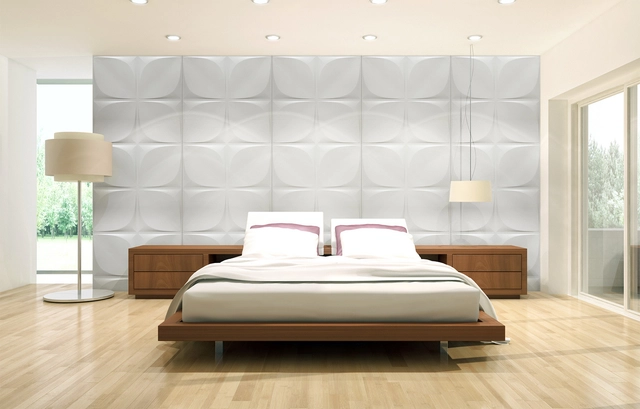
Textures can calm us, bring warmth or even guide us. They elicit our sense of touch and also affect us visually. This is because lights and shadows tend to form in relation to the irregularities and shapes that are present in some textures, which can in turn clearly differentiate these types of materials from other surfaces. For many, the idea of a space surrounded with white, smooth walls can be disturbing and monotonous. Embellishments such as paints, the inclusion of natural coatings or other elements can easily transform a space, emphasizing certain parts or creating new and attractive visuals. In interior design projects, textured walls have always been a popular way to add prominence to a space, either via the constructive system of building - such as brick or exposed concrete walls - or through different types of coatings that can be added later on.
Contemporary challenges and developments in technology inevitably trigger changes in the way we design and build our cities. SUMMARY, one of ArchDaily's Best New Practices of 2021, is a Portuguese architecture studio focused on the development of prefabricated and modular building systems. Striking a balance between pragmatism and experimentalism, the firm develops prefabricated solutions in order to respond to a driving challenge of contemporary architecture—to speed up and simplify the construction process. Founded in 2015 by the architect Samuel Gonçalves, a graduate of the School of Architecture of the University of Porto, the studio has presented at prominent events such as the 2016 Venice Biennale. We talked with Samuel about the firm's practical experience in prefabrication and modulation, as well as their experiments and forays into research.
BUGA Pavilhão de Fibra / ICD/ITKE Universidade de Stuttgart. Image Cortesia de ICD/ITKE University of Stuttgart
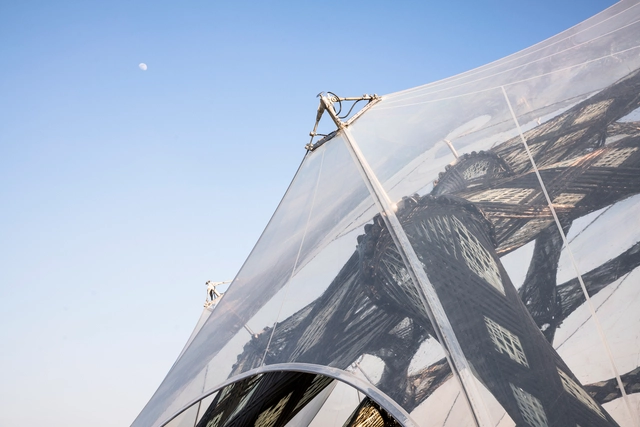
Let us return to the first architecture class on structures and the classification of structural efforts. In most structures, whether natural or man-made, compression forces are the primary actors. These are efforts undertaken with equal and opposing loads, applied in the interior of the structure, which tend towards the shortening of the piece in one direction - or compressing it, as the name indicates. It is not difficult to find examples of this: for example, a stone wall or a wooden log can resist the weight of a covering through internal compression efforts that are inherent to each material. Tension efforts, on the other hand, tend to lengthen components in the direction of the applied force of action. Steel, for example, is a material with good tensile strength. It is used in reinforced concrete precisely in the parts where the piece is in traction. But it is also possible for a structure to only have tensile parts, as is the case of membrane, tensioned, or tension structures, which consist of surfaces pulled by the action of cables or ropes in which the masts absorb compression efforts.
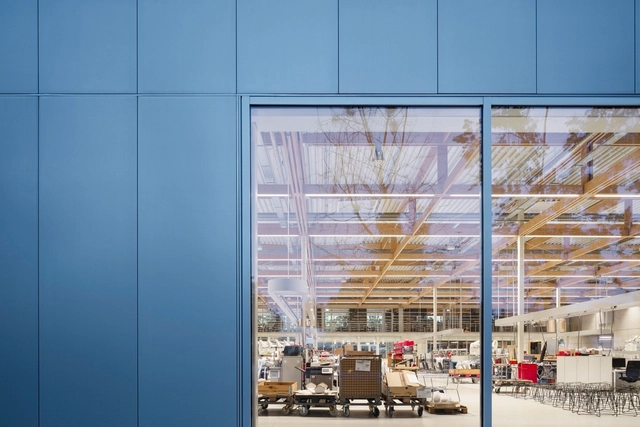
Metal façades give buildings an air of sophistication and modernity. They also bring a cleanness to the façade, due to their precise fabrication and well-resolved connections between other materials and building elements. There are currently multiple product options available for coatings, offering extensive colour options, including metallics, with different levels of durability (natural aging and corrosion). One of the main issues when approaching metal façades is the risk of corrosion, which can create points of weakness in the material and interfere with the aesthetics of the building. So, with this in mind, what do architects need to focus on to ensure that building envelopes age gracefully, while maintaining aesthetics and performance over time?
Artificial lighting plays an essential role in spatial quality. Badly thought-out lights can disrupt an architecture project and even bring harmful effects to occupants' health; while a well-balanced luminotechnic project can highlight positive aspects of the surroundings and make it much more enjoyable. Generally, however, projects tend to be too rigid and not in-tune with the flexibility of contemporary spaces. In addition, a badly made lighting decision can be complex and expensive to rectify. For example, electrical points in slabs, linings or walls are not easily modified if the distribution of a space is changed. At most, when this is resolved with hanging or free-standing lamps, we end up having to deal with bothersome electrical wires throughout the space.
Cladding systems have important functions in buildings. They can confer thermal insulation, protect internal spaces from the weather and–just as important–give the building a "face", improving its appearance and clearly identifying the element of design. "Cladding" refers to the components that are linked to the structure of a building to form non-structural external surfaces. While in the past wooden cladding was the only option, there are currently multiple possibilities of materials, colors, weights, textures, anchoring systems, and many other variables available. Below, we outline some of the main materials used for façade cladding, and the projects that use them in a remarkable way:
Cortesia de S'Winter Station - Ryerson University – Department of Architectural Science
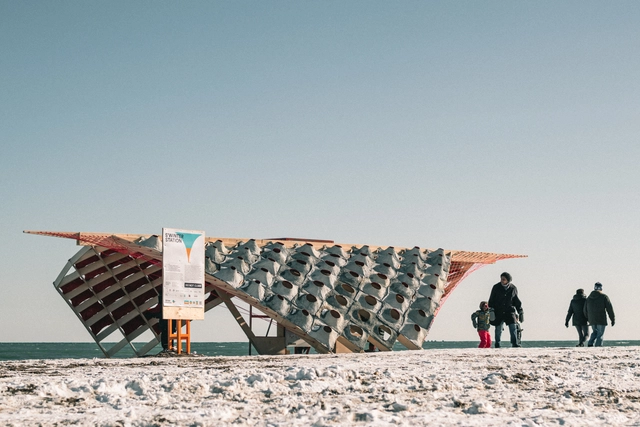
The construction industry has experienced severe changes in recent decades. Historically, it counted on abundant labor and a false notion that natural resources were infinite, but nowadays the sector has struggled to find innovations that will allow it to become more sustainable, especially considering its enormous impact and importance in the world. In addition, the recent Covid-19 pandemic changed several factors and dynamics, demanding creativity from designers to overcome challenges. In some cases, the design process itself became subject to changes. The S'Winter Station project, developed by students and teachers of Ryerson University's Department of Architectural Science, is one of these examples which relied on existing visualization and manufacturing technology for its completion.
Pricing architectural project work is a complex issue that is not usually addressed during one's formative school years, and it usually takes time for professionals to develop a good system that works for them and their clients. Issues such as scope of work, hours worked, project area and project complexity will influence the final cost of a job. In addition, another thing that can keep project professionals awake at night is how to charge clients in a way that is sustainable for the business and comfortable for future users of the designed space.
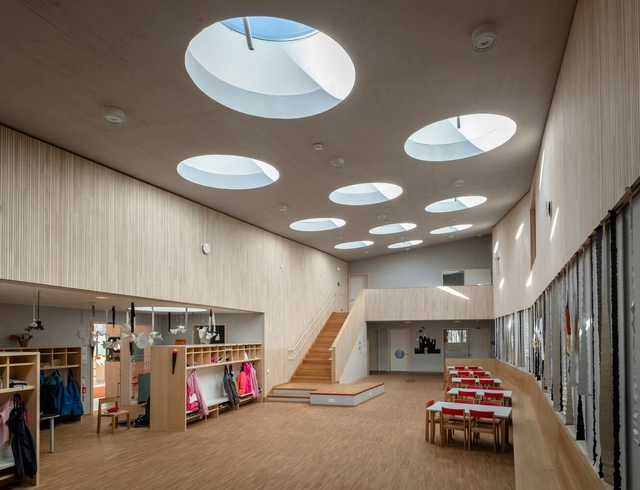
Kindergarten “St. Severin”, Garching. Image Courtesy of LAMILUX
Our environment influences how we feel; we have all experienced this. For students, it is easier to study in a bright place, artists look for inspiring atmospheres, and our mood can improve with the right color scheme. These aspects are also important for kindergartens, daycare centers and schools, because a child-friendly design can stimulate the curiosity and imagination of children, so that they learn in a playful way. The design of a room supports the learning and creativity of children. Daylight systems, for example, flood rooms with light, making them appear larger and friendlier.
Videos
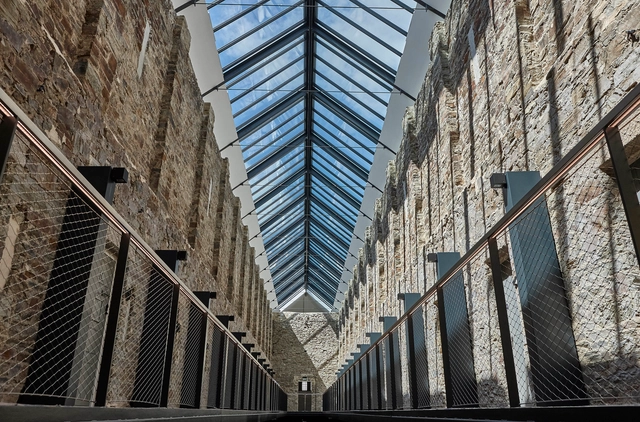
The Bodmin Jail Hotel. Image Cortesia de VELUX Commercial
Commercial building refurbishment projects present architects with design challenges. Transforming 18th century Bodmin Jail into a modern hotel meant an acknowledgement of restrictions in relation to the building’s infrastructure. Listed buildings often have construction regulations to preserve historic and architectural interests, impacting thermal comfort and how daylight is introduced to transform building spaces.
These design challenges can make architectural planning appear more complex, particularly when a building is being repurposed. Common challenges include sourcing materials to replicate or meet existing infrastructures. The adaption of floor plans, consideration of user comfort and introduction of technology in planning phases, also influence contemporary design. The Bodmin Jail Hotel required skylight installations that could work within an existing and iconic sloping roof.
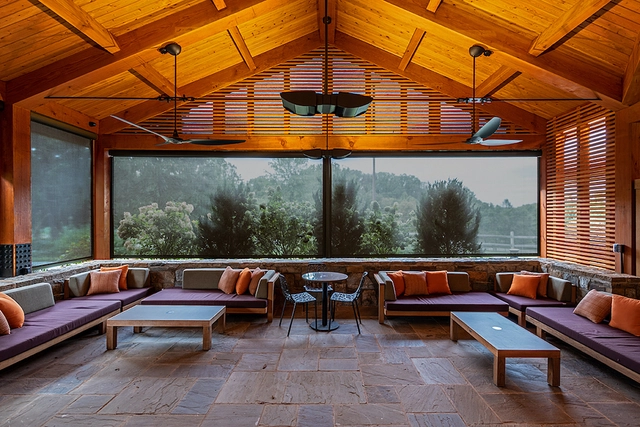
Wolf Trap National Park for the Performing Arts – Vienna, Virginia | FlexShade® ZIP | Dealer: Goodwin Bros. Shades and Specialties | Photographer: Alan Wycheck – alanwycheckphoto.com. Image Cortesia de Draper
Comfortable outdoor spaces are more desirable than ever. Over the past couple of years, people have been spending more time at home, connecting with nature from the relative comfort of covered balconies, patios, and pergolas. But even with pleasant views, cooling breezes, and the warmth of the sun, covered outdoor spaces can be uncomfortable. Temperature variations, glare, rain, and wind quickly create an unpleasant experience. In warmer climates, insects can be an additional a nightmare.
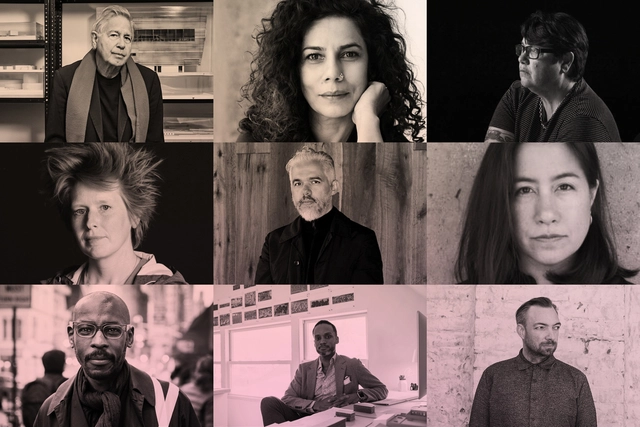
Top left to right: Bernard Tschumi, Anupama Kundoo, Catherine Opie. Middle left to right: Erin Besler, Héctor Esrawe, Ana María León. Bottom left to right: Mario Gooden, Sekou Cooke, Liam Young. Image Courtesy of SCI-Arc
SCI-Arc (Southern California Institute of Architecture) was created in 1972 and based on the concept of a "college without walls". Its original name was New School, which symbolized a paradigm shift in teaching architecture, focusing on a horizontal relationship between teachers and students and on experimentation, making it one of the few independent architecture schools in the world. In 2022, the institution turns 50 and has planned a calendar full of events and projects to take place throughout the year.
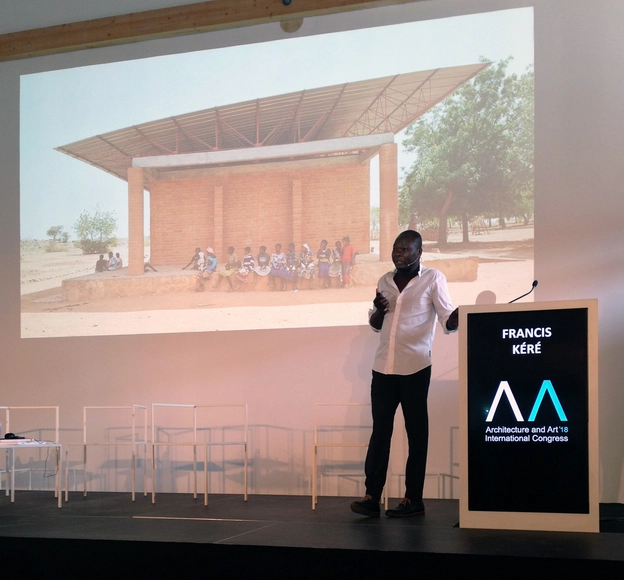
"I Draw on Paper, but I Prefer to Draw on the Ground". This phrase caught my eye during Diébédo Francis Kéré's speech at the AAICO (Architecture and Art International Congress), which took place in Porto, Portugal from September 3 to 8, 2018. After being introduced by none other than Eduardo Souto de Moura, Kéré began his speech with the simplicity and humility that guides his work. His best-known works were built in remote places, where materials are scarce and the workforce is of the residents themselves, using local resources and techniques.
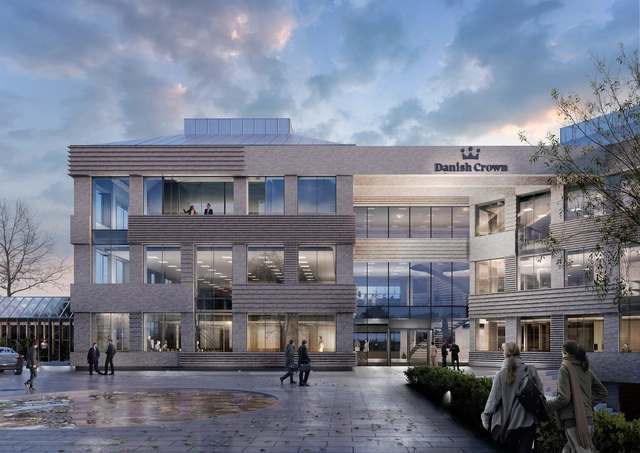
It is crucial to consider the future environmental impact of everything we create. Climate change remains high on the global agenda, and every industry must take part in the goal of reaching Net Zero. One of the more challenging industries concerns construction, which plays a vital role in the process of decarbonization and is constantly encountered with challenges to become greener. Therefore, it demands innovative techniques and development of data to find new and sustainable processes. One solution is to introduce and design both cleaner and more efficient materials. Bricks are a good example, as they can be used in building constructions to ensure a circular process and minimize carbon emissions, being an extremely durable material that can be produced with more sustainable techniques.
In recent years, much attention has been given to timber constructions. Being a sustainable and renewable material, which captures a huge amount of carbon during its growth, the innovations related to this material have allowed for increasingly higher constructions. However, when we talk about wood we approach an immense variety of species, with different strengths, nuances, potentials, limitations and recommended uses. While there are extremely hard and heavy woods, with strengths comparable to concrete, there are other soft and soft woods that are suitable for other purposes.
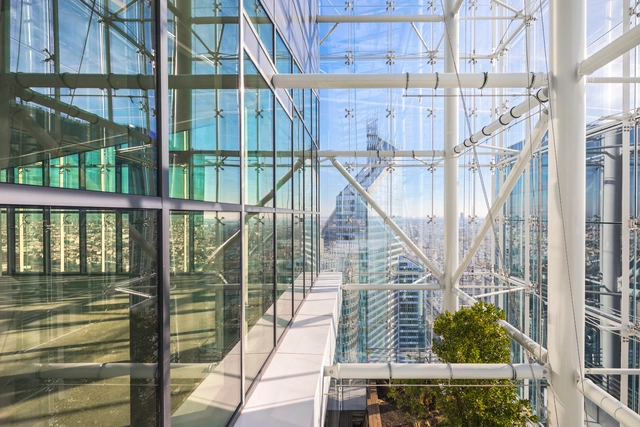
The clothes used by nomadic peoples in the desert (Bedouins, Berbers, Tuareg, among others) are usually dark, long and made of heavy fabric. Contrary to common sense, which would recommend light, pale and short clothes for a hot climate; heavy and loose clothing favors air convection, creating a constant flow of air along the body, providing thermal comfort in arid climates. For buildings, the analogy works. When approaching energy efficiency and project performance, we will inevitably talk about its envelope, among other aspects of the project. A successful solution in one location, will not always be efficient in another.
During the last 2 years we have created a series of articles on wellness and sustainability focused on the construction industry. But how do projects, according to their demands and context, apply the solutions to make them, in fact, efficient and perform well?







.jpg?1647615056&format=webp&width=640&height=580)