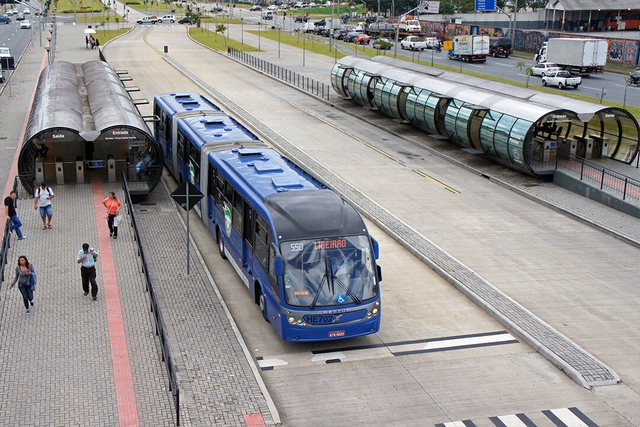
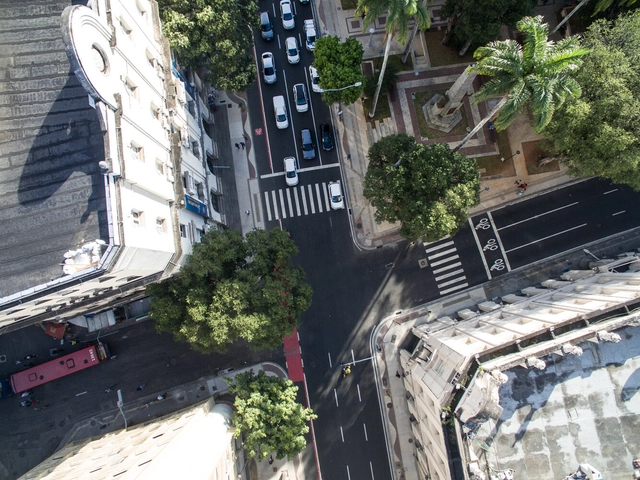
To be truly efficient, buses need special conditions, such as dedicated lanes and elevated platforms for boarding and alighting. Image: Mario Roberto Duran Ortiz
The most famous critique of the disproportionate amount of space occupied by automobiles is represented by a poster from the city of Münster, which compares the space taken up by 60 cars, one bus, and 72 bicycles (all carrying 72 people). The image clearly demonstrates that the space required by automobiles to transport the same number of passengers is staggeringly larger.
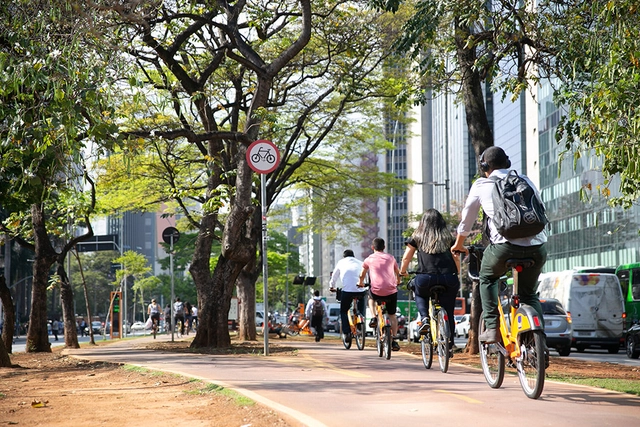
Bike lane in São Paulo-SP. Image: Joana Oliveira/WRI Brasil
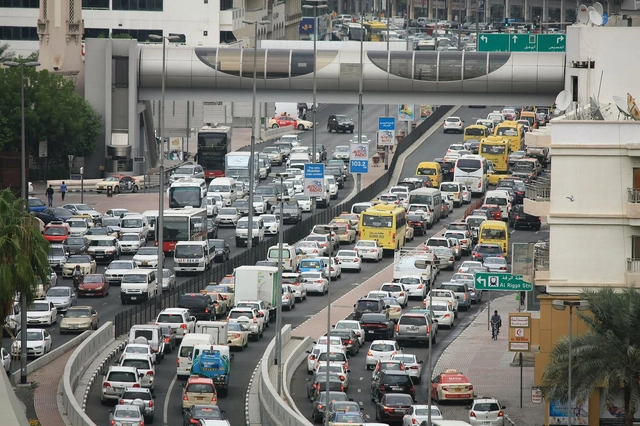
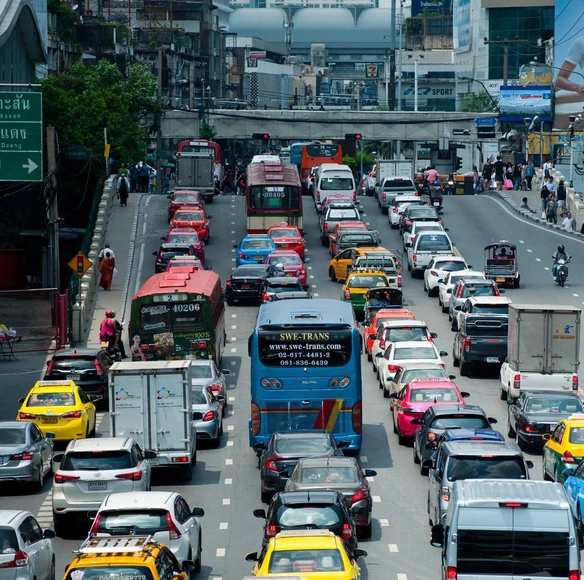
From the mid-20th century to the present day, time lost in traffic has become one of the primary sources of frustration in urban life. Historically, the classic formula for combating this problem has been to add more and more car lanes and build overpasses, based on the unfulfilled promise of improving traffic flow.
This consequence is well documented: every new car lane added represents a barrier to other modes of transportation and means longer travel distances for everyone. The result is induced demand—an invitation for more and more people to travel by car.
Among the various problems stemming from the excessive use of cars in large and medium-sized cities, traffic congestion and time lost in transit are undoubtedly those that receive the most attention from the media and society.
Drivers tend to overlook other issues, however severe, such as traffic fatalities and tragedies, air pollution, the stressful noise generated by motorized vehicles, urban sprawl—which makes cities dysfunctional, expensive, and far-flung—or the hydrological problems caused by the excess of asphalt and concrete dedicated to cars. Generally, these issues are ignored or seen as inevitable, whereas gridlock is highly visible, instantly perceived as a nuisance demanding immediate solutions.
In legal terms, road space belongs to government entities and is therefore viewed as public. However, according to economic theory, the various goods produced by society exhibit distinct characteristics.
Tie-in sales are one of the major consumer rights issues and are typically banned in most market economies. They occur when a seller conditions the sale of one product or service on the purchase of another. In Brazil, the Consumer Defense Code, under Article 39, Subsection I, expressly condemns this practice. Meanwhile, Law 12,529/2011, which structures the Brazilian competition defense system, establishes in Article 36, Subsection XVIII, that tie-in sales constitute an infraction against the economic order.
In 1854, the American writer Henry David Thoreau wrote the classic work “Walden”, recounting his experience of life in the woods and extolling the advantages of simple and self-sufficient life. Right at the beginning of the book, the author comments that, if someone wants to travel 48 km to visit the countryside, it would be faster to walk than to opt for a locomotive.
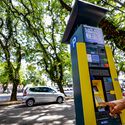
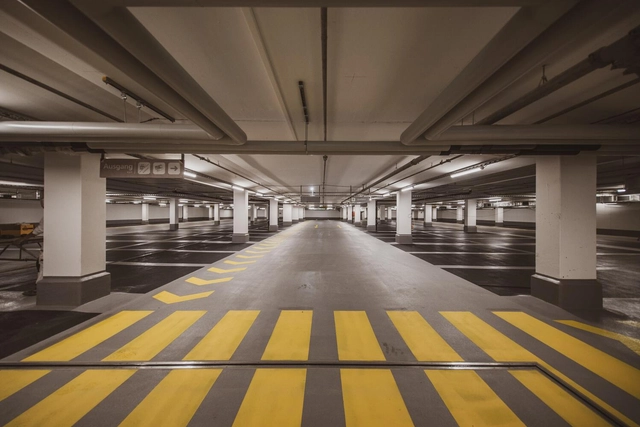
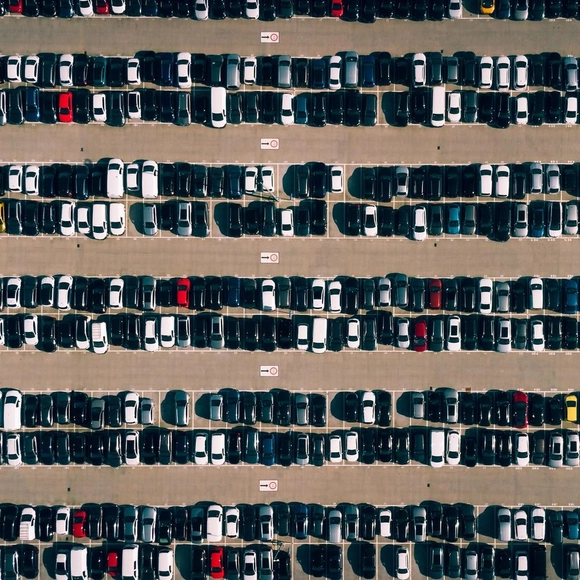
The book “The High Cost of Free Parking,” by retired University of California professor Donald Shoup, demonstrates that parking can impose a significant social cost. Shoup argues that the car-centric city model is irrational, allocating increasingly more resources and space to a machine that goes unused 95% of the time.