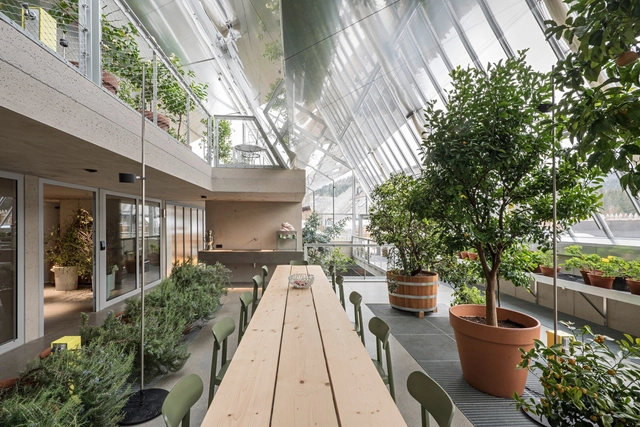
Applying neuroscience to architecture, specifically within the realm of neurogastronomy, provides a unique understanding of the intersection between human sensory domains and the built environment. It seeks to understand brain function in relation to eating, which has traditionally been viewed as a process limited to the mouth and stomach. Ultimately, it is the brain that eats. Accordingly, this article aims to consolidate scientific concepts related to neurogastronomy applied to architecture, examining the dining experience and architectural spaces, with a particular focus on active aging.