Cidade Ativa

BROWSE ALL FROM THIS AUTHOR HERE

On Foot I Go: How Can We Advocate for Pedestrian Cities?

Subscriber Access | 

Today, August 8, marks World Pedestrian Day. The date is famous for the iconic photo of the Beatles crossing Abbey Road in 1969. It is now 2020—more than fifty years later—and we still face immense challenges as pedestrians in our cities. How many times have you faced the hazard of crossing the street? Or had to navigate narrow, poorly lit sidewalks?

Can living near squares and bike paths influence leisure-time walking?

Subscriber Access | 
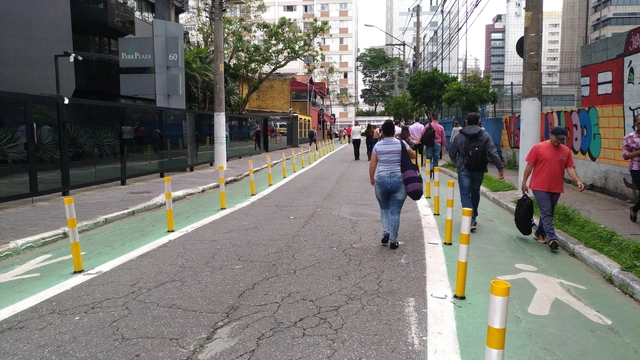
Can living near squares and bike paths influence leisure-time walking? - Imagem 2 de 4

Access to open public spaces is important for increasing leisure-time physical activity in high-income countries, as studies show, but evidence remains limited in middle-income countries. Moreover, in countries like Brazil and Colombia, for instance, leisure-time physical activity is still lower than in high-income countries like the United States—a situation that has not changed in recent years.

Public space as an instrument of social transformation

Subscriber Access | 
Public space as an instrument of social transformation - Image 4 of 4

Today in Brazil, there are several groups spearheading initiatives aimed at improving our living environment. Unfortunately, many face difficulties in getting their ideas off the ground, primarily due to a lack of financial resources, as shown by data gathered by the Como Anda Project.

The Fenômenos Foundation sees this demand as an opportunity: through the Fenômenos Challenge, the organization supported the implementation of three ideas with great transformative potential in the city of São Paulo. The challenge's premise was to select initiatives promoting physical activity and sustainability in vulnerable areas, offering solutions to local issues. The selected groups were: Cidade Ativa, Canto da Arte Jaguaré, and the Dente de Leão Collective. The selection process considered criteria such as impact, feasibility, and how the program could help boost the projects.

Graffiti: Transforming Landscapes, Occupying Spaces

Subscriber Access | 
Graffiti: Transforming Landscapes, Occupying Spaces - Image 1 of 4

Walking through the streets, we encounter various shapes, colors, textures, sounds, and smells. Our senses are activated, and these stimuli connect us to the place we are in. Cities are often synonymous with exhaust fumes, engine noises and honking, and shades of gray. The scarcity of natural or built elements that convey a sense of safety, comfort, and aesthetic pleasure contributes to our ongoing discontent and frustration in the urban environment. These feelings fuel a lack of connection between people and places, a lack of empathy for others, and a detachment from the public realm.

How can we plan cities that prioritize pedestrians?

Subscriber Access | 
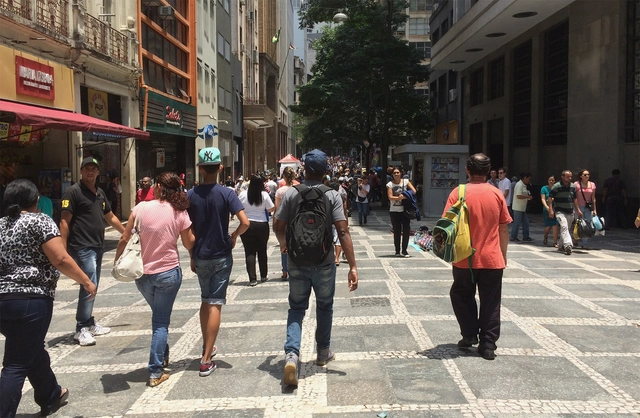
How can we plan cities that prioritize pedestrians? - Imagen 3 de 4
Cortesia de Cidade Ativa

Active cities are those where the population can make healthier, more sustainable choices. To make this possible, cities must provide access to high-quality public spaces and services for everyone, ensuring they can walk, rest, play, and exercise in plazas, parks, and public facilities. Active cities are also compact, where the proximity between housing and work, school, services, and leisure makes walking, cycling, and public transit networks more efficient and better distributed across the territory. Consequently, opting for walking or cycling for daily commutes becomes viable. For this reason, active cities are, inherently, more walkable.

Do you know what is needed to promote the use of bicycles as a mode of transportation in Brazilian cities?

Subscriber Access | 

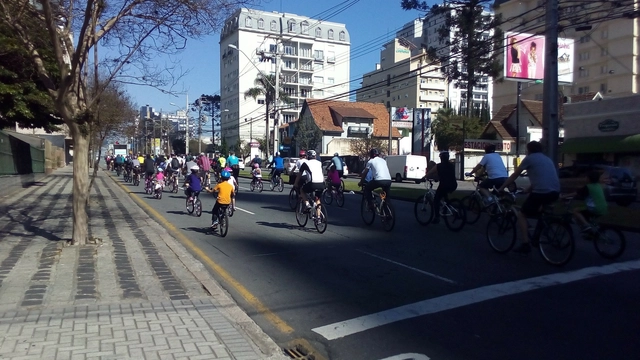
As has been discussed in several countries around the world, promoting cycling as a mode of transportation brings diverse benefits to cities and their citizens, such as: a reduction in chronic illnesses (like hypertension and cardiorespiratory diseases), lower rates of overweight and obesity, fewer traffic fatalities and injuries, and lower levels of air pollution, among others. Despite the continuous dissemination of these positive impacts, in Latin America less than 10% [1] of the adult population uses the bicycle as a means of transportation, whereas in European countries like the Netherlands and Denmark, this figure exceeds 25% of all trips [2].

To better understand the relationship between the built environment and the promotion of cycling in Brazil, a study [3] sought to understand the associations between cycling for transportation and bike paths and mass transit in the city of São Paulo. The research was

What is the impact of the first Complete Street in São Paulo?

Subscriber Access | 
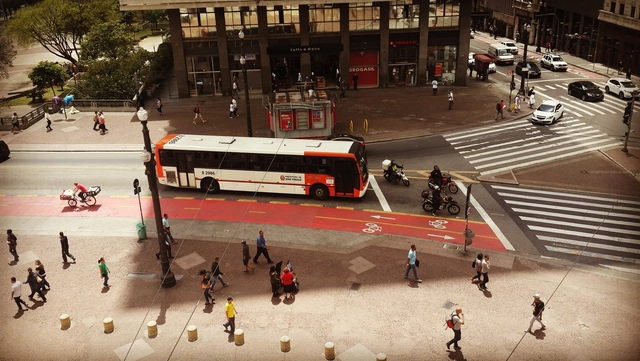
What is the impact of the first Complete Street in São Paulo? - Image 5 of 4

The concept of Complete Streets has gained prominence in recent years and has arrived in Brazil bringing the vision that streets must be planned, designed, operated, and maintained to allow safe, convenient, and comfortable travel for all users, regardless of age, ability, or mode of transportation.