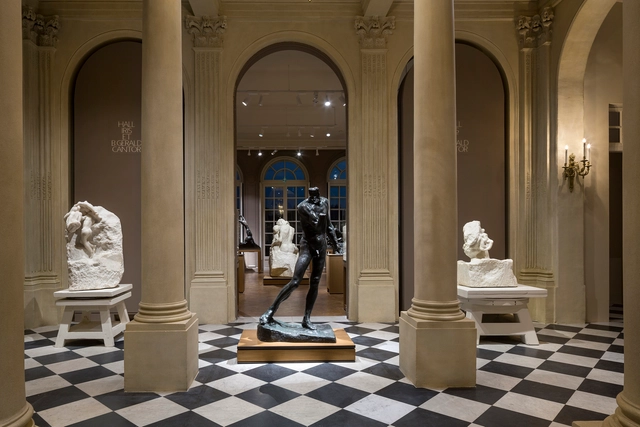
After a meticulous multi-year restoration the Musée Rodin in Paris has reopened to the public. Dedicated exclusively to the work of Auguste Rodin, the state-owned museum has undergone a ground-up facelift designed to breathe new life into the ageing home of the artist's diverse body of work. Housed in an estate originally built in 1732 and open to the public since 1919, the comprehensive renovation has left no stone unturned, including a full structural and cosmetic overhaul. Project architect Richard Duplat was challenged to "recreate the atmosphere it must have had in Rodin’s day" while implementing current accessibility and safety standards, all with the goal to better represent Rodin's influential work.
For this edition of The Urbanist, Monocle 24's weekly "guide to making better cities," the team discuss women in urbanism, asking whether "a city planned or managed by a woman look different to any other?" From architects defending and stimulating Lisbon's public spaces, to new urban design in Niterói (situated in the "long shadow" of Rio de Janiero), this episode uses gender as a device to explore city-tactics.
Apple's new Foster + Partners-designed flagship store in Chicago is said to have been inspired by Frank Lloyd Wright's Prairie Style Homes outside the city. Unveiled first by the Chicago Tribune, the store will feature a 14-foot entry pavilion that will usher visitors from Michigan Avenue down into the sales floor backdropped with views of the Chicago River. A "grand flight of stairs" will offer pedestrians an alternative route to the riverside walkway that flanks the bank.
Plans have been revealed for a new Modern Art Center (MAC) in the historic city of Vilnius, Lithuania. The 3100-square-meter "three-dimensional public space," as architect Daniel Libeskind describes it, is designed to be a "cultural gateway" that connects the city's 18th century grid and medieval walled city.
“We wanted to create a museum for the people of Lithuania, and also give this collection a home and an international audience. This collection is about the cultural legacy of the country,” said founder Viktoras Butkus. “Libeskind’s work is expressive, innovative, and, most importantly, has the power to tell the story of the past while connecting to the future of the city,” added Butkus.
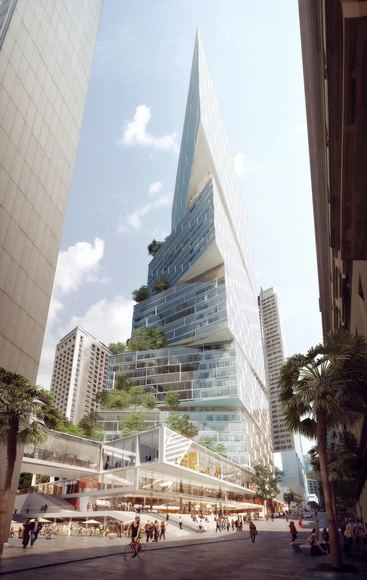
Update: 3XN's Quay Quarter Sydney has received final approval. The article below was originally published September 25, 2014, after the practice won the commission. New interior images have been added to the gallery.
3XN has won an international competition to design the “50 Bridge Street” tower and masterplan for the Quay Quarter Sydney (QQS) precinct. Just west of Jørn Utzon’s Opera House, the new tower will feature five rotating glass volumes, each equipped with a multi-level atria and views of the Sydney harbour.
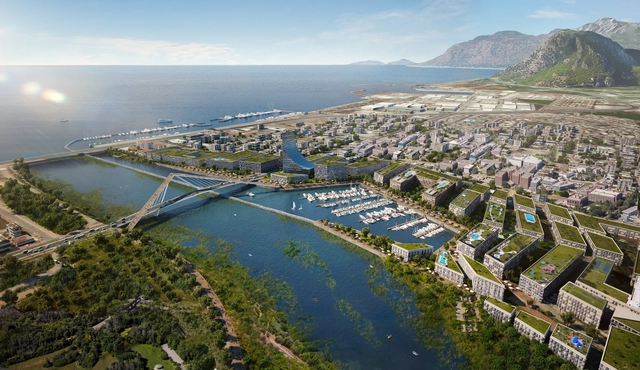
Turkish President Recep Tayyip Erdoğan and Antalya Mayor Menderes Turel have announced their support for Perkins+Will’s sustainablemaster plan for Antalya, Turkey. The master plan will revitalize and preserve the Bogacay Creek Basin area of Antalya, improving its quality as a major tourist city along the Turkish Riviera.
Millau Viaduct, France / Foster + Partners. Image via Foster + Partners
If Lord Foster—perhaps one of the greatest architects of our time—feels as though he has "no power as an architect, none whatsoever," people tend to take notice. His support, thoughts and opinions, he tells The Observer'sRowan Moore, are his most influential tools: "advocacy, he says, is the only power an architect ever has." Their conversation, held ahead of the Urban Age Global Debates which are currently taking place in London, also touches upon the importance of infrastructure, the social role of the architect, and the growing—if not undervalued—urgency to readdress sustainability within the profession.
DesignIntelligence has named 25 educators for being the most "exemplary professionals" in their field. With professors from some of the US' top architecture schools, each honoree was selected with "extensive input from thousands of design professionals, academic department heads, and students."
The "most admired" US design professors of 2016, include:
Following the resignation of Rick Bell earlier this year, AIANY and The Center for Architecture have appointed Benjamin Prosky as Executive Director. Prosky will assume his new position in early 2016, after stepping down as Assistant Dean for Communications at Harvard University Graduate School of Design (GSD).
“Ben brings a unique energy, intelligence, and experience to the executive director position,” said Carol Loewenson, incoming president of AIA New York and partner at Mitchell/Giurgola Architects, in a statement. “AIANY is poised for great change: more outreach, greater membership value, deeper connections to the academy, and a stronger role in actively impacting the design of our city. Ben is the right person to imagine the AIANY of the future. We are thrilled to have him on board to lead our organization.”
New York Yimby has unveiled BIG's latest New York skyscraper: 76 11th Avenue. Planned for one of the largest plots along the High Line, the nearly 800,000-square-foot proposed project is comprised of two towers perched on a podium of retail, gallery and hotel space in the city's Meatpacking district. Rising 302-feet to the east and 402-feet to the west, the towers are divided by a "diagonal cut" through the site that opens up more views for residents to the High Line.
This article is part of ArchDaily Essentials, a series of articles which give you an overview of architecture's most important topics by connecting together some of our best articles from the past. To find out more about ArchDaily Essentials, click here; or discover all of our articles in the series here.
We often hear of the great tectonic shift that digital technologies have brought to almost every aspect of our lives, but in one particular yet understated way, architecture has been revolutionized by computerization. Building Information Modeling (BIM) is a background revolution that has implications on every stage in the building process from development through construction and onto the lifecycle of the building. As defined by the US National Building Information Model Standard Project Committee:
"Building Information Modeling (BIM) is a digital representation of physical and functional characteristics of a facility. A BIM is a shared knowledge resource for information about a facility forming a reliable basis for decisions during its life-cycle; defined as existing from earliest conception to demolition." [1]
While that gives some indication of BIM’s applications, many people may still be wondering how such a shift came about, what are its present applications and benefits, and how it will shape architecture’s future?
https://www.archdaily.com/777039/ad-essentials-bimAD Editorial Team
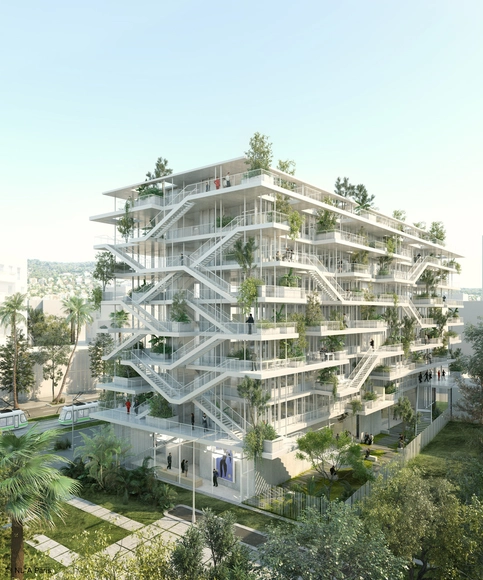
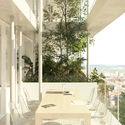
Nicolas Laisné Associés (NL*A Paris) has revealed the plans for its new Offices With Terraces, an office building in Nice, France, which aims to set new standards for bio-climatic work environments. The building’s layout revolves around the idea of flexible workspaces, integrating landscape into the building as an eco-conscious approach.
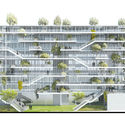
The organization of the building has been reversed, with the circulation passages—typically at the center—moved to the façades to free up central space.
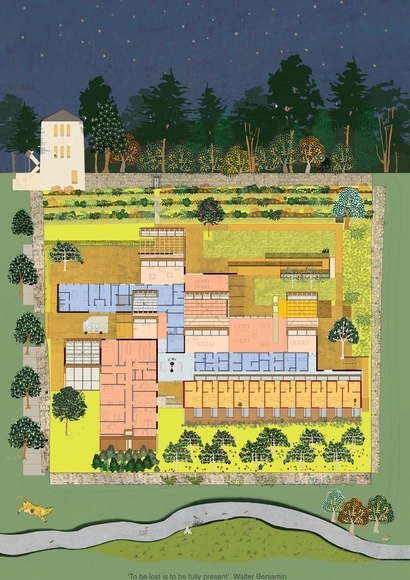
Níall McLaughlin Architects, based between the United Kingdom and Ireland, have been selected to represent Ireland at the 2016 Venice Biennale. The practice, who were shortlisted this year for the RIBA Stirling Prize, will be working alongside Yeoryia Manolopoulo, an architectural academic based in London. Their proposal "reflects their interest in working as architects to understand and improve the quality of life for those suffering from Alzheimer’s disease [by examining] the spatial experiences of people with Alzheimer’s whilst recognising that the experiences of the sufferer are unlikely to resemble any conventional architectural representation."
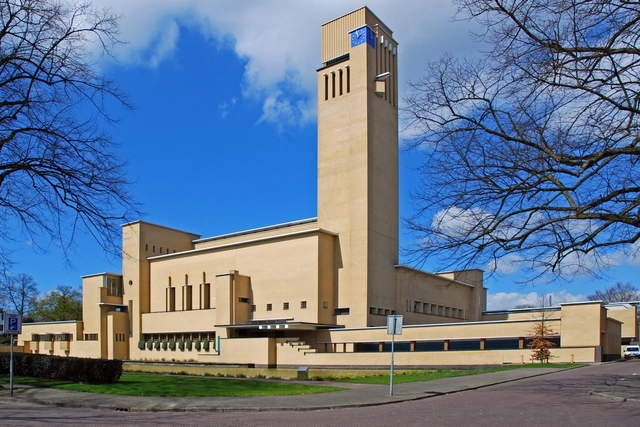
Willem Marinus Dudok (6 July 1884 - 6 July 1974) was one of The Netherlands' most influential Modernist architects. Formally trained as an engineer, Dudok spent his formative years designing military barracks for the Dutch forces, and his time with the military has been credited with the development of his early linear style, though he was known to borrow elements from Frank Lloyd Wright's prairie school of architecture. Dudok's architectural legacy is undeniable: with a career spanning several decades, his portfolio encompasses nearly all civic buildings in Hilversum, along with a series of projects in Rotterdam, Utrecht, and Paris, among others.
More than forty years after Dudok's death, Dutch journalist Peter Veenendaal has produced two videos documenting the architect's best projects, both in Hilversum: Town Hall and the Sports Grandstand. Serving as sequels to Veenendaal's documentary "City of Light" which delved into Dudok's design for retailer De Bijenkorf in Rotterdam, the videos highlight Dudok's impressive eye for form and linearity.
Check out Veenendaal's videos and find out more about Dudok's influential architecture after the break
“As space begins to be captured, enclosed, molded, and organized by the elements of mass and volume, architecture comes into being.”
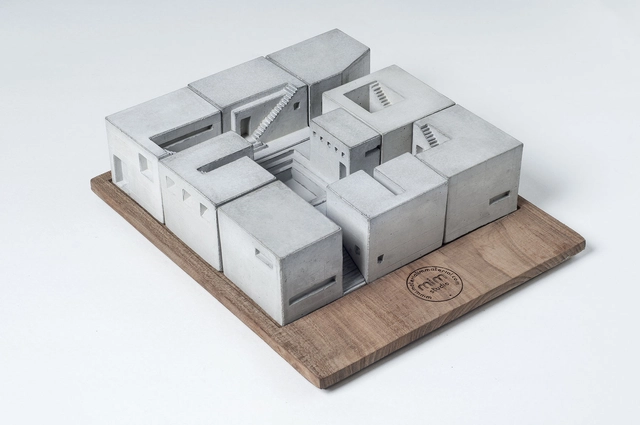
With influential concrete buildings like Le Corbusier’s Villa Savoye, Frank Lloyd Wright’s Falling Water, and Tadao Ando’s Church of the Light in mind, Mumbai-based Material Immaterial studio has created SPACES, a set of miniature concrete pieces. “Each piece is an individually complete space defined by volumes and voids,” offering the basis for users to imagine what could be lying inside.
“As an architect you design for the present, with an awareness of the past, for a future which is essentially unknown. The green agenda is probably the most important agenda and issue of the day […] all the projects which have, in some way, been inspired by that agenda are about a celebratory lifestyle, in a way celebrating the places and spaces which determine the quality of life.”
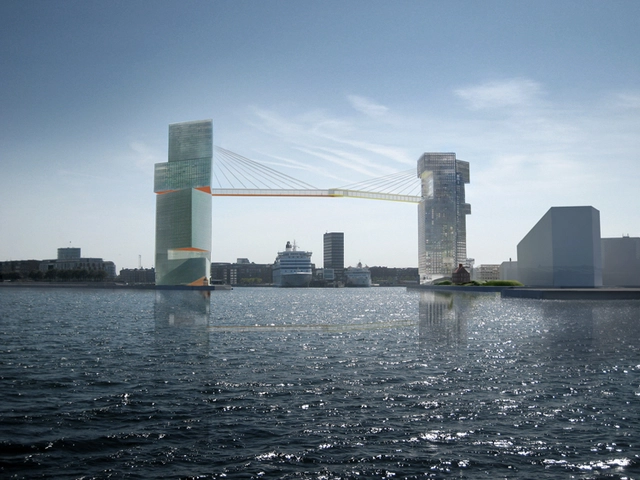
Steven Holl Architects (SHA) is preparing to break ground on a project that is nearly eight years in the making. The ambitious "Copenhagen Gate" development will break ground next year, as Fast Company reports, after being initially held back in 2008. It will feature two asymmetrical towers - Gate L and Gate M - connected by a (terrifying) pedestrian skybridge suspended 213 feet above the harbor.
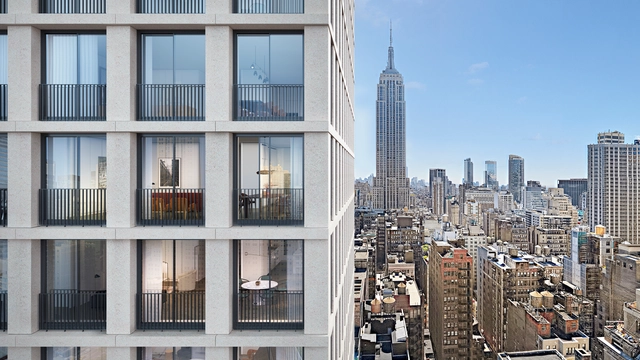
Details on David Chipperfield's first large-scale residential project in New York has been revealed. The last development to take place at Bryant Park, The Bryant condominium tower will feature 57 one to four bedroom residences, including two triplex penthouses, on a boutique hotel at 16 West 40th Street. The HFZ Capital Group development was designed with Chipperfield's "intelligent simplicity," as the architects describe. Each residence will occupy a corner of the tower.
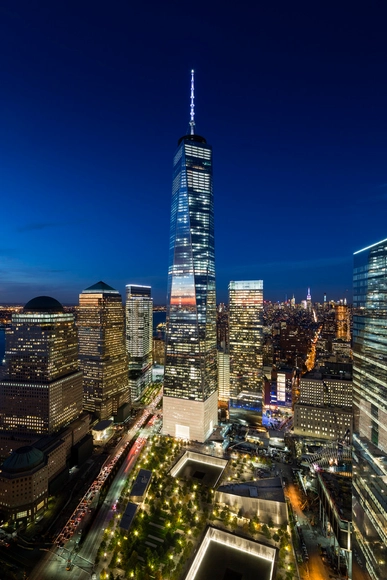
"Throughout the architectural selection process, REX presented us with an inspired vision. Joshua [Prince-Ramus] totally blew us away with his innovative ideas about how to present cutting-edge culture, but also about how to make the PAC relate to everyone who comes to the WTC site," said PACWTC director and president Maggie Boepple.
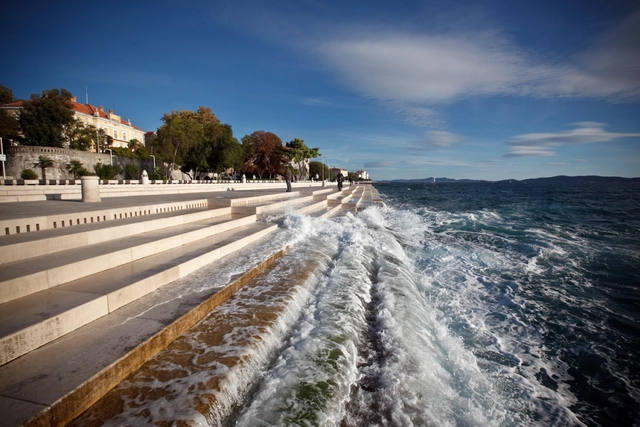
Following the Second World War, the Croatian city of Zadar underwent a large, rapid reconstructive transformation. The city's seafront became nothing more than a concrete wall until 2005, when architect Nikola Bašić proposed to redesign parts of the seawall to interact with the ocean waves. Concealed beneath marble blocks, the 'Sea Organ' (morske orgulje in Croatian) is comprised of a network of polyethylene tubes and resonating cavities which sing as the waves and wind lap the shore. With thirty five individual pipes spanning a total length of seventy metres, it is the largest aerophone in the world. According to reports, the sound is specifically directed out to sea and is impossible to hear from within the city of Zadar itself. In 2006, the intervention was jointly awarded the European Prize for Urban Space.
As reported by the AIA, this month's Architecture Billings Index (ABI) has shown a slight reduction in construction growth in October, dropping by 0.6 points from September's mark of 53.7, but still in solid positive territory at 53.1. The Project Inquiries Index also dropped for the third straight month, falling to 58.5.
“Allowing for the possibility of occasional and minor backsliding, we expect healthy business conditions for the design and construction industry to persist moving into next year,” said AIA Chief Economist Kermit Baker. “One area of note is that the multi-family project sector has come around the last two months after trending down for the better part of the year.”
The sports stadium features the largest free-spanning dome in the world, stretching 310 meters to cover the 55,000-seat stadium, and uses a “third of weight of steel normally used to span this size,” writes Arup in a press release. To provide shade during sporting events, the dome roof structure is retractable and features “an energy-efficient cooling system that delivers cooled air to every seat.”
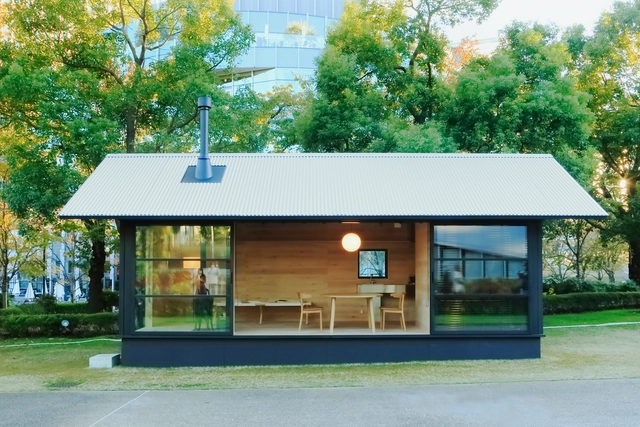
A wooden hut by Naoto Fukasawa. Image Courtesy of MUJI
Following the release of their “Vertical House”, a prefabricated home designed for the tight, urban spaces of Japan, Japanese design brand Muji has showcased another set of ready-made habitats, this time a series of three minimalist “huts” at varying scales. Each hut, designed by a different designer, is intended as a retreat from urban activity and can be set-up in rural terrains.
The huts each explore a different material: an aluminum hut by Konstantin Grcic, a cork hut by Jasper Morrison, and a wooden hut by Naoto Fukasawa.








_Studio_Libeskind.jpg?1448392758&format=webp&width=640&height=580)