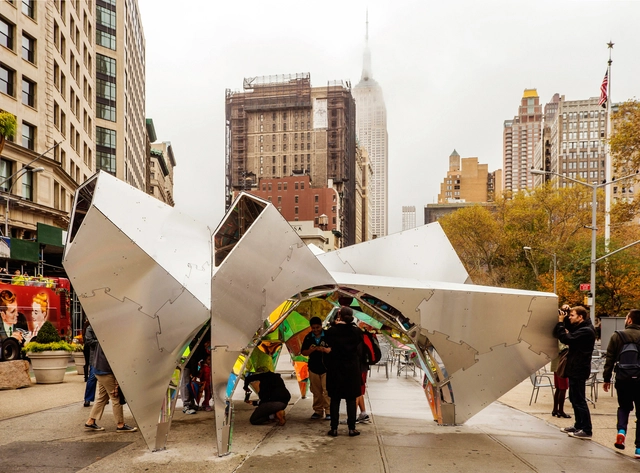
MoMA P.S.1 has announced five finalists to compete in the 2016 Young Architects Program (YAP). Now in it’s 16th edition, the competition will challenge a group of emerging architects to design a temporary installation within the walls of the P.S.1 courtyard for MoMA’s annual summer “Warm-Up” series.
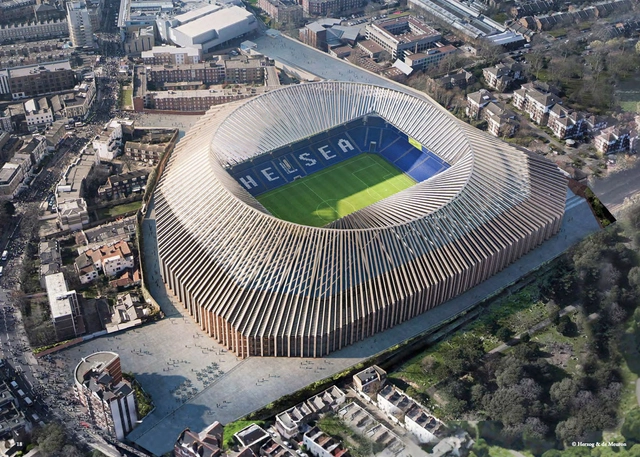
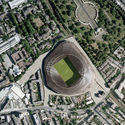
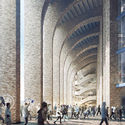
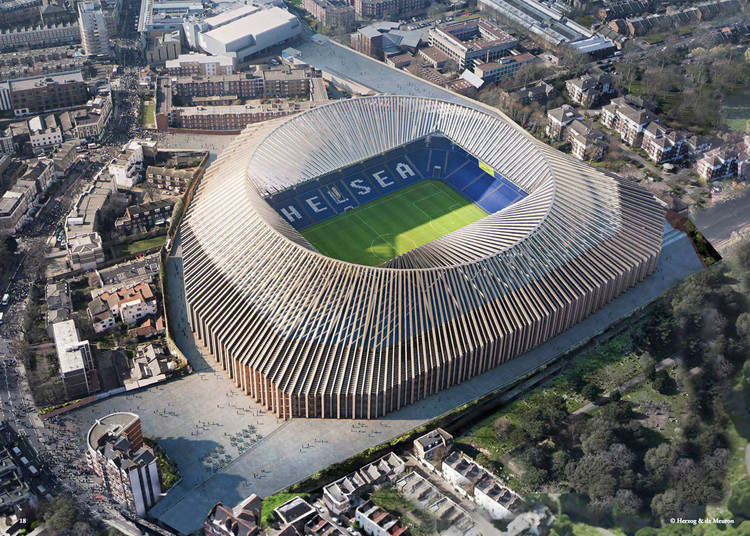
Following the announcement earlier this year that Herzog & de Meuron were developing designs for a new £500million stadium for Chelsea Football Club, the Swiss practice have released a series of official images which narrate the project's design intentions and contextual implications. The new stadium, which will be built in place of the football club's existing stadium at Stamford Bridge, will contain a "three-tier, four-stand, bowl with a capacity of 60,000 supporters" (compared to the current 41,837 capacity) and have around 60,000sqm of facilities housed within its ribbed shell.
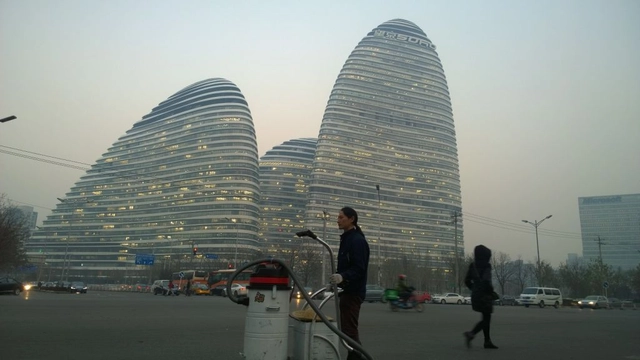
Day 98. Image via Quartz / Supplied by Nut Brother
From the Bird’s Nest to the CCTV headquarters, for the past 100 days Chinese performance artist "Nut Brother" has been wandering the streets of Beijing collecting smog with an industrial vacuum so that he can eventually turn it into bricks. He has now began to form his bricks by mixing a combination of the collected "dust and smog" with clay. As he told Quartz, the project is meant to be a symbol. Read the whole story here.
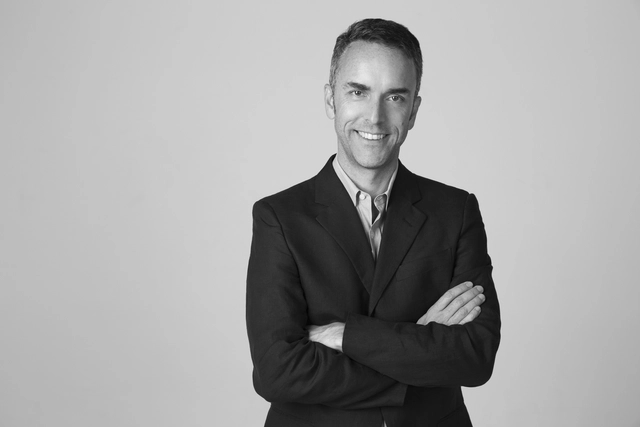
The Museum of Modern Art (MoMA) has appointed Sean Anderson as the new Associate Curator in the Department of Architecture and Design. Under the direction of Chief Curator Martino Stierli, Anderson will be responsible for "overseeing MoMA's Issues in Contemporary Architecture exhibition series, assisting in curatorial supervision of the Young Architects Program (YAP) both at MoMA PS1 and with international partners, and serving as the primary liaison to architecture communities both locally in New York as well as globally." His appointment is now effective.
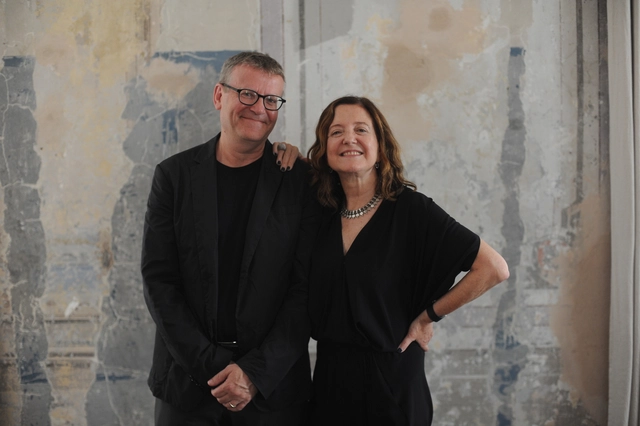
At a media meeting this morning at the Istanbul Archaeological Museums Library, the curators of the 3rd Istanbul Design Biennial Beatriz Colomina and Mark Wigley announced the theme of next year's event, titled “ARE WE HUMAN?: The Design of the Species: 2 seconds, 2 days, 2 years, 200 years, 200,000 years.” The event, which will be held from October 22nd to December 4th next year, is intended to combine elements of both media documentary and archaeological project and according to the curators "will explore the intimate relationship between the concepts of 'design' and 'human.'"
Now in its second year, DesignCurial has revealed the results of their annual “Top 10 Public Toilets” award, recognizing outstanding lavatory design across the world. The top 10 emerged as exemplars among over 1,000 public toilet designs, evaluated on “design, innovation and the relationship with surroundings”. “The aim of the list was to bring international design to the fore, especially unique architecture that may be overlooked due to the structure’s mundane stereotype,” said Katherine Houston, web editor at DesignCurial. “This list is well geographically spread, with distinctive designs emerging from Japan, Australia and the UK to name a few.” See the world’s best public toilets for 2015 after the break.
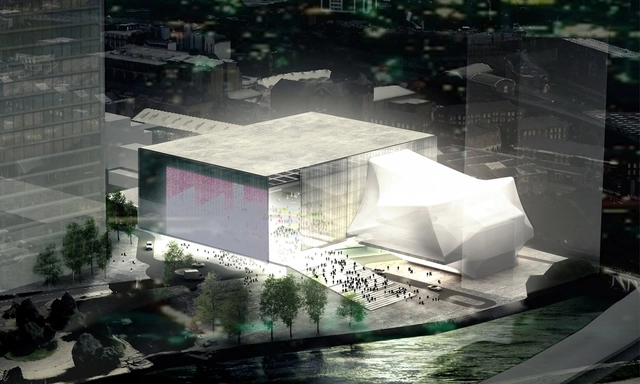
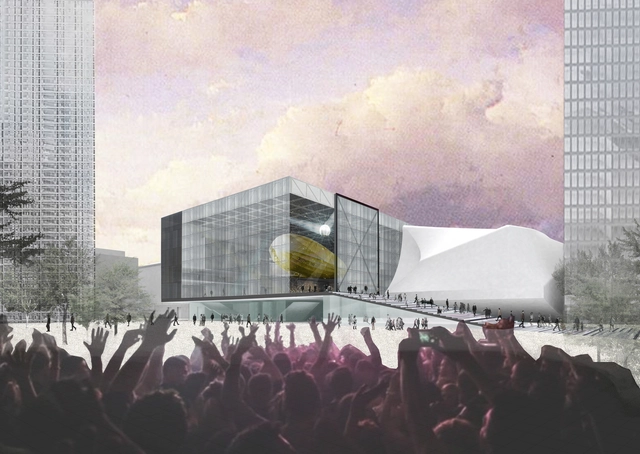
In an article for theFinancial Times, Edwin Heathcote responds to the recent news that OMA, based in Rotterdam, have won the competition to design the British city of Manchester's new "ultra-flexible" arts venue. The Factory, so-named because of city's rich musical heritage, will be one of the largest cultural projects of its kind. Having gained and maintained financial support from Westminster, the building—which must be able to transform from a 2,200-seat theatre into an open 5,000-capacity space—is a flagship project for the British government.
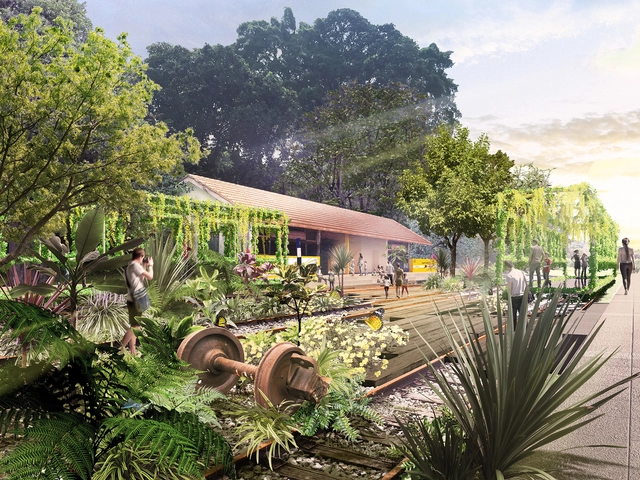
A design team led by Nikken Sekkei, in collaboration with Tierra Design and Arup Singapore, has won a competition to Master Plan a 24-kilometer long former railway corridor that spans the entirety of Singapore with their proposal entitled “Lines of Life.” The proposal, chosen by a panel from Singapore’s Urban Redevelopment Authority incorporates green areas, footpaths, bicycle paths, and surrounding developments that are flexibly implementable over many years, so that the former train line can be best integrated into its surroundings.
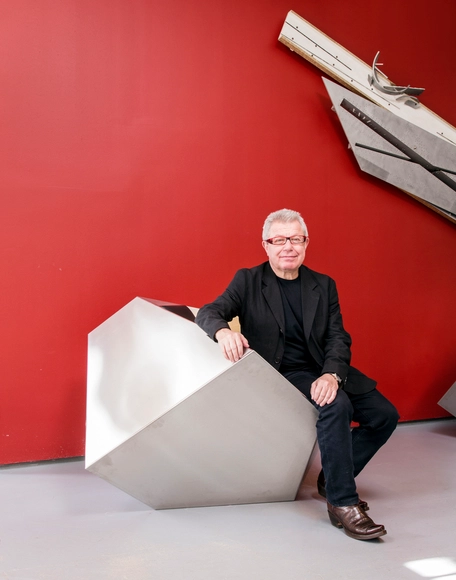
In an exclusive interview with Daniel Libeskind, who is based in New York City ("a microcosm of the world") and describes himself as having been "an immigrant several times," discusses his origins, his family, his early influences and the 'state of the world', touching upon a great theme in his built works: that of memorialising and remembrance in the built environment. Having grown up under "terrible oppression" in post-war Poland and moved between countries eighteen times, he describes himself as a citizen of the world with a great deal of retrospective advice for prospective architects.
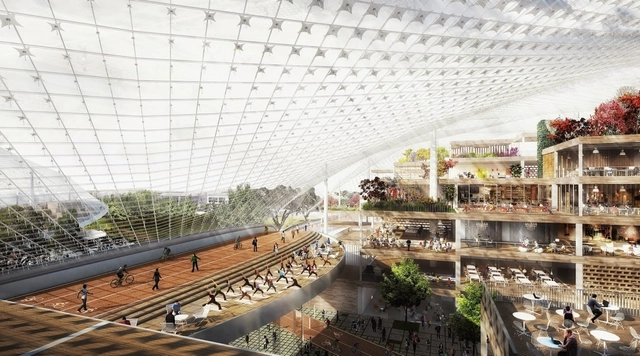
This past February, BIG and Heatherwick Studiounveiled their designs for Google’s new Mountain View Headquarters in California. The project, which will be built by robots, faced sizeable critique, as well as site complications—that have since been resolved—over the past year. Now, as a part of Esquire’s 2015 Breakouts, Bjarke Ingels—founder of BIG—is speaking out about how the firm won the Google bid, and why the headquarters could create a new mold for Silicon Valley urbanism. Ingels goes on to discuss other major BIG projects, like 2 World Trade Center, and an upcoming NFL stadium. Read the full Esquire interview, here.
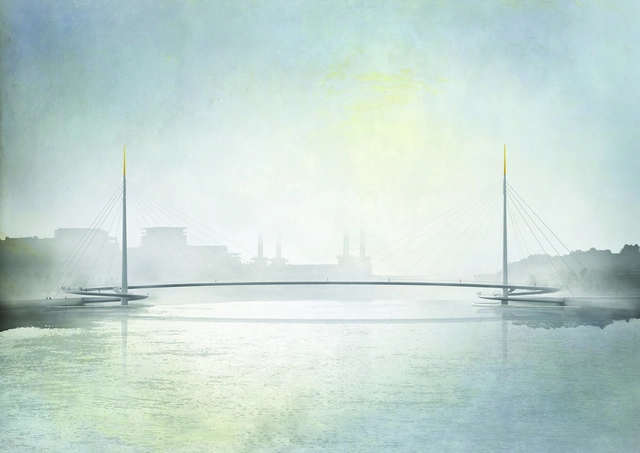
Istanbul-based architecture studio Salon, in collaboration with Praxis Landscape, has unveiled the designs for its Beylikdüzü Life Valley Bridges and Routes Master Plan for Istanbul's Beylikdüzü district. Guided by the idea of “Keeping the Valley Alive," the project has created a new design for the area to thrive, maintaining the valley “livable, accessible, sustainable, feasible, and alive.”
UPDATE: The Deadline has been extended to Wednesday, December 3rd at 9:00 AM EST. ArchDaily is looking for motivated architecture geeks to join our team of interns for Spring 2016! An ArchDaily internship is a great opportunity to learn about our site and get exposed to some of the latest and most interesting ideas shaping architecture today. Read on to find out what it takes to work for the world’s most visited architecture website!
Interested? Then check out the requirements below.
https://www.archdaily.com/777074/call-for-archdaily-interns-spring-2016AD Editorial Team
Is ornament seeing a resurgence in architectural design? Writing for The Financial Times, Edwin Heathcote examines the rising phenomenon of decoration as a growing element of contemporary architectural design. Describing FAT and Grayson Perry's recently completed 'kitsch' abode 'A House for Essex' Heathcote justifies the assimilation of decoration into the central design philosophy, thus creating an entirely new aesthetic category. "The building sits somewhere between outsider art, high culture and the most sophisticated postmodernism," Heathcote explains, adding that its decoration "is not just applied as a layer but subsumed into the architecture."
Simon Battisti, Leah Whitman-Salkin, and design collective Åbäke have been selected to represent Albania at the 15th International Biennale in Venice in 2016, with their project entitled, “I Have Left You the Mountain.” The project was selected from an open call for proposals from the Albanian Ministry of Culture that was held earlier this fall.
The Royal Institute of British Architects (RIBA)'s Future Trends Survey for October 2015 showed a level of caution among UK architects, reflecting a period of slowing growth in the industry. The Future Trends workload index dropped to +18 from last month's mark of +21, showing a decrease in the number of practices that expect their workload to increase in the coming months. All regions of the UK still reported a positive balance though, with the most optimism coming from Northern Ireland with a balance figure of +25, while the most uncertain figures came from the Midlands and East Anglia, where a balance figure of +12 was reported.
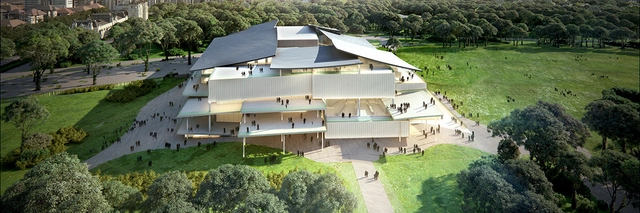
After having tied with Snøhetta in a restricted competition to design the New National Gallery -- Ludwig Museum in Budapest, SANAA’s proposal has ultimately been selected as the winner, following negotiations held over the past few months. The gallery and museum will be located in the 200-year-old Városliget (City Park) and are part of the larger Liget Budapest project, which seeks to revive the park by 2018 with the addition of five new museum buildings, including Sou Fujimoto’s House of Hungarian Music.
Writing for Guardian Cities Alejandro Aravena, director of the 2016 Venice Architecture Biennale, discusses what he perceives as the social reality of contemporary architects, the power of design in mobilising people to act, and "how architecture can introduce a broader notion of gain" in the face of ever greedier and evermore powerful development companies the world over.
Any attempt to go beyond business as usual encounters huge resistance in the inertia of reality. Any effort to tackle relevant issues has to overcome the increasing complexity of the world. [...] It's time to rethink the entire role and language of architecture.
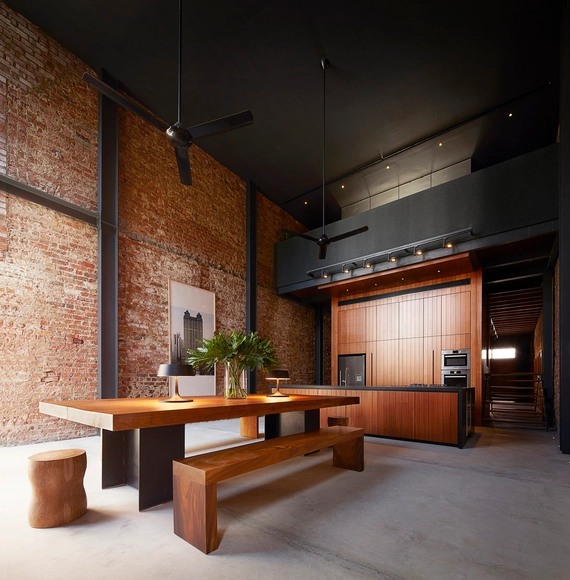
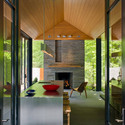
As many of our U.S. readers prepare for their Thanksgiving feast, we’ve decided to share with you one of the things we are most thankful for: stunning kitchens and the architects behind them. Continue reading after the break to view a compilation of kitchens we wouldn’t mind spending our day cooking (and eating) in.
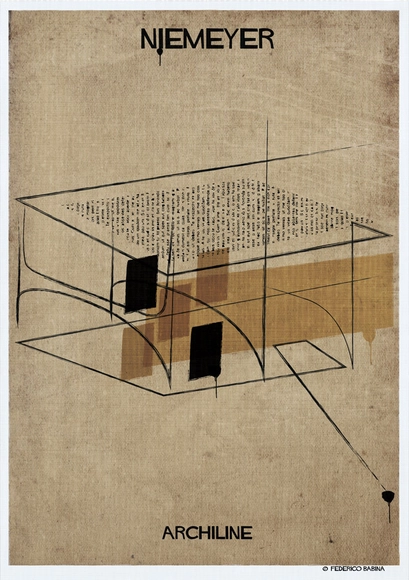
Striping away the unnecessary to reveal the soul of architecture's greatest works is the latest challenge Federico Babina has taken on. With 18 paintings, Babina has revisited the notorious works of Le Corbusier, Tadao Ando, MVRDV, Rem Koolhaas and many others to summarize in just "a few lines" their true essence.
"The intent is to display the volumes, shapes, and even style of iconic architecture through simple lines and geometry," says Babina. "The project is part of a study on the simplification and the identification of the basic elements for the recognition of buildings. The idea is to archive an almost abstract representation without losing the essence of the figurative representation."
A smart city isn’t necessarily a city brimming with technology. This crucial (and, thankfully, growingly accepted) clarification was strongly emphasized by a panel of experts during the Smart City Expo in Barcelona. However, the piloted driving—which, in layman's terms means cars that drive themselves—that Audi has been testing and implementing is as high-tech, impressive and brimming with technology as one might expect. Beyond the “ooh and aah” factor of a car that needs no human driver, the spatial implications for our cities are undeniable, and the sooner architects can learn to work with and appreciate this technology, the better. In a city equipped with smart mobility solutions, we can expect technology to drive positive changes to social behavior and the affordability of the cities. But for this, we need visionary leaders.
Last week Audi showed their commitment to finding these visionary leaders in the field of architecture by announcing the implementation of three Urban Future Partnerships in Somerville/Boston and Mexico City. In the words of Audi CEO Rupert Stadler, the three pilot projects represent a key move for the car manufacturer: “The development of an investment logic for mobility infrastructure in cities will be an integral part of our company strategy.”
Rotterdam-based Office for Metropolitan Architecture (OMA) have been announced by the UK's Chancellor of the Exchequer as the winning team in the competition to design the city of Manchester's high-profile Factory art space. Following the announcement of the shortlist earlier this year, featuring practices including Rafael Viñoly, Diller Scofidio + Renfro, Zaha Hadid and Mecanoo, it has since been reported by The Guardian that the British government's original pledge of £78million ($117million) to the cost of the building will be raised by a further £9million per year from around 2018.
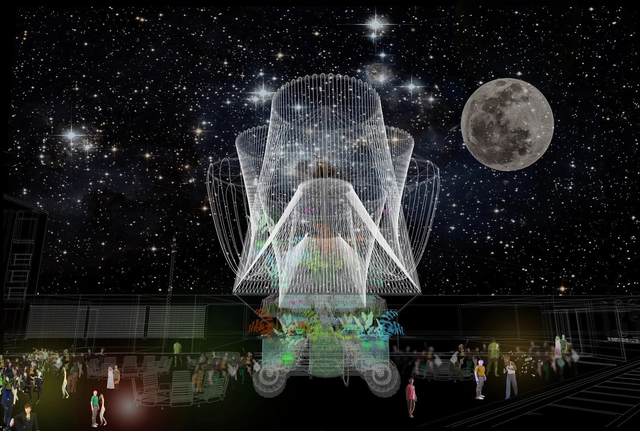
The Flatiron Public Plaza has unveiled its centerpiece for this year’s “23 Days of Flatiron Cheer” – SOFTLab’s Nova, the winner of a closed-competition hosted by the Flatiron/23rd Street Partnership Business Improvement District (BID) and Van Alen Institute. The project will become the center of the neighbourhood’s festivities for the holiday season, as well as “a highly visible landmark” in the heart of New York.



.jpg?1448848409&format=webp&width=640&height=580)
.jpg?1448848741 "Trail Restroom. Image via DesignCurial")
.jpg?1448848696 "Wembley WCs. Image via DesignCurial")
.jpg?1448848785 "Tokinokura Lavatories Shimodate. Image via DesignCurial")
.jpg?1448848535 "L'Uritonnoir. Image via DesignCurial")
.jpg?1448848409)
.jpg?1448602861&format=webp&width=640&height=580)
.jpg?1448602977 "© Salon")
.jpg?1448602967 "© Salon")
_1.jpg?1448602882 "© Salon")
.jpg?1448602850 "© Salon")
.jpg?1448602861)

_Dave_King_-_Channel_4_Television_(2).jpg?1448352614&format=webp&width=640&height=580)
.jpg?1448636619&format=webp&width=640&height=580)