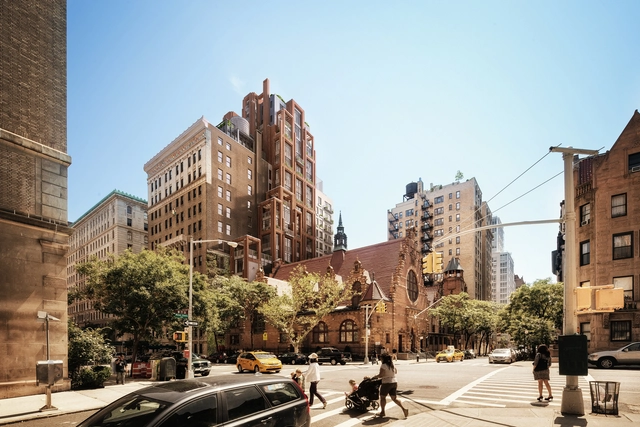
The New York City Landmarks Preservation Commission has approved COOKFOX Architect's plans for a mid-rise, 66-unit condominium building in Manhattan. Planned for two parcels of land in the West End Collegiate Historic District, next to one of the Churches' five ministries, the project aims to "fit harmoniously with the distinct streetscape" while "interweaving the rich historic details of the Upper West Side with subtle contemporary and sustainable design."
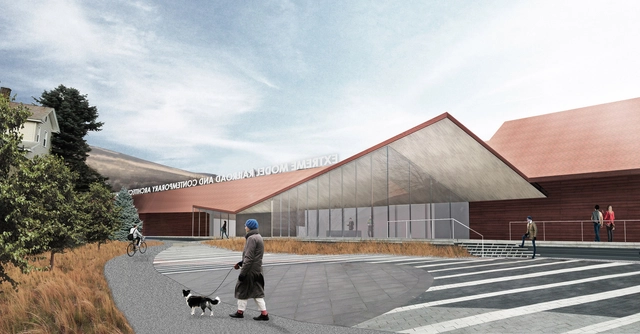
Gluckman Tang Architects has been selected to design two new museums in North Adams, Massachusetts: the 160,000-square-foot Global Contemporary Art Museum (GCAM) and 32,400-square-feet Extreme Model Railroad and Contemporary Architecture Museum.
Built as a 700-foot-long addition to two historic freight depots in Western Gateway Heritage State Park, the Extreme Model Railroad museum will house one of the world’s largest collections of working O-scale model trains, moving through a trainscape designed by world-class architects, including Frank Gehry, Gluckman Tang, and Zaha Hadid.
British filmmaker Joe Gilbert has created a short tribute film to Alison and Peter Smithson's Robin Hood Gardens estate in Poplar, East London, which—as of August 2015—is set to be demolished. Accompanied by insightful commentary from Timothy Brittain-Catlin, the film charts the buildings' history and recent threats to a backdrop of monochrome shots of the estate, in all of its dilapidated and "pleasantly wild" current state. The 'Streets in the Sky', made famous by the Smithsons and both widely praised and criticised as a response to the collapse of low-density terrace housing, are one of the focuses of the film.
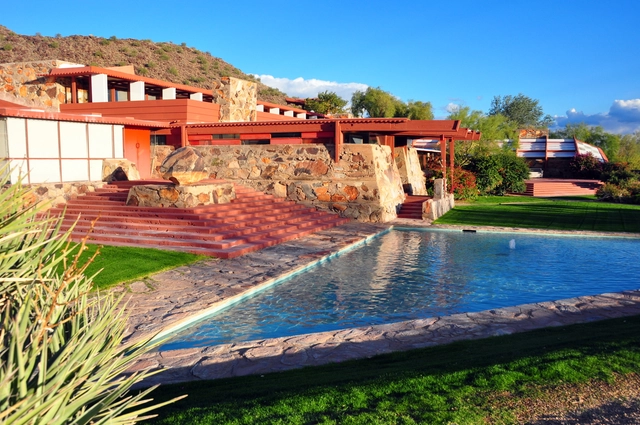
The Frank Lloyd Wright School of Architecture has reached another important milestone on its current path to becoming independent from the Frank Lloyd Wright Foundation, having raised over $2 million in cash and pledges. As the Frank Lloyd WrightSchool of Architecture is currently an operating division of the Frank Lloyd Wright Foundation, it faces losing its accreditation, following new laws by the Higher Learning Commission (HLC) that require universities, colleges and other institutions to be financially and administratively independent from "larger institutions with multi-faceted missions."
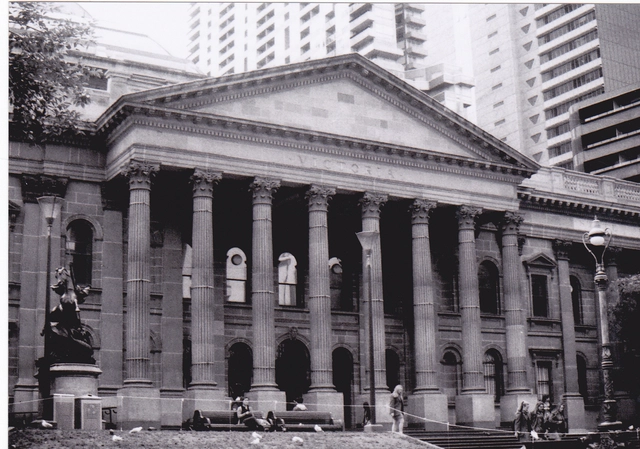
Four architectural design teams have been chosen to submit designs for the $83.1 million State Library Victoria Vision 2020 Redevelopment Project in Victoria, Australia.
The large-scale project includes the restoration of the historic Queen’s Hall, reopening of the library’s Russell Street entrance, an e-Town Hall, and new spaces for early learning, digital media, entrepreneurship, and exhibitions.
UNESCO has inaugurated 47 new cities into its Creative Cities Network, with Detroit being selected as the first "City of Design" from the United States. The Creative Cities Network is a selection of cities across the world that promote the creation of creative and cultural industries, within the categories of crafts and folk art, design, film, gastronomy, literature, media arts, and music.
The Royal Institute of British Archtects (RIBA) has announced the launch of its new global architecture award for the world’s best new building, called the RIBA International Prize. Open to any qualified registered architect around the world, the new prize will be awarded to a building that “demonstrates innovative and visionary design whilst making a distinct contribution to its users and to its physical context.”
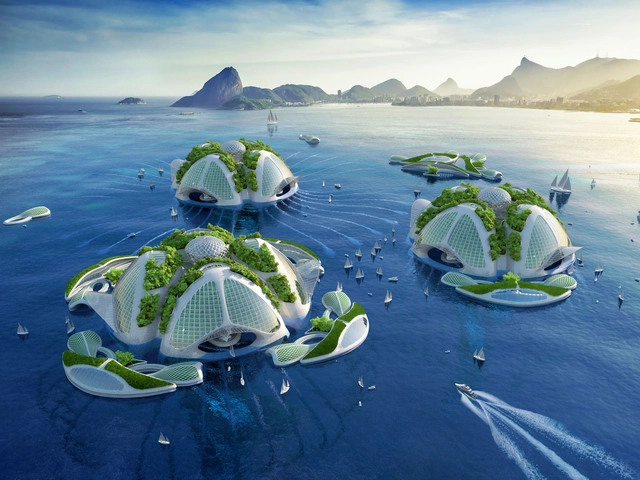
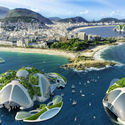
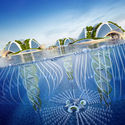
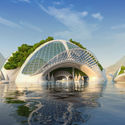
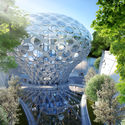
Vincent Callebaut Architectures has envisioned a radical underwater colony for "climate change refugees" 3D printed from recycled materials taken from the ocean's floating garbage patches. This particular proposal of "oceanscrapers" is sited off the shore of Rio de Janeiro. It's aim is to provide a sustainable habitat with 10,000 housing units, office and work space, sea farms, gardens, community orchards and much more, while fostering marine life.
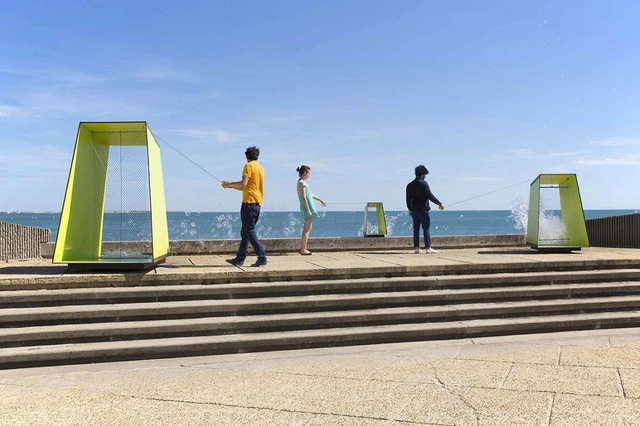
The south of France is known for its endless beaches, nineteenth century architecture, lush greenery, and monuments to its storied history. For nearly a decade, Le Festival des Architectures Vives (Festival of Lively Architecture) has been infusing contemporary architecture into the staid Southern French landscape through the creation of an array of artful temporary pavilions. Beginning in 2006 and 2013 respectively, the towns of Montpellier and La Grande Motte have played host to a series of structures designed to animate historical segments of the two cities. Founded with a mission to celebrate the seminal work of burgeoning architects, the festival aims to produce meaningful and interactive works designed to activate the historic centres of the two ageing cities.
Explore the bizarre and inspired installations of Le Festival des Architectures Vives after the break.
“One of the World’s largest aviation projects, Istanbul New Airport’s air traffic control tower will be an iconic structure, visible to all passengers traveling through the airport. We were looking for a striking design fit for a 21st century airport while remaining sensitive to Istanbul’s unique heritage. We received excellent designs from all over the world and are delighted to announce the AECOM and Pininfarina team as the competition winner,” said Yusuf Akçayoğlu, chief executive officer of İGA.
Over the past few days we've received dozens of holiday and New Year's cards from our network of architects around the world. See them all after the break (or check out our reader-submitted cards). Happy Holidays from the editors of ArchDaily!
https://www.archdaily.com/779203/happy-holidays-from-the-architects-2015-editionAD Editorial Team
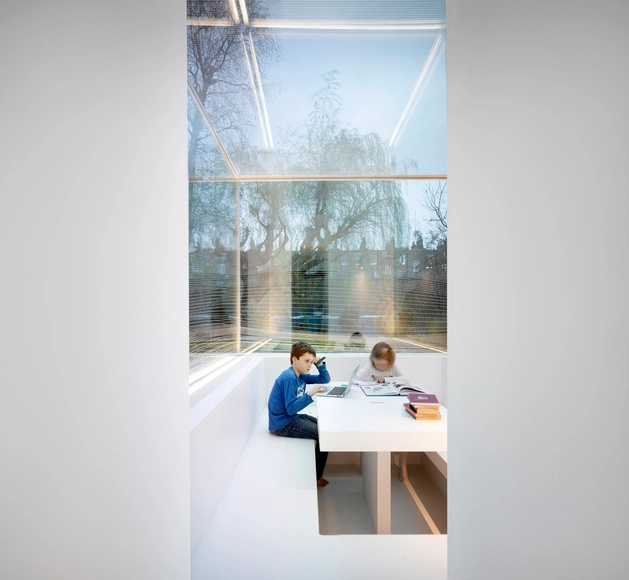
White on White by Gianni Botsford Architects. Image Courtesy of RIBA
RIBA (Royal Institute of British Architects) has released a report forecasting the greatest design trends in housing in the UK for 2016, based off a survey of 250 RIBA charted practices that are currently active in the housing design market. Noticeable trends include an increase in sustainable, energy conservation measures such as sustainable materials, improved insulation and water conservation/recycling; large extensions and bigger homes; housing designed for aging relatives/occupants; and flexible open-plans for family gathering.
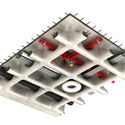
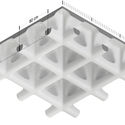
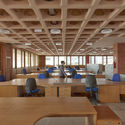
Holedeck's concrete slab system claims to use 55% less concrete than a standard concrete slab, making it significantly more environmentally friendly than standard concrete structures, while reducing the thickness of floor plates to allow a greater number of floors in tall buildings.
From Gehry, Mies and Corbusier puns to trees made of scales, rulers and buildings, we were overwhelmed by the depths of our readers’ creativity! Out of the 450 submitted cards, these are 52 of our favorites.
Zaha Hadid Architects has teamed up with Plus Architecture to design their first tower in Melbourne. The 54-story mixed use skyscraper is designed as a series of "stacked vases" supported by an "elegant colonnade of sculptural, curved columns" that "embody and emulate the finest examples of historic architecture" in the area. If approved, the proposal will add a mix of retail, commercial and residential programs to its site at 582-606 Collins Street.
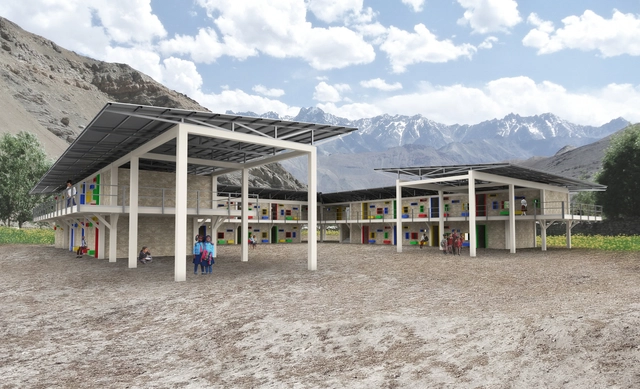
In wake of the April 25, 2015 earthquake in Nepal, SHoP has partnered with Kids of Kathmandu and Asia Friendship Network (AFN) to help rebuild 50 public schools in the hardest hit areas. The project will not only replace damaged schools, but also will raise the standard for public education in remote regions of Nepal.
In the hopes of providing a future model for non-governmental organizations, the design is a flexible system that is adaptable to different site conditions and available resources, and can be easily assembled.
Malkit Shoshan, shortlisted earlier this year for the Harvard GSD Wheelwright Prize, has been selected by Het Nieuwe Instituut to curate the Dutch Pavilion at the 2016 Venice Biennale. Founder of the Amsterdam-based architectural think tank FAST (Foundation for Achieving Seamless Territory), Shoshan has been fellow of the Institute for the past two years having previously authored the award-winning book Atlas of Conflict: Israel-Palestine (2010). Her current work, entitled Drones and Honeycombs, is a study of the architecture and landscape of war and peace and examines "public space as war zone." It is this research, under the title 'Blue', which will be presented as a new series of narratives for architecture in conflict areas.
Rio de Janeiro architect and urban planner Washington Fajardo has been named by the Bienal de São Paulo Foundation as curator of the Brazilian Pavilion at Venice Biennale 2016. Fajardo is president of the Rio World Heritage Institute (Instituto Rio Patrimônio da Humanidade) and the Municipal Council of Cultural Heritage Protection (Conselho Municipal de Proteção do Patrimônio), as well as special advisor to Mayor Eduardo Paes on urban planning issues.
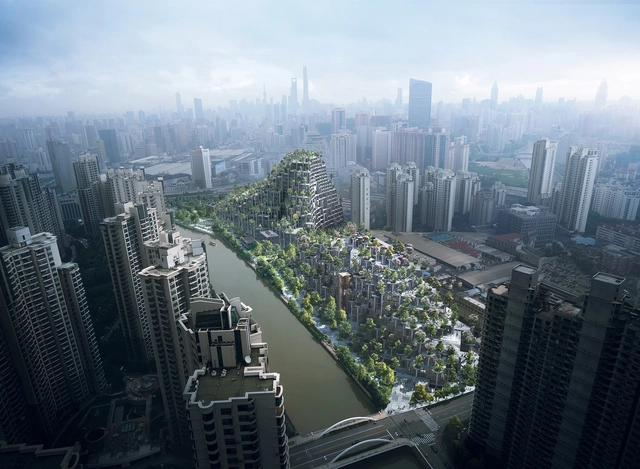
Heatherwick Studio has designed a mountainous mixed use plan for Shanghai's main arts district. Named M50, the 300,000-square-meter project was conceived as "a piece of topography" that takes the shape of "two tree-covered mountains" populated by "400 terraces" and "1000 structural columns."
“Normally, the large-scale projects that we are quite used to seeing have big boxes, and the role of the designer is figuring out what pattern of architectural wrapping paper to put on these boxes,” said Thomas Heatherwick, according to Architectural Digest. “We wondered if there was a way to make better working spaces by also making access to outdoors.”
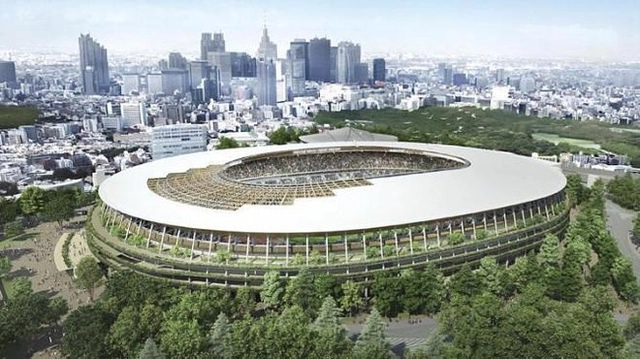
Kengo Kuma & Associates have been selected to replace Zaha Hadid Architects to design the new Tokyo National Stadium, the central venue for the 2020 Tokyo Olympics. Kuma's design was revealed alongside one other, a design by Toyo Ito, last week, after the original design by Zaha Hadid Architects was scrapped earlier this year. As reported by The Japan Times, Kuma's design narrowly won out against Ito's based on nine selection criteria by the Japan Sport Council, being awarded 610 total points compared to Ito's 602. Responding to concerns about the size and cost of Hadid's design, the new design will be under 50 meters tall and cost an estimated ¥153 billion, compared with the 70 meters and ¥252 billion of Hadid's controversial plans.
At the beginning of 2014, gmp was selected through a competition to redesign Real Madrid’s Santiago Bernabéu stadium, as part of a larger project being implemented by Real Madrid president Florentino Pérez. In addition to expanding the capacity of the stadium and covering it with a metallic, retractable roof, the project consisted of constructing a 12,250 square meter retail center and hotel, and an underground parking lot for up to 600 cars.
Now, however, the Madrid City Council has rejected the current renovation plan for the stadium. Speaking with local media, Chief of Sustainable Urban Development, José Manuel Calvo, explained that the current authorities will only support projects that are “consistent with public interest, [that] don’t involve new uses of public land and that are confined exclusively to the area currently occupied by the stadium’s facilities.”
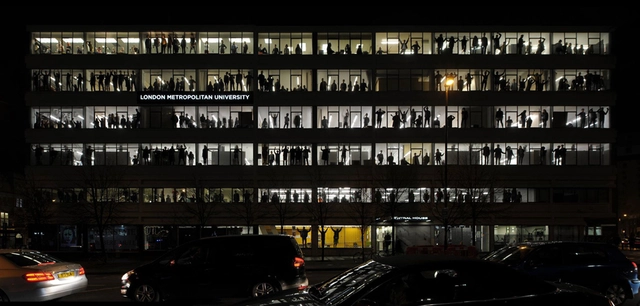
Robert Mull, former Dean of London Metropolitan University's Sir John Cass Faculty of Art, Architecture and Design—also known as 'The Cass'—has resigned over a dispute about proposed relocation plans for the school's campus in Aldgate, East London. As reported in The Independent, campaigners argue that the move, which was first announced in October 2015 by the university's Vice Chancellor John Raftery, would cause courses and jobs to be unnecessarily cut. The university's vision, named 'One Campus, One Community', aims to invest £125million ($185million) to create "a new, single campus in Islington, north London, bringing all of the [university's] faculties together on one site for the first time in the institution’s 170-year history."
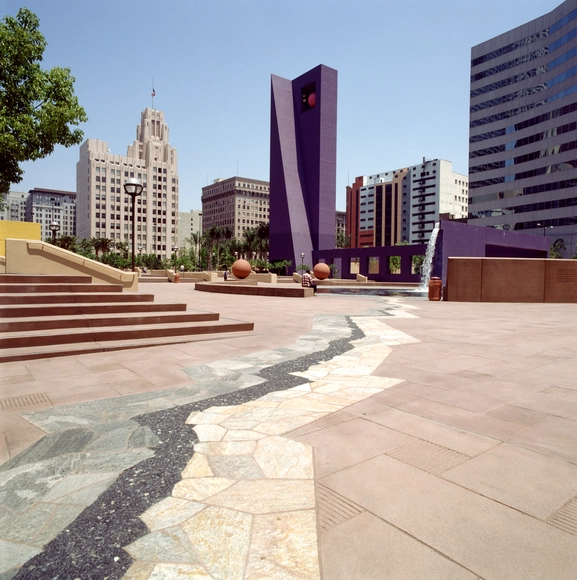
Four teams have been chosen to move on to the second stage of the Pershing Square Renew competition. Aiming to transform downtown Los Angeles' oldest park, the finalists will now refine their schematic proposals in preparation of a second review in March 2016. The winning scheme will potentially be the five-acre park's sixth iteration, replacing Mexican architect Ricardo Legorreta and landscape architect Laurie Olincurrent design that first opened in 1994.
The four teams and their preliminary ideas, include:
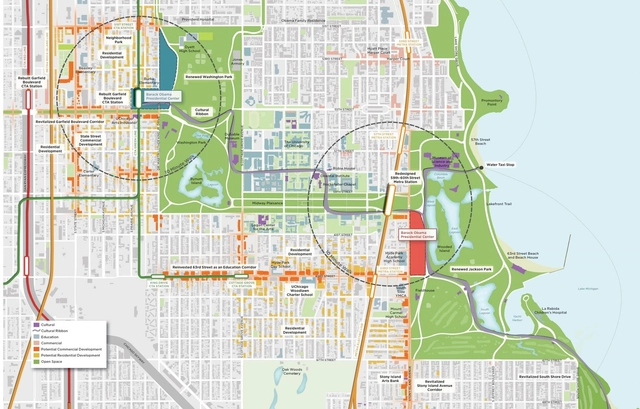
“These finalists offer a variety of backgrounds and styles, and any one of them would be an excellent choice,” Obama Foundation chairman Martin Nesbitt, according to CBS Chicago. “We are excited to see this process moving forward because the Obama Presidential Center will be so much more than a library – this facility will seek to inspire citizens across the globe to better their communities, their countries, and their world.”


_Philip_Vile.jpg?1450856752&format=webp&width=640&height=580)