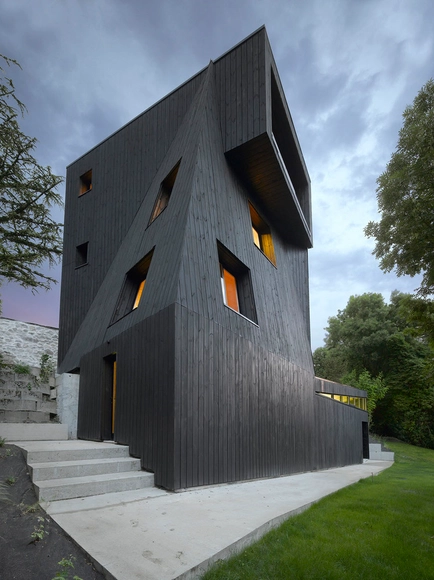
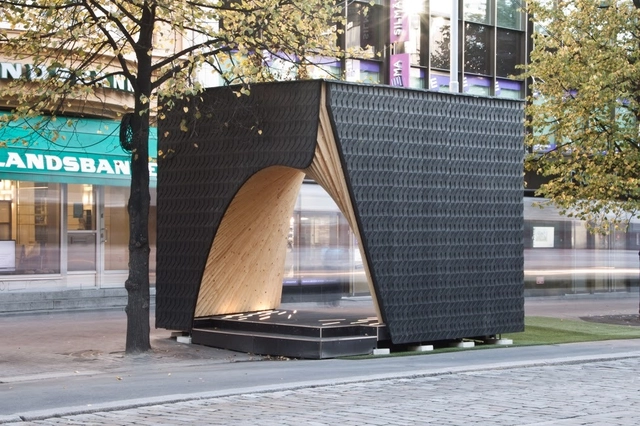
The Pauhu pavilion was constructed as part of Tampere, Finland's 2015 Tampere Architecture Week, an annual event that aims to explore ideas about architecture and urban design by bringing together design students and professionals from the city. The 2015 theme -- interaction -- brought forth a discussion between architects and other citizens of Tampere.
The pavilion functions as an open-stage for performances and public debates, and also aims to promote forward-thinking ideas about the innovative use of wood in architecture. The name “Pauhu” refers to the “distant roar generated by the Tampere rapids, by the city around the pavilion, as well as by the artists and presenters the pavilion is hosting.”
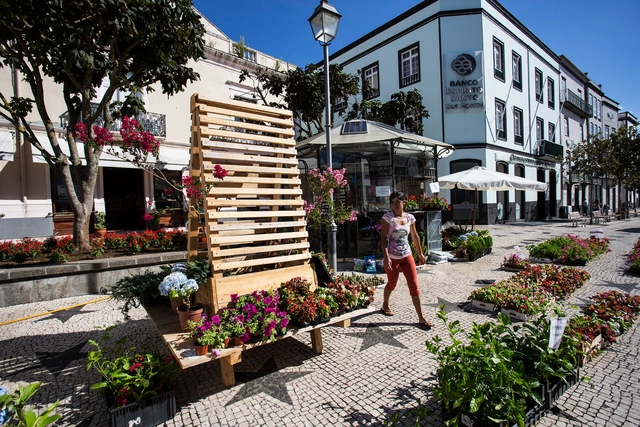
A volcanic island in the middle of the Atlantic Ocean with 140,000 inhabitants has become a stage for artistic experimentation in the last four years through the Urban Art Festival “Walk & Talk”.
The open-air festival takes place in Ponta Delgada, capital of the Archipelago of the Azores in Portugal, but the events are spread out in other areas of the São Miguel Isle as well.
While well-known street artist murals characterized the first editions of the festival, the most recent ones gathered other artistic expressions, like dance, cinema, design and architecture, developing a multidisciplinary cultural event, which has put the island under the contemporary art radar.
Courtesy of The Royal Institute of British Architects (RIBA)
The Royal Institute of British Architects’ (RIBA)Future Trends Survey for January 2016 has reported overall increases in predicted workloads and staffing for the New Year. Completed by a mix of small, medium, and large firms based on a geographically representative sample, the survey was launched in January 2009 “to monitor business and employment trends affecting the architects’ profession.”
The Future Trends Workload Index “bounced back strongly in January 2016, rising to +29 (up from +15 in December 2015). Increased workload optimism was shown across most of the UK, with the South of England (balance figure +38) showing particular strength, and only Scotland (balance figure -25) in negative territory."
"With the support of the Architectural Society of China and the Architectural Society of China Shanghai, the first year of this regionally focused awards program was very successful, with numerous high-quality projects entering into the running under six categories of recognition," said CITAB and CTBUH.
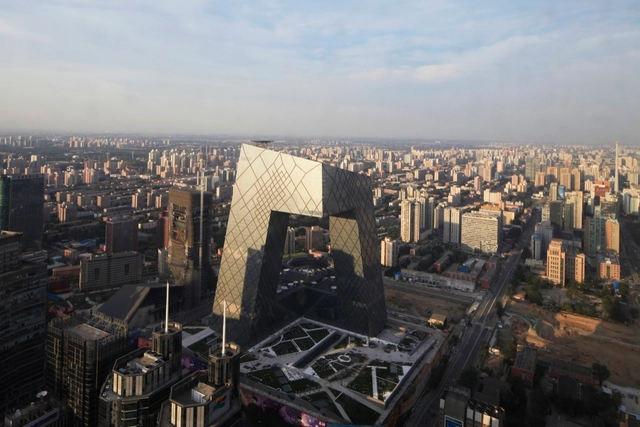
China has become home to some of the world’s most outlandish architectural landmarks of the 21st century. Hangzhou is home to a replica of the Eiffel Tower, located in a luxury real estate development, and Shanghai’s World Financial Center is often referred to as “The World’s Largest Bottle Opener.” However, all of these zany designs may soon come to a halt following a directive issued by the State Council, China’s cabinet, and the Communist Party’s Central Committee on Sunday, reports the New York Times.
The directive says “no” to any architecture considered “oversized, xenocentric, weird, and devoid of cultural tradition.” In their place should be buildings designed as “suitable, economic, green, and pleasing to the eye.”
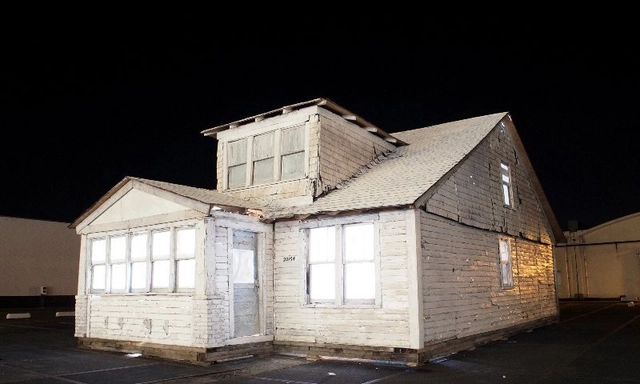
An empty house from Stoepel Street 20194, Detroit, is now in Rotterdam, The Netherlands. In this article for The Guardian, artist Ryan Mendoza describes his impetus and process for translocating a worn, abandoned former family home from one continent to another – as well as the statement he hoped to make. "When I arrived in Detroit in March 2015 I realised that this city – in the country I had left in 1992 out of distaste for its nationalistic, isolationist, police-dog mentality and its privatised prison system, [...] had, aside from the positive developments that were mostly in the downtown area, begun to look like a war zone."
Carlo Ratti Associati has teamed up with German engineer Schlaich Bergermann Partner and British design studio Atmos to design the world's tallest man-made structure. Nearly twice the height of the Burj Khalifa, the 1609-meter-tall tower was envisioned as a vertical "Central Park" clothed in vegetation and supported by a lightweight matrix of pre-stressed cables.
"Imagine you take New York's Central Park, turn it vertical, roll it and twirl it," said Carlo Ratti.
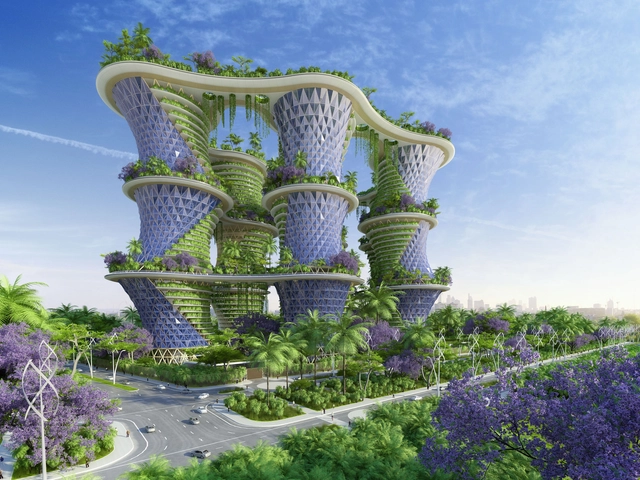
Agroecologist Amlankusum, together with Paris-based Vincent Callebaut Architectures, has created Hyperions, a vertical, energy positive eco-neighborhood proposed for Jaypee Green Sports City in the Delhi National Capital Region (NCR) in India. Aiming to “reconcile urban renaturation and small-scale farming with environment protection and biodiversity,” the project combines low-tech and high-tech elements with the “objective of energy decentralization and food deindustrialization.”
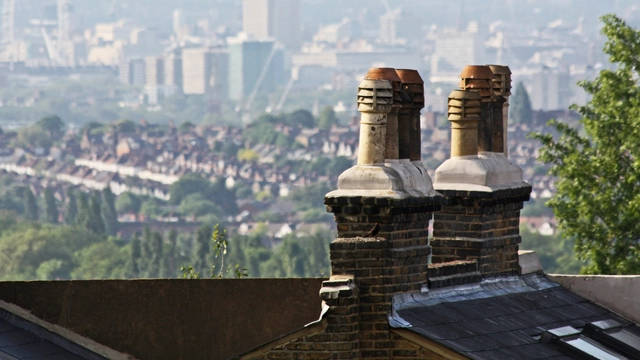
For this edition of The Urbanist, Monocle 24's weekly "guide to making better cities," the team head back in time to explore London in 1891, examining some of the city’s achievements to get a glimpse of what life was like in the British capital. They investigate the architectural legacy of Victorian London, see how the introduction of the railway changed the city, and chat about Charles Booth’s pioneering study into Victorian Londoners’ quality of life. They also take a tour around the country’s first council estate.
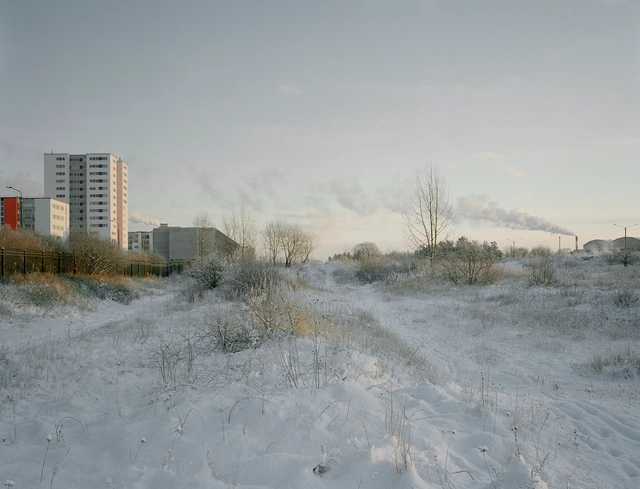
The Baltic Pavilion at the 2016 Venice Biennale, representing Estonia, Latvia and Lithuania, will explore the "transformative efforts at play" that are currently "reprogramming an inert region beyond the delineations of separate nation states." It "intends to explore the built environment of the Baltic States as a shared space of ideas." Located in Enrichetto Capuzzo's Palasport Arsenale Giobatta Gianquinto, a Brutalist architecture sports hall located next to the Arsenale, the exhibition will also be accompanied by a series of related events that will be presented in the form of a cross-section through Baltic space unfolding as "a non-linear stratigraphy."
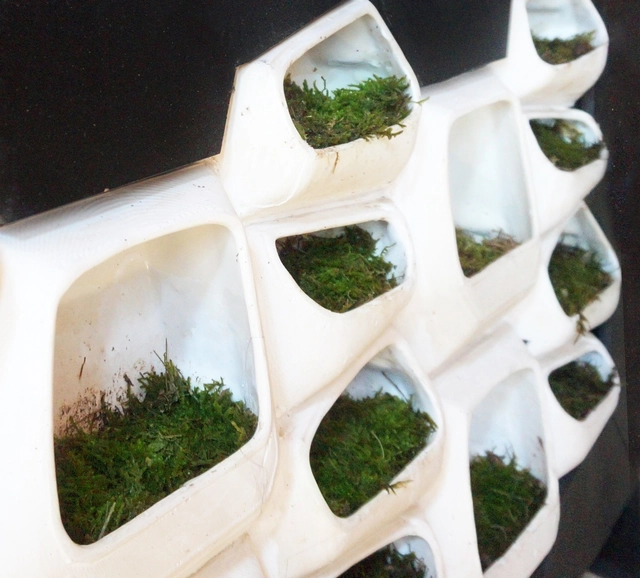
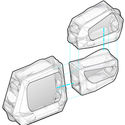
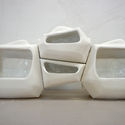
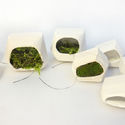
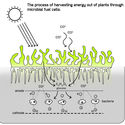
IaaC Student Elena Mitrofanova, working alongside biochemist Paolo Bombelli has created a proposal for a facade system that utilizes the natural electricity-generating power of plants. Consisting of a series of hollow, modular clay "bricks" containing moss, the system takes advantage of new scientific advances in the emerging field of biophotovoltaics (BPV) which Mitrofanova says "would be cheaper to produce, self-repairing, self-replicating, biodegradable and much more sustainable" than standard photovoltaics.
Videos
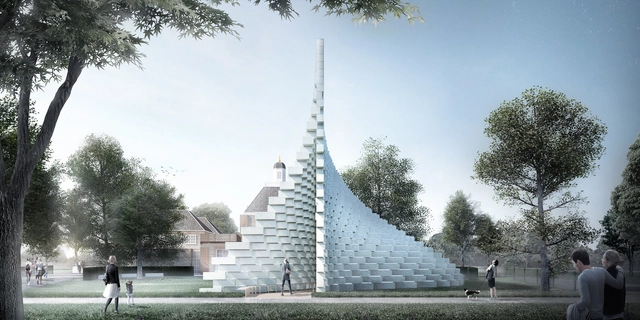
Pavilion design by BIG. Image Courtesy of BIG
The Serpentine Gallery in London has unveiled the designs for this year's prestigious Serpentine Gallery Pavilion, designed by BIG, showing an "unzipped wall" which rises to a point above the entrance. In addition to the pavilion, this year the Serpentine gallery will host four smaller "summer houses" designed by Kunlé Adeyemi - NLÉ, Barkow Leibinger, Yona Friedman and Asif Khan. For these summer houses, the Serpentine Gallery asked the participants to take inspiration from Queen Caroline's Temple, a small, classical summer house near to the gallery that was built in 1734.
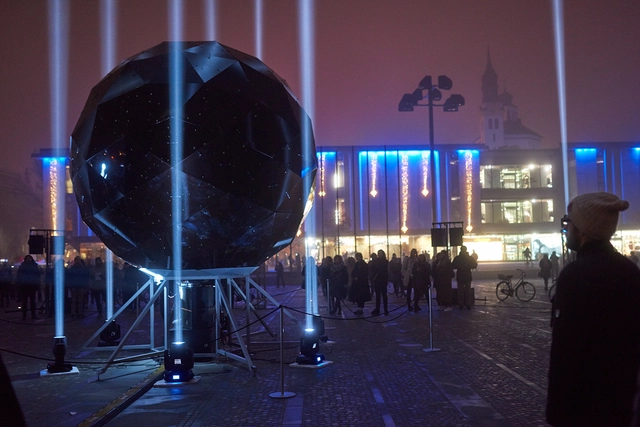
Courtesy of Martin Bricelj Baraga and the Museum of Transitory Art
Slovenian artist Martin Bricelj Baraga has created Moonolith, a monument to the moon and stars, in collaboration with the City of Ljubljana, Slovenia. Based on the modular design of Buckminster Fuller’sgeodesic dome, Moonolith “is a modern three-dimensional squaring of the circle, projected into Euclidean space.”
As a part of the artist’s Nonument series, the installation “[carries] a strong symbolic message in a physical, mental, and virtual space,” reflecting “research of the meaning and development of monuments and the phenomenology of collective memory.”
Portugal has unveiled the theme of its contribution to the 2016 Venice Biennale: “Neighborhood – Where Alvaro Meets Aldo.” Curated by Nuno Grande, a Portugese architect, teacher, critic, and curator, and Roberto Cremascoli, an Italian architect and longtime collaborator of Álvaro Siza Vieira, the exhibition will focus on the works of both Álvaro Siza and Aldo Rossi.
The Portuguese exhibition is unique in that it will be installed on Venice’s Giudecca island, where Siza’s 1985 social housing project Campo di Marte is located. Campo di Marte is part of a larger plan on the island, which includes designs by other architects such as Aldo Rossi, and was never fully completed.
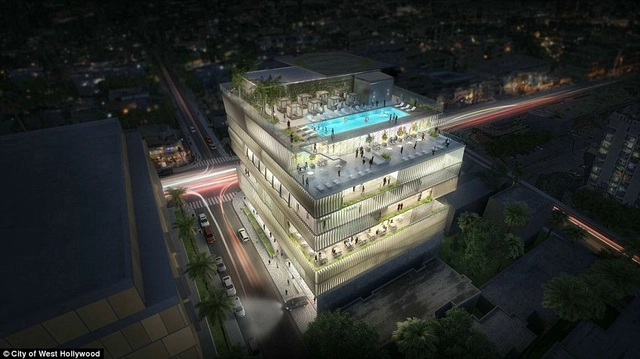
American actress Gwyneth Paltrow has commissioned Gensler to design a new branch of London's exclusive Arts Club in West Hollywood. The eight-story members-only club will feature a number of luxury amenities, including a spa, gym, art gallery and rooftop pool. Paltrow is collaborating with business partner Gary Landesberg to complete the 132,000-square-foot facility, which will also include a restaurant and dining terrace, screening rooms, 15 guest rooms, and helicopter pad.
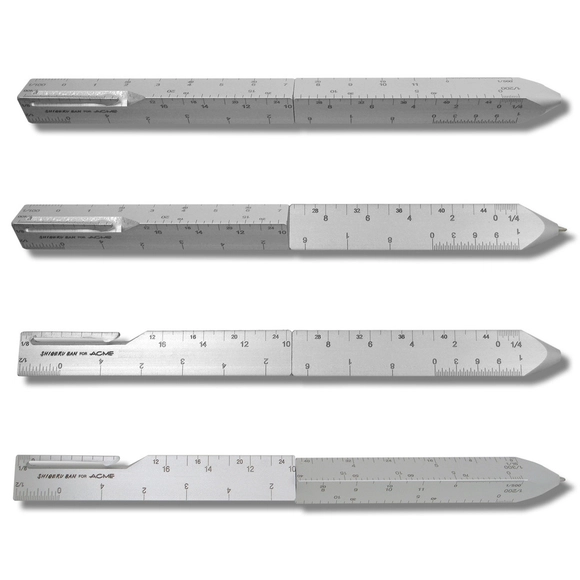
Shigeru Ban has designed a retractable, refillable "SCALE" pen for ACME Studio that was inspired by the architect's ruler. The aluminum pen, designed to fit comfortably into your hand, serves as a fully functional architect's scale outfitted with a ballpoint pen that retracts with a simple twist of the pen's two halves.
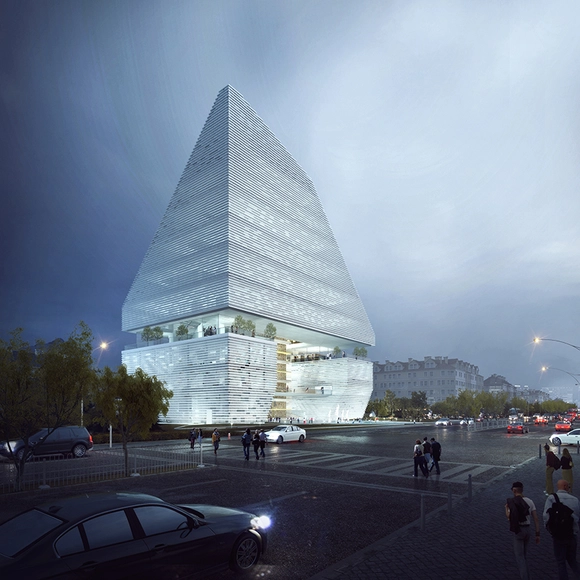
Hong Kong-based architecture firm TheeAe has released the plans for its entry to the competition for the Varna Regional Library in Varna, Bulgaria. The competition called for proposals to combine six regional libraries into one new site, ultimately awarding Architects for Urbanity the first prize.
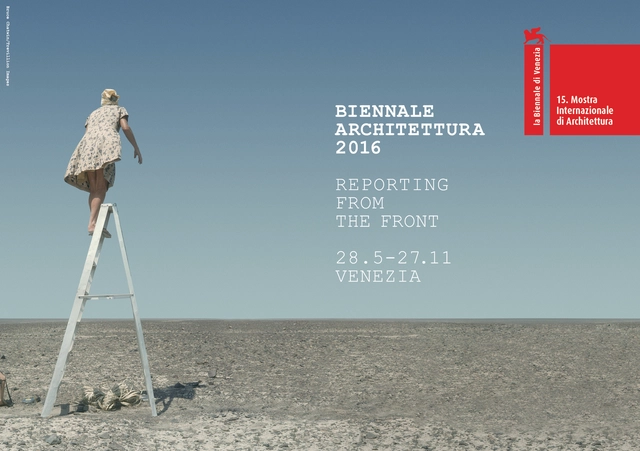
At a press conference earlier today, the director of the 2016 Venice BiennaleAlejandro Aravena revealed more details about his plans for this year’s event. Alongside announcing the proposal and invited teams for Aravena’s own central exhibition titled “Reporting from the Front,” which will occupy all of the Biennale’s main venues, the Biennale announced the full list of participants in the 62 national pavilions, including 5 first-time participants: Kazakhstan, Nigeria, the Philippines, the Seychelles, and Yemen.
These participants will be tasked with responding to Aravena's prompt to highlight "architectures that despite the scarcity of means intensify what is available instead of complaining about what is missing." The national pavilions will highlight the social, environmental and economic challenges prevalent in each of the participating countries, and the ways in which architecture all over the world has been used to alleviate these problems. Read on for the full list of participants, and don't forget to check out all of our Venice Biennale coverage here.
https://www.archdaily.com/782531/2016-venice-biennale-full-list-of-participants-revealedAD Editorial Team
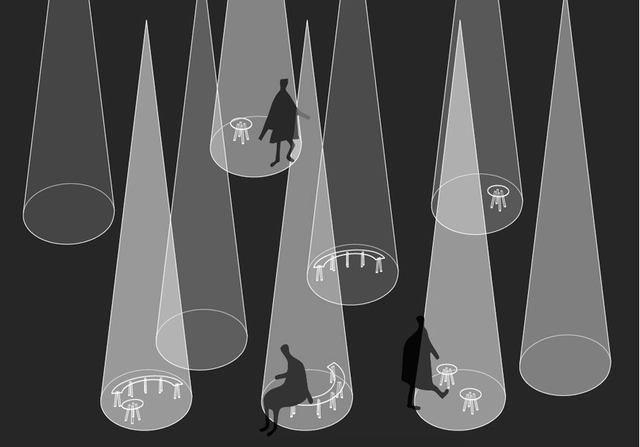
Sou Fujimoto has been commissioned by Swedish clothing brand COS to design its installation for this year's Salone del Mobile in Milan. Taking place from April 12-17, the event will be the brand's fifth year participating.
"In this installation for COS, I envisage to make a forest of light," said Fujimoto. "A forest which consists of countless light cones made from spotlights above. These lights pulsate and constantly undergo transience of state and flow. People meander through this forest, as if lured by the charm of the light. Light and people interact with one another, its existence defining the transition of the other."
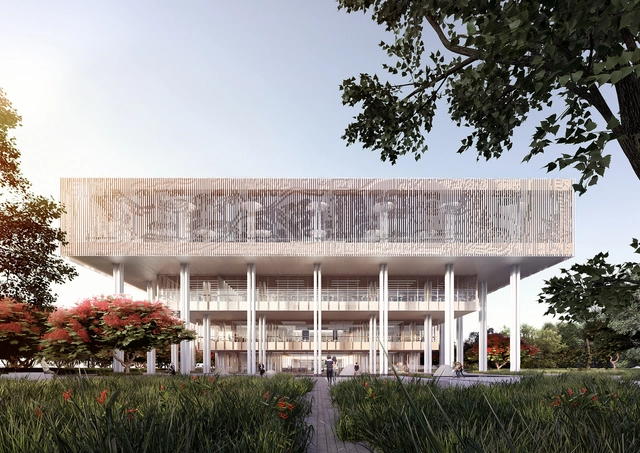
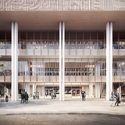
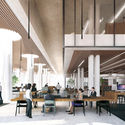
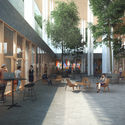
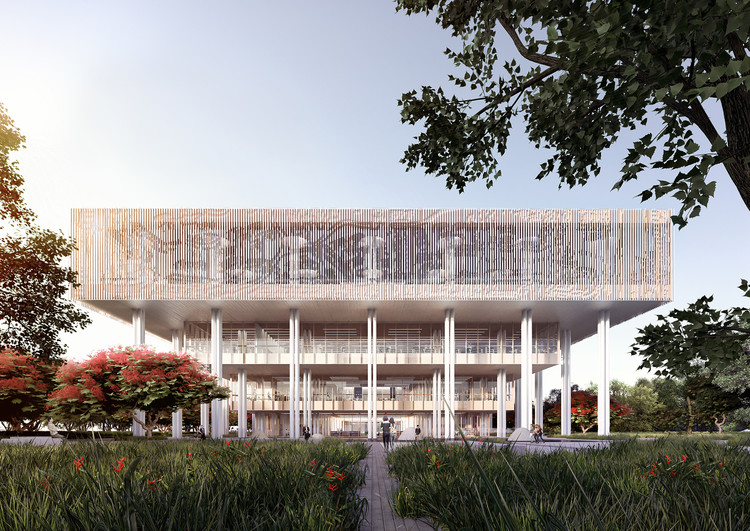
Mecanoo architecten and MAYU architects+ have won a competition to design the new Tainan Public Library in Taiwan. Their winning design "represents the meeting of cultures, generations and histories," says the architects. It will feature an inverted stepped facade that houses reading rooms, special collections, study spaces, a children’s area, café, conference hall, a 200-seat auditorium, and public courtyards.




CCDI.jpg?1456507917&format=webp&width=640&height=580)
.jpg?1456423124&format=webp&width=640&height=580)