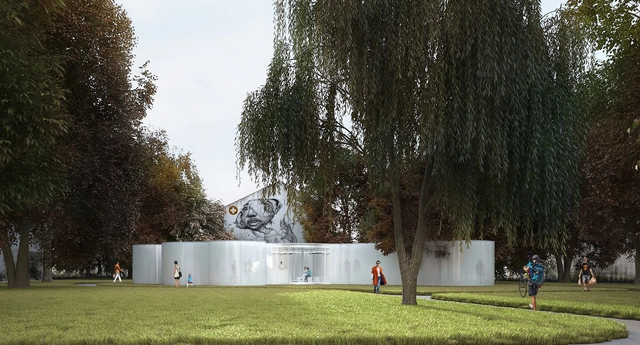
Bee Breeders has announced the winner of the Krakow Oxygen Home competition, which asked designers to reconsider contemporary architectural conventions with respect to current cultural and global issues in the city of Krakow, Poland. Due to the large number of coal-burning furnaces in the city, residents of Krakow are threatened by air pollution, which has resulted in a sky-rocketing number of cases of asthma, lung disease, and lung cancer. The competition brief called for the “design of a care center for lung cancer patients as part of the Maria Sklodowska-Curie Memorial Institute of Oncology.”
Working with Drexel University and master developer Brandywine Realty Trust, SHoP and West 8 will transform 14-acres of existing underutilized land with 6.5-acres of public open space to create a collaborative mixed-use neighborhood in Philadelphia’s University City submarket. Schuylkill Yards will feature a mix of 24/7 entrepreneurial spaces, educational facilities and research laboratories, corporate offices, residential and retail spaces, hospitality and cultural venues, as well as a robust public realm network that connects the existing neighborhoods with the adjacent Amtrak 30th Street Station.
Situated next to the third-busiest passenger rail station in the country, Schuylkill Yards will be connected to Philadelphia’s international airport and major cities along the Northeast corridor, making it a major innovation hub on the East Coast.
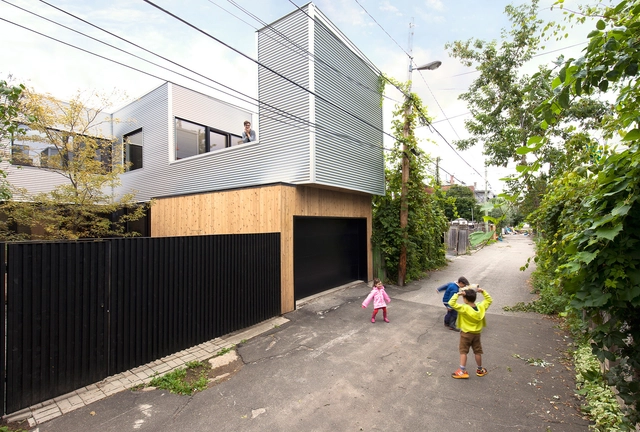
“MJMA has consistently achieved a very high quality of architecture and bold clarity throughout its large body of work,” said the five-member jury. “In addition to the spectacular spatial qualities, the architecture exhibits a clear problem-solving approach.
The Mies Crown Hall Americas Prize has announced the nominees for this year's MCHAP awards, the biennial prize hosted by the Illinois Institute of Technology (IIT) to award the best projects in the Americas. Following on from their inaugural prize in 2014 which awarded the best projects of the 21st century up to 2013, this year's awards will focus on the best architecture from 2014 and 2015, and the nominee list features 175 projects in the main MCHAP awards and 55 in the MCHAP.emerge awards.
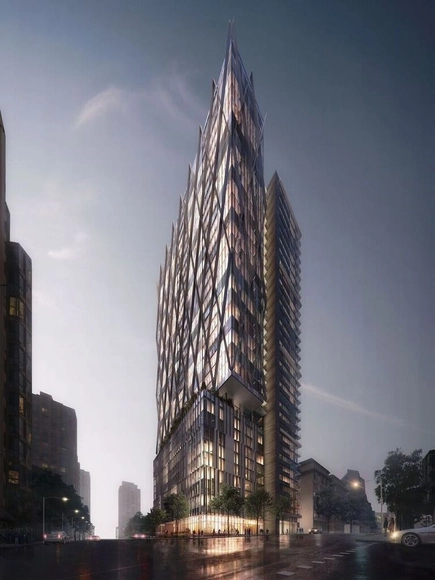
GBL Architects' 8X Tower in Vancouver has won approval to be built, with construction set to begin in the fall. The site is located at the western corner of Richards and Helmcken Street in Vancouver’s Yaletown neighborhood. The building’s conceptual design combines the context of three surrounding areas: Emery Barnes Park, which flanks the western edge of the site; the grid of the nearby streets; and the Yaletown skyline which displays a wide range of architectural styles.
Yesterday, ArchDaily celebrated 8 years online. And, while every birthday is a special occasion, this year feels to us to be particularly special: in the past year we've achieved many milestones, including the launch of both ArchDaily China and ArchDaily Perú, a move to a new platform and a new design and so many other steps forward; at the same time, in the Pritzker Prize, the Venice Biennale, and other organizations around the world, we're seeing the acceptance of a type of architecture that has always been a key part of our mission statement.
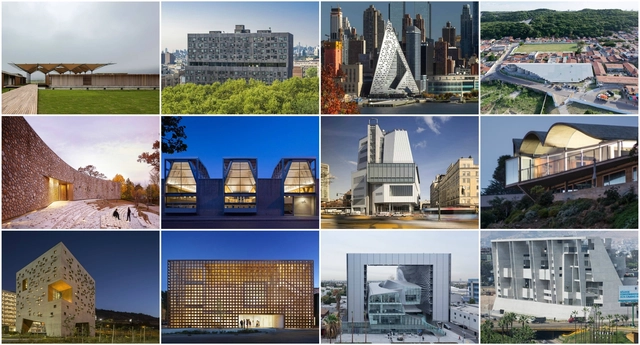
With those things in mind, now seems like a very good time to look back at how we got here - in particular, to look at some of the most notable architectural projects that have defined our time so far on the web. Our selection of 50 projects includes buildings by Pritzker Prize winners (and a number of architects who are sure to be future Pritzker Prize winners), it includes Building of the Year award winners and runners-up, and of course it includes projects that have inspired architects around the world.
This collection of projects also demonstrates the power of ArchDaily's database - an immense library of over 21,000 projects which we are adding to every day, but one which we are also working hard to give you the tools you need to make use of. With our My ArchDaily platform and our faceted search, these and many, many other projects are always at your fingertips for your inspiration, education and enjoyment.
https://www.archdaily.com/783495/editors-choice-50-essential-projects-from-our-databaseAD Editorial Team
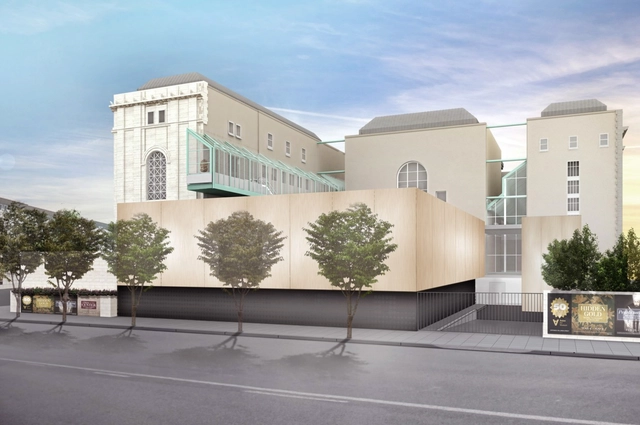
As part of its 50th anniversary celebrations, the Asian Art Museum of San Francisco has announced major renovation and expansion plans by wHY Architecture. The practice is expected to design a new 12,000-square-foot exhibition pavilion, reconfigure the Museum’s existing galleries, and modernize its education and public programming spaces. Work will begin in 2017.
"The new pavilion will underscore San Francisco’s cultural diversity, create one of the nation’s premier exhibition spaces dedicated to Asian art, and increase the number of special exhibitions on view for visitors," says the Museum.
20 prominent women in architecture have been shortlisted for the arcVision Prize - a prize that "aims to give recognition to women whose work brings an innovative new design, theoretical or practical approach to the economic, social and cultural issues at play in the field of architecture." Referred to some as the "Pritzker for women," the yearly arcVision Prize is now in its fourth edition.
Common Edge has published a cheeky "letter to prospective architectureparents" that preps them for the changes their child will soon undergo by detailing the 6 phases of architectural education: "Architecture school is a peculiar beast. It almost never actually prepares students to be practicing architects, and 90% of what is written by architects and architectural theorists is incomprehensible garbage. But being able to discern what is and what is not incomprehensible garbage is a profoundly useful life skill."
The six phases each architecture student goes through includes:
The City of Vancouver has agreed to purchase the Arbutus Corridor from Canadian Pacific Railway for $55 million to make way for a future public greenway. According to a report by CBC, this ends a long-standing dispute between the city and CP Rail over the worth of the nine kilometer stretch of land, which hasn't been used for nearly 15 years.
8 years ago today, ArchDaily launched with a daunting mission: to provide inspiration, knowledge and tools to the architects tasked with designing for the 3 billion people that will move into cities in the next 40 years. This mission has captured the imagination of architects worldwide, leading us to become the world's most visited architecture website – serving over 400,000 visitors daily in English, Spanish, Portuguese and now Chinese. In our 8th year, we've made great strides towards this goal: from conveying information in another language through ArchDaily China to finding new ways to transmit information such as our ArchDaily Essentials series; from better ways to engage readers such as our #YourArchDaily Instagram campaign to presenting more of an editorial voice through articles such as our selection of most inspiring leaders of 2015; and from a better way to display our site with our new redesign to a better way to manage our database with our custom publishing platform.
Of course, the most important part of this progress is the continued support and engagement of our ever-growing readership. By sharing our content on social media or discussing it with friends and colleagues, you're helping us to reach more and more architects, and thus helping us to fulfill our goal – thank you for joining us on this mission. Read on after the break for a round-up of our highlights from the past year.
https://www.archdaily.com/783455/happy-birthday-to-us-archdaily-turns-8AD Editorial Team
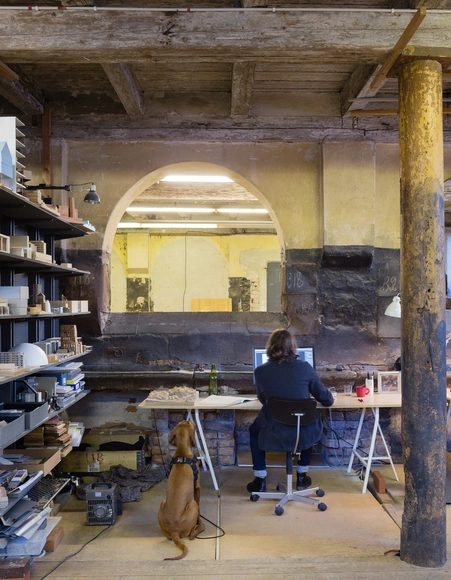
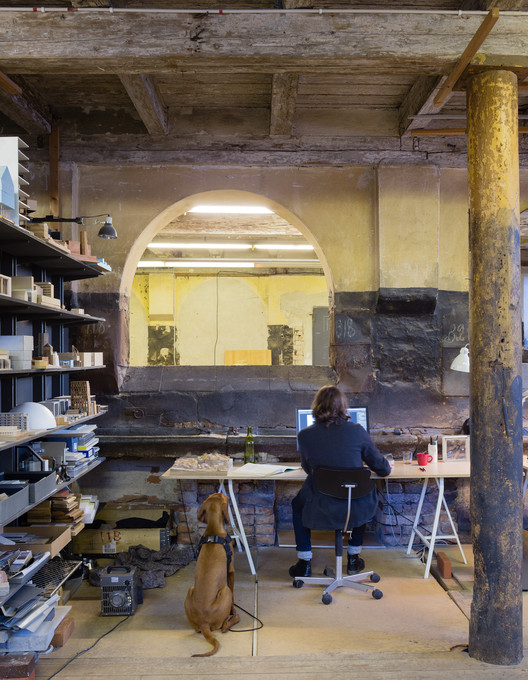
Architectural photographer Marc Goodwinhas recently completed "the ultra-marathon of photoshoots:" twenty-eight architectural offices in twenty-eight days, spread across four capital cities – Oslo, Stockholm, Copenhagen, and Helsinki. His aim was to understand what sort of spaces architects in the Nordic countries operate in, and how they differ between each respective country. From former boathouses to stables and coal deposits, Goodwin has captured some of the most unique working environments the profession has to offer.
Studio Gang Architects has been chosen by the Department of State to design the new US Embassy compound in BrasíliaBrazil's federal capital. Selected from a shortlist of six, the Jeanne Gang-led practice won the commission with their "strong and cohesive team approach with more than 20 years of collaborative experience executing projects with complex constraints at challenging sites," says the report.
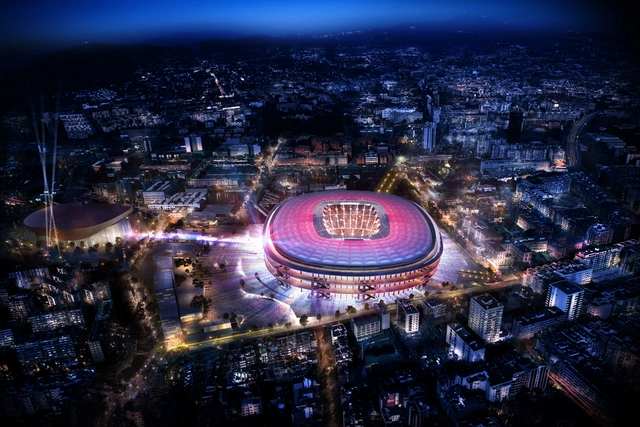
Design of the new Camp Nou. Image Courtesy of FC Barcelona
Japanese practice Nikken Sekkei, in collaboration with Joan Pascual-Ramon Ausió Arquitectes, has been chosen to design the new Camp Nou stadium for FC Barcelona, according to Spanish newspaper La Vanguardia. The winning team was chosen over three other finalists: HKS + COX + Batell i Roig Arquitectes; BIG + IDOM + BAAS Arquitectes; POPULOUS + Mias Arquitectes + RCR Arquitectes.
The new design intends to compliment the recently unveiled New Palau Blaugrana, FC Barcelona's main basketball arena that will be designed by HOK and TAC Arquitectes. All this is happening alongside the Espai Barça remodel that is expected to begin in 2017 and complete by 2021.
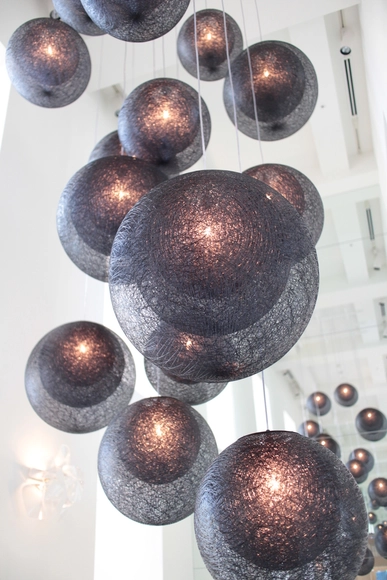
Yamagiwa has just released a new version of Toyo Ito's popular Mayuhana lamp - Mayuhana Ma Black. "Ma," meaning "true" or "genuine," represents the new lamps darker color that is, as the company describes, "more deep and profound."
"Mayuhana Ma Black is light in darkness. It is the quintessential quality of light found in Japan that reminds me of ‘In Praise of Shadows’ by Junichiro Tanizaki," says Toyo Ito.
Today, on International Women's Day, we wanted to open up a discussion among ArchDaily readers to see what else could be done. What more could architects, institutions and indeed even the media do to close the gender gap in our profession? Let us know in the comments below and the best responses will be featured in an upcoming article.
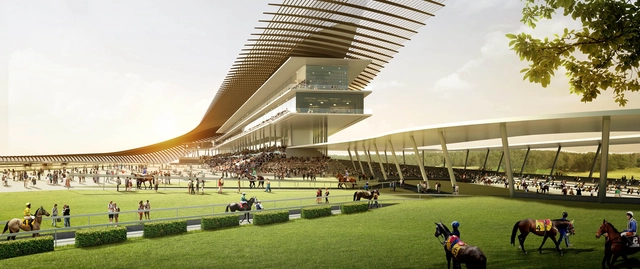
NOW Architects and Grimshaw have been selected to design "LetsRun Park" - a new home for horseracing in the South Korean city of Yeongcheon. Selected through an international competition by the Korea Racing Authority and International Union of Architects, the team's masterplan calls for new racecourse and equine-themed family park on the 148 hectare site.
“This is a recently created firm that has developed a coherent and consistent body of high-quality architectural work in a rapid time frame,” said the five-member jury. “It has achieved this while often working within limited budgets.”
For nearly two millennia, European architecture was closely affiliated with and shaped by Christianity. Prior to the advent of Modernism, there was scarcely a style that was not promoted, or more likely defined, by the designs of churches. Such a hypothesis makes it difficult to imagine Medieval England outside the purview of GothicCathedrals, or Renaissance Italy as separate from its Basilicas. But with the Industrial Revolution and the economic and population growth that ensued, infrastructure and housing became the new symbols and necessities of cultural representation, finding their ultimate expression in the ease and simplicity of Modernism. The field of architecture, so long shaped and dominated by the church, had been subsumed by the changing concerns of a commercially driven society. Of course there were still churches being built, but the typology that once defined architecture in its ubiquity became novel and rare. Or so we’ve all been lead to believe.
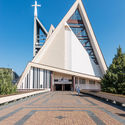
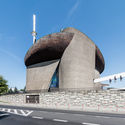
Surprising as it might be, in the wake of World War II and under Soviet control, Poland built more churches than any other country in Europe. The majority were built in the 1980s, at a time when church construction was neither authorized nor forbidden, and as a result played a pronounced role in Cold War politics. The construction of these churches was a calculated affront to the proletariat-minded Modernism of the Soviets. In their project Architecture of the VII Day, Kuba Snopek, Iza Cichońska and Karolina Popera have sought to comprehensively document these Polish churches and the circumstances of their construction. Unique not only in how they defied the prefabrication and regularity of the Eastern Bloc, the churches were community-led endeavors that relied on local funding and input, long before these practices became buzzwords in 21st century architectural circles.
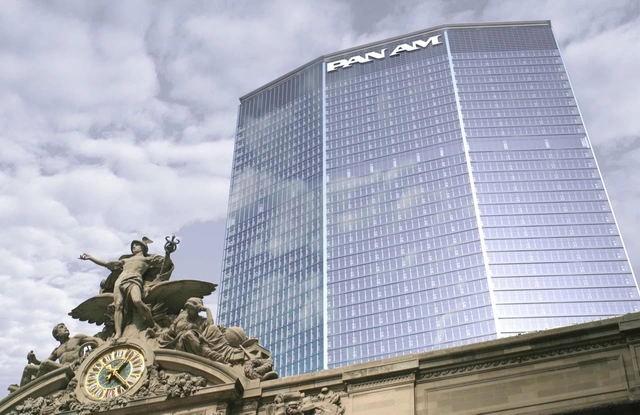
Metals in Construction Magazine and a jury of architects and engineers have announced the winners of the “Reimagine a New York City Icon” competition. The 2016 Design Challenge, which was sponsored by Metals in Construction magazine and the Ornamental Metal Institute of New York, called for submissions from architects, engineers, students, and designers from around the globe to reimagine the cladding of 200 Park Avenue (formerly the Pan Am Building, now the MetLife Building), with a “resource-conserving, eco-friendly enclosure” that simultaneously creates transparency and preserves the building’s original aesthetic.
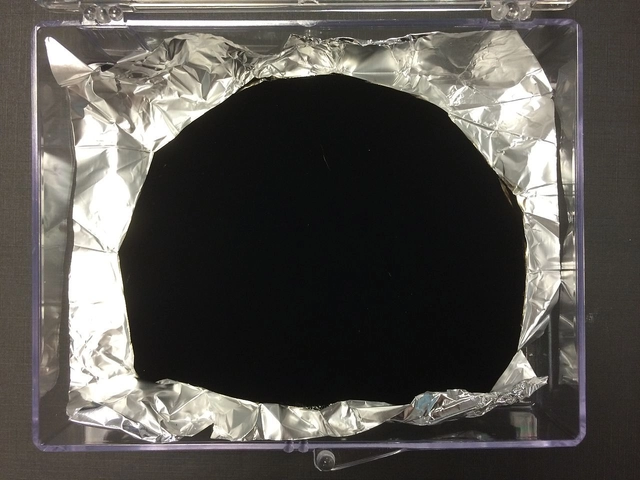
Anish Kapoor, a British-Indian sculptor, now owns the exclusive rights within the field of art to Vantablack, currently the world’s darkest material. Developed by a team of scientists at Surrey NanoSystems in 2014, Vantablack absorbs all light and creates a crease free abyss which is often compared to a black hole. Other artists, such as Christian Furr, had intended to use Vantablack in a series of paintings, but no longer can due to Kapoor’s monopolization. “All the best artists have had a thing for pure black — Turner, Manet, Goya,” he told Daily Mail. “This black is like dynamite in the art world. We should be able to use it. It isn’t right that it belongs to one man.”
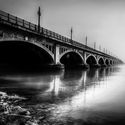
Twenty postcards depicting Detroit have been selected for “My Detroit,” part of The Architectural Imagination,” the exhibition for the US Pavilion at the 2016 Venice Biennale. Selected from among 463 entries by curator Cynthia Davidson and sociologist Camilo José Vergara, the 20 winning postcards --- taken by 18 different individuals -- were selected as a group, for helping to tell the story of Detroit today. Ten of the 18 winners are Detroit-area residents.









.jpg?1457466632&format=webp&width=640&height=580)