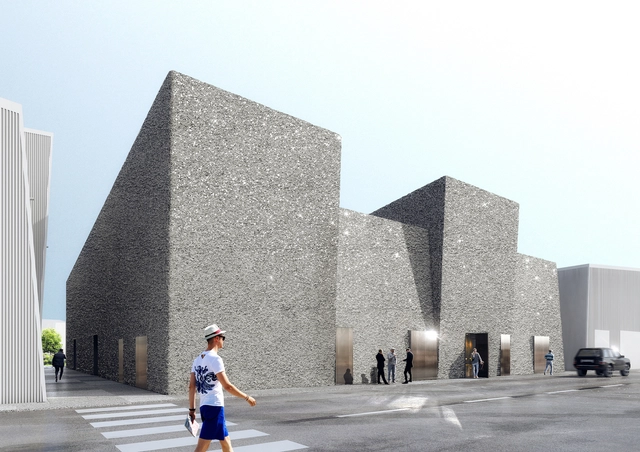
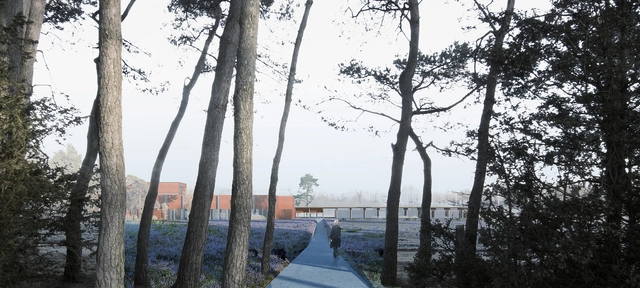
a2o architecten, in partnership with artist Jan De Cock, has won a competition to design a crematorium in Lommel, Belgium. The goal of the project is to integrate the crematorium into the existing cemetery, which shares the site. The design is heavily symbolic and is based off of the idea of “the journey” of saying farewell to a loved one.
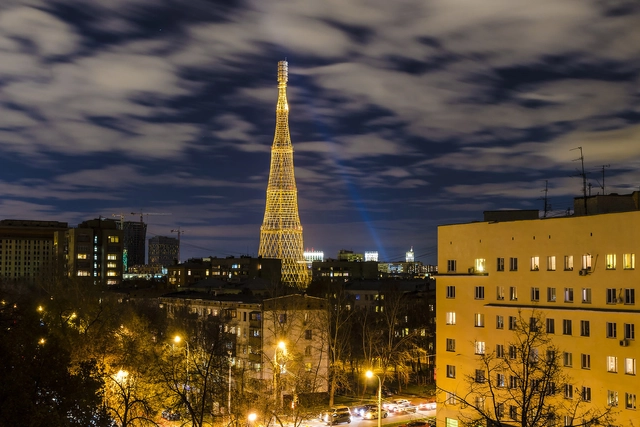
A two-day event will be held on Saturday, March 19, and Sunday, March 20, 2016, in Moscow, Russia, to celebrate the 94th anniversary of the Shukhov Tower and the official launch of a petition to save the Constructivist landmark, which faces a "looming threat of demolition." The tower is on the 2016 World Monuments Watch, as well as the World Monument Fund’s biennial list of at-risk cultural heritage sites worldwide.
Built between 1919 and 1922 by Vladimir Shukhov, the tower is a landmark in the history of structural engineering, and “is an emblem of the creative genius of an entire generation of modernist architects in the years that followed the Russian Revolution.”
In his project Abbey Time Shiftarchitectural photographer Andy Marshall sought to capture the elusive nature of time by documenting the subtle shifts of light across the hand-laid masonry of Hexham Abbey in Hexham, Northumberland, in the northeast of England. Using the camera's ability to isolate changes in light that might be imperceptible to the human eye, Marshall set up "the gentlest of traps" to create videos and still-image collages of particular views and vantages of the Abbey as the sun emphasized the relics and architectural details within. Spending several days in the Abbey in 2013, Marshall watched light gather and fade in real time, but he has repackaged his own experience into a short video and collages for all to enjoy. In a project that counterpoints the speed and precision that characterizes most of our lives, Abbey Time Shift asks us to to slow down and admire the delicacy and beauty of the nearly indiscernible.
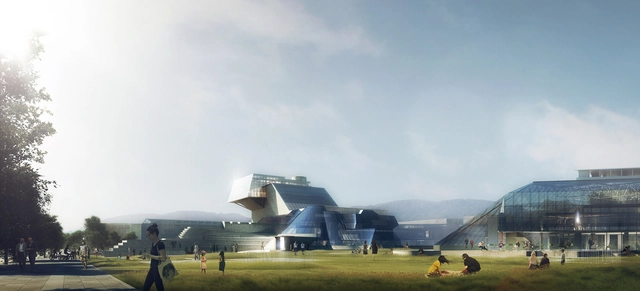
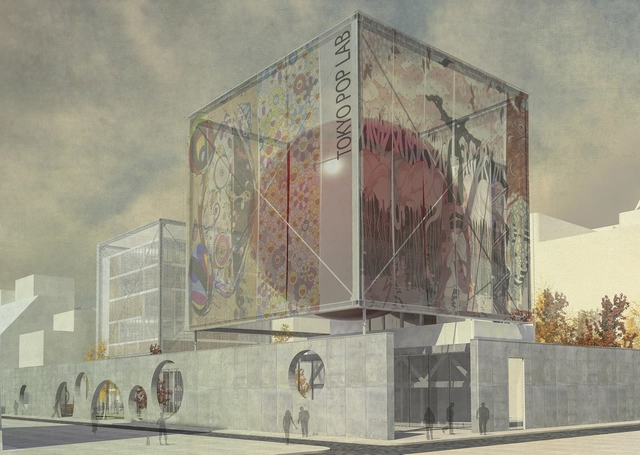
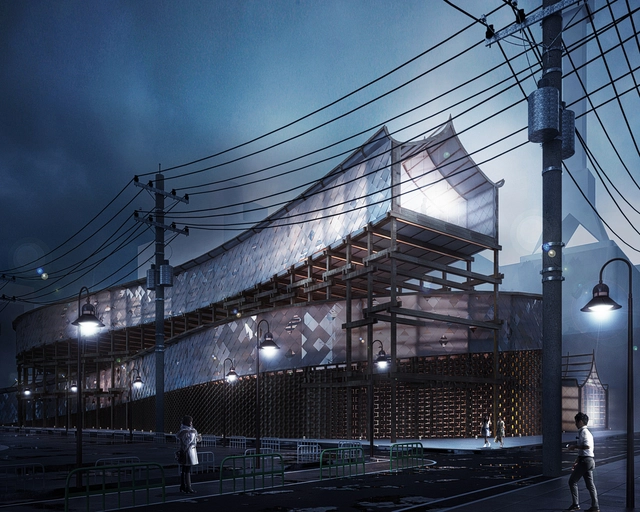
SO/AP Architectes has released its proposal for the Tokyo Pop Lab competition, which recently announced its winners. Based on the duality of environmental vulnerability and the omnipresence of numeric technology, the 3,500 square meter design focuses on the battle between mankind and nature.
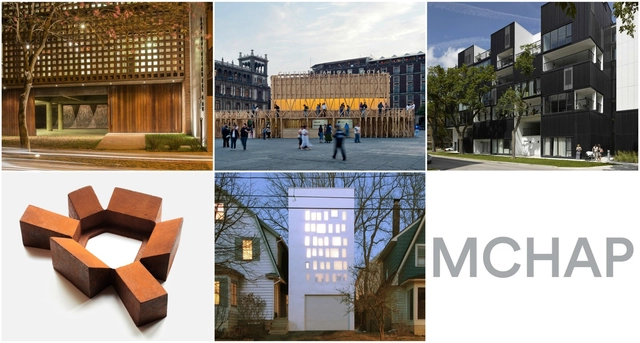
The Mies Crown Hall Americas Prize has announced five finalists for its biannual MCHAP.emerge awards, celebrating the best architecture in the Americas by emerging practices. The five projects were selected from a list of 55, coming from 95 different nominators, that were announced last week. The projects represent the best architecture completed by young architects over the past two years in both North and South America, with finalists coming from Canada, the United States, Mexico, Chile and Paraguay.
The winner of the prize will be announced on the evening of April 1st at a symposium at the S. R. Crown Hall in Chicago, after an afternoon in which the finalists present their work to the jury, and the Architecture faculty and student body of IIT. Read on to see the list of finalists.
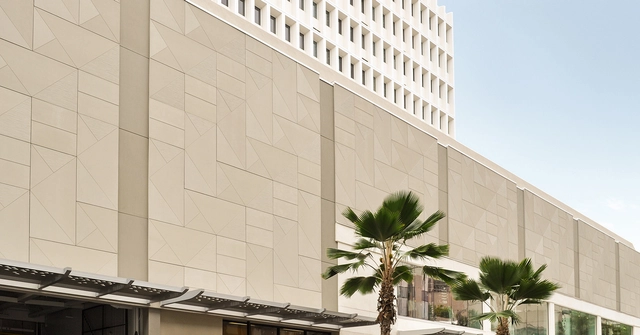
TAKTL's ultra-high-performance concrete panels on the Waikiki Business Plaza by MGA Architecture. Image Courtesy of TAKTL
It's no secret that among the architecture profession's biggest sources of guilt is our reliance on concrete in a huge number of the buildings that we have a hand in creating. Architects are more likely than most to be aware of the environmental implications of the material, and yet we continue to use it at an alarming rate. But what alternatives are there in order to do our job? In an article for Forbes, Laurie Winkless runs down a list of three alternatives that stand a good chance of changing the face of concrete construction.
Guggenheim Helsinki competition jury. Image Courtesy of Monocle
The latest edition of Section D, Monocle 24's weekly review of design, architecture and craft, examines the architectural competition: "a critically important but less visible facet of the architectural world." Monocle's Henry Rees-Sheridan talks to Jacob van Rijs, co-founder of MVRDV, about how the practice incorporates unbuilt plans and competition entries into its business model; Malcolm Reading, head of "the leading independent organiser of architectural competitions in the UK," about what goes into creating a successful architecture competition; and ArchDaily Editor James Taylor-Foster about how the unbuilt world affects the built.
https://www.archdaily.com/784069/monocle-24-talk-to-mvrdv-and-malcolm-reading-about-the-architectural-competitionAD Editorial Team
SADAR+VUGA, HHF architekten, and local consultant Archicon have received first prize in the competition for the adaptation and reconstruction of the Dom Revolucije (Home of Revolution) in Nikšić, Montenegro.
The existing structure, built by Slovenian architect Marko Mušič, was originally intended to represent the socio-political structure of Nikšić, Montenegro and Yugoslavia as a whole. Construction began on the building in 1978, and after eleven years, work was suspended, leaving the site uncompleted in the middle of the city for 27 years.
The new proposal will transform the Home of Revolution by utilizing the existing built structure—mainly a shell—and inserting minimal interventions to create a new type of urban space.
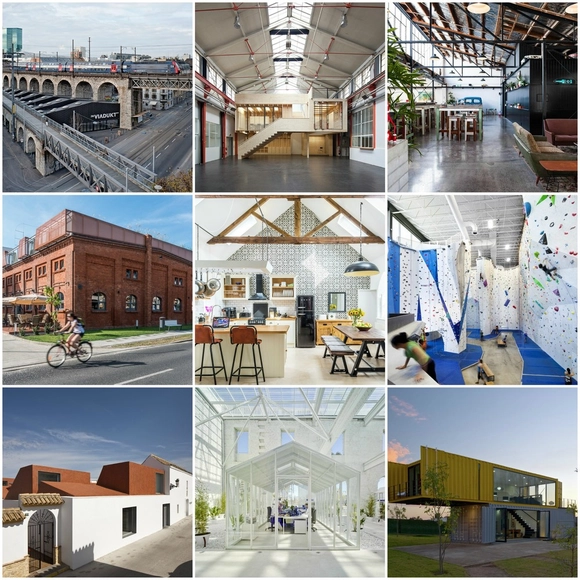
After built structures become disused or abandoned, adaptive reuse can be the perfect way to breathe new life into an old building, while conserving resources and historic value. Whether due to environmental reasons, land availability or the desire to conserve a historic landmark, countless architectural firms worldwide are turning to adaptive reuse as a solution to some of the modern problems of the built environment.
With this in mind, we have compiled a list of 20 creative adaptive reuse projects, each of which utilizes an old structure to create a revitalized form in its own distinct way.
See how a former chapel, water tower and 19th century slaughterhouse were transformed and given new life, after the break.
Since this time last year, an additional 119 new tall buildings have been planned for London, according to a report published by New London Architecture (NLA) and GLHearn. This brings the total number of planned, tall buildings -- buildings of 20 floors or taller -- to 436.
The research conducted by the NLA shows that since last year, the number of tall buildings undergoing construction has inched from 70 to 89. An impressive 223 tall buildings have received planning approval and 114 towers are in pre-application or planning stages. Ninety-four tall buildings, up from 72 buildings in the previous year, were submitted for planning. Of those 94, 43 were approved in the same year. The survey also notes that a significant number of these tall buildings are part of larger scale master plans, which situate multiple towers in clusters.
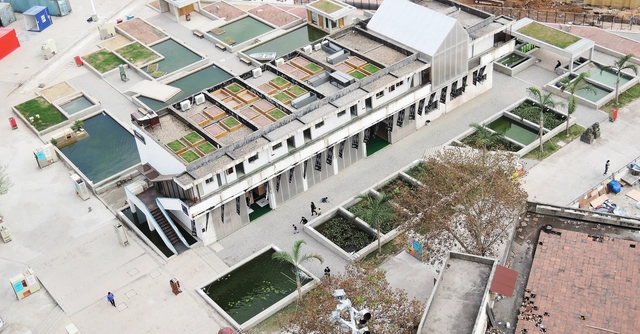
The Urbanism\Architecture Bi-City Biennale (UABB) in Shenzhen finished in February, but at least one element of it lives on. Floating Fields, a project by Thomas Chung, Associate Professor of Architecture at the Chinese University of Hong Kong, was installed at the UABB site at the Dacheng Flour Mills in Shekhou as a demonstration of a concept to return agriculture to the Shenzhen's bay with floating agricultural fields. The project, which forms the major landscape piece at the Biennale, received the Biennale Organising Committee Award at the event's closing ceremony.
Kazuyo Sejima is designing a new express train for Japan. Commissioned by Seibu Group, the Limited Express train would be a "friendly" addition to the company's "Red Arrow" series, which so far boasts brightly colored, traditional designs that stand out from the surroundings.
Much like Sejima's architecture, the initial concept reveals a light, semi-transparent design that allows the train to blend into the landscape.
More than 6 million courses have been created for Super Mario Maker, a video game where players can create their own game levels with all of the available tools of the Mario universe. The plumber, who has entertained millions of people around the world with his adventures, turned 30 last September, the date of the release of his first solo odyssey, Super Mario Bros. The rest, as we know, is history.
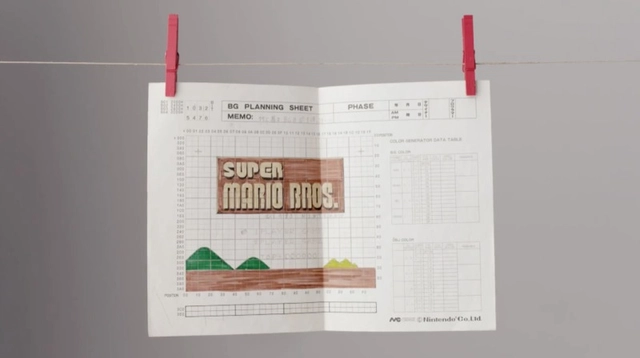
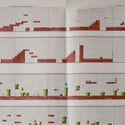
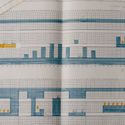
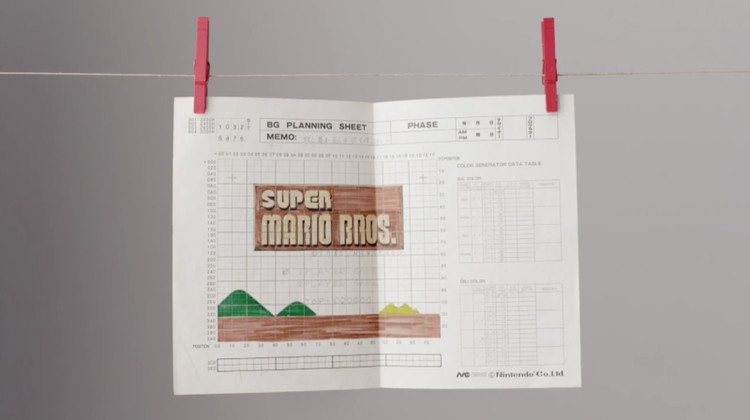
A few months ago, for the premiere of Super Mario Maker at the last Electronic Entertainment Expo (E3 2015), Shigeru Miyamoto and Takashi Tezuka, the creators of Super Mario Bros, explained how they designed the levels of the classic Nintendo video game in 1985: on graph paper.
That's right, using graph paper and tracing paper, the Japanese artists drew each level in detail, adding and editing the position of enemies, traps, and even designing the game's cover art.
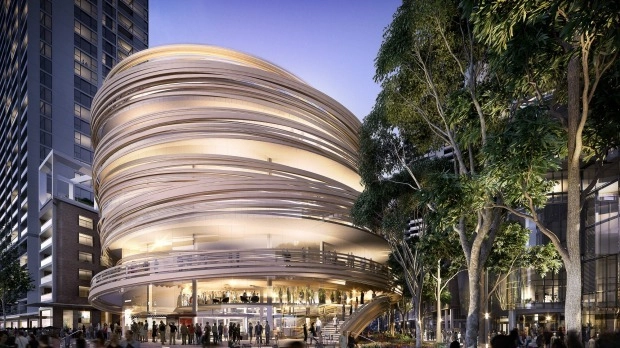
Darling Harbour has commissioned Kengo Kuma to design a new civic and creative center in Sydney - the Japanese practice's first Australian project. The 30-meter-tall, wood-clad "Darling Exchange" will rise six stories and provide space for a ground-floor market hall, library, childcare center, makerspace, and additional program for start-ups, as well as a rooftop bar and restaurant.
“Our aim is to achieve architecture that is an open and tangible as possible to the community, and this is reflected in the circular geometry that creates a building that is accessible and recognizable from multiple directions,” said Kuma.
OMA has won a commission to design their first project in the United Arab Emirates. The winning proposal will transform four warehouses on Dubai's Alserkal Avenue into a new multi-purpose venue that will connect local architects and artists, and highlight the role intelligent design plays in the city.
“The main strategy for the design of the event space is to blur the boundary between interior and exterior by bringing view and daylight into the space and extending the action and events to the public space outside," said Iyad Alsaka, OMA's MEA Partner in Charge.
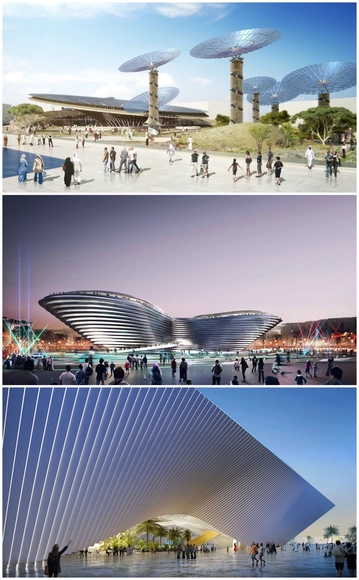
Foster + Partners, BIG and Grimshaw Architects have won a competition to design pavilions for Expo 2020 Dubai. Under the Expo’s 2020 theme of Connecting Minds, Creating the Future, the teams were selected from 13 invited practices to design three themed pavilions within the Expo's HOK-designed masterplan: Opportunity, Mobility, and Sustainability.
"A key criterion for the competition was ensuring that the designs not only embodied one of Expo’s core themes, but also had the flexibility and longevity to live on as landmarks and functional structures after the Expo is complete in 2021," said the organizers in a press release.
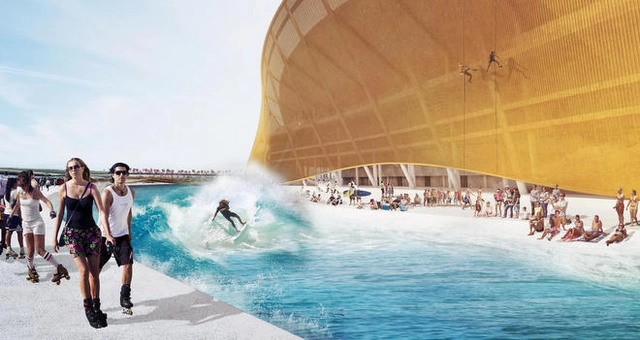
BIG has revealed their concept for the Redskins new stadium complex. Complete with a moat, the semi-transparent, undulating structure was designed to redefine the American stadium. Rather than being (mostly) preserved for game-day, BIG envisions the stadium to be a year-round destination used for more than just football.
“The stadium is designed as much for the tailgating, like the pre-game, as for the game itself,” Bjarke Ingels said on 60 Minutes. “Tailgating literally becomes a picnic in a park. It can actually make the stadium a more lively destination throughout the year without ruining the turf for the football game.”
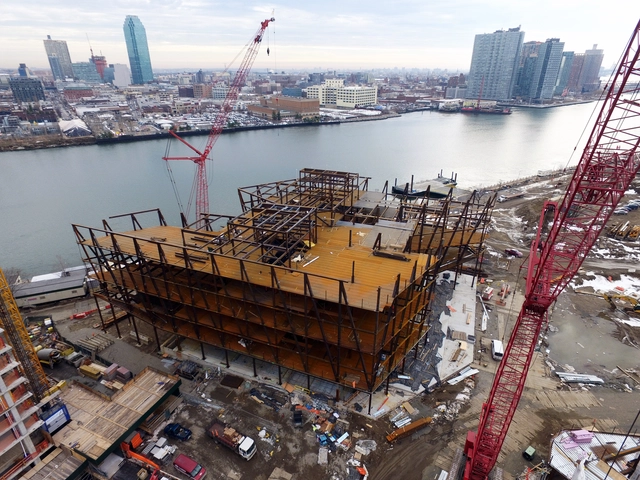
The building, which begins the first phase of the two billion dollar Roosevelt Island tech campus, will be a first-of-its-kind building that will house companies, researchers, and entrepreneurs who aim to drive the economic growth of New York through the commercialization of new products. The Bridge is scheduled to open to the public in the summer of 2017, along with two other CornellTech projects.
Founded by Harvard and MIT, edX offers more than 800 free, online courses as well as certificates from top universities around the world, including Harvard, MIT and UC Berkeley. The courses cover everything from literature to poetry, medicine, biology, urban planning, engineering, history and architecture.
Taught mostly in English, the courses have different weekly requirements, and generally require participants to be online at designated times of the day. There are also classes offered in other languages like Chinese, French, Spanish and Portuguese. They also offer certificates that can be purchased at the end of the course, costing between $50-$70.
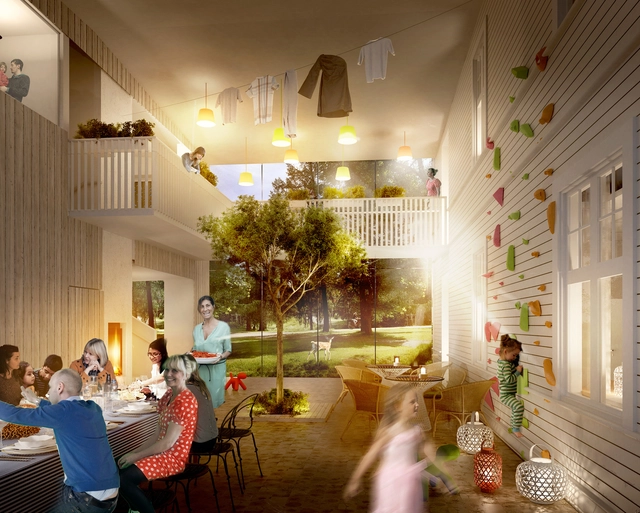
Children suffering from severe illness often leave their homes and families to receive the necessary care. In most of Sweden, accommodations for the relatives of the ill are built in the vicinity of the larger pediatric clinics.
The largest of these accommodations will be built in Umeå, Norrland. Named “Hjältarnas Hus” or "Home for Heroes," the building was designed by White Arkitekter and broke ground on Friday, March 4.
A total of 12 projects have been shortlisted for the 2016 RIBA East Midlands Awards. The shortlisted buildings will be assessed by a regional jury, and winners will be announced on April 27. Regional winners will then be considered for a RIBA National Award, and National winners are then considered for the RIBA Stirling Prize for the best building of the year.
The 12 projects shortlisted for the 2016 RIBA East Midlands Awards are:
First Prize: The team of Attilio De Palma, Andrea Longo, and Enrico Nicli, of Italy. Image Courtesy of Bee Breeders
The three winners of the Tokyo Pop Lab competition, which called for the development of an institution for popular culture, have been announced.
Centered on the phenomena of pop culture, the competition examined how “popular culture migrates and changes from person to person and place to place,” and invited entrants “to critically evaluate fundamental correlations between cultural production and architecture.”
Entrants varied in typology from pragmatic to ideological, with successful proposals including “a well considered and articulated definition of popular culture, clarity in representation of both architecture and culture, and a clear programmatic agenda.”
The three winners of the Tokyo Pop Lab competition are:
The AIA has released the results of a survey on diversity in the workplace. Taken by more than 7,500 professionals in the industry, the purpose of the survey was to investigate the careers of architects and observe how firm culture affects career paths, depending on race, ethnicity, and gender.
Some of the key findings included representations of gender and race, challenges to career advancement, work-life balance and its impact on women, factors impacting the representation of minorities, reasons for leaving the architecture field, and job satisfaction levels.
The Burning Envelope - The Universal Emblem of the Turncoats. Image Courtesy of Turncoats
Turncoats, the irreverent architectural debate society from London, is launching an international series, starting chapters in Canada, Scotland, Serbia and the US. Originally created by Phineas Harper, Maria Smith and Robert Mull, Turncoats has “electrified London’s architectural scene” since its inception.
Combining architectural debate with unique settings, alcohol, and an absence of recordings or wireless devices, Turncoats has gathered significant attention, their signature flaming envelope emblem appearing on lapels across the city, and soon all over the world.


.jpg?1458288906&format=webp&width=640&height=580)