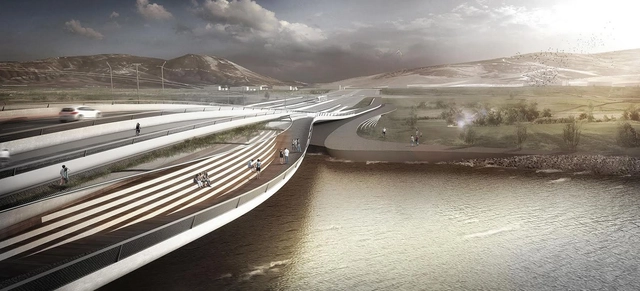
Melike Altınışık Architects has won first mention in a competition to design the Kızılırmak Bridge located in Sivas, Turkey. The competition, which was hosted by Sivas Municipality, called for ideas to design a bridge to support pedestrian movement, vehicular transportation, and cycling activities. The proposal aimed to create an “avant-garde looking design approach to obtain coherency between plan and sections, and harmonize the bridge with its topography.”
Scotland, a country within the United Kingdom, will be showcasing a projected entitled Prospect North at the forthcoming Venice Biennale. Curated collaboratively between the Scottish Government, Architecture and Design Scotland, Creative Scotland,and the British Council Scotland, the installation will be designed by Lateral North, Dualchas Architects, and Soluis. As reported by the Architects' Journal, the show is set to examine "Scotland’s relationship with its northern neighbours" by focusing "on people and place, [and] looking at how communities from the Northern Isles of Orkney to the central belt of Scotland are using grassroot action."
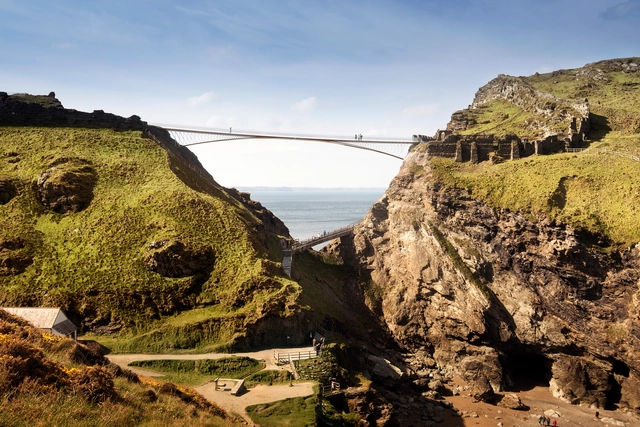
English Heritage has announced that a team of Ney & Partners and UK-based William Matthews Associates has won the Tintagel Castle Bridge Design Competition. Chosen from a shortlist of 6 proposals, from among 136 entries, the winning design was selected by the majority of the jury.
The site of Tintagel Castle is one of English Heritage’s most spectacular, attracting over 200,000 visitors annually. It is “inextricably linked to the legend of King Arthur and has been prized throughout history for its elemental qualities and spirit of place within this area of outstanding natural beauty.” The new bridge is commissioned for approximately £4 million and will stand 28m higher than the current crossing.
San Francisco-based architecture firm, EHDD, has just unveiled their design for Pacific Visions, a 29,000 square foot, two-story expansion for one of the nation’s largest aquariums, the Aquarium of the Pacific. Pacific Visions' facilities will integrate the arts and research sciences which will allow visitors to understand the world’s oceans. The expansion is scheduled to open in the fall of 2018.
We provided our readers with a blank canvas, a single white egg. From this common starting point, we asked architects to let their innovation and creativity shine by putting an architectural twist on the average pastel Easter egg. From gifs to famous architects as eggs, we received over 450 submissions to our sites in English, Spanish, Chinese and Portuguese. It was particularly difficult to narrow down our favorites, and our selection really only scratches the surface of the many creative Easter eggs that we received from our incredibly talented readers.
https://www.archdaily.com/784399/the-best-submissions-to-our-easter-egg-design-contestAD Editorial Team
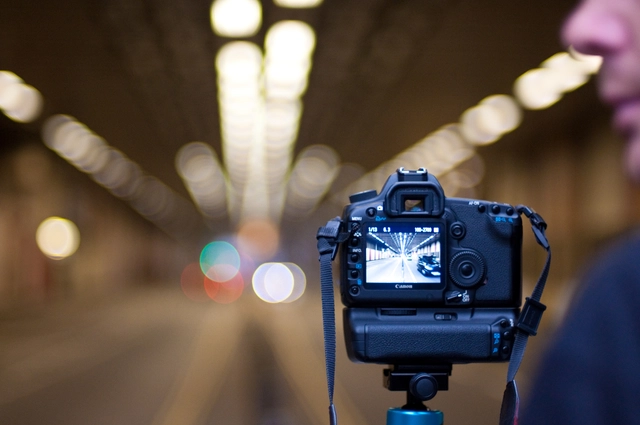
While drawing or even writing about architecture can be a great way to be expressive in the field, today architectural photography is by far the most direct and widely-used methods for communicating the true form of the built environment. Capturing the perfect architectural photograph, however, can be far more difficult than one might anticipate. In light of this, we have compiled a list of ten architectural photography tutorials to help you get the right shot every time.
Read on to see how to take architectural photos at twilight, for Instagram, using long exposure, and more.
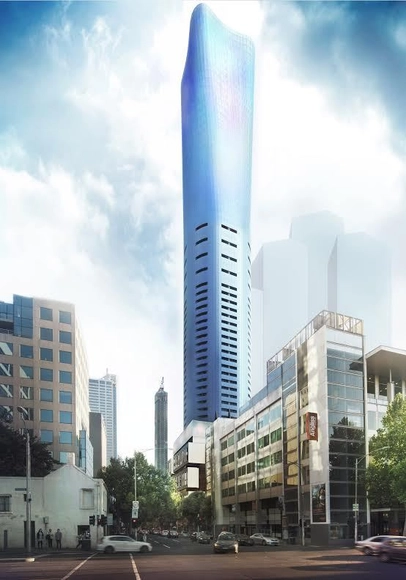
295 King Street, a 64-story mixed-use building designed by Plus Architecture and developed by Farinia, has just won approval to be built in Melbourne, Australia. The project, situated in the city’s central business district, is comprised of two sites at the northwest corner of King and Little Lonsdale streets. Its sculptural design will become a notable presence in the Melbourne skyline. Upon completion, the building will include 431 apartments and nine penthouses.
Blank Space has announced three winners and ten honorable mentions in their third Fairy Tales Competition. This year's contest drew entries from more than 1,500 participants from 67 countries. Everyone from students to academics and notable studios and designers submitted detailed stories and beautiful visuals for their submissions. The winners were chosen by an interdisciplinary jury of distinguished judges including Hans-Ulrich Obrist, Co-Director of the Serpentine Galleries; Elizabeth Diller, founding partner at Diller Scofidio + Renfro, and ArchDaily’s own Becky Quintal, Executive Editor; and David Basulto, Founder and Editor in Chief.
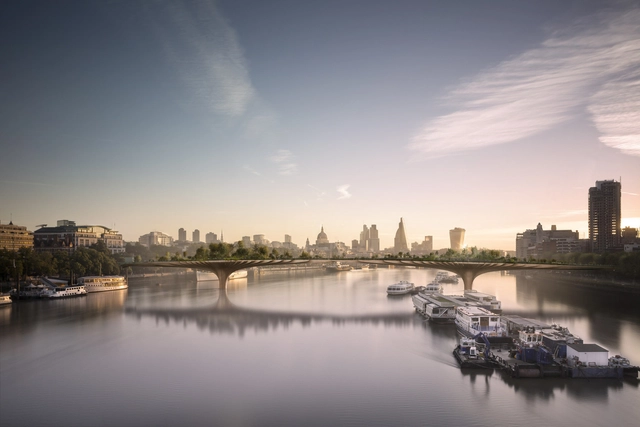
Heatherwick Studio's proposed Garden Bridge scheme across the River Thames, London. Image Courtesy of Arup
This edition ofSection D, Monocle 24's weekly review of design, architecture and craft, is dedicated to plants and gardens and specifically their role in architecture, urban life, and the design of the workplace. The episode considers the history of London’s urban greenery and the role of plants in landscape architecture touching upon, in conversation with Sam Jacob, the latest in London's green infrastructure: Heatherwick Studio's proposed Garden Bridge across the River Thames. It also traces the lineage of semi-private squares in Georgian London to Ebenezer Howard's Garden City movement in the late 19th and early 20th centuries – all approaches discussing how best to unite the built environment with the natural world.
https://www.archdaily.com/784385/monocle-24-investigates-gardens-and-the-public-life-of-plantsAD Editorial Team
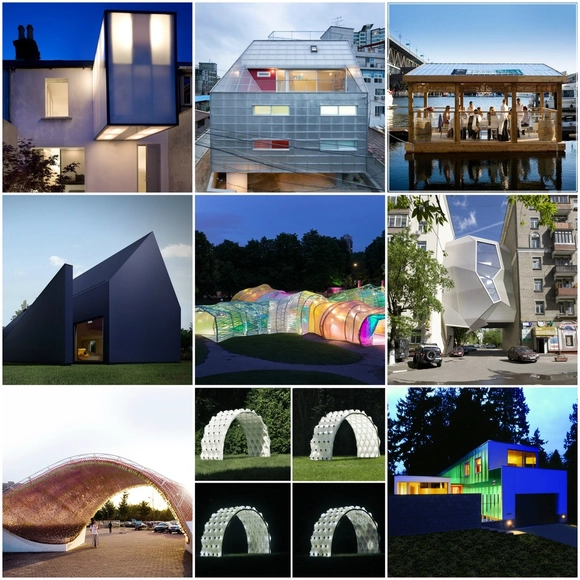
Over time, an endless spectrum of materials has become available for use within the realm of architecture. However, one material that seems underrepresented is plastic, a versatile and malleable compound that can be used for a wide variety of purposes. In light of the many applications of plastics in architecture, we have compiled a list of 12 projects that utilize plastic: from repurposing plastic bottles to the use of translucent plastic siding, these projects represent just a few of the many ways that plastic can be used as a primary material.
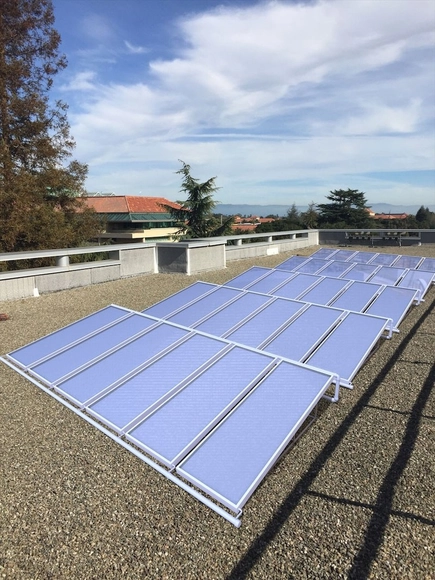
Although many have come to question our unwavering devotion to hermetically sealed buildings, most construction budgets are still dominated by costs associated with HVAC and other quality of life standards. With some questioning the efficacy of such practices, and others taking fault with the costs, there is now immense incentive to create new technologies and techniques that could allow us to retain the benefits of such climate control without the environmental and monetary cost they currently carry.
Now a young company known as SkyCool Sytems, founded by Stanford University researcher Aaswath Raman, has developed a cooling method capable of ejecting excess heat out of the atmosphere in the form of infrared rays. Read on to find out how it works.
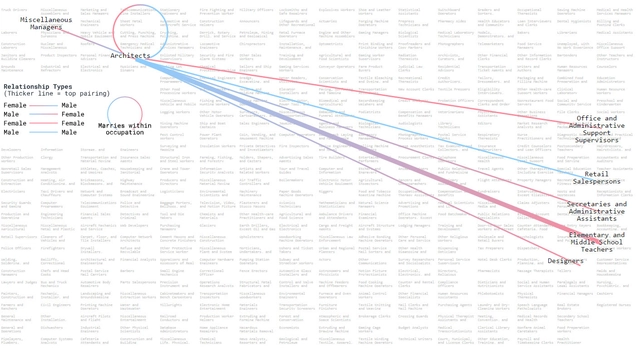
An interactive info graphic published by Bloomberg last month, which scanned 2014 U.S. Census Bureau information from more than 3.5 million households, shows how married professionals are pairing up. Whether people are marrying others in the same field (like artists tend to do), or outside their profession, (as metal fabricators, secretaries and administrative assistants do), Bloomberg finds that falling in love may have more to do with work proximity than destiny.
Courtesy of C.F. Møller Architects and Tredje Natur
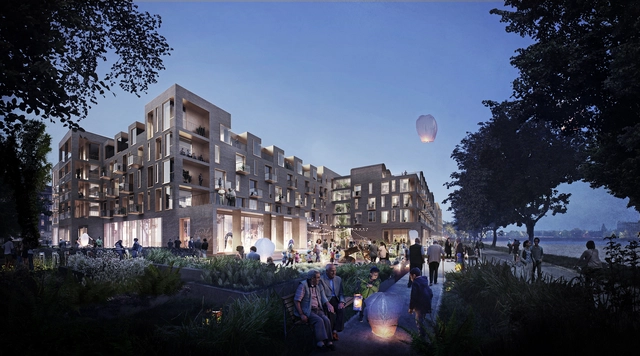
C.F. Møller Architects and Tredje Natur have won a competition to design Future Sølund, one of the largest and most forward-thinking residential nursing homes in Danish history. Not only will this center give the elderly the care they need, but it will also give them the opportunity to interact with people of other generations while simultaneously setting higher standards for well-being, security, functionality, and community values.
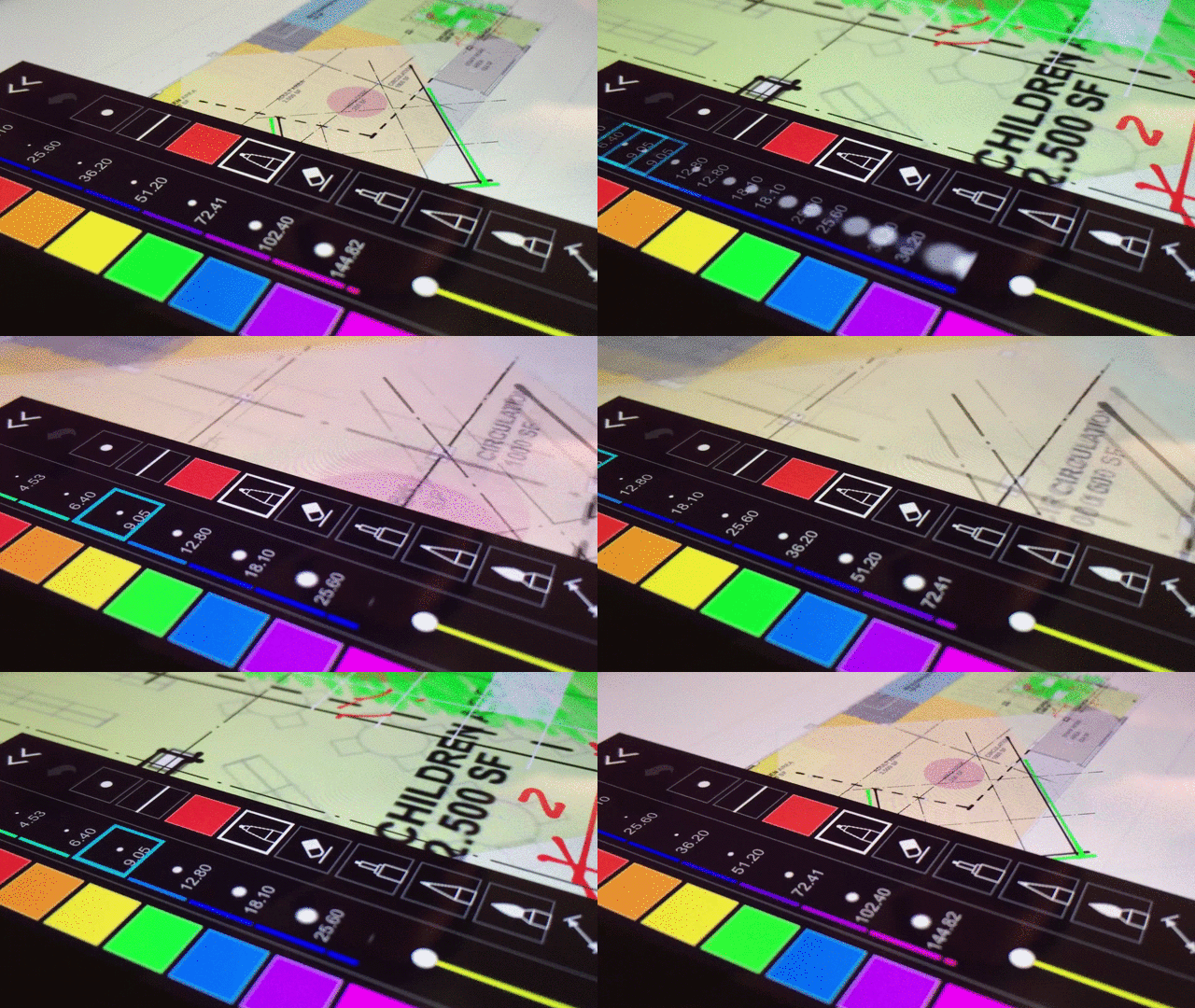
Capitalizing on the emergence of the touchscreen tablet and stylus as a drafting tool, Morpholio has released the brand new, patent-pending ScalePen, which provides a new way to draw on their popular iPad app, “Trace” (available in the App Store). The ScalePen simultaneously checks the drawing scale and iPad zoom level and offers an array of pens that respond as you move through the drawing. The result “brings precision and clarity to line weight, and gives architects the ability to make beautiful sketches at multiple scales, within a single drawing, set of layers, or layouts.”
The student architecture competition “120 Hours” has released the winners of its 2016 competition—“What Ever Happened to Architectural Space?”—which this year challenged entrants to imagine a space without program or site. In a time when the discourse of architecture is influenced more by program and environment than spatial quality, the brief was uniquely challenging in its simplicity. Entries were received from over 2863 students from 72 countries, with winners selected by a jury headed by Christian Kerez and including Maria Shéhérazade Giudici, Beate Hølmebakk, Neven Mikac Fuchs and Marina Montresor.
Originally devised by students in Oslo, the competition format is intended as a way of encouraging discourse among architecture students across the world, with competition briefs released just 120 hours (5 days) before the submission deadline. These unique restrictions have fostered a reputation for unconventional and challenging proposals and winning entries in the past have included giant scaffolds of hammocks and the use of robots to inhabit an abandoned town. Read on to see the top three award recipients for 2016.
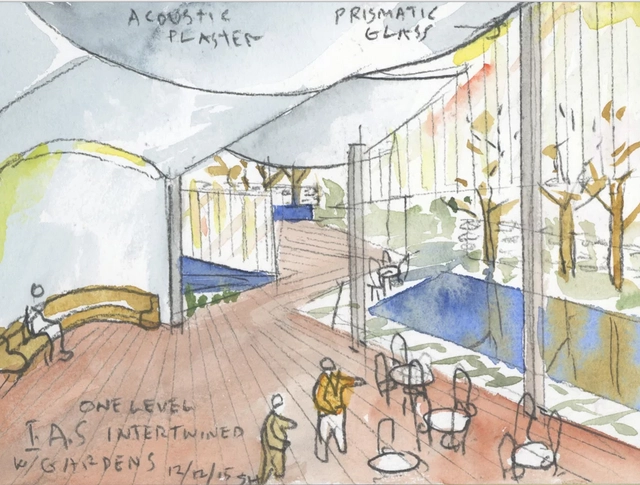
Steven Holl Architects has been selected as the winner of an invited competition to design the Rubenstein Commons at the Institute for Advanced Study (IAS) located in Princeton, New Jersey. The new Rubenstein Commons will be situated at the center of the campus and serve as a new forum for scholars to interact and share ideas. The IAS, which was home to where Albert Einstein worked for 22 years until his death in 1955, received the project funding from David Rubenstein, Co-Founder and Co-CEO of the Carlyle Group.
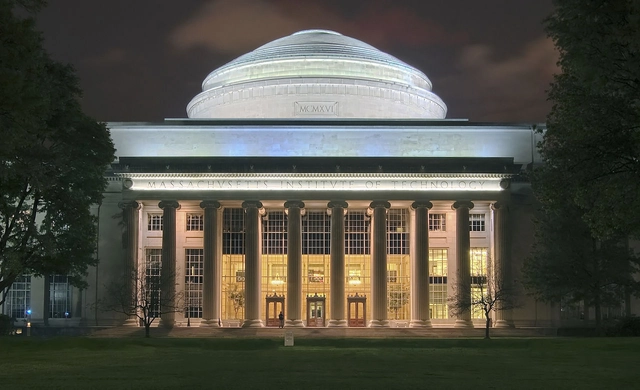
QS has released its 2016 rankings of the top 100 schools for architecture in the world. The company has produced an annual survey of universities since 2011, now comparing including over 800 universities worldwide across 42 subjects, and rating the top universities based on academic reputation, employer reputation and research impact. As they did last year, MIT came out top of the list in architecture. Read on for the full rankings list for architecture, and be sure to visit QS's site for the full rankings list which is sortable by subject, country or continent.
https://www.archdaily.com/784261/the-top-100-universities-in-the-world-for-architecture-2016AD Editorial Team
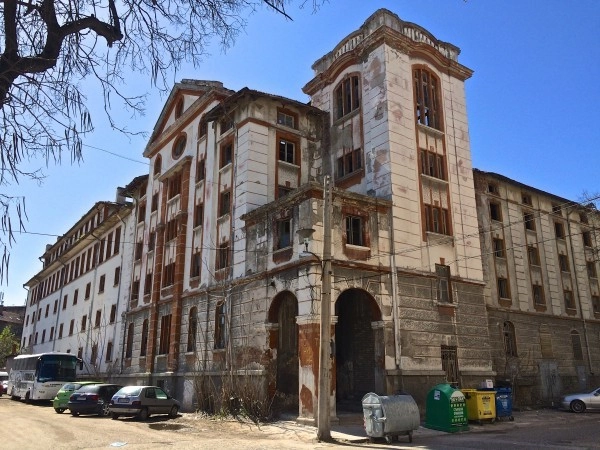
The public of Plovdiv, and of Bulgaria, woke up on Monday the 7th March—after their national holiday celebration—with a national cultural monument and a key piece of the city's identity on the ground in pieces. The building was one of the standout structures of “Tobacco Town”—a complex of former tobacco industry warehouses. The demolition by its owners began despite a promise made by Mayor Ivan Totev in September that the entire complex would be renovated as an urban art zone as part of the preparations for Plovdiv European Capital of Culture 2019.
Plovdiv, a city in the south of Bulgaria with its 7 hills, is one of the oldest continuously inhabited cities in Europe. The Thracians, Romans, and Ottomans all employed its strategic location, and today it is Bulgaria’s second largest city. The title of cultural capital is well deserved, and perhaps even well overdue. With its arrival, there was hope that major parts of the city's history lying in disrepair may finally have a standing chance, and then this… another building, gone.
Everybody's heart is heavy. They are in disbelief. The questions are the same as the ones that have been asked many times before: “How did this happen?” “Who did this?”
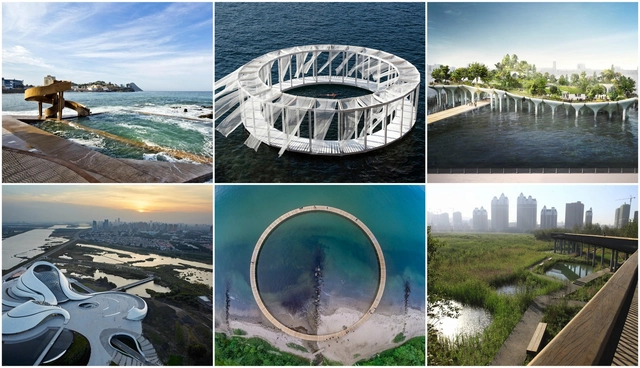
A year of controversies over water-related projects like Thomas Heatherwick’s Garden Bridge in London, or Frank Gehry’s LA River master plan in Los Angeles, can paint a fraught portrait of the relationship between design and one of our most precious resources. But in honor of World Water Day, we have rounded up some of the projects that represent the most strategic, innovative, and unexpected intersections of design and H2O that have been featured on ArchDaily.
Architecture and water have a long history of intersection, from the aqueducts engineered by the Romans to Frank Lloyd Wright’s Fallingwater, and the relationship holds new value in an age of climate change coupled with evolving modes of thinking about the relationship between humans and ecology. An ever-broadening understanding of the human need for water—from health and hygiene to recreation and wonder—has ensured that new ways to incorporate this classic element into vanguard designs has flourished. The following projects feature water in a variety of ways, from proximity to bodies of water, to designs literally shaped or formed by their relationship to moisture, to projects that are physically immersed in the liquid, and finally other projects which are only visions of a yet-unbuilt future.
The third Kuwaiti Pavilion at the 2016 Venice Biennale, entitled ‘Between East and West: A Gulf’, will "look past Kuwait’s borders to the contested hydrography of the Persian/Arabian Gulf" in order to propose a new masterplan for the region. Curated by Hamed Bukhamseen from Kuwait and Ali Karimi from Bahrain the pavilion will, in an area of physical, religious, and political division, "tell the story of the Gulf’s islands and the possibilities they hold for a joint territorial project."
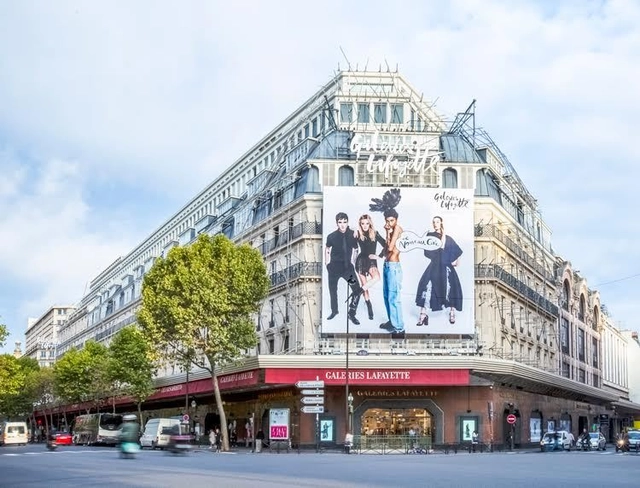
French department store Galeries Lafayette has selected London based AL_A to transform their historic flagship store on Boulevard Haussmann in Paris. Galeries Lafayette selected them with the goal of “building the department store of the 21st century” which will be designed to bring a completely new shopping experience to customers. The remodeling of the 40,000 square meter store is scheduled to begin in early 2017.
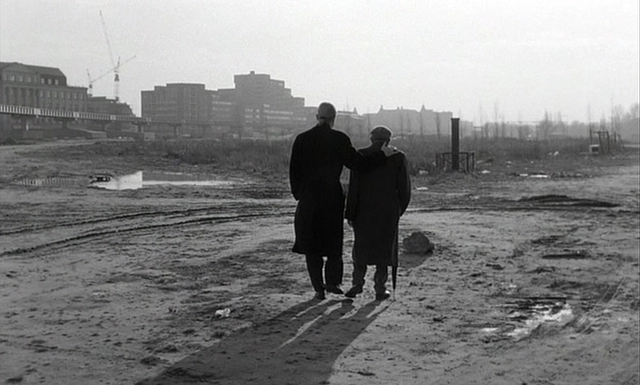
The city has been explored as a theme in movies since the early days of cinema, appearing as both a setting and a protagonist in films by renowned directors like Fritz Lang, Jean-Luc Godard, François Truffaut, Roberto Rossellini and Quentin Tarantino. In one of the first films ever made, Arrival of a Train at La Ciotat (1925), the Lumière brothers already show the modern urban environment as an important element and part of the contextualization.
Yet the cinema and the city have an extensive relationship, each influencing one another. The influence of architecture (especially modern) in the settings and cities of films can be seen in movies like Jacques Tati’s My Uncle (1958) and Ridley Scott’s Blade Runner (1982), while the influence of cinema in architecture and buildings can be seen in the work of architects like Rem Koolhaas, Jean Nouvel and Bernard Tschumi.
We have compiled a list of 10 films in which the city plays a much more important role than just the mere setting, acting as a true protagonist of the plot.
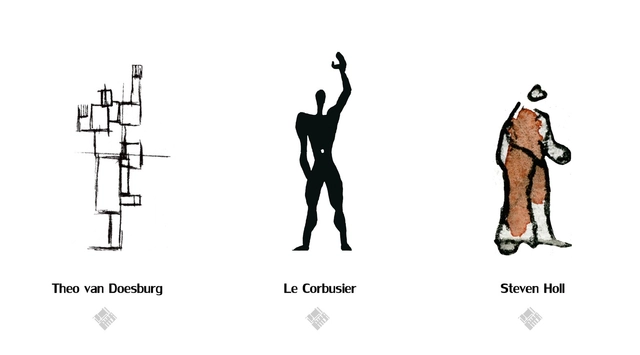
While there are many different approaches creating architectural space, most architects agree that the primacy of the human is paramount to the creation of a successful design. We perceive architecture through our senses, interpret its scale in comparison to our bodies, and of course require architecture to protect our bodies from the forces of nature. For these reasons, designers often include human figures in their sketches to give a better sense of the scale and atmosphere of their design.
However, often these figures can be even more revealing. "Architects project themselves into the human figure," explains Noor Makkiya, who has collected a selection of figures from the sketches of the world's best-known architects. "So if we compare drawings from different architects, we frequently find differences in body shape and body activity, for practicing architects often represent their own ideologies as a reference for understanding the human physical condition."
From the scientific body proportion studies used by Da Vinci and Le Corbusier, to the primitive figure used by Glenn Murcutt, to the creative explosion that is Frank Gehry's deconstructed human, read on to see the full set collected by Makkiya.
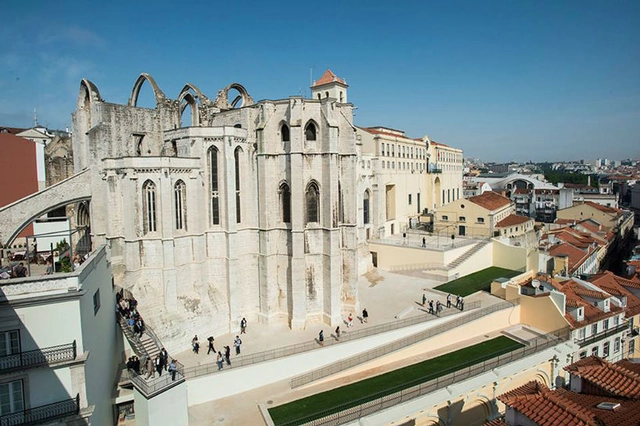
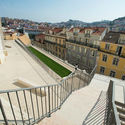
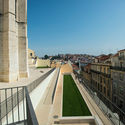
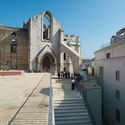
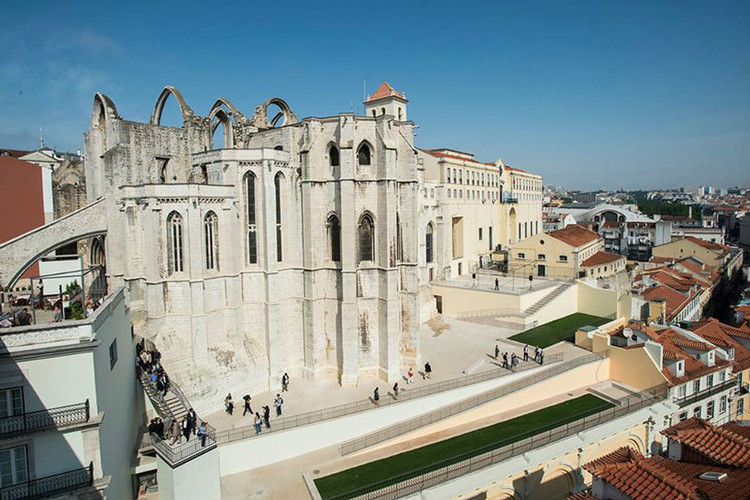
Due to a fire in 1988, the Chiado district of Lisbon had many of its buildings damaged or partially destroyed by the flames, and an intense restoration and recovery project led by Álvaro Siza has been going on for over a decade.
Among the strategies employed by the Portuguese architect (and winner of the 1989 Pritzker Prize) is the reorganization of routes and walkways, creating elevated walkways to facilitate access to the area and the flow of locals and visitors. According to the Municipal Council of Lisbon, Siza has recently completed the connection between one of the courtyards of the Carmo Convent (Patio B) to the Largo do Carmo square and the Carmo Terraces with a pedestrian path.