The 2015 Milan Expo required the input of more than 145 countries and 50 international organizations resulting in over 70 temporary pavilions; a combined effort totaling more than €13 billion. Norman Foster’s rippling pavilion for the United Arab Emirates ended up at €60 million. The massive slab of concrete, laid out over the previously green agricultural land to act as the Expo’s foundation cost a whopping €224 million. Even Vietnam’s “low cost” pavilion came in at $2.09 million.
Compare that with, for example, IKEA’s proposal for a temporary refugee shelter that can house 5, costing just $1000, and one can see the absurdity of spending gargantuan sums on buildings that will perhaps be sold to be used later as a clubhouse, or to a museum as another temporary cultural center. Where is the architectural action behind an architectural event that boasts “Energy for Life” or “Better City, Better Life” - the slogan of the Shanghai 2010 Expo - yet spends extraordinary amounts of resources on structures that provide little sustainable development to parts of the world that are actually in dire need of it?
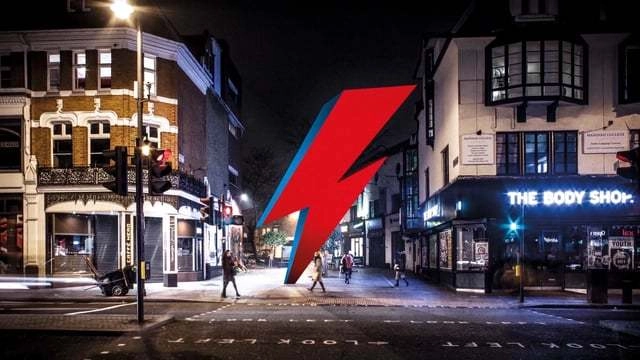
A year since the passing of David Bowie, one of music and pop culture’s greatest icons, fans have launched a fundraising campaign to support the erection of a permanent memorial statue in London, in honor of the late musician.
“We’re taking the lightning flash from the cover of Aladdin Sane, and turning it into a three-storey tall sculpture,” explains Charlie Waterhouse of This Ain’t Rock ‘n’ Roll, one of the organizations behind the campaign, working in conjunction with David Bowie’s team.
https://www.archdaily.com/805983/this-campaign-envisions-a-three-storey-lightning-bolt-in-honour-of-david-bowieOsman Bari
It's common knowledge that China has "at least 10 White Houses, four Arcs de Triomphe, a couple of Great Sphinxes and at least one Eiffel Tower," report the New York Times. But now photographs of a copy of London’s famous Tower Bridge (a Victorian riparian gateway to the city) in the Chinese city of Suzhou have emerged – and it's been adapted to suit a five-lane highway. Almost identical—from a distance, at least—to its British counterpart the new structure, which was completed in 2012, has been doubled – a feat which has also required some spectacular architectural additions.
https://www.archdaily.com/806431/twice-as-nice-suzhou-china-architectural-homage-copies-copy-london-tower-bridgeAD Editorial Team
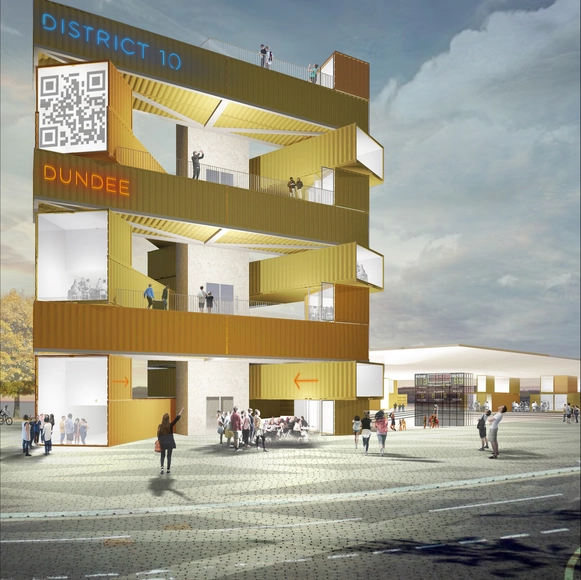
Flexible studios to aid Dundee's thriving digital creative sector. Image Courtesy of Studioshaw
London-based firm Studioshaw has won a competition to design a hub facility for children and young people in Dundee, Scotland. The Interactive Hub will be located on the site of a former railway depot at the Seabraes Yards Digital Media Park. The competition, hosted by the Dundee Institute of Architects (DIA) and Scottish Enterprise, was one of 400 events taking place across Scotland as part of the RIAS 2016 Festival of Architecture.
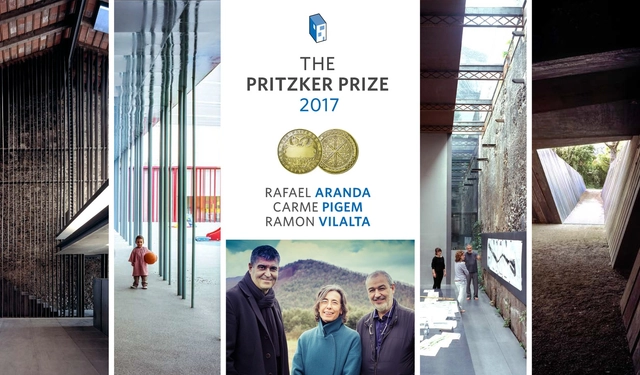
Today, Rafael Aranda, Carme Pigem and Ramon Vilalta were named the laureates of the 2017 Pritzker Prize, becoming the first trio of architects to be bestowed the profession’s highest accolade. Working together since 1988 as RCR Arquitectes, the team has tackled a wide range of project types, from libraries to wineries to park designs – many of which are located in their home region of Catalonia, Spain. Continue to see 20 images from their work that exemplify the firm’s outstanding attention to detail and considered use of materiality.
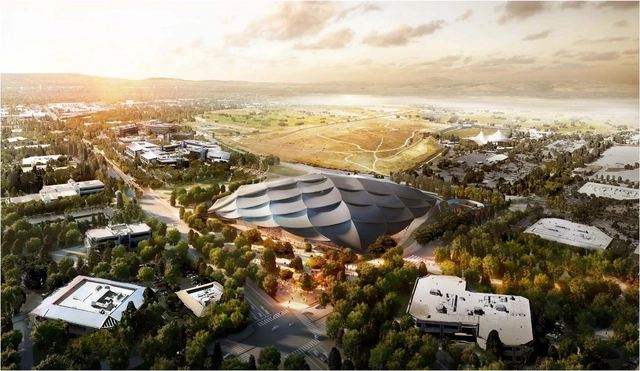
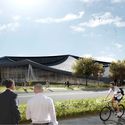
New images of BIG and Heatherwick Studio’s proposed Google campus in Mountain View California have been revealed in planning documents presented to the city last month. Initially announced in 2015, the project has seen several revisions after first running into difficulty with the city planning board, and then after swapping sites with fellow tech giant LinkedIn. The latest iteration, the 18.6-acre Charleston East campus, features a 2-story, 595,000-square-foot building topped with a flowing, tent-like canopy.
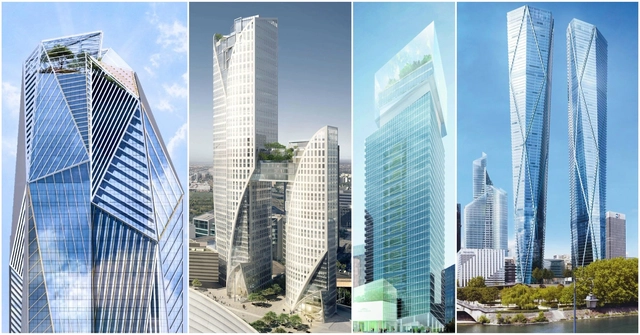
All planned for completion no later than 2022, the new buildings would target international businessmen and researchers, especially those displaced following the United Kingdom’s exit from the European Union.
Rafael Aranda, Carme Pigem and Ramon Vilalta have been named as the laureates of the 2017 Pritzker Prize. Their projects emphasize materiality and craft – considered use of color, transparency (and thereby light) define an oeuvre which ranges from public buildings to houses, a kindergarten and a winery.
The three architects—all of whom are Spanish Catalan and originate from Olot, Girona (where they are all presently based)—have worked collaboratively together as RCR Arquitectes since 1988; they simultaneously graduated in Architecture from ETSAV, the School of Architecture in Valles (Escola Tècnica Superior d’Arquitectura del Vallès) a year prior. This 39th incarnation of the Prize represents the first instance in which three architects have been recognized at once, and only the second time—following Rafael Moneo in 1996—that Spanish practitioners have been honored.
Two days ago ArchDaily had the distinct honor to interview Ramon Vilalta, one of the three architects named as 2017 Pritzker Laureates. Vilalta gave us an exclusive insight into history behind his collaboration with Rafael Aranda and Carme Pigem and how their connection to their small hometown of Olot, Spain has influenced a career that has produced exceptional projects by their firm, RCR Arquitectes.
ArchDaily: How did your studio/practice begin? Why did you start quickly after graduating?
Ramon Vilalta: In that sense we were very disciplined people. We finished our degrees quickly and once we were finished we decided to share a studio; we chose to confront architecture by sharing it, and by really sharing it. We each have different personalities – each one has his or her own style but what comes from the chemistry between the three of us makes us special, I think. This was, I feel, a big decision that wasn’t easy at the time.
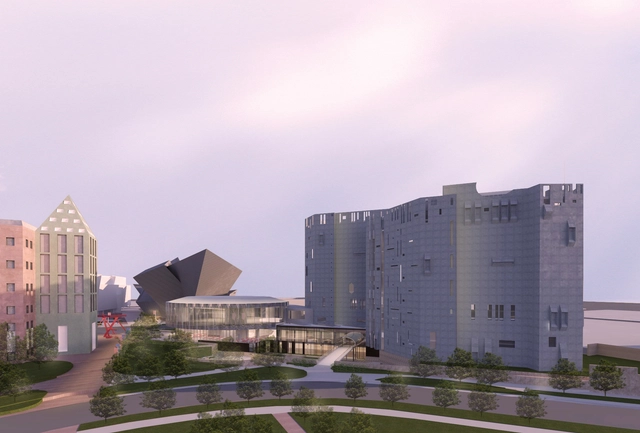
Proposed architectural rendering of an aerial view of the North Building at dusk. Image Courtesy of Fentress Architects and Machado Silvetti
The Denver Art Museum (DAM) has announced that a $12 million gift from Anna and John J. Sie will support the construction of a new welcome center at the museum’s Gio Ponti-designed North Building.
Paying homage to the shapes and volumes of the existing building, the new construction—by Machado Silvetti and Fentress Architects—aims to enhance the museum campus’ connection to the Golden Triangle neighborhood, as well as to improve visitor navigation and amenities.
This year, for the first time, the ArchDaily Building of the Year Awards have come to China. In tandem with our global search for the best projects published in the past year, our readers are currently voting to select the best Chinese projects over on our sister site ArchDaily China. So far, after 2 weeks of nominations and over 5,000 votes, the readers of ArchDaily China have narrowed down more than 300 projects from mainland China and Hong Kong to just 10 finalists. Read on to see the projects competing for the top prize, and make sure to vote for your favorites up until March 6th!
https://www.archdaily.com/806298/archdaily-chinas-2017-building-of-the-year-finalistsAD Editorial Team
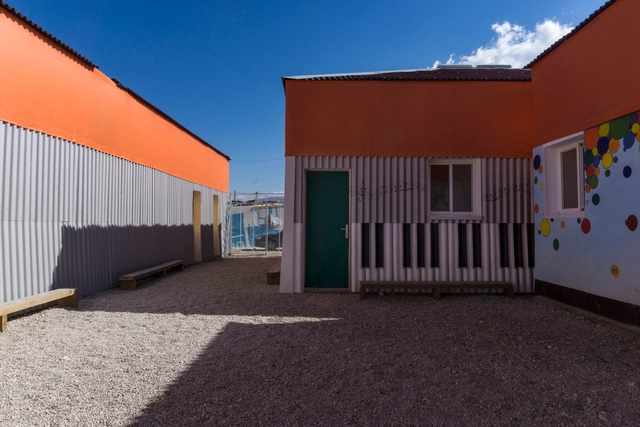
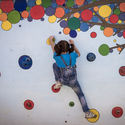
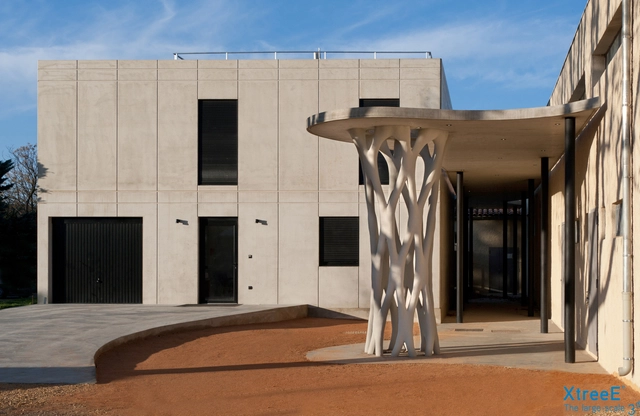
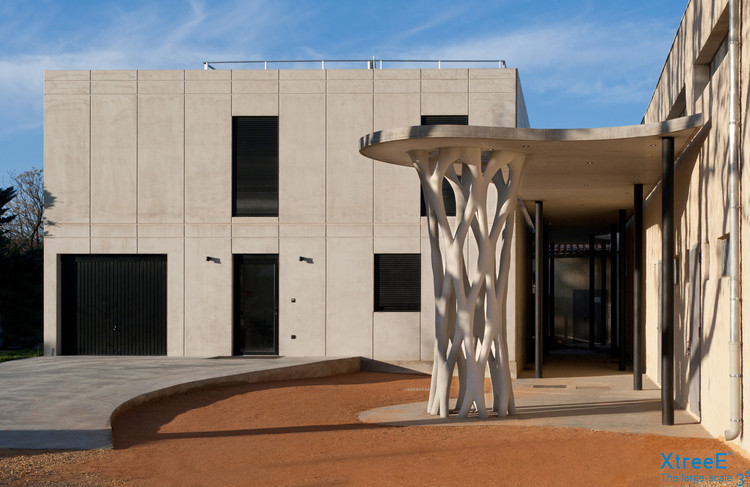
While large-scale 3D printing for architecture continues to be a busy area of research, France-based company XtreeE has been using 3D printed concrete in projects since 2015. Their latest creation is an organic truss-style support structure for a preschool playground in Aix-en-Provence.
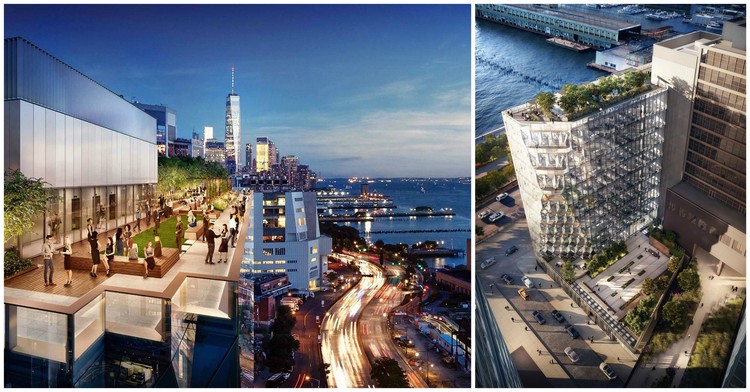
New renderings have been revealed of Studio Gang’s Solar Carve Tower, located at 40 10th Avenue along the High Line in New York City, as the project gets set to begin construction. Initially conceived by the architects in 2012, the tower was presented to New York’s Board of Standards and Appeals on four occasions before finally receiving planning approval in November 2015. In the new images, the building’s interiors and roof terrace are seen for the first time, as well as its relationship to the nearby Pier 55, the proposed park along the Hudson Waterfront designed by Heatherwick Studio.
Eight “Winter Stations” have been installed along Toronto’s beachfront, injecting new life into the shoreline during the Canadian city’s winter months. Completed as a result of the annual Winter Stations design competition, the eight projects responded to this year’s theme of “Catalyst,” which sought installations that “open up the waterfront landscape and reinvent the space for visitors” while considering how materials may be repurposed or reused for future iterations.
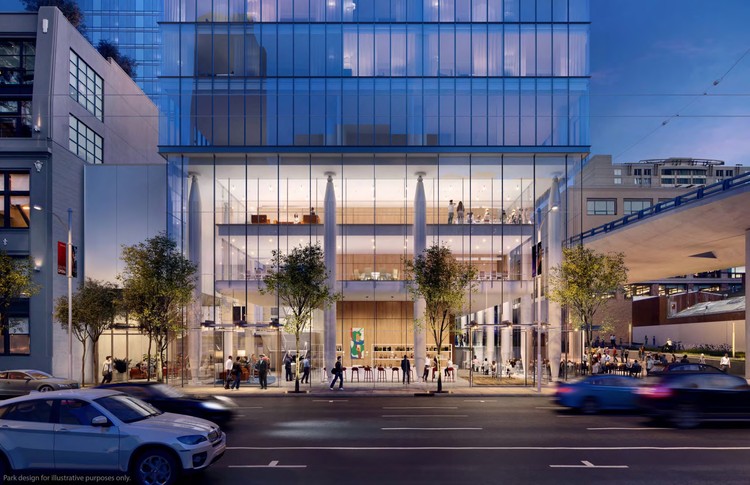
Plans for 555 Howard, a mixed-use hotel and residential tower to be located in San Francisco’s Transbay neighborhood, have been revealed by the city’s Planning Department. Designed by Renzo Piano Building Workshop for developer Pacific Eagle, the 36-story tower would house 69 residential units and 255 hotel rooms, as well as a publicly-accessible open-air rooftop terrace. The project represents Piano’s second project in the city, following 2008’s California Academy of Sciences.
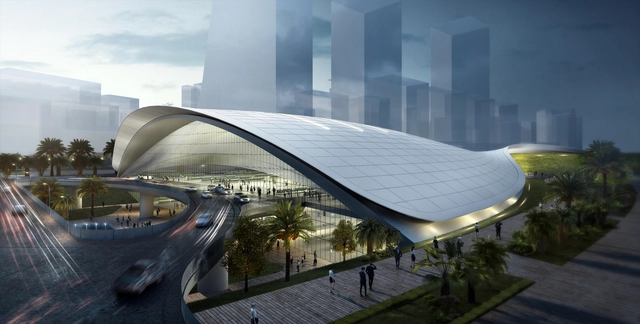
Architecture and urban design firm, Farrells, in collaboration with AECOM, have won the competitive tender to design the Singapore terminus of the new Kuala Lumpur-Singapore High-Speed Rail.
Sited in Singapore’s “futuristic second Central Business District” of Jurong Lake, the design was conceived as a new civic landmark and a part of the district’s new master plan currently in development by the Urban Redevelopment Authority and a team of consultants led by KCAP Architects & Planners.
While the railway station’s platforms are located below ground, the design aims to create an above-ground focal point that will mark the station as a new international gateway to Singapore.
First Prize: Archhive: Architecture in Virtual Reality / Boris Hilderal; France. Image Courtesy of Bee Breeders
Bee Breeders has announced the winners of its Archhive: Architecture in Virtual Reality competition, which asked participants to design a virtual exhibition gallery to showcase future Bee Breeders competition winners. In this virtual gallery, visitors would be able to “walk” around and explore the work of selected winners and guest contributors.
The three winners of Archhive: Architecture in Virtual Reality are:
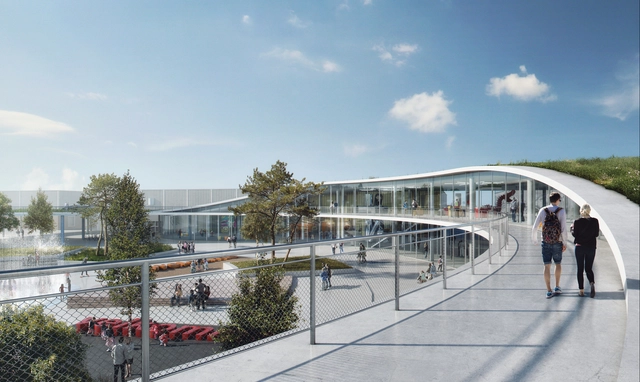
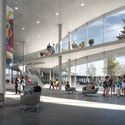
Urban Agency and Aarhus Arkitekterne have unveiled a proposal for the expansion of the MCH Messecenter in Herning, Denmark’s largest exhibition center. According to the architects, the intent was “to create a strategy that will make the complex a more attractive and coherent structure with a new focal point.”
To achieve this, the design converges two circulation routes at the building’s new point of entry, further complimented by usable art displays and foliage, including green walls. The circular form of the roof defines the event square, with ramps serving as outdoor seating and shelter from inclement weather.
You’ve seen the floor plans from Hit TV Shows brought to you by Iñaki Aliste Lizarralde, Homes.com, and Drawbotics. Now, with the Academy Awards just around the corner, we're bringing you a series of floor plans from Oscar-nominated films, all painted in watercolor by Boryana Ilieva (who previously brought us the floor plans of Stranger Things). With movies such as La La Land, Fences, Elle, 20th Century Women and Toni Erdmann depicted in meticulous details, Ilieva’s watercolors not only provide us with a new perspective of the familiar spaces, but also highlight the important architectural features that help construct these captivating storylines.
Woods Bagot’sShenzhen Hazens Longgang Longteng Mixed-Use project has been rated by the Shenzhen Government as one of the city’s most important projects of 2016. Located in Shenzhen’s Longgang District, the 393,000 square meter site will feature 1,500,000 square meters of gross floor area subdivided into office space, retail space, a shopping mall, residential communities and facilities, and over 90,000 square meters of green and public space.
As a part of the design, the development will rejuvenate a river park area running through the existing site, with the northern bank becoming a commercial and leisure focal point, and the southern bank featuring a community of residential towers connected by retail podiums and green spaces.
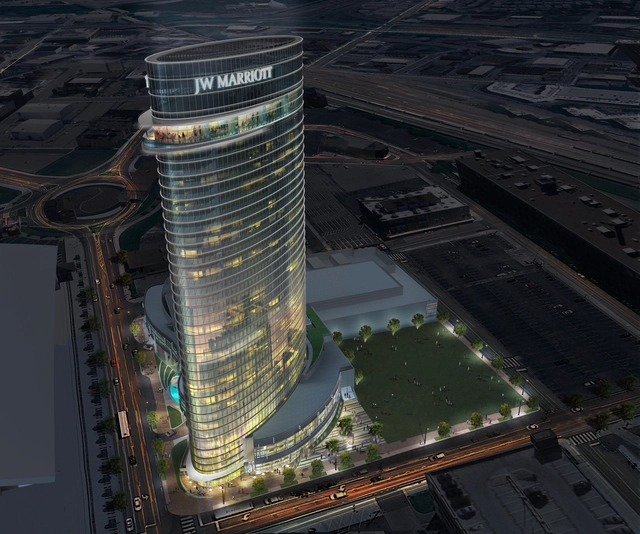
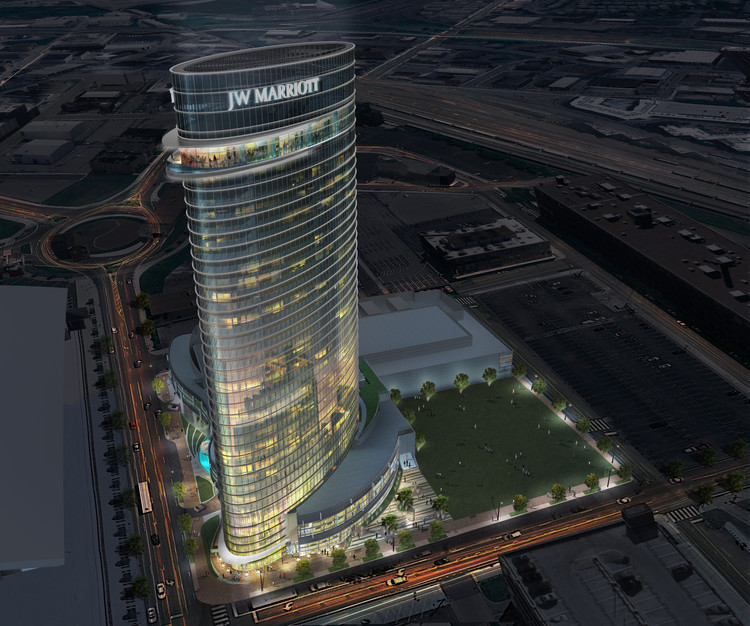
Nashville is set to receive its newest and tallest luxury landmark, in the form of the JW Marriott Hotel, designed by esteemed Miami firm Arquitectonica to be completed in 2018. Situated in the center of downtown, the 33-storey undulating tower will offer expansive views of the surrounding cityscape from a height of 386 feet; one of highest points in the city.
https://www.archdaily.com/805646/arquitectonicas-undulating-hotel-tower-to-be-nashvilles-lastest-landmarkOsman Bari
Titled “Saltholmsgade”, the winning proposal is a reinterpretation of Aarhus’ historical housing typologies along Hjortensgade, creating modern and green communal spaces. The complex consists of 38 individual apartments, offering tenants views of the city through the inclusion of rooftop gardens.












.jpg?1488297941&format=webp&width=640&height=580)







.jpg?1488222197&format=webp&width=640&height=580)
















.jpg?1487736608)
.jpg?1487736570 "Courtesy of Woods Bagot")
.jpg?1487736532 "Courtesy of Woods Bagot")
.jpg?1487736650 "Courtesy of Woods Bagot")
.jpg?1487736441 "Courtesy of Woods Bagot")
.jpg?1487736608)


.jpg?1487638854&format=webp&width=640&height=580)
.jpg?1487638804 "© WE Architecture")
.jpg?1487638383 "© WE Architecture")
.jpg?1487638874 "© WE Architecture")
.jpg?1487638854 "© WE Architecture")
.jpg?1487638854)


