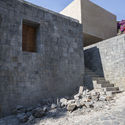
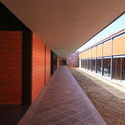
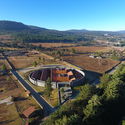
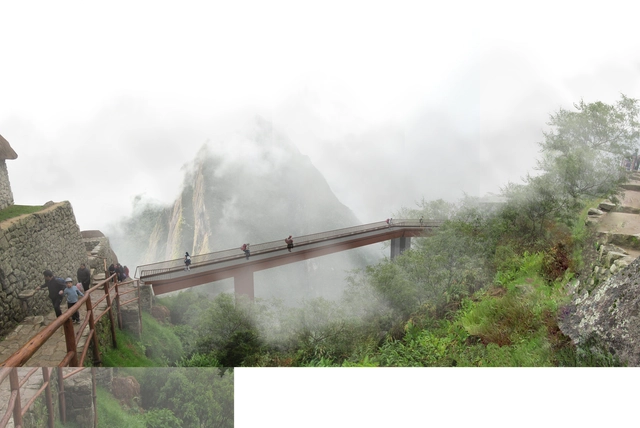
Historical preservation and integration with nature, two crucial themes in the development of the Peruvian structure whose territory is a synthesis of historical landscapes. The winning project of the “Ideas de Arquitectura” contest in Machu Picchu National Archaeological Park (Cusco) not only achieves both themes but also weaves and customizes them. The project mimics the architectural tradition of the place while bringing its own contemporary language. It creates bridges of new relations while respecting the preexisting ones, in continuation with the nature of the place, harmony between nature and history. And of course, it invites visitors to be part of this experience.
Learn more details about this project and its approach to what has been the development of landscape of its masterplan that was made for the Archaeological Park.
Photographer Laurian Ghinitoiuhas visited Herzog & de Meuron's Elbphilharmonie Hamburg, Germany – a 2017 winner of the ArchDaily Building of the Year award. The striking silhouette of this cultural centre and concert hall, which is identical in ground plan to the brick block of the older building upon which it sits, is often photographed as an isolated object. In this photo-essay, the context of the port around the project is often foregrounded – and unusual views offer new perspectives onto its iconic design.
The first edition of ArchDaily China's Building of the Year Awards has now come to a close. Like our global Building of the Year Awards, the awards given by ArchDaily China rely on the collective intelligence of an audience of informed and engaged readers to select the winners.
Once again, ArchDaily readers demonstrated their collective influence, with over 7,000 votes cast over 3 weeks to filter over 300 projects published on ArchDaily China in 2016 to find the 3 best works that mainland China and Hong Kong have to offer. Read on to see the winners.
https://www.archdaily.com/806691/winners-of-the-2017-archdaily-china-building-of-the-year-awardsAD Editorial Team
James Welling, 8183, 2016 from the series Chicago, 2016-2017, Courtesy the Artist and David Zwirner, New York and London. Image Courtesy of Chicago Architecture Biennial
The Chicago Architecture Biennial has announced the list of participants invited to contribute to the event’s second edition, which will be held from September 16 to January 7, 2018 in Chicago. More than 100 architecture firms and artists have been selected by 2017 artistic directors Sharon Johnston and Mark Lee, founders of Los Angeles–based Johnston Marklee, to design exhibitions that will be displayed at the Chicago Cultural Center and throughout the city.
“Our goal for the 2017 Chicago Architecture Biennial is to continue to build on the themes and ideas presented in the first edition,” explained Johnston and Lee. “We hope to examine, through the work of the chosen participants, the continuous engagement with questions of history and architecture as an evolutionary practice.”
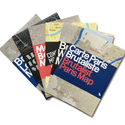
Russian designer Sergey Lisovsky has created an online illustrative magazine inspired by Brutalist Architecture. Pattern Brutalist’s first issue was published in January 2017, illustrating four Brutalist buildings across Russia, Germany, and Serbia. The buildings, dating between 1968 and 1980, are represented by Lisovsky using a collection of GIFs, photographs, and illustrations.
Pattern Brutalist also hosts a T-shirt printing service, allowing users to publically express their appreciation for an often-criticized architectural style.
https://www.archdaily.com/806436/pattern-brutalist-an-illustrative-magazineNiall Patrick Walsh
In the upcoming years, Dubai may become home to one of the world’s newest radical architectures—the first ever, rotating skyscraper. Designed by Dynamic Architecture’s Davis Fisher, the 80-story, 1,273-foot tower proposal features independent floors that can rotate 360 degrees in both directions, in order to provide more comprehensive views.
A static central core will connect the rotating floors together, each of which will be prefabricated off-site and attached to the tower afterward.
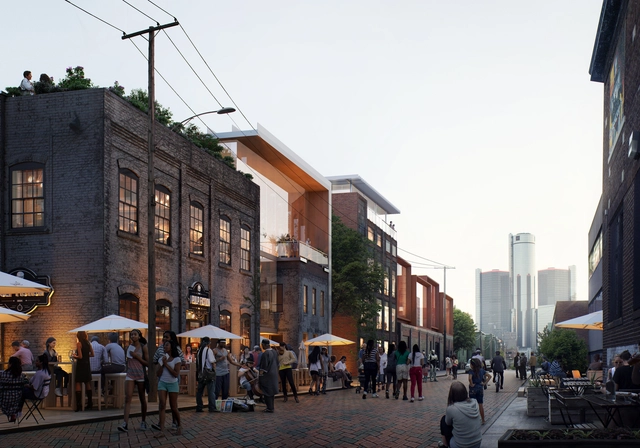
The Historic Stone Soap Building will be upgraded to a mixed-use development, increasing density and activity along the riverfront. Image Courtesy of City of Detroit
Chicago-based SOM’s plans for the redevelopment of the East Riverfront in Detroit, Michigan have been unveiled. The Detroit RiverFront Conservancy, Detroit Economic Growth Corporation, and City of Detroit Planning and Development Department will work together to deliver SOM’s plan to revitalize the former blighted industrial area. The framework plan involves improving community access to the riverfront, the design of a new riverfront parkland, and the conversion of a historic riverfront structure into a mixed-use development.
https://www.archdaily.com/806465/soms-inclusive-riverfront-set-to-revitalise-detroitNiall Patrick Walsh
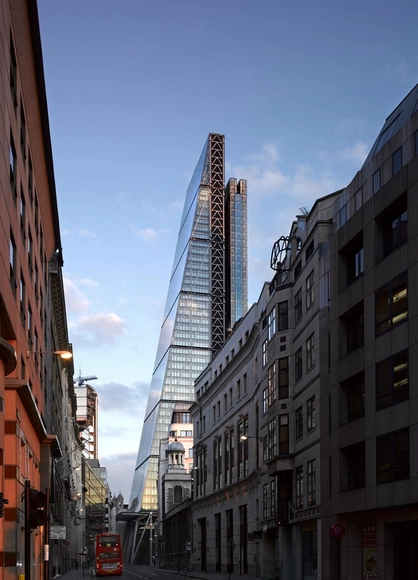
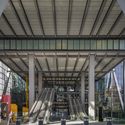
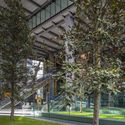
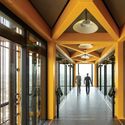
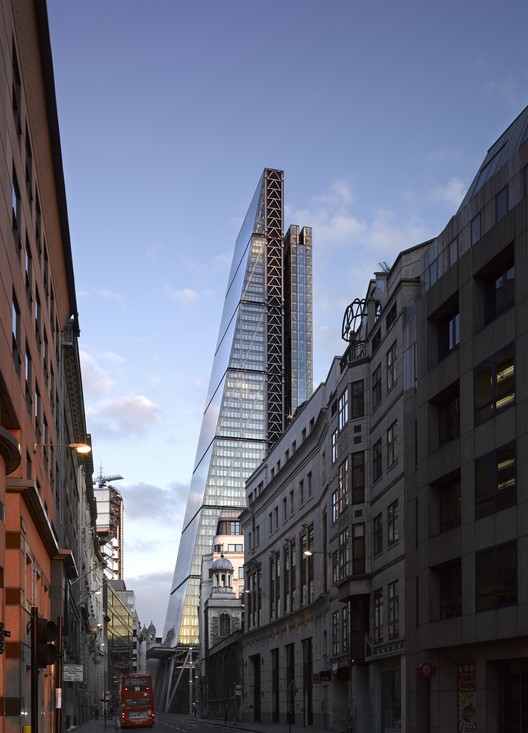
The Leadenhall Building, designed by Rogers Stirk Harbour + Partners, has been sold to a Chinese property magnate for a price of £1.15 billion, in what has become the second-biggest sale of a UK building in history, as well as one of China’s largest acquisitions of UK real estate. The transaction involved developer British Land and its partner Oxford Properties, who sold the tower to CC Land, a Hong Kong based company.
Tim Roberts, head of offices and residential at British Land, said: “British Land and Oxford Properties took a bold step at the early stages of the UK’s economic recovery to develop the Leadenhall Building to generate a high-quality, long-term income stream,” said Tim Roberts, head of offices and residential at British Land. “This sale shows continued investor appetite for best-in-class, well-located property in London.”
Benoy has released its latest designs for the China International Travel Service (CITS) Sanya Enot development scheme, which will be located on the reclaimed Hexin Island in Hainan, and is the second phase of a large-scale plan. Connected to the first phase of development by a pedestrian bridge, the project will be surrounded by the area’s luxury international hotels and natural attractions.
The 32,000-square-meter mixed-use, retail-led space features a “porous and multi-layered environment,” with clusters of small-scale buildings that will create a series of indoor and outdoor spaces for entertainment and retail programming. Buildings will be connected by a succession of elevated walkways and bridges.
Perkins+Will and the Healthy Building Network (HBN) have released their latest material health and performance white paper, Healthy Environments: Understanding Antimicrobial Ingredients in Building Materials.
According to the paper, antimicrobial building products “marketed as healthy or beneficial to human health contain ingredients that may have adverse environmental or human health impacts, and alternative products should be considered whenever possible.” Citing a lack of evidence that antimicrobial products prevent the spread of communicable diseases, the report highlights potential impacts like “super bugs,” contamination of aquatic ecosystems, and carcinogens.
Ten top highlights from the paper, concerning antimicrobial products, are:
His RAIC Gold Medal, recognizing a significant and lasting contribution to Canadian Architecture, will be accepted by his widow Sheila du Toit and two sons at the RAIC/OAA Festival of Architecture in Ottawa in May.
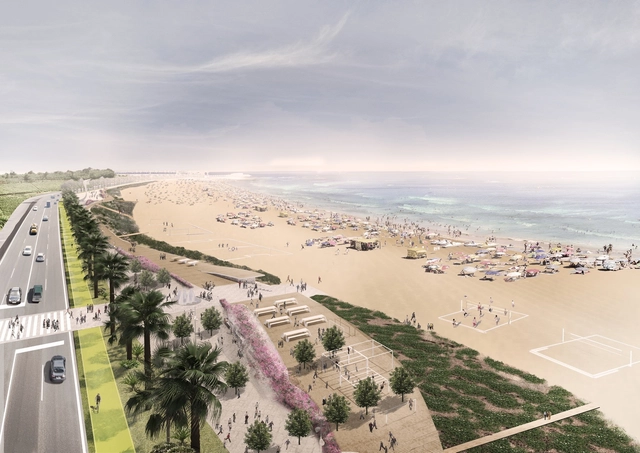
Quebec-based practice Lemay has won the global bid to redesign Morocco’sCasablanca Coast, which will include the new seaside promenade of the Hassan II Mosque and the Ain Diab corniche.
With modernity, sustainability, and innovation in mind, the urban and landscape design will promote mobility along the length of the corniche (a coastal, cliffside road) and aims to reinforce the appeal of the coast.
Launched in December, the project will feature an urban park and corniche along the El Hank embankment that will include rest areas, walkways, outdoor sports, and more. As an extension of the Hassan II Mosque, the promenade is expected to become a new Moroccan landmark.
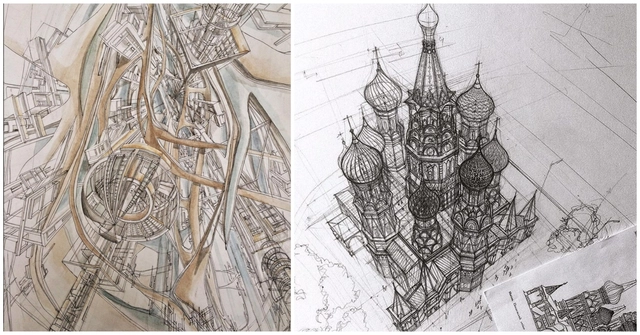
Despite the rush of new technologies available to architects to express their designs, the humble art of hand-drawing is still alive and well. And when sketching are drafting are done well enough, they can become their own artifacts for inspiring architectural thought.
The work of architecture student Adelina Gareeva is one such example. Studying at Kazan State University of Architecture and Engineering (KSUAE) in Russia, Gareeva produces incredibly detailed architectural drawings, from carefully constructed perspective drawings of St. Basil’s Cathedral, to travel sketches to more abstract architectural compositions that draw similarities to Zaha Hadid’s Suprematist paintings or the Cubist works of Georges Braques. Check out some of her best sketches below.
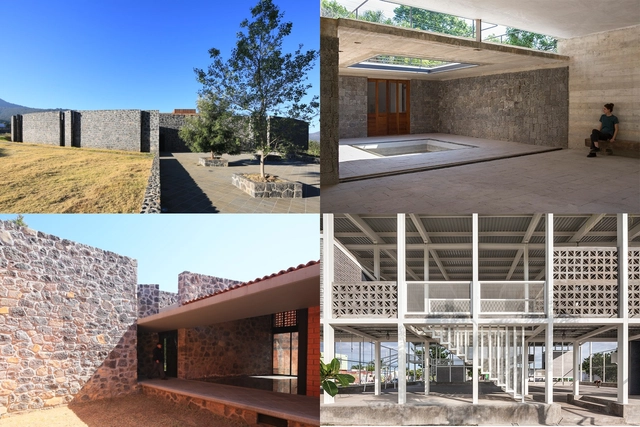
Works by Gabriela Carrillo (left) and Rozana Montiel (right)
The Architectural Review and The Architects’ Journal have announced two Mexican architects as winners of their 2017 “Women in Architecture” Awards. This year’s Architect of the Year is awarded to Gabriela Carrillo of Taller Mauricio Rocha + Gabriela Carrillo, while Rozana Montiel Estudio de Arquitectura’s Rozana Montiel was named the winner of the Moira Gemmill Prize for Emerging Architecture. Both women were selecting for demonstrating “excellence in design and a commitment to working both sustainably and democratically with local communities.”
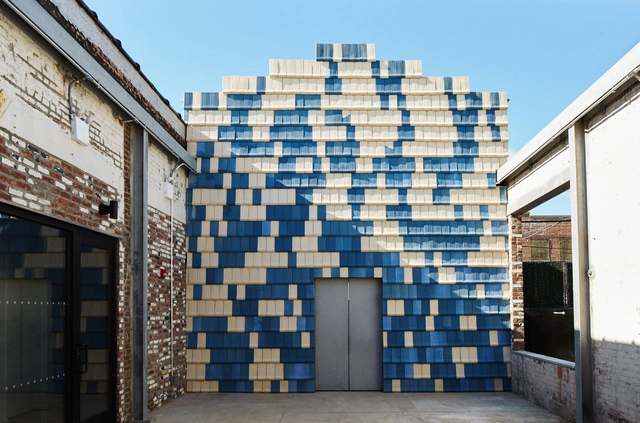
The installation is set at A/D/O's courtyard in Brooklyn. Image Courtesy of Sam Nixon
London-based architecture collective Assemble is set to transform an outdoor courtyard at A/D/O in Brooklyn into a ‘model factory’ to explore utopian ideals of work. The Turner Prize-winning architects will use their first site-specific installation in the U.S. entitled ‘A Factory As It Might Be’ to depict a vision of how society should build and function using abundant, malleable materials.
Earlier this month, Hong Kong-owned developer Knight Dragonrevealed plans for an billion-dollar urban-development scheme that will completely transform London’s Greenwich Peninsula. In this edition of Section D, Monocle 24's weekly review of design, architecture and craft, the team speak to Santiago Calatrava—who will be designing the core of this grand new project—about this and his public-spirited design philosophy. Why, they ask, has he’s always wanted to leave a mark on the "Big Smoke?"
https://www.archdaily.com/806495/santiago-calatrava-ground-zero-design-philosophy-greenwich-peninsula-project-monocleAD Editorial Team
Construction on Herzog & de Meuron’s 160 Leroy condominium tower in New York’s West Village has nearly topped out, with 12 of its planned 15 floors now complete. The design, inspired by the great Brazilian architect Oscar Niemeyer, features a curved concrete and glass facade and contains 57 luxury condos ranging in price from $3.1 to $48.5 million.
UNStudio has been selected as the winners of an international competition to design a new mixed-use development on the site of the former Deutsche Bank offices in Frankfurt, Germany. Selected to complete the urban strategy for the district last March, UNStudio has now been unanimously selected to carry out the architectural redevelopment of the site, beating out third prize proposals from the teams of Dudler / Jahn and MSW / Snøhetta, and an honorable mention from Christoph Mäckler / CoopHimmelblau.
The new mixed-use development will consist of four high-rise towers ascending from a multi-story plinth in the heart of the city. The project includes space for retail, restaurants and hotels, as well as a full range of residential accommodation. The four towers, rising up to 228 meters (748 feet) high, will serve as a new landmark on the Frankfurt skyline.
The 2015 Milan Expo required the input of more than 145 countries and 50 international organizations resulting in over 70 temporary pavilions; a combined effort totaling more than €13 billion. Norman Foster’s rippling pavilion for the United Arab Emirates ended up at €60 million. The massive slab of concrete, laid out over the previously green agricultural land to act as the Expo’s foundation cost a whopping €224 million. Even Vietnam’s “low cost” pavilion came in at $2.09 million.
Compare that with, for example, IKEA’s proposal for a temporary refugee shelter that can house 5, costing just $1000, and one can see the absurdity of spending gargantuan sums on buildings that will perhaps be sold to be used later as a clubhouse, or to a museum as another temporary cultural center. Where is the architectural action behind an architectural event that boasts “Energy for Life” or “Better City, Better Life” - the slogan of the Shanghai 2010 Expo - yet spends extraordinary amounts of resources on structures that provide little sustainable development to parts of the world that are actually in dire need of it?
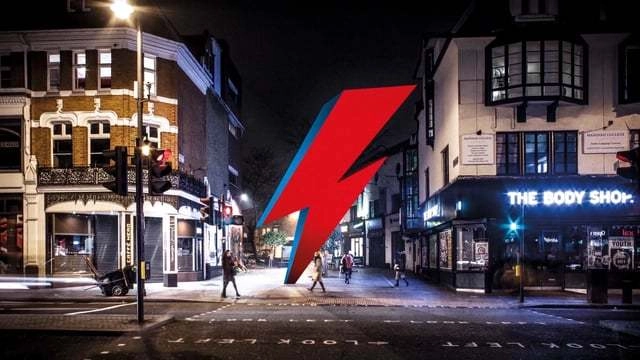
A year since the passing of David Bowie, one of music and pop culture’s greatest icons, fans have launched a fundraising campaign to support the erection of a permanent memorial statue in London, in honor of the late musician.
“We’re taking the lightning flash from the cover of Aladdin Sane, and turning it into a three-storey tall sculpture,” explains Charlie Waterhouse of This Ain’t Rock ‘n’ Roll, one of the organizations behind the campaign, working in conjunction with David Bowie’s team.
https://www.archdaily.com/805983/this-campaign-envisions-a-three-storey-lightning-bolt-in-honour-of-david-bowieOsman Bari
It's common knowledge that China has "at least 10 White Houses, four Arcs de Triomphe, a couple of Great Sphinxes and at least one Eiffel Tower," report the New York Times. But now photographs of a copy of London’s famous Tower Bridge (a Victorian riparian gateway to the city) in the Chinese city of Suzhou have emerged – and it's been adapted to suit a five-lane highway. Almost identical—from a distance, at least—to its British counterpart the new structure, which was completed in 2012, has been doubled – a feat which has also required some spectacular architectural additions.
https://www.archdaily.com/806431/twice-as-nice-suzhou-china-architectural-homage-copies-copy-london-tower-bridgeAD Editorial Team
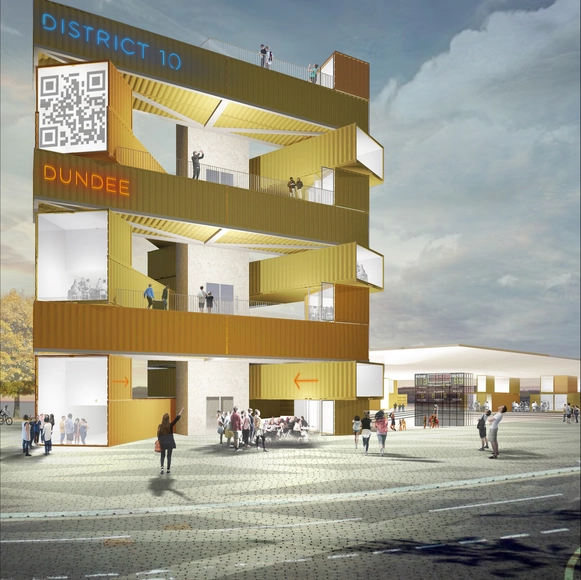
Flexible studios to aid Dundee's thriving digital creative sector. Image Courtesy of Studioshaw
London-based firm Studioshaw has won a competition to design a hub facility for children and young people in Dundee, Scotland. The Interactive Hub will be located on the site of a former railway depot at the Seabraes Yards Digital Media Park. The competition, hosted by the Dundee Institute of Architects (DIA) and Scottish Enterprise, was one of 400 events taking place across Scotland as part of the RIAS 2016 Festival of Architecture.




.jpg?1488821716&format=webp&width=640&height=580)
.jpg?1488821999 "© Laurian Ghinitoiu")
.jpg?1488822128 "© Laurian Ghinitoiu")
.jpg?1488821802 "© Laurian Ghinitoiu")
.jpg?1488821732 "© Laurian Ghinitoiu")
.jpg?1488821716)




.jpg?1488337672 "Courtesy of Shell Arquitectos")


_LR.jpg?1488254837&format=webp&width=640&height=580)
_LR.jpg?1488254858 "Courtesy of Benoy")
_LR.jpg?1488254914 "Courtesy of Benoy")
_LR.jpg?1488254868 "Courtesy of Benoy")
_LR.jpg?1488254904 "Courtesy of Benoy")
_LR.jpg?1488254837)