At times, Landscape design lacks proper consideration or its overlooked within architecture, as a result of current but preconceived notions within architectural practice and education that privilege building over site, or the constructed over the existing. While at face value, landscape is treated as an abject and constant entity of sorts, the reality is that it possesses a layered complexity of patterns and ecosystems, much of which is increasingly impacted by our own actions, more significantly than what meets the eye.
At the same time, the definition of landscape is constantly evolving to encompass a greater number of influences and factors. We have cultural, built and ecological landscapes, which influence one another and come about as a result of the intersection between the architecture and the environment that we are presented with. As a result, it is important to view terrain in a more holistic light, acknowledging its ecological underpinnings and well as the anthropological effects it is subject to, both physically and theoretically. Here is a list of five online resources, which investigate the interdisciplinary nature of landscape design and its relation to architecture and culture.
https://www.archdaily.com/875853/5-online-resources-that-explore-the-intersection-between-landscape-architecture-and-cultureOsman Bari
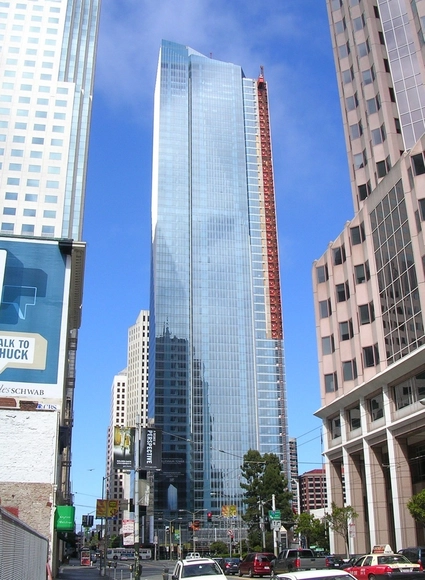
Since construction began in 2005, the 58-story luxury condominium tower has sank approximately 17 inches downward and while leaning 14 inches to the North. And according to a new report from Arup Ground, the issue doesn’t appear to be resolving itself anytime soon: in the past 7 months alone, the building has sunk an additional inch and tilted a further two inches, causing cracking in the building to worsen.
Triggered to action, developer Millennium Partners brought in LERA and DeSimone to devise a solution that would return the building to its original siting and secure it against sinking, all while allowing the building to continue operating through the repair process.
https://www.archdaily.com/876722/engineers-have-a-solution-for-san-franciscos-sinking-millennium-towerAD Editorial Team
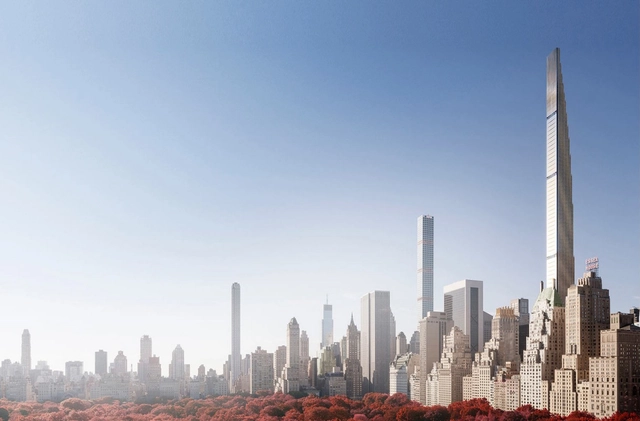
Renderings from 111 West 57th's teaser site. Image via 111w57
The SHoP-designed 111 West 57th Street, “the world’s skinniest skyscraper,” is at risk of never being completed due to soaring construction costs, the New York Post has reported. With fewer than 20 of the supertall skyscraper’s 82 stories currently constructed, a lawsuit filed by investment group AmBase is claiming the project is already $50 million over budget due in part to “egregious oversights” including neglecting to factor in the cost of construction cranes.
https://www.archdaily.com/876704/with-costs-soaring-shop-designed-worlds-skinniest-skyscraper-faces-foreclosureAD Editorial Team
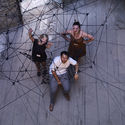
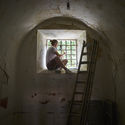
Kotor is an ancient fortified city located in a secluded bay on Montenegro's Adriatic coast. It has been Venetian, Austrian and—most recently—part of the former Yugoslavia. Today, as part of an independent nation, it's narrow streets, small squares, and warm stone buildings define the character of a UNESCO World Heritage Site which, each summer, becomes one vast cruise terminal as tourists arrive in their droves to bask in it's dry heat and spectacular natural environment. At this time, however, it also plays host to KotorAPSS (Architectural Prison Summer School) – an eight day-long gathering dedicated to infusing contemporary cultural life into the city by means of temporary architectural installations.
Zaha Hadid Architects, collaborating with digital artists and computer science researchers Andy Lomas and Mubbasir Kapadia, have been selected to create a projection mapping light show at the 2017 Schlosslichtspiele Festival in Karlsruhe, Germany. Titled ‘Behaviour Morphe,’ the dynamic light display will be projected onto the city’s 18th century baroque palace, simulating how users move throughout and interact with the building’s interior spaces.
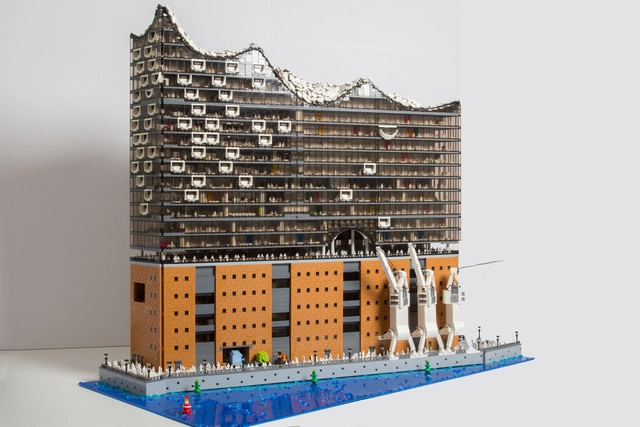
One of last year’s most long-awaited buildings may have just met its match in terms of complexity – and it comes in the form of its own LEGO replica.
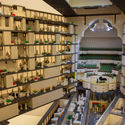
Created by LEGO sculptor Brick Monkey, the LEGO version of Herzog & de Meuron’s spectacular Elbphilharmonie was constructed from more than 20,000 individual LEGO pieces, featuring point perfect scaled versions of the concert hall’s signature features, including the building’s elevated public terrace, glass facade and sail like roof, made up of hundreds of precise umbrella shaped elements. But most impressively, the model can be opened in half to reveal a detailed recreation of the structure’s main concert hall.
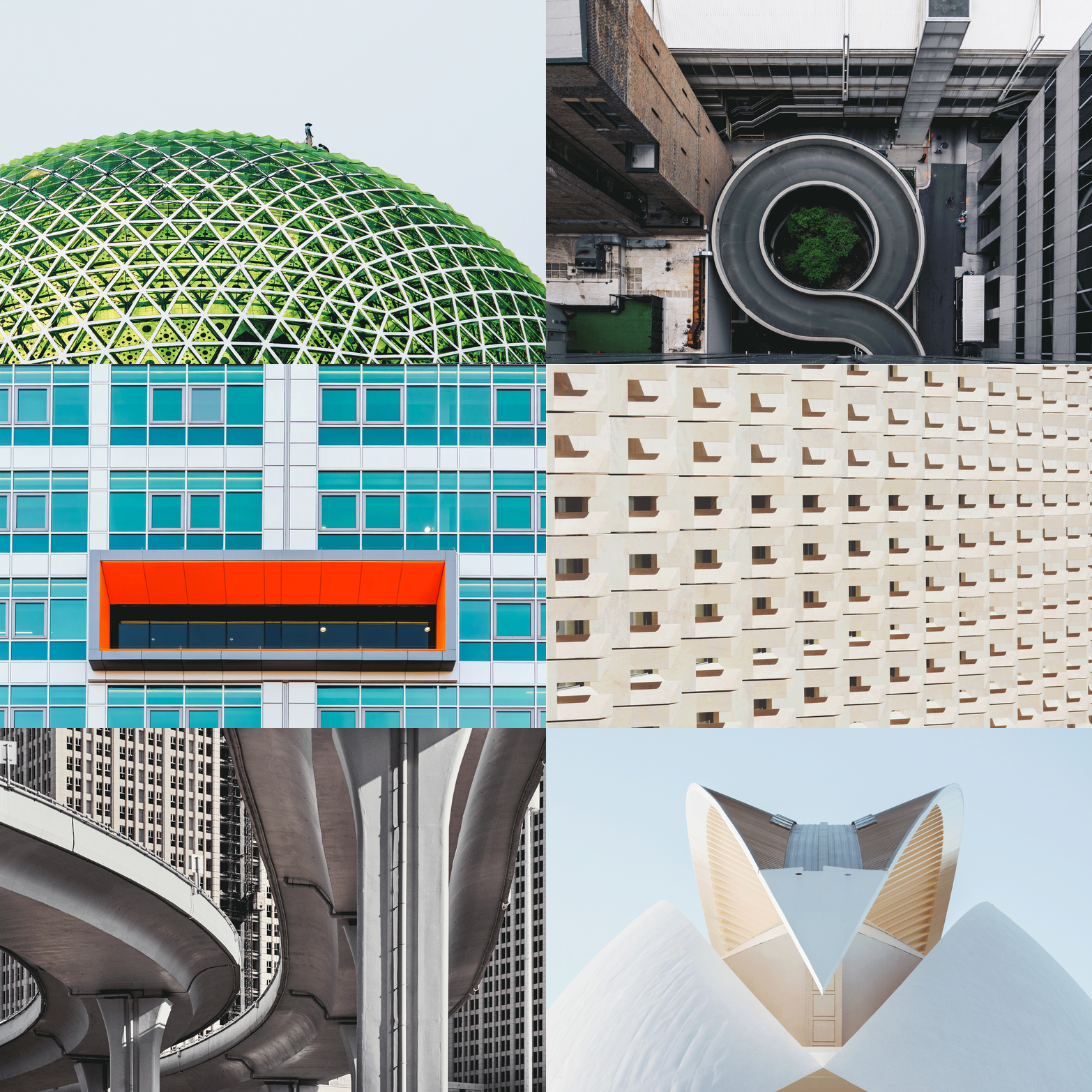
Global photography community EyeEm has announced the finalists of their 2017 Photography Awards. Free and open to photographers of all skill levels and backgrounds to submit through the EyeEm web platform and app, this year’s awards received more than 590,000 submissions from users around the world across five categories: The Architect, The Great Outdoors, The Photojournalist, The Portraitist, and The Street Photographer.
The architecture category alone received over 95,000 submissions, from which 20 images were selected by a jury of photographers and editors from institutions including National Geographic and the BBC. All of the finalist images will be displayed at the 2017 EyeEm Photography Festival & Awards in Berlin from September 15-17, where each of the category winners and Photographer of the Year will be announced.
Continue on to see the 20 finalists in the architecture category.
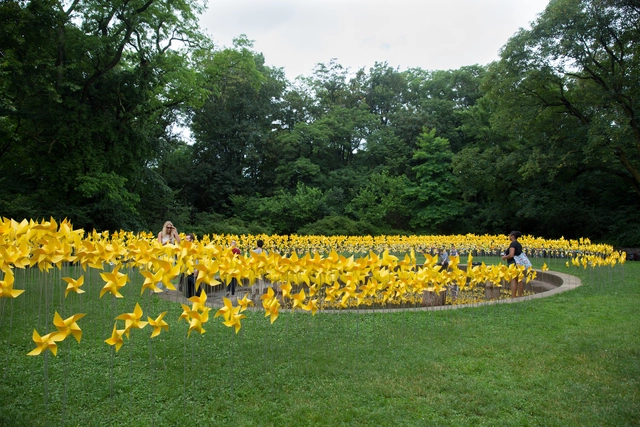
To celebrate the 150th Anniversary of Brooklyn’sProspect Park, AREA4 and Suchi Reddy of Readymade Architecture and Design collaborated with the Prospect Park Alliance to create a public art exhibition that features more than 7,000 pinwheels. Called The Connective Project, the installation covers the Rose Garden in the northeast corner of the park with yellow pinwheels that include art and written work submitted by the public. Influenced by the vision of the park’s 1867 designers Frederick Law Olmsted and Calvert Vaux, Reddy's aspiration for the project was to create a playful urban retreat that sparks a conversation about the value of public spaces.
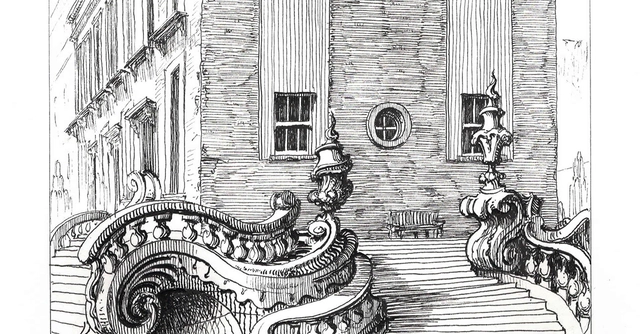
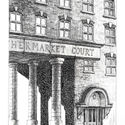
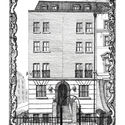
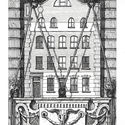
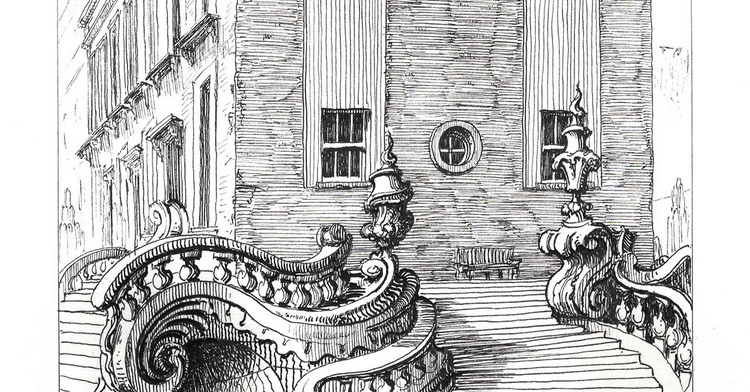
Detail: 132-135 Sewardstone Road, Victoria Park E2 9JQ. Ink on Paper, 21 x 14 cm. Copyright Pablo Bronstein, 2017. Courtesy Herald St, London and Galeria Franco Noero, Turin. Image Courtesy of RIBA
A new exhibition of commissioned work by artist Pablo Bronstein at London's Royal Institute of British Architects (RIBA) will explore "ubiquitous" neo-Georgian developments as exemplar of a British vernacular. The show—Pablo Bronstein: Conservatism, or The Long Reign of Pseudo-Georgian Architecture—will feature fifty new drawings of buildings constructed during the second half of the 20th Century in "an ostensibly neo-Georgian style." These will be presented alongside historical Georgian and neo-Georgian material chosen by Bronstein from the RIBA’s collections.
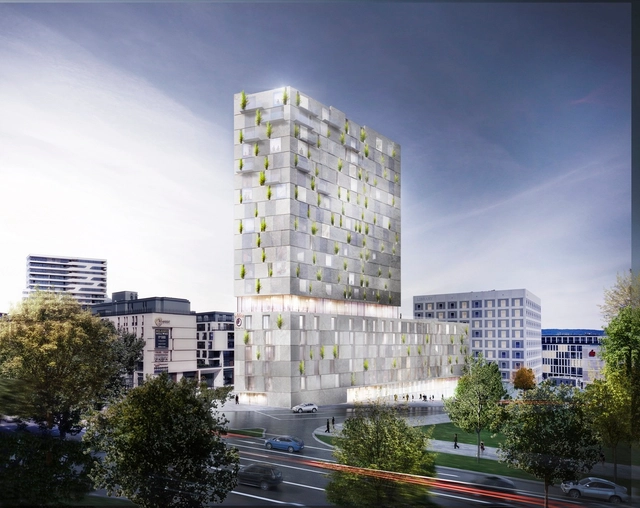
RKW Architektur + , Rendering: Foormtool Anton Kolev
RKW Architektur + has been selected as the winners of a competition to design a new mixed-use residential tower located at Mailänder Platz in Stuttgart, Germany. Rising from a triangular site, the building features a dynamic facade of shifting stone that creates openings for vertical greenery, and an abundance of public space, including cafes, retail, a hotel and a library.
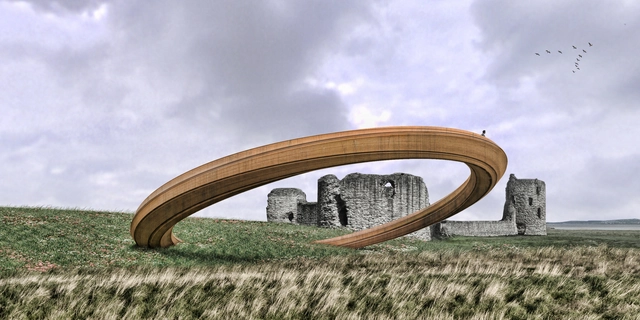
Plans for a new iron ring sculpture located at Flint Castle in Wales have been put on hold following public outcry.
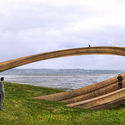
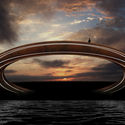
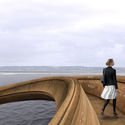
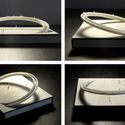
Earlier this week, George King Architects was selected as the winners of a competition held by the Welsh Government to design a signature art piece celebrating Wales’ Year of Legends with their proposal, the Iron Ring, which consists of a large circular structure embedded in the earth at just two points to create a cantilevered observation point with views of the castle and the River Dee.
But opponents of the design have claimed that the sculpture is an overt reference to the “iron ring” of fortresses used by King Edward I to “subjugate and oppress” the people of Wales during his reign from 1272 to 1307. After an online petition calling for the project to be scrapped reached over 7,000 signatures, Economy Secretary Ken Skates announced a "pause" to review the design.
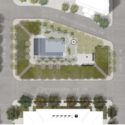
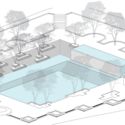
The National Capital Planning Commission (NCPC) has reviewed the revised concept for the National Washington WWI Memorial as part of several major commemoration and transport projects taking place in the capital city. Designed by architect Joseph Weishaar and sculptor Sabin Howard, the proposal won the memorial’s competition last year, beating out 4 other finalists with its multilevel design and use of relief sculpture.
reSITE, an annual conference held in Prague, is among the world's most important forums for discussing cities and urbanism. Pooling together experts, architects, mayors, planners, municipal leaders, real estate developers and city makers from twenty countries, the event brings almost 1,000 participants together.
In these two episodes of The Urbanist, Monocle 24's weekly "guide to making better cities," the team report from this year's incarnation—entitled "In/visible City"—talking to the likes of Kathryn Gustafson, Jean-Louis Missika (Deputy Mayor of Paris), Adriana Krnáčová (Mayor of Prague), and Marlena Happach (the Chief Architect for Warsaw).
https://www.archdaily.com/876385/reporting-from-resite-2017-monocle-24-talks-to-mayors-chief-architects-and-city-plannersAD Editorial Team
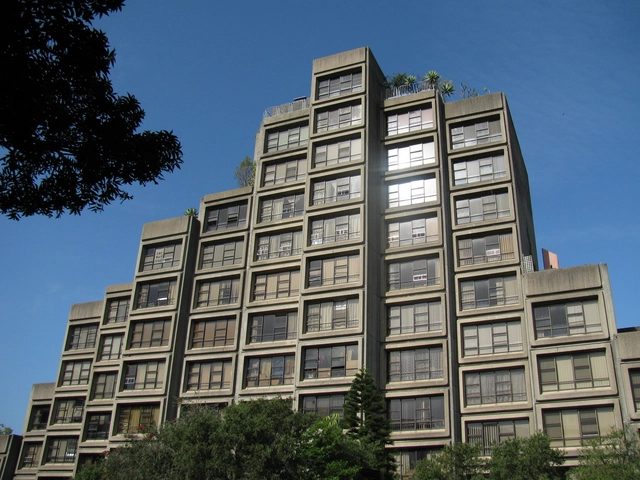
In a major victory for preservationists, one of Sydney’s few examples of brutalist architecture, the Sirius Apartment Building, has been saved from the wrecking ball after court ruled against the government’s attempt to deny it a place on the State Heritage Register.
https://www.archdaily.com/876508/sydneys-brutalist-sirius-building-saved-from-demolition-after-court-rulingAD Editorial Team
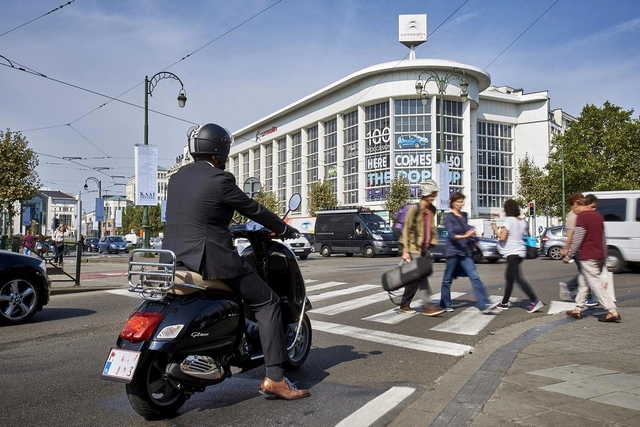
The Urban Development Corporation (SAU-MSI) has announced the seven shortlisted teams competing for the design of the latest Centre Pompidou outpost in Brussels, Belgium. The finalist teams were selected from 92 entries to the competition, which sought proposals to transform the existing Art Deco Citroën Yser garage in the heart of the city into a mixed-use museum complex focusing on contemporary art and architecture.
To be known as the Citroën Cultural Centre, the $135 Million project will consist of 375,000 square feet (35,000 square meters) of public cultural, education and recreation space, including 160,000 square feet (15,000 square meters) designated for the new Centre PompidouBrussels. An additional 108,000 square feet (10,000 square meters) will host a museum run by Brussels’ International Centre for Urbanism, Architecture & Landscape.
Major changes are on the way for Los Angeles’ Union Station that will improve connectivity between the stations various train, metro and bus lines. In a new video released by the Los Angeles Metropolitan Transportation Authority, one possible future – a ring-shaped passenger concourse floating over the train platforms below – is visualized for the first time.
The award is given in four categories: Category A: Built, Less than $25 million in construction cost; Category B: Built, More than $25 million in construction cost; Category C: Unbuilt, Must be commissioned for compensation by a client with the authority and intention to build (No projects were selected in this category this year); and Category D: Innovations in Planning and Design Research, Built and Unbuilt.
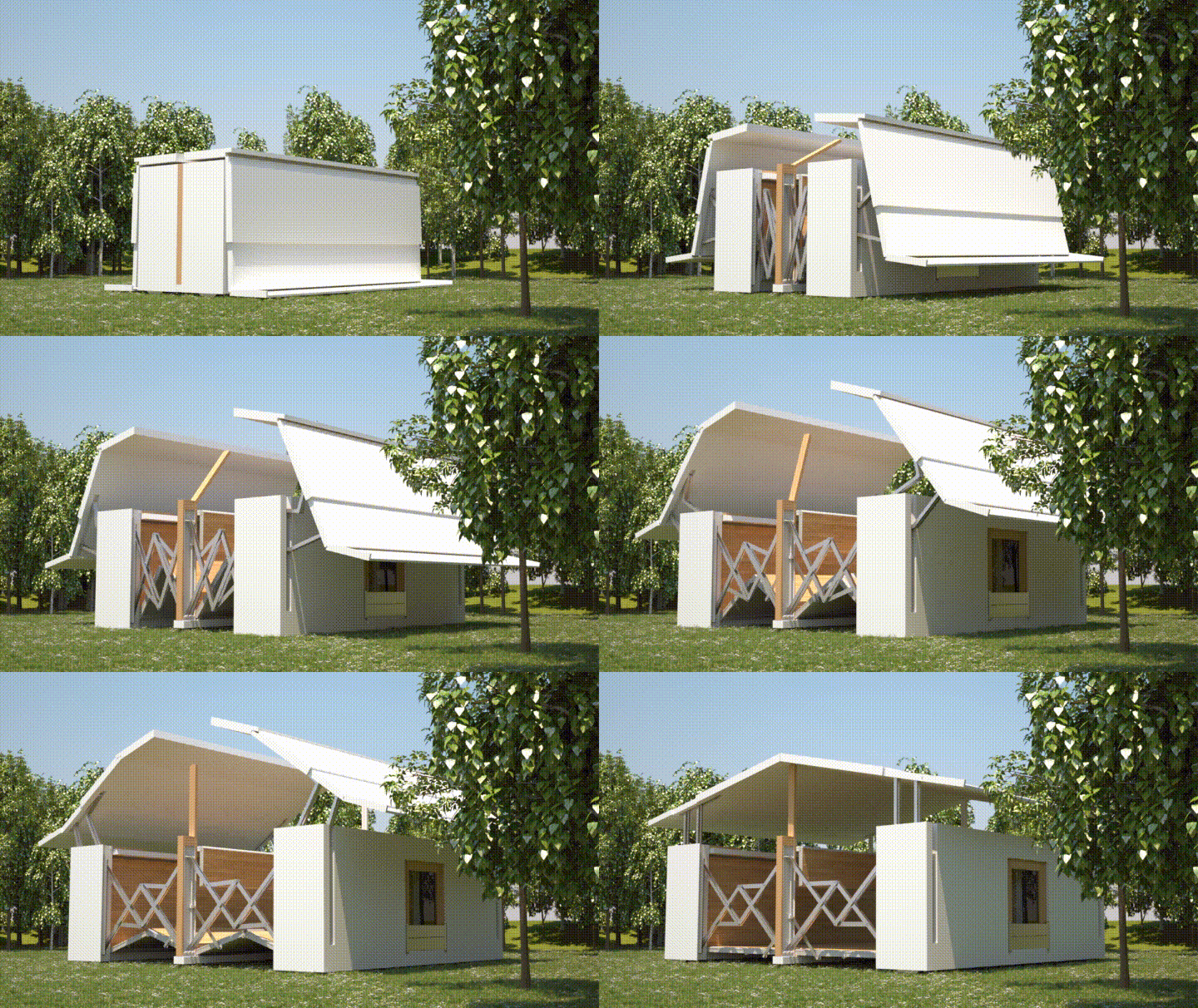
Eight minutes. That is the length of time UK-based company Ten Fold Engineering’s self-deploying structures can transform itself from a portable rectangular container into a fully habitable space that can be used for either the residential or service sector. Transported by truck, the company offers a shelter that is energy efficient, eliminates labor costs, and is highly customizable in an effort to revolutionize the possibilities of prefabrication and construction.
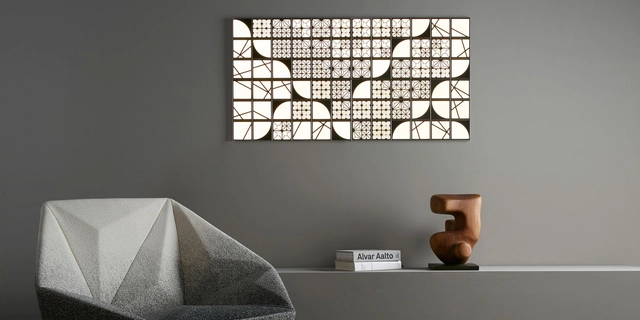
Japanese designer Michiru Tanaka has released a new product partnering with lighting manufacturer Kaneka to create a stainless steel tile that doubles as both an OLED and a mirror. A graduate of Tokyo’s Musashino Art University, Tanaka pursued a career in architectural lighting and her projects range from commercial installations, lighting at museums as well as product design. Coined “Kumiko,” the tiles come from a fusion of inspirations, ranging from traditional Japanese architecture and woodworking techniques to Manhattan’s gridded cityscape.
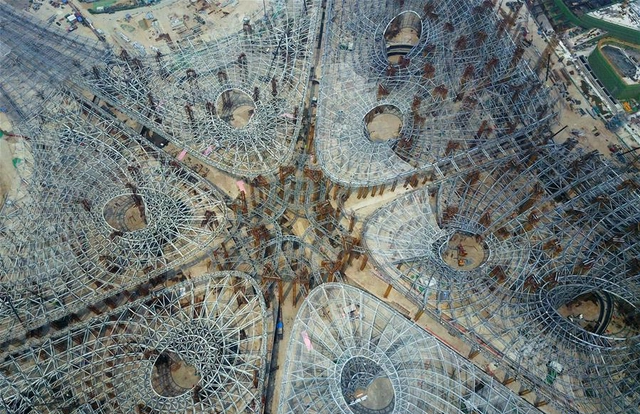
Zaha Hadid Architects' new passenger terminal for Beijing Airport (currently known as Beijing Daxing International Airport) is poised to become the largest aviation hub in the world. The vast structure, defined by five limbs spreading out from a central core, will cover an area of 313,000 square meters. It has been reported that each "arm" will use images from Chinese culture, including "silk, tea, porcelain, farmlands, and Chinese gardens."
https://www.archdaily.com/875562/see-the-structural-skeleton-of-zaha-hadid-architects-new-airport-terminal-in-beijingAD Editorial Team
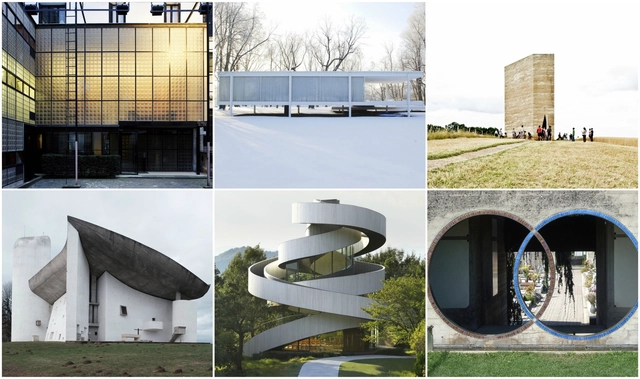
Visiting architectural masterpieces by the greats can often feel like a pilgrimage of sorts, especially when they are far away and hard to find. Not everyone takes the time to visit these buildings when traveling, which makes getting there all the more special. With weird opening hours, hard-to-reach locations and elusive tours we thought we’d show a selection from our archives of masterpieces (modernist to contemporary) and what it takes to make it through their doors. Don’t forget your camera!
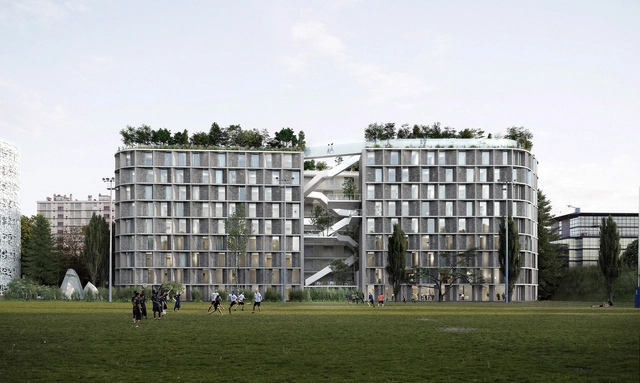
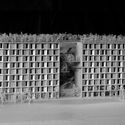
Atelier FCJZ and Coldefy & Associates Architects Urban Planners (CAAU) were announced last month as the winners of the Fondation de Chine Competition that will add another residential facility to the historic Cité Internationale Universitaire de Paris (CIUP). The project is part of #Cite2020, an initiative by the Cite Internationale to develop 1,800 new housing units by 2020. Adding to the existing 40 residential buildings, the Fondation de Chine will introduce a contemporary interpretation of student housing to the campus.
Highlighting the necessity of such a project, the design team explain: “There are approximately 800,000 Muslims living in NYC. A majority of the gathering places for Muslims are Mosques that focuses on Religion as Practice, which does not leave enough room for developing Religion as Culture.”
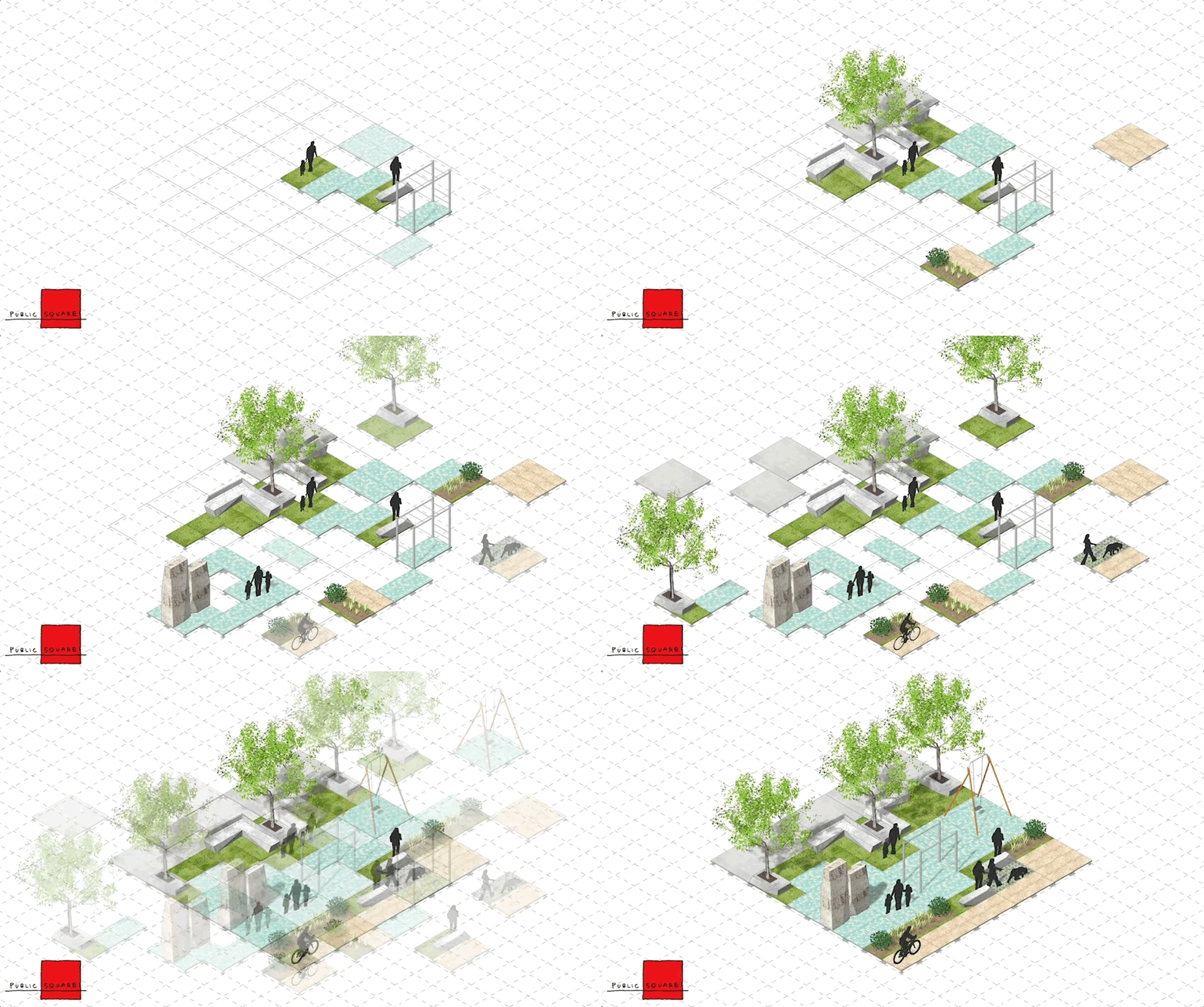
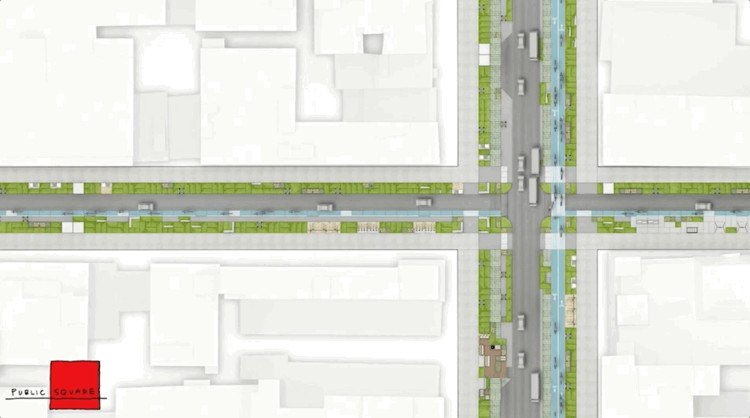
Of the four finalists selected for Blank Space’s “Driverless Future Challenge”, which was announced last month, “Public Square” has emerged as the winning entry, with a plug-and-play scheme to transform New York’s public realm for its streets and pedestrians. Designed by FXFOWLE and Sam Schwartz Engineering, the proposal was selected by a panel of New York City commissioners, for its response to the competition brief with a flexible system that accommodates a variety of public space typologies, while creating a harmonious coexistence between pedestrians, cyclists, and vehicles.
https://www.archdaily.com/875787/the-driverless-future-challenges-winning-entry-uses-plug-and-play-system-to-reclaim-public-space-for-pedestriansOsman Bari
















.jpg?1500848248)
.jpg?1500848248 "Courtesy of National Capital Planning Commission")

.jpg?1500848248)

.jpg?1500915765&format=webp&width=640&height=580)




.jpg?1499812005 "Pavilion Suisse by Le Corbusier. Image Courtesy of Atelier FCJZ")