The IAAC (Institute for Advanced Architecture of Catalonia) has developed a series of advanced materials and systems for air conditioning and passive ventilation, allowing homes to reduce interior temperatures up to 5 degrees lower while saving the electricity consumption caused by the traditional air-conditioning. The systems are made from long-lifespan materials, which lower the costs of maintenance in the long-term and can be used as low-cost alternative building technologies.
The projects highlighted are the Breathing Skin, Hydroceramics, Hydromembrane, Morphluid and Soft Robotics - all developed by students of the IAAC's Digital Matter Intelligent Constructions (conducted by Areti Markopoulou). The passive air-conditioning of spaces is investigated using a combination of new materials that mimic organic processes, adaptive structures and Robotics that help regulate temperature and create sustainable micro climates.
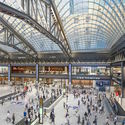
Construction has begun on Penn Station’s fast-tracked Moynihan Train Hall project has begun, announced New York State Governor Andrew Cuomo in a press conference.
Located within the existing James A. Farley Building (across from the existing Penn Station entrance), the new 255,000-square-foot Train Hall will serve as a new concourse for Amtrak and Long Island Railroad passengers, while an additional 700,000-square-feet will be dedicated to commercial, retail and dining spaces.
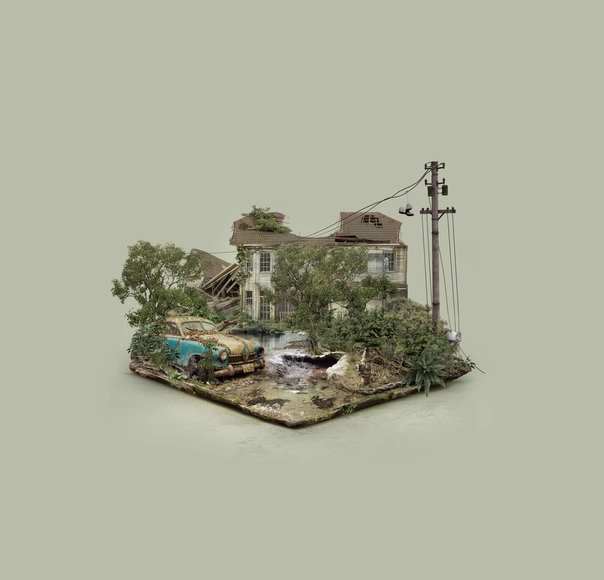
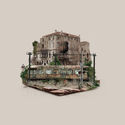
Abu Dhabi-based Brazilian designer and artist Fábio Araujo has a fascination with abandoned places – the mystery of where the man made clashes with the natural to create unique colors, textures and compositions.
These places are the subject of his series, aptly titled “Abandoned Places,” in which he uses a series of digital manipulations to create small islands floating within and contrasting with their clean, solid backgrounds.
Other works by Araujo include “Favela,” where the Brazilian housing typology has been reimagined as located within the sky, and miniature models of scenes and buildings including the Burj al Arab hotel in Dubai.
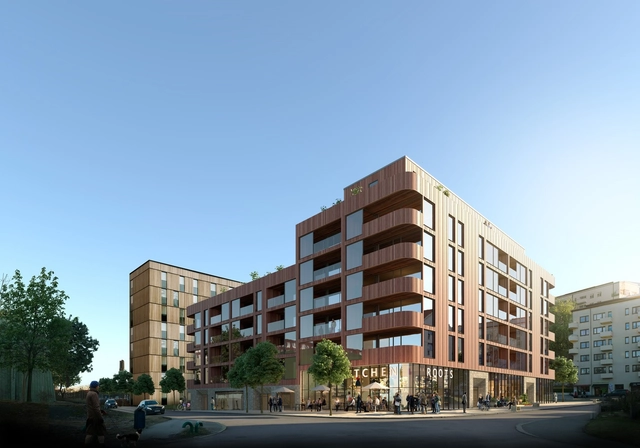
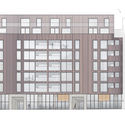
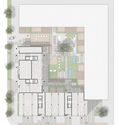
Riksbyggen and Sweco Architects were announced as the winners of a government-led competition to create a cross-laminatedtimber framed housing development for the Johanneberg district of Gothenburg, Sweden. The proposal, called “Slå rot” (Swedish for “put down roots”), was chosen for its response to its existing environment with nods to tradition, while still providing an innovative structural system and modern living to the neighborhood.
The Royal Institute of British Architects (RIBA) and Hull UK City of Culture 2017 have jointly commissioned Chile-based architects Pezo von Ellrichshausen and Swiss artist Felice Varini to design an ambitious temporary outdoor structure in the historic heart of Hull, a port city on the country's east coast. The project, which is part of the Hull 2017 "Look Up" programme of public art installations, will "transform Trinity Square with sixteen galvanized steel columns arranged in a grid formation in front of Hull Minister to highlight the symmetry of its façade."
https://www.archdaily.com/877941/pezo-von-ellrichshausen-and-felice-varini-unveil-designs-for-a-civic-installation-in-hull-2017-uk-city-of-cultureAD Editorial Team
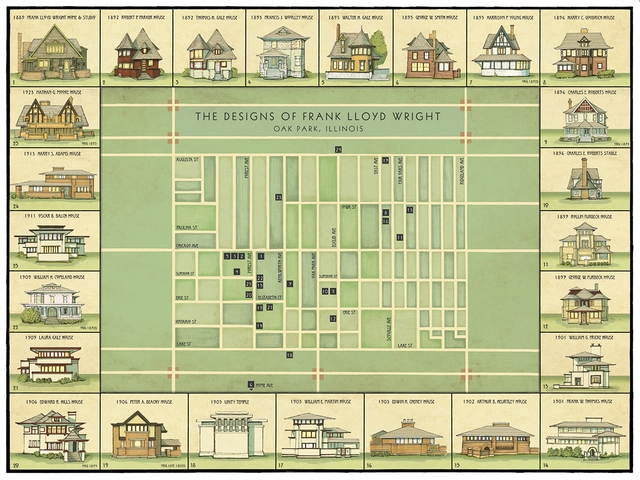
Home to Frank Lloyd Wright for many years, Oak Park, Illinois is also the site of the greatest concentration of Frank Lloyd Wright-designed homes and buildings than anywhere else in the world. Having designed structures for the neighborhood for nearly four decades, Wright used Oak Park as a place to try out new techniques and evolve his personal style.
Picking up on this, Illustrator Phil Thompson of Cape Horn Illustration has created a new map of Wright’s Oak Park designs. Organized both chronologically and by location, the map allows viewers to make connections between the structures, as their lines evolved from gabled to flat roofs and expanded in scale and in ambition.
https://www.archdaily.com/877939/this-map-shows-the-evolution-of-frank-lloyd-wrights-oak-park-designsAD Editorial Team
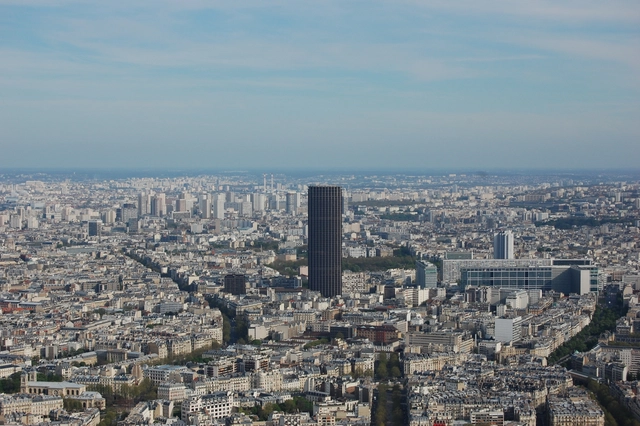
The competition asked teams to submit a vision for the tower that “not only creates a powerful, dynamic and bold new identity for the Tour Montparnasse but also addresses all the challenges involved in terms of user accessibility, comfort and energy performance.”
Designs have been revealed for a new 40-story skyscraper in New York City’s NoMad neighborhood designed by Rafael Viñoly Architects that will house the newest Ritz Carlton Hotel. Located at 1185 Broadway, the will be noticeable for its embrace of greenery, including wraparound vegetated balconies and large, open terraces with enough vertical height for several trees.
Construction has begun on The Independent, a 685-foot residential tower set to be the tallest of its kind, located west of the Mississippi in Austin. Designed by local practice Rhode Partners, major progress in shaping the building’s stacked and offset form has been made, through the setting of the 24th floor to create the first of these tiers, which encompass 58 stories and 370 units.
Downtown Los Angeles’ skyscraper boom continues – this time straying south to the intersection of South Olive and 11th Street, where developer Crescent Heights has submitted plans for a new 70-story residential tower housing 794 apartment units. Designed by ODA, 1045 Olive is planned to top out at a height of 770 feet, which would make it Los Angeles’ tallest residential building and 4th tallest overall.
Unique to the structure (and fitting for Los Angeles) would be the massive amount of space dedicated to parking: 13.5 total floors would be dedicated to parking spots, including an above ground 8-story core that would be wrapped in apartments to visually conceal the cars within.
Washington, D.C. has unveiled the design of the city’s largest ever construction project: a $411 million bridge spanning the Anacostia River that will replace the 68-year-old Frederick Douglass Memorial Bridge. The project will be carried out by the team known as “South Capitol Bridge Builders,” consisting of lead designer AECOM, Archer Western Construction and Granite Construction, after their submission was selected as the winner of a competition for the bridge announced in 2014.
The Design Museum in London has announced the shortlist projects in the running for the 2017 edition of their prestigious Beazley Design of the Year award. Now in its tenth year, the award was established to “celebrate design that promotes or delivers change, enables access, extends design practice or captures the spirit of the year.”
This year, a total of 62 projects have been nominated across six categories: Architecture, Digital, Fashion, Graphics, Product and Transport – including 13 projects from the Architecture category. A winner from each category and the overall winner will be announced on January 25, 2018. Previous winners of the architecture category include: IKEA’s Better Shelter last year (also the overall winner), Alejandro Aravena's UC Innovation Center in 2015, and Zaha Hadid Architects’ Heydar Aliyev Center (overall winner in 2014).
Courtesy of Chris Grimley, Michael Kubo, and Mark Pasnik
In their ninth architectural city guide, London-based publisher Blue Crow Media highlights the city of Boston’sBrutalist buildings. The map was produced in collaboration with the principles of the firm over,under Chris Grimley and Mark Pasnik along with Michael Kubo, who together authored the book “Heroic: Concrete Architecture and the New Boston.” The map highlights more than forty examples of Brutalist architecture around the greater-Boston area.
Plans have been revealed by American-Norwegian data company Kolos to construct the world's largest data center, a claim based on the amount of electrical power the site intends to draw from the grid to supply its banks of servers and cooling facilities. Located on a fjord in Ballangen, Norway, the proposed site sits within the Arctic Circle and would take advantage of the cold climate, low humidity, and the abundant supply of hydropower currently available in the area.
https://www.archdaily.com/877826/plans-unveiled-to-construct-the-worlds-largest-and-most-secure-data-center-in-northern-norwayAD Editorial Team
2017 Perrier Artist of the Year Eric Rieger, also known as HOTTEA, has completed a massive installation of colorful string at the largest indoor mall in North America, the Mall of America in Bloomington, Minnesota.
Consisting of 13,000 individual strands of yarn in 103 colors, the installation completely transforms the mall’s Atrium, enveloping visitors in a storm of buzzing color as soon as they pass through the north entrance. In total, a total of 721 pounds of yarn were used, covering the footprint of 55 by 45-foot skylight above.
Gunārs Birkerts, the prolific Latvian-American architect best known for designing the "Castle of Light"—the world's largest library in Riga, Latvia—has died aged 92. The National Library, which was first conceived in 1988 and officially opened in 2014, has become among the most significant, and controversial, contemporary public buildings in Latvia.
https://www.archdaily.com/877790/gunars-gunnars-birkerts-architect-of-the-worlds-largest-library-riga-latvia-dies-aged-92AD Editorial Team
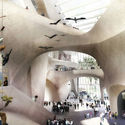
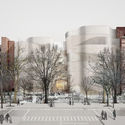
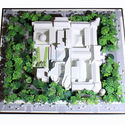
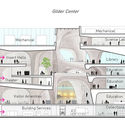
After receiving approval by the New York City Landmarks Preservation Commission last fall, Studio Gang’s expansion of the American Museum of Natural History is preparing to begin construction, reports New York YIMBY, as permits for the project have been filed with Department of Buildings.
To be known as the “Richard Gilder Center for Science, Education, and Innovation,” the expansion will consist of 245,000 square feet across six floors, approximately 80 percent of which will be located within the current museum footprint. Three existing museum buildings/wings will be reduced and adapted to accommodate the Gilder Center, which will house a variety of new exhibition and educational spaces, while enhancing connections to existing galleries. In total, approximately 203,000-gross-square-foot will be added to the Museum, already one of the largest natural history museums in the world.
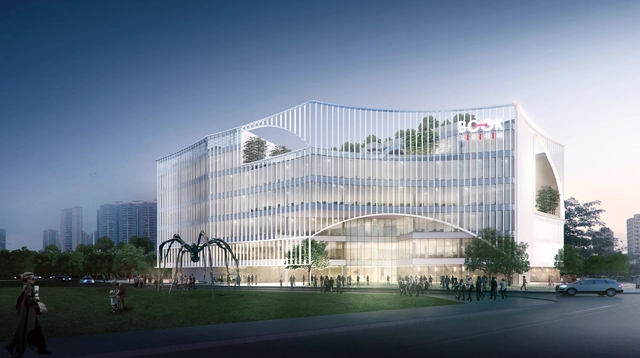
Main entrance from the park. Image Courtesy of Atelier Global
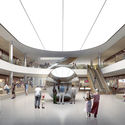
Atelier Global has been announced as the winners of a competition for the architectural and interior design of 'Shenzhen Book City,' a library and public gathering space located at the heart of the Long Hua arts district, becoming a part of the greater contemporary and historic fabric of art centers, public parks and urban typologies.
The saga of London’s controversial Thames Garden Bridge project has finally come to end, as the Garden Bridge Trust has announced the official “closure of the project” after losing the support of the public and London Mayor Sadiq Khan.
"It is with great regret that Trustees have concluded that without Mayoral support the project cannot be delivered,” said Lord Mervyn Davies, Chairman of the Garden Bridge Trust in a statement released today.
“We are incredibly sad that we have not been able to make the dream of the Garden Bridge a reality and that the Mayor does not feel able to continue with the support he initially gave us.”
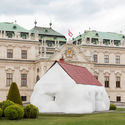
In a new solo exhibition of the work of Erwin Wurm in the artist's home city of Vienna, the "Fat House"—created in 2003—is being publicly displayed for the first time amid the baroque splendor of the Austrian capital's historic Upper Belvedere. The central exhibition of Wurm's work at 21er Hauscomprises over forty "performative sculptures" and statues, examining "extraordinary examples of architecture and objects of daily use."
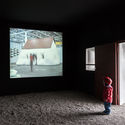
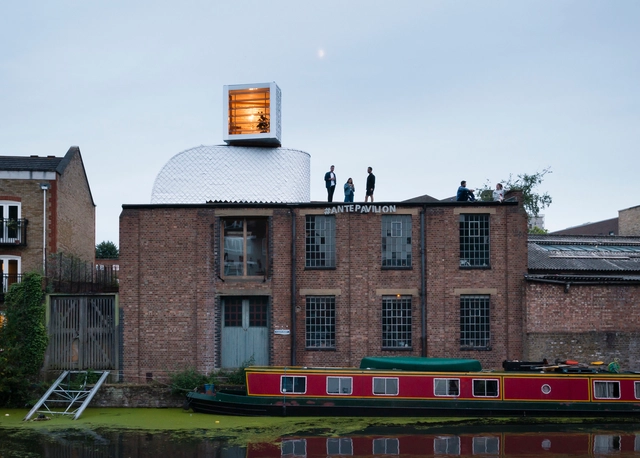
London’s first Antepavillion officially opened to the public last weekend, kicking off an annual series of experimental structures set to explore alternative ways of living in the city. Designed and built by emerging studio PUP Architects, the proposal beat out 128 other entries as the winner of a competition held by the Architecture Foundation. Calling for proposals that engaged with issues of sustainability and recycling, PUP's design, dubbed H-VAC is built using prefab elements made in-house by a team of volunteers. The pavilion's tongue-in-cheek appearance resembling an air duct is a playful subversion of planning legislation, exploiting loopholes for mechanical rooftop equipment to be built without planning permission.
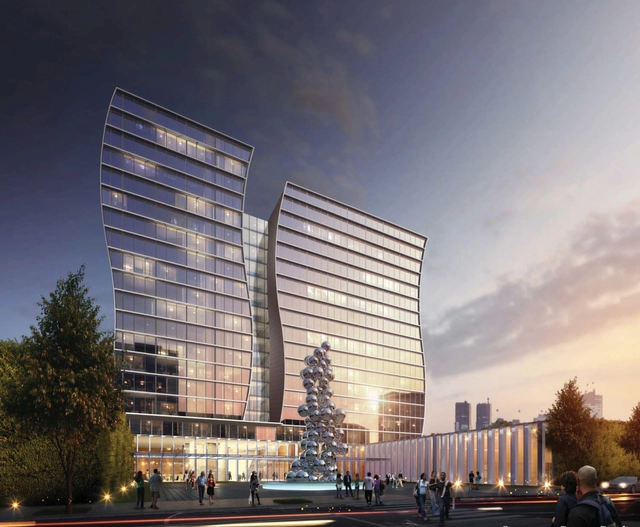
Plans have been announced for a new hotel in Orlando’s planned Lake Nona community, which is to be designed by Arquitectonica in one of the fastest growing communities in the United States. The 16 storey Town Center Hotel will be situated at the heart of the community, featuring a motor court entrance, a lobby, a ballroom accommodating 200 guests, as well as a rooftop pool with a lounge and accommodation for private events. The tower will also be within close proximity to the airport, easily accessible by Orlando’s 68 million annual visitors and the “unique property will cater to airport travelers as well as those who intend to make Lake Nona their final destination.”
https://www.archdaily.com/877441/arquitectonica-to-design-hotel-in-orlando-as-new-social-hub-for-the-united-states-fastest-growing-communityOsman Bari
Construction has started on the redesign of an energy storage tower by LAVA (Laboratory for Visionary Architects) for Stadtwerke Heidelberg (SWH) in Heidelberg, Germany. The updated facade of the 56-meter cylindrical tower and design of an adjacent park are part of an initiative to create a sculptural landmark and symbol of sustainable energy for the city.
LAVA introduces a multi-layered facade that features 11,000 diamond shaped stainless-steel plates attached to a steel cable network that can rotate 45 degrees in the wind. According to the architects, a number of plates correlate to the number of households that will be beneficiaries of the energy. The geometries of the facade are inspired by forms found in nature.




















.jpg?1502671282 "Courtesy of The Independent")


.jpg?1502913677&format=webp&width=640&height=580)