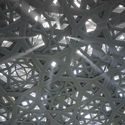
Following ten years of multinational collaboration between France and the Emirate of Abu Dhabi, Jean Nouvel's Louvre Abu Dhabi opens this week to the public. Located on Saadiyat Island and surrounded by the sea, twenty three permanent galleries and exhibition spaces, a Children's Museum, an auditorium, and a research center are connected by waterfront promenades which weave beneath the building's iconic dome.
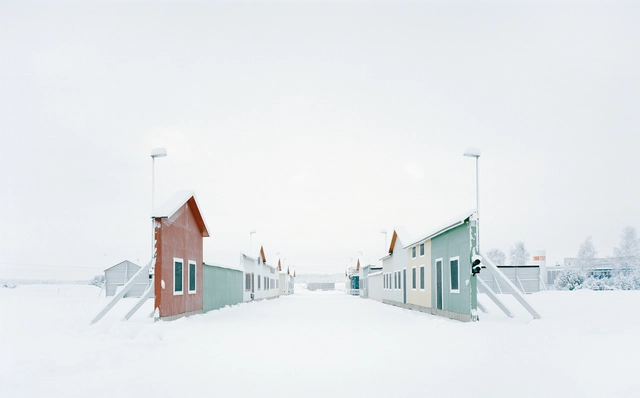
According to Russian legend, "Potemkin Villages"—entirely fake urban conurbations made to appear real—can be traced to it's namesake, Field Marshall Aleksandrovich Potemkin. In 1787, this soldier faced an unusual request: Catherine the Great demanded the construction of swathes of artificial settlements along her route to the Crimea in order to disguise, or veil, the run-down face of the region.
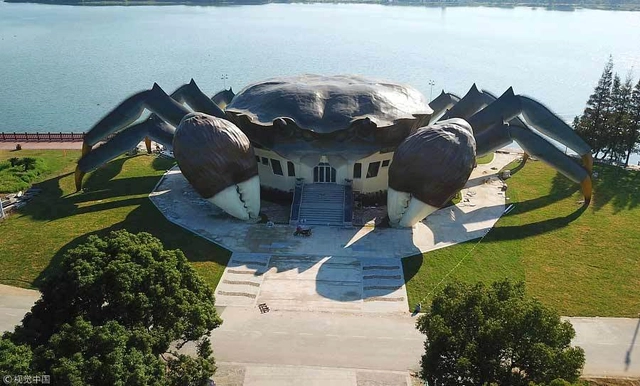
In a new book, photographer Gregor Sailer documents versions of Potemkin Villages from around the world. From faithful replicas of European cities in China to vehicle test cities in Scandinavia, grand political gestures to combat training centers, Sailer’s images lend us access to "the world of fakes, copies, and stage sets."
Ten projects have been selected as winners of 2017 AIA International Region Design Awards, honoring exemplary projects undertaken by architect members of the American Institute of Architects’ International Region, encompassing six of the seven chapters located outside of the United States: AIA United Kingdom, AIA Continental Europe, AIA Hong Kong, AIA Japan, AIA Middle East, and AIA Shanghai (not including the recently formed AIA Canada).
Projects were selected by an international jury led by Helene Combs Dreiling, FAIA, AIA Past President 2014, AIA IR Zone 1 (USA) and were presented AIA International Region Conference in Prague on October 7th.
London's Royal College of Art (RCA) have submitted proposals by Herzog & de Meuron to Wandsworth Council for a new £108 million ($141 million) building in Battersea. The "flagship" project will form part of the RCA's ongoing transformation into a 'STEAM' (Science, Technology, Engineering, Art and Mathematics) postgraduate university, facilitating the provision of ten new programmes focusing on computer and materials science, the impact of the digital economy, advanced manufacturing, and intelligent mobility.
https://www.archdaily.com/883044/herzog-and-de-meuron-unveil-designs-for-the-royal-college-of-arts-new-london-campusAD Editorial Team
If you were to identify, categorize and map the 21st century’s emergent architectural practices from the world over, all on one diagram, what would it look like? Considering how the current architectural landscape consists of several different approaches, attitudes and political stances, how would you map them without being too reductive? And how would you ensure that out of hundreds of emergent practices and firms across the globe, you don’t leave anyone out? Perhaps the Global Architectural Political Compass V 0.2 could offer a clue.
Created by Alejandro Zaera-Polo and Guillermo Fernandez-Abascal, the diagram is part of an ongoing inquiry into “the state of the art in (global) architectural practice” [1]. In 2016, Zaera-Polo explored the subject in a comprehensive essay for El Croquis titled “Well into the 21st Century” in which he set down the framework for 11 political categories that now form the compass diagram.
https://www.archdaily.com/882843/have-your-say-on-the-landscape-of-emerging-practices-with-the-interactive-architectural-political-compassZoya Gul Hasan
Google has launched 'Tilt Brush', a powerful tool for designers available for Oculus and HTC Vive that allows artists to create 3D objects while fully embedded in Virtual Reality (VR).
Tilt Brush turns any room into the perfect canvas to capture all your creativity, allowing you to paint in real size with 3D brushes.
The fourth annual Flatiron Public Plaza Holiday Design Competition winner has been announced--Flatiron Reflection by Future Expansion. In June 2017 non-profit groups Flatiron/23rd Street Partnership and Van Alen Institute invited ten design and architecture firms to submit proposals. “The initiative has become a valuable platform for launching new practices, a visible celebration of inventive, temporary designs that enliven public space during a chillier season, and an opportunity to understand how these spaces impact our minds and bodies” states David van der Leer, Executive Director of Van Alen Institute.
With the 2017 World Architecture Festival less than two weeks away, the event has shared the program of Fringe events scheduled for attending architects to enjoy. Taking place in Arena Berlin in the German Capital from November 15-17, WAF 2017 will also provide opportunities for architect-led tours and parties throughout the city.
Following the Festival’s theme of ‘Performance,’ events will center on the performative quality of different architectural typologies and themes including housing, public spaces, festivals, cultural institutions and new technologies.
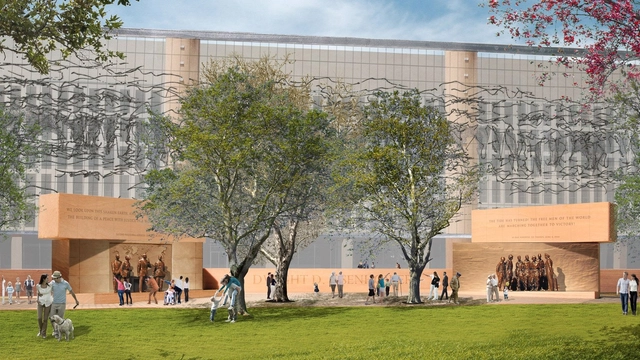
A groundbreaking ceremony was held yesterday at the National Mall site, located at the intersection of Maryland and Independence Avenues and across from the National Air and Space Museum.
The American Institute of Architects’ (AIA) Technology in Architectural Practice (TAP) Knowledge Community has announced the winners of their 2017 Innovation Awards, honoring “new practices and technologies that will further enable project delivery and enhance data-centric methodologies in the management of buildings for their entire lifecycle, from design, to construction and through operations.”
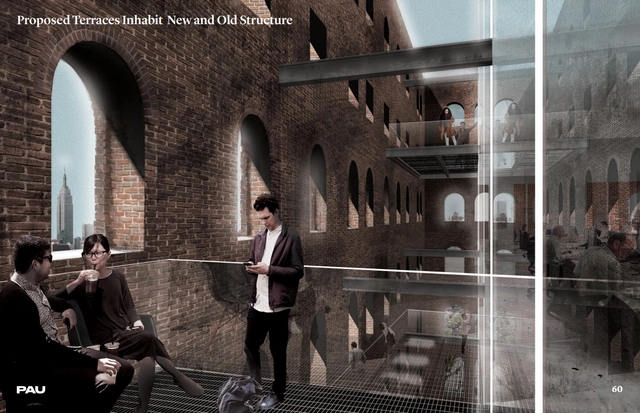
The New York City Landmarks Preservation Commission (LPC) has asked PAU to take its plans for the Domino Sugar Refinery back to the drawing board. While reactions from the public and commissioners were warm on the whole, commissioners debated whether the building, which has sat vacant for more than a decade, is a ruin or “armature” as Practice for Architecture and Urbanism (PAU) claimed, or whether the structure could—or should—be treated like an adaptable building.
Essentially, PAU intended to use the facade as a mask for a glass office building. Instead of sitting right up against the old brick, the new building would be set back ten feet from the old, and workers could get outside and up close to the original walls via metal latticework terraces poking through the glass envelope. The approach, explained founding principal Vishaan Chakrabarti, would preserve the bricks by equalizing the temperature and humidity on both sides while allowing the architects flexibility within a challenging original structure. A round-arched glass roof would dialogue with the American Round Arch windows that define the facade, while on the ground floor, the designers proposed a through-access from the Kent Avenue smokestack to the park and water that would be open to the public.
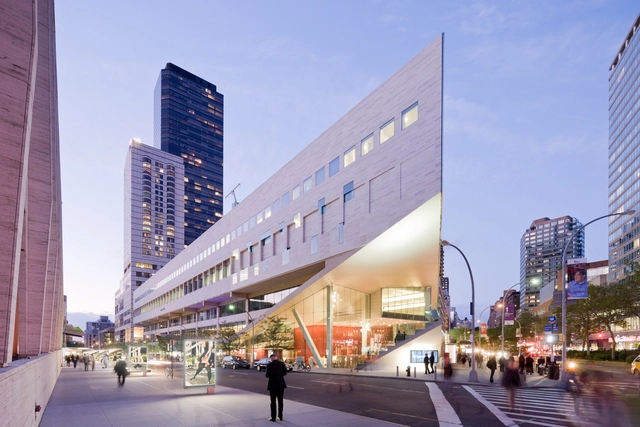
The Wall Street Journal has selected New York-based firm Diller Scofidio + Renfro as their 2017 “Architecture Innovator of the Year.”
Led by partners Liz Diller, Ricardo Scofidio, Charles Renfro and Benjamin Gilmartin, over the past decade the firm has quickly grown from a largely conceptual practice focused on installations, performance and unbuilt works to a full-fledged, international office with completed and in-progress projects around the globe.
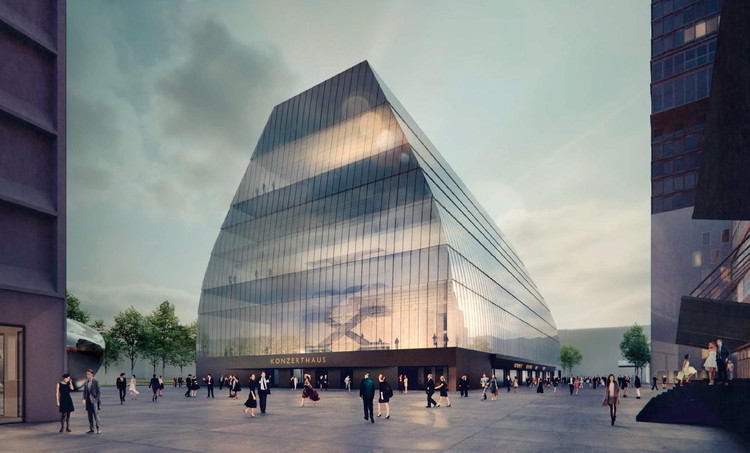
The Austrian firm Cukrowicz Nachbaur Architekte has been selected as the winner of an international competition for the design of a signature new concert hall in Munich, Germany, beating out proposals from 30 of the world’s most notable architecture practices.
The competition tasked architects with designing a stand-alone new structure on a 5,300-square-meter site near the Ostbahnhof train station in the neighborhood of Werksviertel. The building program included an overall floor area of approximately 9,500 square meters, including a larger 1800-seat concert hall and a more intimate 600-seat venue that satisfy “the most exacting acoustic requirements.”
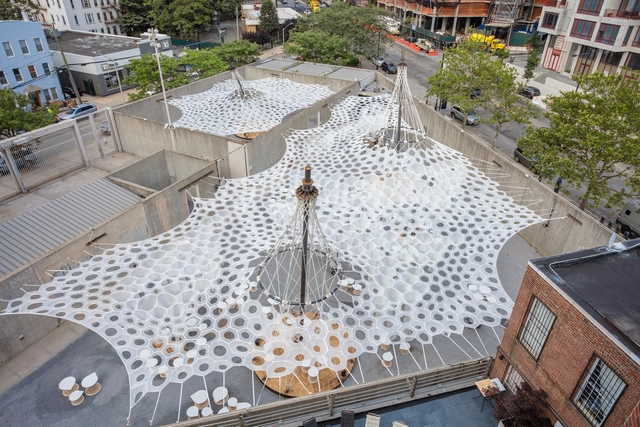
Lumen by Jenny Sabin Studio for The Museum of Modern Art and MoMA PS1’s Young Architects Program 2017. Image courtesy MoMA PS1. Photo by Pablo Enriquez.
Now in it’s 18th year, the competition was founded to offer emerging architectural talent the opportunity to design a temporary, outdoor installation within the walls of the P.S.1 courtyard for MoMA’s annual summer “Warm-Up” series. Architects are challenged to develop creative designs that provide shade, seating and water, while working within guidelines that address environmental issues, including sustainability and recycling.
The hit Netflix series Stranger Things returned for Season 2 last week (just in time for Halloween!), and, of course, immediately took the internet by storm.
Just as important as the mysterious circumstances and creepy characters to the plot are the show’s artfully crafted settings, intended by the producer to resemble familiar places from the real world (of the 80s), but with an unsettling twist.
This model from Archilogic recreates one of the central locations from the show, the house where Will Byers lives with his mom and brother. Check it out below to explore the manically-lit living room and other spaces seen in the action of the story.
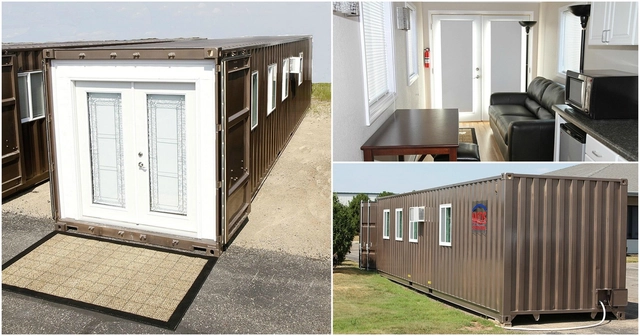
The conversion of shipping containers to living spaces is not a new concept—but being able to purchase them online and have them delivered by e-commerce giant Amazon is. Deliveries by the Seattle-based (and seemingly endlessly expanding) company are becoming a staple for most American households: dogs have never barked so much at the postman, porches have never been so littered with empty boxes, and never before has almost every product on the market been available from one place without even having to leave the house.
In spite of this consumer revolution, homes on demand constitutes new territory for the platform. So what does it look like when an entire house is delivered on the back of a truck?
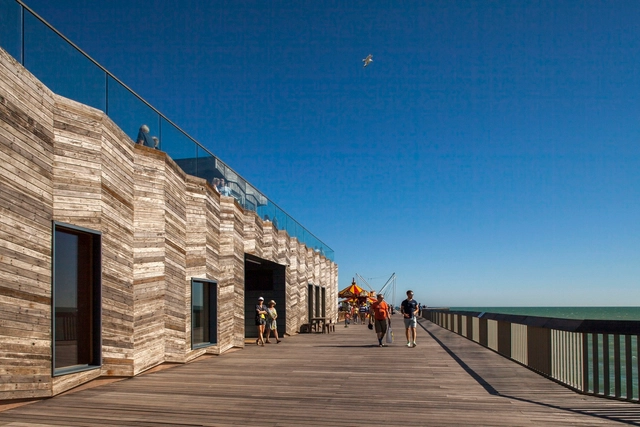
"Hastings Pier is a masterpiece in regeneration and inspiration. The architects and local community have transformed a neglected wreck into a stunning, flexible new pier to delight and inspire visitors and local people alike," said RIBA President and Stirling Prize jury chair Ben Derbyshire.
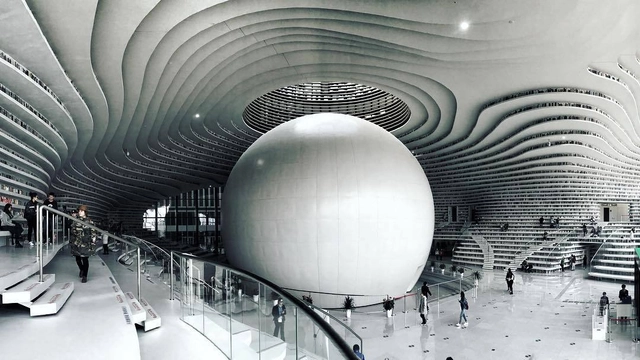
Located within the new Binhai Cultural District, the library provides storage for as many as 1.2 million books on sweeping, terraced bookshelves in the building’s central atrium. At the center of the room, an enormous mirrored sphere houses an auditorium and reflects the miles of bookshelves around it, creating a dazzling atmosphere for reading and studying.
Check out some first looks at the interior from social media below, and be on the lookout for professional photos later this week.
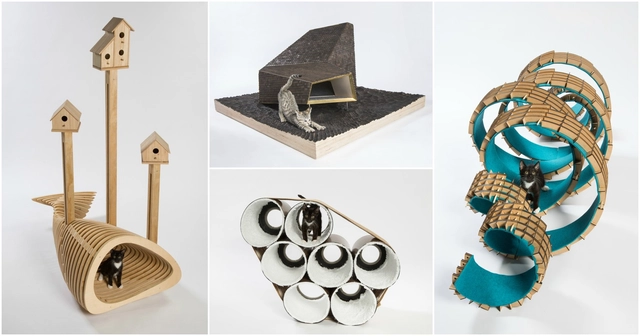
With somewhere between one and three million cats, Los Angeles is home to one of the United States’ largest populations of homeless felines. For the “Giving Shelter” exhibition in Los Angeles, 12 architects designed and built 13 small, one-of-a-kind shelters for these cats. The shelters, which are being sold through an online auction until 9pm PST tonight, will raise money for FixNation, a non-profit which provides a free service to spay or neuter homeless cats. Read on to see all 13 shelters.
https://www.archdaily.com/882701/12-architects-design-shelters-to-raise-money-for-las-homeless-catsAD Editorial Team
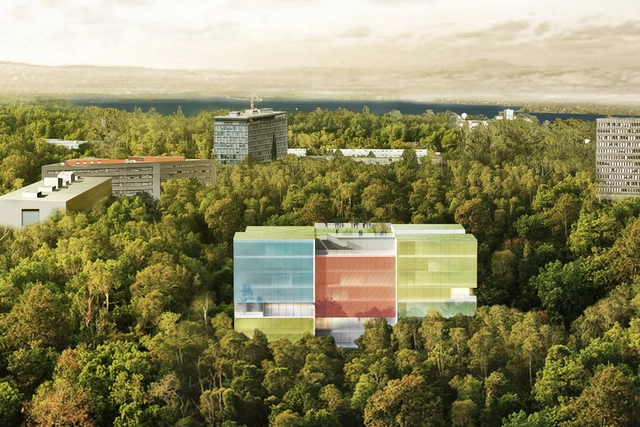
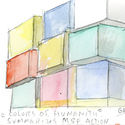
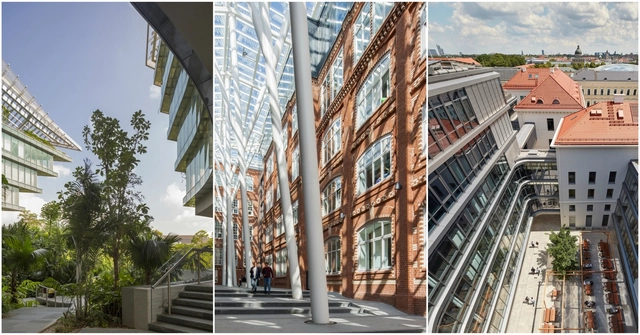
Clad in an innovative colored photovoltaic glass facade system, the energy-efficient building will provide flexible work and social spaces for more than 250 employees.
If you’re trying to get buildings that work with nature, that consume less energy, that are more healthy, and more joyful, you need to go out to a younger generation, and try to anticipate the future
- Norman Foster
Even for a career filled with an impressive number of peaks, right now Norman Foster seems to be having a particular moment, with the completion of the world's most sustainable office building in London and the recent opening of the new Madrid headquarter of his eponymous think tank, the Norman Foster Foundation.
These triumphs have an inspired a profile in the most recent edition of Surface Magazine that takes a look at the extraordinary path of Foster's career and how he has grown into one of the architecture world's most successful businessmen. Written by the magazine's executive editor, William Hanley, the story features quotes from Foster during his recent trips to Madrid and London on topics ranging from tackling world problems to becoming the go-to designer for Apple's corporate headquarters and flagship stores.
https://www.archdaily.com/882623/surface-magazine-talks-to-norman-foster-about-designing-for-bloomberg-and-cementing-his-legacyAD Editorial Team
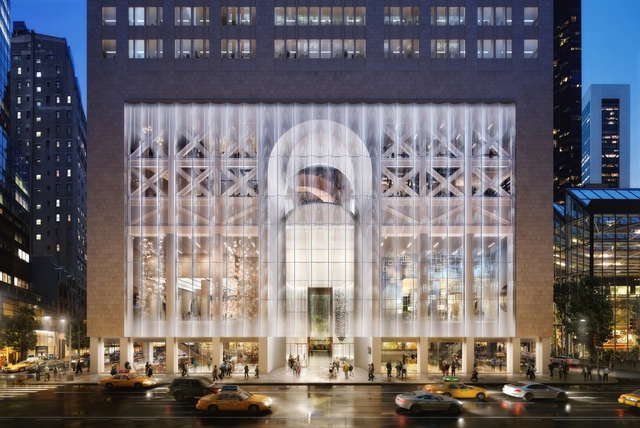
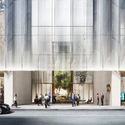
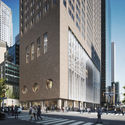
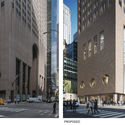
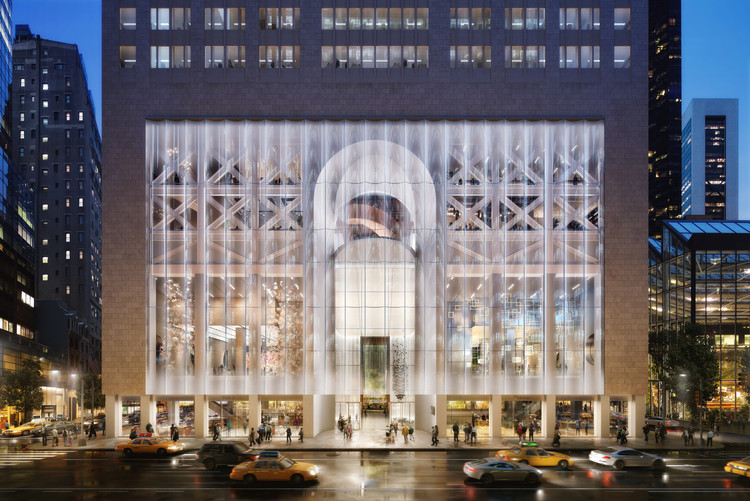
Designed by Snøhetta, the project centers on improving the transparency of its street presence. To do this, the stone facade at the building base will be replaced with a undulating glass curtain wall intended to be more inviting and attractive toward pedestrians, while the existing mid-block public passageway will be opened into a much larger outdoor landscape.


.jpg?1510054144&format=webp&width=640&height=580)
.jpg?1510054144 "© Roland Halbe")


.jpg?1510054144)



.jpg?1509978736&format=webp&width=640&height=580)